Egg Freezing in China: Wait Times, Booking Steps, and Real Costs
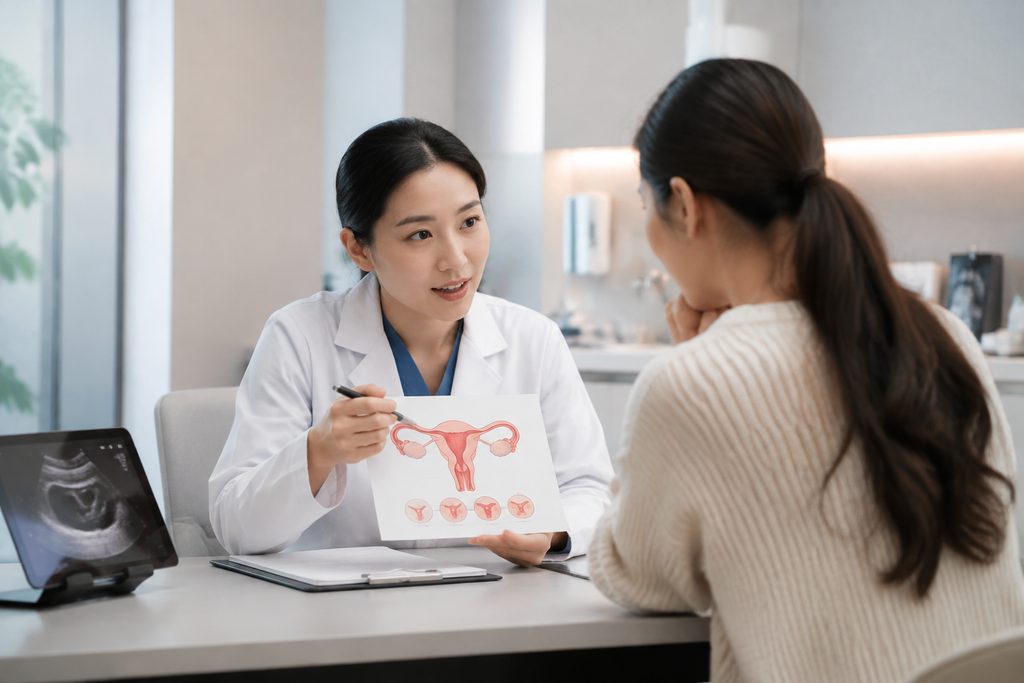
How This Actually Works, Step by Step
Have you ever wondered whether you can walk into a Chinese fertility clinic as a foreigner and actually get treatment without a year-long bureaucratic nightmare? The process is more structured than you might expect. But it is not instant.
First, you send us your basic medical history and your reason for pursuing egg freezing. We review it with our network of reproductive specialists. Then we match you with two or three hospitals that fit your clinical profile and budget. Once you choose, we coordinate a remote consultation. The doctor reviews your records. They order specific blood work and an ultrasound. You do these at home. We translate the results. The doctor then approves you for a cycle. Only after that approval do we lock in a treatment window.
This sequence matters. Skipping steps means arriving in China without a confirmed plan. That is how people waste weeks.
What the Egg Freezing Waitlist in China Actually Looks Like
The question “how long is egg freezing waitlist China” has no single answer. Public hospital reproductive departments in Beijing and Shanghai often run 2 to 4 months out for new patient consultations. Private international clinics move faster—sometimes 2 to 4 weeks. But the waitlist is only one part of the timeline. The total journey from first contact to completed egg retrieval usually spans 6 to 12 weeks.
Several factors stretch that window. Document translation takes 3 to 5 business days. Hormone priming protocols often require 2 to 3 weeks before stimulation begins. And if you need an S2 visa, embassy processing adds another 1 to 3 weeks depending on your home country. You cannot compress ovarian biology. A stimulation cycle runs 10 to 14 days. That part is fixed.
For foreigners, the practical question is not just “how long is the wait” but “how long is the total commitment.” Plan for one preliminary trip of 2 to 3 days for initial testing, or do testing at home and fly in only for the cycle itself. Most of our patients choose the second option.
Egg Freezing Cost China: What You Actually Pay
The egg freezing cost China varies widely by hospital tier and whether you use the international VIP channel. Public hospital standard pricing starts around $3,000 to $5,000 for one full cycle including stimulation medication, monitoring, retrieval, and one year of storage. Private international clinics in Shanghai and Beijing charge $6,000 to $10,000 for the same package. Those numbers do not include travel, accommodation, or translation services.
Compare that to the United States, where a single cycle averages $11,000 to $15,000 before medication, or Western Europe at €4,000 to €7,000. China sits at the lower end of the global range, especially at top public hospitals. But the lower price comes with trade-offs: less hand-holding, more paperwork, and almost no English support on the standard track. The international departments solve the language problem but raise the price.
| Setting | Typical Cycle Cost (USD) | Wait for New Patient | English Support |
|---|---|---|---|
| Public hospital, standard channel | $3,000–$5,000 | 2–4 months | Minimal |
| Public hospital, international department | $5,000–$8,000 | 2–6 weeks | Yes |
| Private international clinic (Shanghai/Beijing) | $6,000–$10,000 | 1–4 weeks | Yes |
Storage fees add $300 to $600 per year. Medication costs can swing the total by $1,000 to $2,000 depending on your ovarian reserve and the protocol chosen. Always ask whether the quoted price includes anesthesia, lab fees, and the first year of cryopreservation. Some clinics quote a base procedure fee and leave those out.
Can Foreigners Freeze Eggs in China?
Yes. But the rules differ from what many Western patients assume. Chinese law does not restrict egg freezing to married women, and several major cities have updated local regulations to allow elective fertility preservation. The practical barrier is not legality—it is access. Public hospital reproductive departments rarely accept walk-in foreign patients without a Chinese-speaking coordinator. The international departments of major hospitals do accept foreigners, and private clinics like Jiahui and United Family actively market to expats and medical travelers.
You will need a passport, a visa appropriate for private medical treatment, and translated medical records. The S2 visa is the correct category for short-term medical travel. It is not a “medical visa” in the formal sense, but it is the category Chinese consulates use for treatment visits. Processing times vary by country. We guide patients through the exact documentation the hospital requires for the visa support letter.
A Realistic Timeline
Here is what a typical journey looks like for a foreign patient pursuing egg freezing in China. These are ranges, not promises.
| Stage | Duration | What Happens |
|---|---|---|
| Initial inquiry and record review | 3–5 days | We collect your medical history and fertility goals |
| Hospital matching and consultation booking | 1–2 weeks | We coordinate with 2–3 clinics; you choose one |
| Remote video consultation | 1 week | Specialist reviews records, orders tests |
| Pre-cycle testing at home | 1–2 weeks | Blood work, ultrasound, infectious disease panel |
| Visa processing (S2) | 1–3 weeks | Embassy processing after hospital issues support letter |
| Arrival and baseline scan | Day 1–2 | Confirm ovarian status, start stimulation |
| Ovarian stimulation | 10–14 days | Daily injections, monitoring every 2–3 days |
| Egg retrieval | Day 14–16 | Outpatient procedure under sedation |
| Recovery and departure | 2–3 days | Rest, follow-up scan, fly home |
Total: 6 to 12 weeks from first email to completed retrieval. The waitlist itself is rarely the bottleneck. Document translation, visa timing, and your own menstrual cycle dictate the pace more than the clinic’s calendar.
What Can Go Wrong — and What Happens Then
The most common failure point is poor ovarian response. You start stimulation, and your follicles do not grow as expected. The doctor may cancel the cycle. You lose the medication cost and the time. This happens in roughly 5 to 15 percent of cycles depending on age and ovarian reserve. The recourse is a modified protocol for the next attempt, often with different medication dosing. Some clinics offer partial refunds on canceled cycles; most do not. Ask before you commit.
Another failure mode: arriving without the correct visa. If you enter on a tourist L visa and the hospital discovers you are there for medical treatment, they may refuse service. Consulates are stricter now than they were five years ago. We have seen patients turned away at hospital registration because their visa category did not match the purpose of visit. The fix is prevention—get the S2 visa with a support letter from the hospital before you fly.
Language failure is the third risk. Even in international departments, lab technicians and ultrasound nurses often speak only Mandarin. If you go alone, you may miss critical instructions about medication timing. A bilingual medical companion solves this. It costs from $300 per day, but it prevents errors that can cost you the entire cycle.
Egg Freezing Clinics Shanghai Price vs. Beijing: How to Choose
The egg freezing clinics Shanghai price range runs slightly higher than Beijing on average. Shanghai’s private international clinics—Jiahui, Parkway, United Family—charge $7,000 to $10,000 per cycle. Beijing’s equivalents run $6,000 to $9,000. Public hospital international departments in both cities are cheaper: $5,000 to $7,000. The difference is real but not dramatic enough to drive the decision alone.
What matters more is clinical volume and laboratory quality. Beijing has Peking University Third Hospital, one of the highest-volume reproductive centers in the world, with a dedicated international department. Shanghai has the International Peace Maternity and Child Health Hospital and several strong private options. Both cities have excellent labs. The choice often comes down to which city is easier for you to reach and where you feel more comfortable recovering.
Do not choose a clinic based on a single price quote. Ask for the itemized breakdown: consultation fee, stimulation medication, monitoring ultrasounds, blood tests, anesthesia, retrieval procedure, lab processing, and first-year storage. A clinic that quotes $4,000 but excludes medication is not cheaper than one that quotes $6,500 all-inclusive. We review these breakdowns with patients before they commit.
For a broader look at hospital options across China, our top-ranked hospital database shows which institutions carry Fudan rankings and JCI accreditation. The reproductive medicine department rankings are particularly useful for comparing clinical strength, not just price.
Practical Considerations: Records, Visa, Payment, and Follow-Up
You will need your full gynecological history, any prior fertility treatment records, recent Pap smear results, and a basic health screening. If you have a known condition like PCOS or endometriosis, bring those diagnostic reports. All documents must be translated into Chinese for the hospital file. We handle this as part of coordination.
Payment is almost always required upfront. Public hospitals do not bill international insurance directly. Private international clinics sometimes do, but you should confirm before arrival. If you plan to claim reimbursement, get an itemized invoice and a discharge summary in English. Many insurers require pre-authorization for fertility preservation. Start that process at least 3 weeks before your cycle.
Follow-up after retrieval is straightforward. You rest for 2 to 3 days, avoid heavy lifting and intercourse for about 2 weeks, and fly home. The clinic provides a written summary of the number of eggs retrieved and frozen. Storage renewal is annual. You can pay storage fees remotely through the hospital’s international billing office, though the process is easier with a local contact.
One thing people forget: your eggs stay in China. If you later want to use them, you will need to return for embryo creation and transfer, or arrange international shipping to a clinic in your home country. Shipping frozen eggs across borders is complex and regulated. Ask your home clinic whether they accept international gamete transfers before you freeze in China. This is a real consideration that affects the long-term value of the decision.
Frequently Asked Questions
The what is the process for egg freezing in Beijing question comes up often. You start with a remote consultation at a hospital’s international department. The doctor orders tests. You complete them at home. Once cleared, you apply for an S2 visa with a hospital support letter. You fly in for baseline testing, start stimulation, and complete retrieval about 14 days later. Total time in Beijing: roughly 3 weeks.
Yes, but only through the international or VIP channel. Public hospital standard registration does not allow advance booking from overseas. The book egg freezing China package route means working with the hospital’s international department or a private clinic that accepts foreign reservations. We coordinate this for you. The package typically includes consultation, monitoring, retrieval, and one year of storage. Medication may be separate.
There is no national law prohibiting elective egg freezing for single women. Several major cities have issued local guidelines allowing it. The practical reality is that some public hospitals still restrict elective freezing to married women or those with medical indications. Private international clinics are generally more flexible. We match you with hospitals that accept your specific situation before you pay anything.
You lose the medication cost and the time spent. Some clinics charge a reduced fee for the monitoring you received. A few offer partial credit toward a future cycle. This is why we recommend doing thorough pre-cycle testing and a realistic assessment of your ovarian reserve before you commit to travel. The doctor will tell you honestly if your expected response is poor.
Most clinics offer storage in renewable annual contracts. There is no strict legal limit on storage duration, but clinics typically require you to renew consent and payment each year. If you stop paying and cannot be reached, the clinic may eventually dispose of the eggs according to their policy. Keep your contact information current and set a calendar reminder for annual storage renewal.
Your Next Step
The decision to freeze eggs abroad is significant. The timeline is manageable, the costs are transparent, and the clinical quality at top Chinese hospitals is high. But the logistics—records, visa, language, payment—are where most people stumble. That is what we handle. We are a medical coordination team, not a clinic. We do not perform procedures or give medical advice. We connect you with ranked hospitals, translate your records, coordinate appointments, and provide bilingual support on the ground. If you want to understand your options without any obligation, request a free consultation through our patient services page. We will review your situation and tell you honestly whether China is the right fit for your egg freezing plan.
For more medical information and treatment options in China, visit chinamedservices.com (China Medical Services).
