China Medical Tourism 2026: How Approved Drug Access Expanded
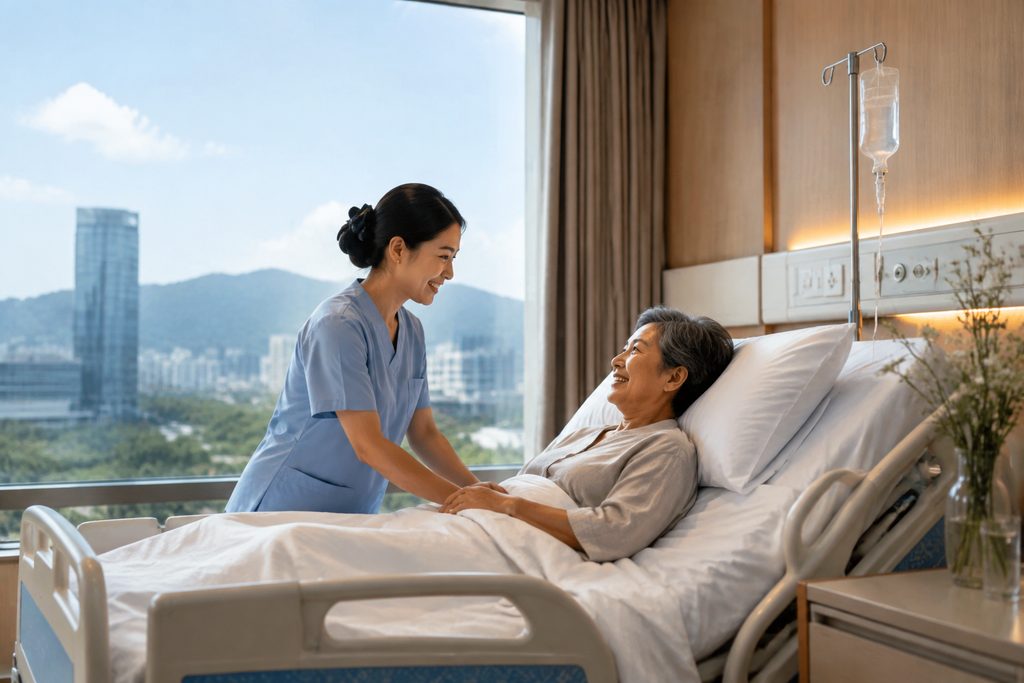
According to China’s National Health Commission, the volume of international inpatient visits to Chinese hospitals rose by roughly 40% between 2023 and 2025, with 2026 projections pointing to continued double-digit growth. A key driver is drug access. In 2025, China’s National Medical Products Administration approved more than 60 novel drugs, many of them oncology therapies that had already cleared FDA or EMA review. For patients facing long waits or restricted formularies at home, the question is no longer whether China has the treatment. It is whether they can navigate the system to receive it safely. Our team has spent years helping international patients evaluate the best hospitals in China for medical tourism — and the 2026 drug access landscape has changed the calculus for many of them.
How This Actually Works, Step by Step
You do not book a Chinese hospital bed from your living room. Not at a public hospital. The sequence is more deliberate, and understanding it early prevents expensive mistakes.
Step one: you gather every medical record you have — imaging, pathology reports, treatment history, current medication list. Step two: those records get translated into Chinese by a certified medical translator. Hospitals will not accept foreign-language records for clinical review. Step three: a specialist reviews the translated file. This can happen remotely through a written second opinion, which typically costs between $300 and $500 at a top-tier hospital. Step four: if the Chinese team believes they can help, you schedule either a video consultation or an in-person visit. Step five: you apply for an S2 visa, which is the short-stay category used for medical treatment and private affairs in China. Step six: you arrive, attend the outpatient consultation, and only then can a surgery or admission date be discussed.
That last point matters. Public hospitals in China require an in-person consultation before scheduling surgery. There is no way around it through the standard channel.
What Changed in 2026 for Approved Drug Access
The 2026 shift is not about a single policy. It is about volume and speed. China’s drug regulator has compressed review timelines for novel therapies, particularly in oncology, rare diseases, and immunology. Several CAR-T therapies, bispecific antibodies, and next-generation targeted therapies that received FDA approval in 2024 entered the Chinese market within 12 to 18 months — a gap that used to be three to five years.
So what does China approved drug access 2026 for international patients actually look like? In practice, it means a patient from the UK, Canada, or Australia may find a therapy available in Shanghai or Beijing that their home system has not yet funded or approved. It also means the reverse is possible: some drugs available at home are not yet in China. This is exactly why a remote written second opinion matters before you book a flight. You need a Chinese specialist to confirm — in writing — that the specific drug or therapy you are seeking is available and appropriate for your case.
And the availability question extends beyond the drug itself. Some therapies require hospital-specific infrastructure: cell therapy labs, specialized imaging, ICU protocols. The top-ranked specialty departments in China are not evenly distributed. Oncology strength in Guangzhou does not guarantee the same depth in Xi’an. Matching the drug to the hospital matters as much as matching it to the disease.
A Realistic Timeline
People underestimate the waiting steps. Here is what a typical journey looks like for an international patient pursuing treatment in China in 2026.
| Stage | What Happens | Realistic Duration |
|---|---|---|
| Days 1–7 | Collect and organize medical records; confirm translation requirements with the target hospital | 1 week |
| Days 8–21 | Certified translation of records into Chinese | 1–2 weeks |
| Days 15–30 | Remote written second opinion or video consultation with a Chinese specialist | 1–3 weeks depending on department |
| Days 30–60 | S2 visa application with hospital invitation letter and treatment plan documents | 2–4 weeks |
| Days 60–75 | Travel to China; outpatient consultation at the hospital | 1–2 weeks |
| Days 75–120 | Surgery or treatment scheduling; pre-operative testing; admission | 2–6 weeks depending on hospital and department |
The timeline above assumes no complications. Document translation delays, visa processing backlogs, and hospital scheduling conflicts are common. Plan for 3 to 4 months from first contact to treatment start.
What Can Go Wrong — and What Happens Then
The honest failure modes are worth naming. First: you arrive and the specialist disagrees with your home doctor’s treatment plan. It happens. Chinese oncologists and surgeons see high volumes — some departments handle more cases of a specific cancer in a month than a regional Western hospital sees in a year. Their recommendation may differ. You are not obligated to proceed. You can return home with the written opinion, which is still valuable.
Second: the drug you wanted is approved in China but not stocked at the hospital you chose. Drug distribution varies by province and hospital procurement cycles. This is why confirming availability in writing before travel is non-negotiable.
Third: the cost estimate shifts. A hospital may quote a base procedure fee, but pre-operative testing, complications, or extended ICU stays change the final bill. Reputable hospitals provide itemized estimates, but they are estimates. Keep a 20–30% buffer.
Fourth: language breakdown. Even in hospitals with international departments, the radiology technician or the floor nurse may speak only Mandarin. A bilingual companion who stays with you through registration, payment, and ward transfers is not a luxury. It is the difference between a manageable experience and a disorienting one.
What happens then? Each of these has a recourse. Disagreement with the plan means seeking a second Chinese opinion or returning home. Drug unavailability means switching hospitals or waiting for the next procurement cycle. Cost overruns mean negotiating a payment schedule. Language barriers mean hiring a companion on day one, not day five.
How to Evaluate a Hospital for Your Specific Case
Rankings are a starting point, not a destination. The Fudan University hospital rankings — the most authoritative in China — divide the top 100 general hospitals into tiers from A++++ to A. They do not assign a single national rank. For specialty care, the story is different: Fudan publishes reputation rankings for 45 specialties, each with a clear top 10. That is the list that matters for a cancer patient or a cardiac surgery candidate.
But even a top-10 oncology department is not automatically right for you. Ask these questions before committing:
- How many cases of my specific disease subtype does this department handle annually?
- Is the drug or therapy I am seeking currently stocked or available through the hospital pharmacy?
- Does the hospital have an international department with English-speaking coordination staff?
- What is the estimated total cost, including pre-operative testing and typical post-operative stay?
- Will the hospital provide documentation for my insurance claim at home?
One more consideration: is it safe to have surgery in China? The safety question deserves a straight answer. At top-tier hospitals — the ones on the Fudan A-tier list or holding JCI accreditation — surgical volume is a safety feature. Fuwai Hospital in Beijing performs more than 14,000 cardiac surgeries annually, the highest volume of any cardiac center in the world. Volume drives protocol refinement. But safety also depends on communication, and communication depends on preparation. A patient who arrives with translated records, a clear treatment goal, and a bilingual companion is a safer patient than one who arrives alone with a folder of untranslated documents.
Practical Considerations: Records, Visa, Payment, Follow-Up
It varies dramatically by cancer type, stage, and hospital tier. A course of standard chemotherapy at a top public hospital’s international department might range from $15,000 to $40,000. Immunotherapy or CAR-T therapy can exceed $100,000. These figures are indicative — final quotes depend on the specific protocol and hospital. Always request an itemized estimate in writing.
At top-tier hospitals, yes — with preparation. High surgical volumes at leading centers mean experienced teams and refined protocols. The main safety risks are communication gaps and incomplete medical history. Translated records, a bilingual companion, and a hospital with an established international department reduce those risks substantially.
Most international insurers reimburse treatment at accredited Chinese hospitals, but you pay upfront and claim afterward. Check with your insurer before travel: some require pre-authorization, and some exclude specific hospitals. Private international hospitals in China often handle direct billing, which simplifies the process but comes at a higher procedure cost.
No. The M visa is for commercial and trade activities. Medical treatment falls under the S2 visa category for stays under 180 days. Applying for the wrong visa category will delay your trip. Confirm the current requirements with the Chinese embassy or consulate in your country before applying.
Your Next Step
Drug access in China has expanded faster than most international patients realize. The bottleneck is no longer the medicine — it is the navigation: knowing which hospital stocks it, which specialist has experience with it, and how to move through the system without losing weeks to administrative friction. We help with exactly that. Our team at China Medical Services provides case management: record translation, hospital matching, appointment coordination, and bilingual companionship on the ground. We do not practice medicine, and we do not promise outcomes. We connect you with the right specialists and make sure nothing gets lost in translation.
If you are weighing treatment in China in 2026, start with a conversation. Tell us your diagnosis, your treatment history, and what you are hoping to find. We will tell you honestly whether China is a realistic option for your case — and if it is, what the next 90 days should look like. Request a free consultation and we will map out the path from where you are to a confirmed treatment plan.
Frequently Asked Questions
Yes. The hospitals used for international patients are JCI-accredited and follow the same international safety standards as top hospitals in the US and Europe. Surgical teams perform high volumes of procedures — often more than their Western counterparts — which studies show leads to better outcomes.
Costs vary by procedure and hospital, but international patients typically save 40-80% compared to US prices — even when factoring in travel and accommodation. A consultation with our team will give you an exact, all-inclusive quote with no hidden fees.
Send us your existing medical reports to get started. We handle everything from hospital selection and appointment scheduling to visa assistance and post-operative recovery planning. Your medical records are reviewed by the specialist before you even book a flight.
For more medical information and treatment options in China, visit chinamedservices.com (China Medical Services).
