Is Dialysis Safe in China? A Kidney Care Safety Companion
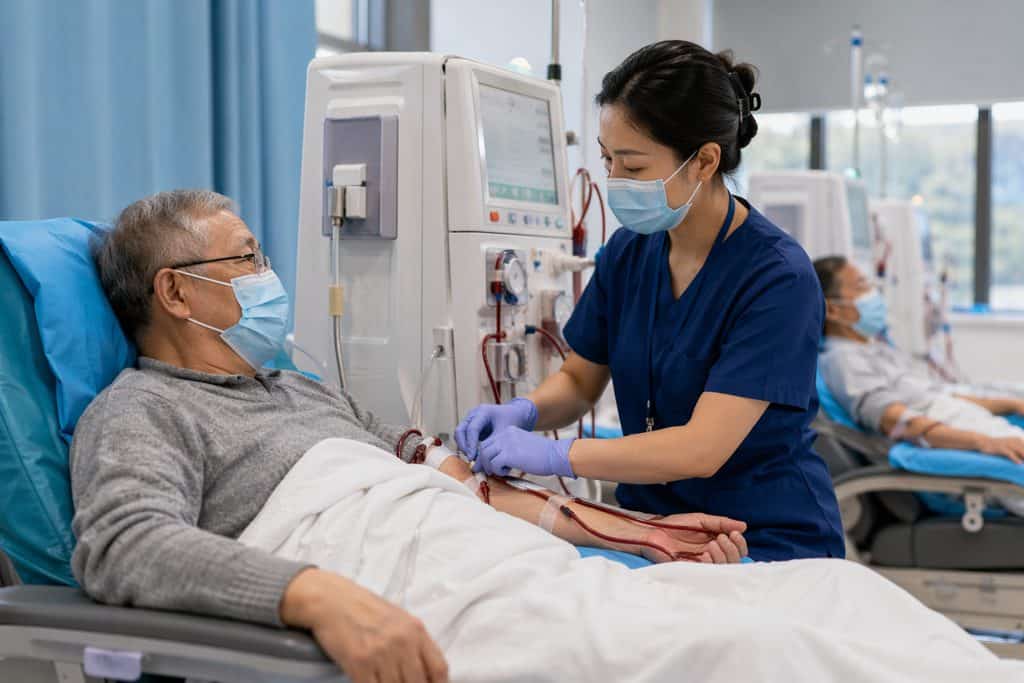
Key Takeaways
- China’s top-tier dialysis centers operate under JCI or China’s strict Class A tertiary (Grade 3A) hospital standards, with infection control protocols comparable to Western benchmarks.
- Hemodialysis in China typically costs $80–$150 per session at public hospitals, versus $250–$500+ in the United States — a 60–70% cost reduction without sacrificing core safety metrics.
- The biggest safety variable is not clinical quality at top centers but operational friction: language barriers, payment logistics, and hospital selection.
- Before booking dialysis treatment in China, you need recent lab work, a treatment summary from your current nephrologist, and a clear understanding of which hospital tier fits your needs.
Have you ever wondered whether receiving dialysis in a foreign country could be as safe as your home clinic — or whether the lower dialysis cost China offers comes with hidden risks? It is a fair question, and one we hear from patients every week. The short answer: at accredited Chinese hospitals, dialysis is safe, regulated, and clinically rigorous. The longer answer involves understanding which hospitals meet international standards, what safety protocols look like in practice, and how to avoid the pitfalls that come with navigating an unfamiliar system.
Kidney failure affects approximately 1 in 7 adults globally, and for the 3.5 million people worldwide who depend on dialysis, continuity of care is non-negotiable. Missing even one session can lead to dangerous fluid overload or electrolyte imbalances. So when patients consider China for extended business stays, family visits, or long-term relocation, the question is not just “how much does dialysis cost in China per session” — it is whether the care will keep them stable and safe. This guide addresses both.
The Problem: Dialysis Costs and Access Gaps Are Pushing Patients to Look Abroad
In the United States, a single hemodialysis session costs between $250 and $500 depending on the facility, with annual costs often exceeding $90,000 per patient. Medicare covers much of this for eligible citizens, but for uninsured patients, international travelers, expatriates, and those on high-deductible plans, the financial burden is severe. The National Kidney Foundation reports that medical costs for end-stage renal disease patients are among the highest of any chronic condition.
Meanwhile, in countries like the UK and Canada, dialysis is publicly funded but access can be constrained by capacity. Wait times for fistula creation or catheter placement can stretch for weeks. For a traveler who needs dialysis two to three times weekly, missing sessions is not an option. This is why more patients are asking a practical question: can I receive safe, affordable dialysis in China while I travel, work, or visit family?
Why Dialysis in China Delivers Safe, Cost-Effective Results
Clinical Standards at Top Chinese Hospitals Match International Benchmarks
China’s top-tier hospitals — the 340+ institutions ranked in the top 5% of the country’s 35,000+ hospitals by the Fudan University hospital rankings — operate dialysis units that follow protocols aligned with the Kidney Disease: Improving Global Outcomes (KDIGO) guidelines. Many of these units are inside hospitals that also hold JCI accreditation, the same international quality standard used by leading hospitals in the US, Europe, and Singapore. JCI accredited dialysis hospitals China include facilities in Beijing, Shanghai, and Guangzhou that undergo rigorous, unannounced inspections covering infection control, medication safety, and patient rights.
What does that mean in practice? Water treatment systems are tested regularly for endotoxins and bacteria. Staff-to-patient ratios in dialysis units at Grade 3A hospitals are generally 1 nurse to 4 patients, comparable to Western standards. Hepatitis B and C isolation protocols are mandatory, with separate machines and designated areas for infected patients. These are not optional practices — they are institutional requirements.
Volume Creates Competence
Chinese nephrologists at major centers manage enormous patient volumes. A single large dialysis unit in Shanghai may run 200–300 patients through multiple shifts daily. This repetition builds technical proficiency in vascular access management, complication response, and dialysis adequacy monitoring. When a nurse has placed thousands of fistula needles, the risk of infiltration or infection drops measurably. The clinical teams at these centers are not learning on international patients — they are applying well-rehearsed protocols refined across millions of annual treatments.
Cost Advantage Without Quality Compromise
The dialysis cost China offers is structurally lower, not clinically inferior. Labor costs for nurses and technicians are lower than in the US or Europe. Hospital infrastructure is often government-subsidized. Consumables like dialyzers and bloodlines are frequently manufactured domestically, reducing supply chain markups. The result: a hemodialysis session at a top public hospital in China typically runs $80–$150, while the same session at a private international hospital might cost $200–$350. Both remain well below US rates. And the quality at the top public centers is not a step down — many of these units publish outcomes data in peer-reviewed journals and participate in international registries.
How to Evaluate a Dialysis Center in China Before You Commit
Not every dialysis unit in China is equal. The country has over 6,000 hospitals offering dialysis, and quality varies significantly between a top-tier academic medical center and a small county hospital. So how do you evaluate your options when you cannot walk the halls yourself?
| Evaluation Criterion | What to Look For | Red Flags |
|---|---|---|
| Hospital tier | Grade 3A (三级甲等) public hospital or JCI-accredited private hospital | Unranked small hospital with no international patient experience |
| Dialysis unit volume | 30+ dialysis stations, multiple daily shifts | Fewer than 10 stations, single shift only |
| Water treatment | Reverse osmosis system with documented endotoxin testing | No water quality reports available on request |
| Infection control | Separate isolation area for HBV/HCV patients, dedicated machines | No visible isolation protocol or unwillingness to explain |
| Staffing | Nephrologist on-site during all shifts, nurse-to-patient ratio ≤ 1:4 | No physician on-site, nurses covering excessive patient loads |
| International experience | English-speaking coordinator, experience with foreign patients | No one who can explain the treatment plan in English |
If you are considering Shanghai specifically, the best dialysis center Shanghai options cluster around major teaching hospitals like Zhongshan Hospital Fudan University and Ruijin Hospital, both of which run large, well-regulated dialysis units with international patient departments. For a broader view of top-ranked institutions, our database of China’s top hospitals organizes facilities by city and specialty so you can see which ones have nephrology departments with strong reputations.
What a Typical Dialysis Session in China Actually Looks Like
If you have never received dialysis outside your home country, the operational flow matters. At a top Chinese hospital, a standard hemodialysis session runs 4 hours, same as anywhere else. You arrive, check in at the dialysis unit, have your weight and blood pressure recorded, and the nurse confirms your prescribed dialysate composition and ultrafiltration target. The machine is primed, your access is prepared under sterile technique, and the session proceeds with monitoring every 30–60 minutes.
One difference: paperwork. Chinese hospitals require a treatment order from a local nephrologist. If you arrive without one, you will need a consultation first — usually $50–$150 at a public hospital international department. This is not a barrier, but it is a step. Bring your most recent labs (within 2 weeks), your current dialysis prescription, a list of medications, and your vascular access history. With those documents, the intake process is straightforward. Without them, expect delays.
Payment is another operational difference. Public hospitals in China generally require upfront payment per session or per week. Credit cards are accepted at international departments, but Alipay and WeChat Pay dominate. If you are using insurance, you will likely pay out of pocket and seek reimbursement later — except at private international hospitals like United Family or Jiahui, which offer direct billing with many international insurers. For a deeper look at those options, see our guide to JCI-accredited private hospitals in China.
Practical Considerations: Documentation, Visas, and Follow-Up
Planning to receive dialysis in China requires more than booking a flight. The practical details determine whether your treatment continues without interruption.
Medical documentation. You need a referral or treatment summary from your current nephrologist, recent lab results (CBC, electrolytes, BUN, creatinine, albumin, iron studies), your dialysis prescription including dry weight and dialysate composition, and proof of hepatitis B and C status. Chinese hospitals will re-test for HBV/HCV on arrival — this is standard and non-negotiable.
Visa category. For medical treatment in China, the applicable short-stay visa is the S2 visa, which covers private affairs including medical treatment. Your accompanying family members also apply for S2 visas. The hospital will need to provide supporting documentation confirming your treatment arrangement. Visa rules change, so check with the nearest Chinese embassy or consulate before applying. We can guide you on the documentation, but approval is always at the consulate’s discretion.
Payment and insurance. Budget $80–$150 per session at public hospitals, $200–$350 at private international facilities. If you need three sessions weekly for a month, that is roughly $960–$1,800 at public rates — a fraction of US costs. Confirm whether your insurer covers overseas dialysis; many travel policies exclude pre-existing conditions, so check the fine print before you leave.
Language and navigation. Even at top hospitals, front-line staff in the dialysis unit may speak limited English. The international patient department can help, but a bilingual companion who understands both the clinical terminology and the hospital’s administrative flow removes a significant source of stress. This is not about hand-holding — it is about making sure your dry weight is communicated correctly and your lab results are interpreted without translation errors.
Frequently Asked Questions
At accredited Grade 3A public hospitals and JCI-accredited private hospitals, yes. These facilities follow international clinical guidelines for water quality, infection control, and dialysis adequacy. The key is choosing the right hospital — quality varies significantly below the top tier, so verify accreditation and volume before committing.
At top public hospitals, hemodialysis typically costs $80–$150 per session. At private international hospitals, expect $200–$350. These figures vary by hospital, city, and whether you need additional medications or lab work during the session. Compared to $250–$500+ per session in the US, the savings are substantial.
You cannot simply reserve a dialysis chair online like a hotel room. You need a local nephrologist to review your records and issue a treatment order. What you can do in advance is identify the right hospital, submit your medical documents for pre-review, and arrange a consultation for your first day. This is where coordination support makes the process smoother.
Top Chinese hospitals have emergency response protocols in their dialysis units, including crash carts, defibrillators, and on-site physicians during all shifts. If a serious complication occurs, you are already inside a full-service hospital — not a standalone clinic — so transfer to an ICU or emergency department happens within minutes, not hours.
Yes, but request documentation before you leave. Ask the Chinese hospital to provide a treatment summary in English, including session dates, pre- and post-dialysis weights, ultrafiltration volumes, and any medication changes. Most international departments can provide this. Bring it home and share it with your regular nephrologist for continuity of care.
Your Next Step
Dialysis in China at accredited hospitals is safe, clinically rigorous, and dramatically more affordable than in the US. The challenge is not the quality of care — it is the logistics of finding the right center, submitting your records correctly, and navigating the system in a language you may not speak. China Medical Services helps international patients connect with top-tier Chinese hospitals for dialysis and other treatments. We are not a hospital and we do not provide medical advice — we coordinate the practical side so you can focus on your health. If you are considering dialysis in China, request a free consultation to discuss your needs and options.
For more medical information and treatment options in China, visit chinamedservices.com (China Medical Services).
