Follow-Up MRI After Treatment: How It Works, Costs, and Timing in China
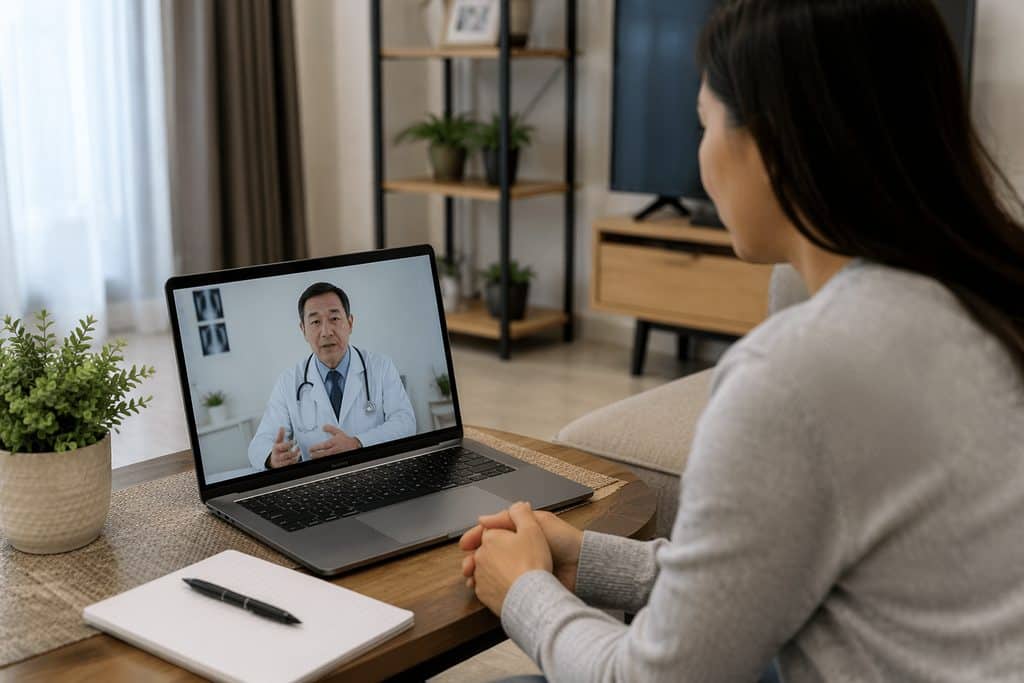
According to data from China’s National Health Commission, the country performed over 80 million MRI examinations in 2023. For international patients, the MRI scan cost China after treatment typically ranges from $150 to $600 at top-tier public hospitals — a fraction of what the same scan costs in the United States, where a contrast-enhanced MRI frequently exceeds $2,500 before insurance. But cost is only one part of the question. The real issue is how the process actually works when you are not a local patient, you do not speak Mandarin, and your referring oncologist is 7,000 kilometers away.
This guide walks through the mechanics of a follow-up MRI after cancer treatment or surgery in China — what to expect, what it costs, how long it takes, and where the process can break down. No marketing gloss. Just the operational reality, based on how China’s hospital system actually functions for international patients.
How This Actually Works, Step by Step
A follow-up MRI is rarely a walk-in event. It is a sequence with dependencies. Miss one step and you lose days. Here is the real flow:
Step 1: You send your prior imaging and treatment summary. This means the original MRI report, the surgical notes if applicable, your chemotherapy or radiation summary, and the specific clinical question your doctor wants answered. Without the clinical question — “is there residual tumor?” versus “is the graft intact?” — the radiologist cannot protocol the scan correctly. We have seen patients send a CD with 1,400 DICOM images but no report, and no question. That adds 2–3 days of back-and-forth.
Step 2: A Chinese radiologist reviews whether the scan is appropriate and what sequences are needed. In China’s public hospital system, a radiologist must approve the imaging order. For international patients going through a hospital’s international department, this review happens before you book a flight. The radiologist may ask for a specific contrast protocol or a different magnet strength depending on the body part.
Step 3: You get a date and a price quote. Appointment lead time at top public hospitals in Beijing or Shanghai is usually 3 to 10 days for a non-urgent follow-up MRI. Private international hospitals can often do next-day or same-week scheduling.
Step 4: You arrive, register, and the scan happens. The scan itself takes 20 to 45 minutes depending on the region and whether contrast is used. A bilingual coordinator handles registration, payment, and getting you to the right building. Public hospital campuses are enormous — a single hospital can have 10,000+ outpatient visits per day. Finding the MRI suite without help is genuinely difficult.
Step 5: The report is written, translated, and delivered. Chinese radiologists typically issue a preliminary report within 24 hours and a final signed report within 2–3 working days. Translation into English adds another day unless the hospital’s international department has English-speaking radiologists on staff, which some major centers do.
What a Follow-Up MRI After Cancer Treatment Actually Involves
Oncology follow-up imaging is not the same as a routine diagnostic scan. The radiologist is not looking for “something wrong.” They are comparing against a baseline — your pre-treatment or immediate post-treatment scan — and measuring change. That comparison is the entire point.
For a patient who had a liver resection for hepatocellular carcinoma, the follow-up MRI at 3 months is looking for new arterial-phase enhancing lesions. The protocol will include dynamic contrast phases: arterial, portal venous, and delayed. If the radiologist does not know you had surgery, they may not include the right sequences. This is why the referral information matters so much.
For a brain tumor patient, the question is often pseudoprogression versus true progression. That requires perfusion-weighted imaging and sometimes spectroscopy. Not every MRI machine in every Chinese hospital has the software for advanced perfusion analysis. The machine matters, but so does the radiologist’s subspecialty. A general radiologist reading a post-glioblastoma scan is not the same as a neuroradiologist who reads 40 brain tumor cases a week.
So when you ask how does a follow up MRI work after cancer treatment abroad, the honest answer is: it works well only when the scan is protocoled for the specific clinical question, read by a radiologist who understands that question, and compared against your actual prior imaging — not just the written report. All three conditions must be met.
A Realistic Timeline
Here is what the process looks like from the day you decide to pursue a follow-up MRI in China to the day you have a translated report in your hands. Ranges reflect the difference between private international hospitals and top public hospital international departments.
| Stage | What Happens | Realistic Duration |
|---|---|---|
| Day 1–3 | You send prior imaging, reports, and the clinical question. Our team translates and submits to the radiology department. | 1–3 days |
| Day 3–7 | Radiologist reviews the request, confirms the appropriate protocol, and the hospital issues a quote. | 2–4 days |
| Day 5–14 | You arrange travel. S2 visa processing at your local Chinese embassy or consulate typically takes 4–7 working days once documents are complete. | 4–7 working days |
| Day 8–17 | You arrive. Registration, payment, and the MRI scan itself happen in one day at most private international hospitals. Public hospital international departments may split registration and scanning across two days. | 1–2 days |
| Day 9–20 | Preliminary radiology report issued and reviewed. | 24–48 hours after scan |
| Day 11–24 | Final signed report delivered, with English translation if required. | 2–4 working days after scan |
Total realistic window: 2 to 4 weeks from first contact to final translated report. The variables are visa processing speed, hospital appointment lead time, and whether your prior imaging is complete. A patient who arrives with everything organized can complete the scan and get a preliminary read within 5 days of landing.
And the question patients often ask — how soon can I get an MRI after surgery in China — depends on the surgery. For most soft tissue and abdominal surgeries, a follow-up MRI is scheduled 4 to 12 weeks post-operatively, once surgical inflammation has subsided. Your surgeon will specify the window. The hospital cannot override that clinical judgment.
What Can Go Wrong — and What Happens Then
Here is where honesty matters more than reassurance.
Your prior imaging is incomplete or in a format the Chinese hospital cannot open. Some hospitals use proprietary PACS viewers. The fix: request a DICOM export on a USB drive or via a secure upload link. We handle format conversion before submission. If images are genuinely missing, the radiologist may ask you to repeat a baseline scan locally before traveling — which defeats the purpose. This is why we ask for imaging review before you book a flight.
The appointment gets delayed. Public hospital MRI suites run from early morning to late evening, often 7 days a week, but emergency and inpatient cases take priority. An outpatient follow-up scan can be pushed by a day or two. The recourse: private international hospitals have more predictable scheduling, and some public hospital international departments can hold a slot with a deposit. We will tell you which hospitals are more reliable for scheduling before you commit.
The radiologist identifies something ambiguous. This is not a failure — it is the nature of post-treatment imaging. Scar tissue versus recurrence is genuinely difficult. What happens then: the hospital may recommend a short-interval repeat scan in 6–8 weeks, or a PET-CT if available. You get a clear recommendation, not a vague “follow up with your doctor.” We can coordinate that repeat scan or send the full imaging to your home oncologist for a second read.
Your insurance refuses to cover a scan abroad. Many Western insurers will not pre-authorize an MRI in China unless it is part of an approved medical tourism package. So the question is follow up MRI included in medical tourism package China has a nuanced answer: some comprehensive packages include one follow-up scan within a defined window, but most standalone imaging is paid out of pocket and then submitted for reimbursement. We will give you the itemized invoice and imaging codes your insurer needs. Approval is never guaranteed.
MRI Scan Cost China After Treatment: What the Numbers Mean
The MRI scan cost China after treatment varies by hospital tier, magnet strength, contrast use, and whether you go through a public hospital international department or a private international hospital. Here is what you can expect to pay in 2026:
| Setting | MRI Without Contrast | MRI With Contrast | Typical Report Turnaround |
|---|---|---|---|
| Top public hospital, standard outpatient | $120–$250 | $200–$400 | 2–3 working days |
| Top public hospital, international department | $250–$450 | $350–$600 | 1–3 working days |
| Private international hospital (JCI-accredited) | $400–$700 | $600–$1,000 | 24–48 hours, often same-day preliminary |
For comparison, a contrast-enhanced brain MRI in the United States averages $2,500–$4,000 before insurance, and in Western Europe typically €800–€1,500. Even at the high end of China’s private international hospital pricing, you are paying less than half the U.S. cash price.
The follow up MRI price Shanghai specifically tends to sit at the lower end of the public hospital international department range — Shanghai has dense competition among top hospitals, including Zhongshan Hospital and Ruijin Hospital, which keeps pricing disciplined. Beijing is comparable. Smaller cities like Chengdu or Hangzhou can be 20–30% cheaper.
What you are paying for in the international department is not a better magnet. It is English-speaking coordination, faster report turnaround, and a scheduler who answers email. For a follow-up scan where your home oncologist needs the images promptly, that operational speed has real value.
Practical Considerations: Records, Visa, Payment, and Follow-Up at Home
Before you book anything, get these four things in order.
Records. You need the actual DICOM files from your prior MRI, not just the written report. The Chinese radiologist will load them side by side with your new scan. If you only have a PDF report, the comparison is weaker. Request DICOM export from the facility that did your original scan — it is your legal right in most countries.
Visa. Medical treatment in China falls under the S2 visa category, which covers short-term private affairs including medical treatment. Your accompanying family member also applies for an S2. Processing typically takes 4–7 working days, but check with your local Chinese embassy because requirements shift. You will need an invitation or supporting letter from the hospital. We help prepare that documentation. Do not apply for an M visa — that is for commercial and trade activities, not medical care.
Payment. Chinese public hospitals require payment before the scan. Cash, UnionPay, and major international credit cards are accepted at international departments, but confirm in advance. Private international hospitals often accept direct insurance billing. If you plan to claim reimbursement, get an itemized invoice with English translation and the relevant CPT or ICD codes before you leave.
Follow-up at home. The report you receive in China is a radiology report, not a treatment plan. Your home oncologist or surgeon should review the images and report together. We can provide the full DICOM set on a USB drive or secure download link so your home team can load it into their own PACS. Some patients also request a written second opinion from a Chinese specialist to accompany the radiology report — useful when your home team wants a second perspective on ambiguous findings.
Frequently Asked Questions
The MRI scan cost China after treatment typically ranges from $150 to $600 at top public hospitals, and $400 to $1,000 at private international hospitals. The same scan in the US often costs $2,500 to $4,000 before insurance. The gap is widest for contrast-enhanced and multi-sequence studies.
Yes, through a hospital’s international department or a private international hospital. Standard public outpatient departments generally require in-person registration, but international departments can pre-schedule with your medical records and a deposit. You cannot, however, book a specific radiologist — the department assigns the reading radiologist based on subspecialty and schedule.
Some comprehensive surgical packages include one follow-up scan within a defined post-operative window, but standalone follow-up imaging is usually billed separately. Always ask for the package inclusions in writing. If imaging is not included, expect to pay $150–$1,000 depending on the hospital tier and contrast requirements.
For most surgeries, your surgeon will recommend a window of 4 to 12 weeks post-operatively, once surgical inflammation has resolved enough for a meaningful read. The hospital cannot override that clinical judgment. You can pre-schedule the scan for that window, but the timing is driven by your surgeon’s protocol, not by appointment availability.
Yes, as long as you obtain the DICOM files, not just the written report. Request a DICOM export on USB or via secure download before you leave. Most PACS systems in the US and Europe can import standard DICOM files without issue. The written report will be in Chinese unless you request English translation, which international departments provide.
Your Next Step
A follow-up MRI after treatment is a logistical puzzle with clinical stakes. The scan itself is straightforward. The hard parts are getting the protocol right, getting the images to the right radiologist, and getting a report your home team can actually use. That is the work we do at China Medical Services — coordinating imaging at top-ranked Chinese hospitals for international patients, handling translation, scheduling, and delivery of DICOM files. We do not interpret scans or give medical advice. We make the process run cleanly so your doctors can do their job.
If you are considering a follow-up MRI in China, start with a conversation. Send us your prior imaging and the clinical question. We will tell you honestly whether it makes sense, what it will cost, and how long it will take. No obligation, no pressure. Just clarity.
For more medical information and treatment options in China, visit chinamedservices.com (China Medical Services).
