Gastric Sleeve in China: How the Procedure Works and Real Costs
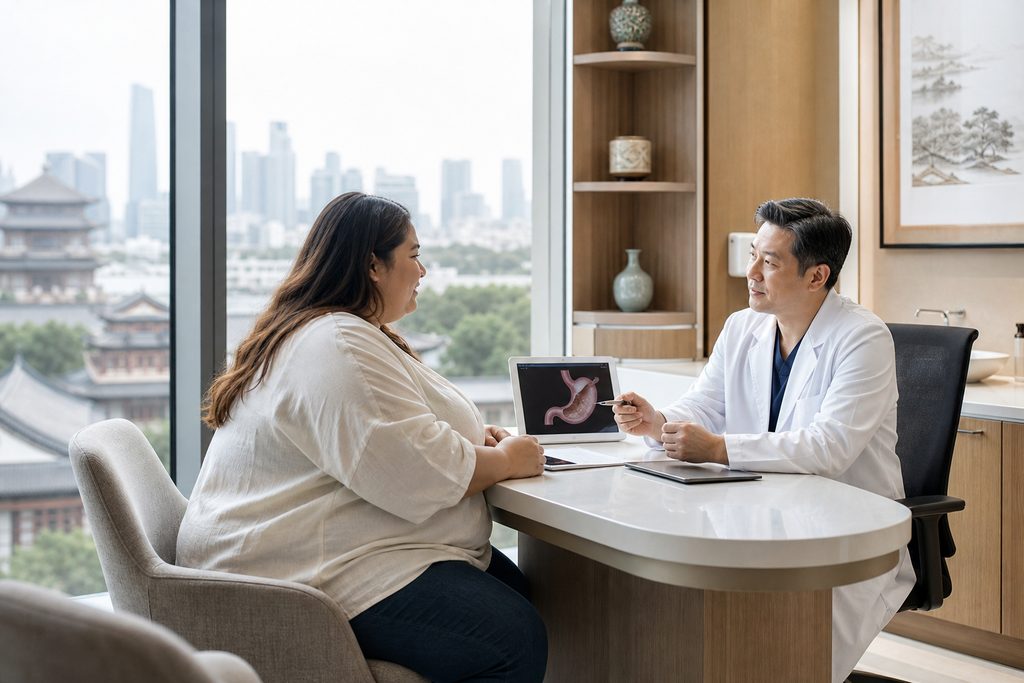
Have you ever checked the price of bariatric surgery in the United States and felt the number physically push you back from your screen? You are not alone. The gastric sleeve cost China is one of the most searched terms among patients who need the procedure but cannot justify a $20,000 hospital bill before they even book a flight. The mechanics of the surgery are identical to what you would get in Houston or London. The difference is the system around it. Our team at China Medical Services spends every day helping international patients understand that system before they commit to it.
How This Actually Works, Step by Step
You do not just land in Beijing and walk into a surgical ward. The process starts weeks before you board a plane. Here is the sequence we guide patients through.
First, you send your medical records. Blood work, previous weight loss attempts, any endoscopy reports, and a letter from your primary care physician confirming your BMI and comorbidities. Our team translates these documents into Chinese for the hospital’s bariatric department. A specialist reviews them. This review determines whether you are a candidate for a sleeve gastrectomy or whether another procedure fits better.
Second, you have a video consultation. The surgeon who will potentially operate on you reviews your case live. You discuss your weight history, your expectations, and the risks. This is not a sales call. It is a medical evaluation. You can ask about their specific experience with international patients and their complication rates.
Third, you receive a written treatment plan. It includes the proposed surgical date, the pre-operative diet you must follow, the total hospital estimate, and the exact tests you need before admission. Only after you approve this plan do you pay anything.
Fourth, you apply for your visa. We provide the hospital invitation letter and the supporting documents. The S2 visa is the correct category for short-term medical treatment in China. Processing time varies by country, but plan for two to four weeks.
Fifth, you fly to China. You complete your pre-operative tests at the hospital. You meet your surgeon in person. You sign consent forms. Surgery happens within one to three days of your arrival, assuming your tests are clear.
How Does Gastric Sleeve Surgery Work Step by Step
The question behind the search is simple: what actually happens to my stomach? The answer is mechanical, not magical.
A sleeve gastrectomy removes roughly 75 to 80 percent of the stomach. The surgeon uses a stapling device to create a narrow tube or “sleeve” from the remaining stomach tissue. The removed portion is taken out through a small incision. Nothing is rerouted. No intestines are bypassed. You keep your pyloric valve, which means food still empties normally.
The surgery takes between 60 and 90 minutes. It is performed laparoscopically through five or six small incisions. You are under general anesthesia the entire time. Most patients stay in the hospital for two to three nights. You are walking within hours of waking up. You are on a liquid diet for the first week, pureed food for the second and third weeks, and soft food for a month after that.
Why does it work? Two reasons. The smaller stomach physically restricts how much you can eat. But the removed portion of the stomach also produced most of your ghrelin — the hunger hormone. After surgery, ghrelin levels drop dramatically. Patients report feeling full faster and thinking about food less. That hormonal change is the part most people do not expect.
A Realistic Timeline
People ask “how long does it take” and expect a single number. The honest answer is a range. Here is what the actual calendar looks like for an international patient.
| Stage | Duration | What Happens |
|---|---|---|
| Document collection & translation | 5–10 days | You gather records; we translate and submit them |
| Specialist review & video consultation | 3–7 days | Surgeon evaluates your case; you speak live |
| Treatment plan & hospital estimate | 2–5 days | Written plan with surgery date and costs |
| Visa application (S2) | 14–28 days | Embassy processing time; varies by country |
| Travel & pre-op testing | 2–3 days | Arrive, complete labs, meet surgeon, sign consent |
| Surgery & hospital stay | 2–3 nights | Laparoscopic sleeve gastrectomy |
| In-country recovery | 7–10 days | Stay near hospital for follow-up and drain removal |
| Return home & remote follow-up | Ongoing | Video check-ins at 1 month, 3 months, 6 months |
The stage people forget is document translation. A missing or poorly translated lab report can delay your review by a week. That is why we handle it before submission. The stage people underestimate is visa processing. Embassies do not rush for medical travel. Apply as soon as you have your hospital invitation letter.
What Can Go Wrong — and What Happens Then
No honest advisor tells you this surgery is risk-free. It is not. The overall complication rate for sleeve gastrectomy is low — serious complications occur in roughly 2 to 4 percent of cases — but they happen. Here are the specific failure modes and what recourse you have.
Staple line leak. This is the complication surgeons worry about most. Stomach fluid leaks through the staple line into the abdominal cavity. It occurs in about 1 to 2 percent of sleeve procedures. Symptoms include fever, rapid heart rate, and severe abdominal pain within the first week. Treatment requires drainage and sometimes a second surgery. Chinese bariatric centers manage this the same way Western centers do — with immediate imaging and intervention. Ask your surgeon about their leak rate before you book. Any surgeon who says “zero” is not being honest.
Blood clot or pulmonary embolism. Obesity itself increases clot risk. Hospitals in China use compression devices and blood thinners after surgery. You will be walking within hours. The risk is real but manageable.
Acid reflux that worsens. Some patients develop new or worse GERD after a sleeve. The narrowed stomach can increase pressure. If reflux becomes severe and chronic, a conversion to gastric bypass may be needed later. This is not common, but you should know it is a possibility.
Insufficient weight loss. The sleeve is a tool, not a cure. About 10 to 15 percent of patients lose less weight than expected. This usually traces back to diet choices and eating patterns, not surgical failure. Your long-term outcome depends on what you do six months after surgery, not what happens on the operating table.
What happens if something goes wrong while you are in China? Your surgical team handles it. That is why you choose a hospital with a dedicated bariatric unit and an international patient department. They have protocols for complications. They have English-speaking coordinators. They do not leave you to figure it out alone.
Is Gastric Sleeve Safe in China for Foreigners?
This is the question every patient asks, and the answer requires nuance. The top-tier hospitals in Beijing and Shanghai are not “cheap alternatives.” They are high-volume centers that perform thousands of bariatric procedures annually. The equipment is the same laparoscopic technology used in the US and Europe. The surgeons train internationally. The complication rates at major centers are comparable to Western benchmarks.
But safety for a foreigner depends on more than the operating room. It depends on communication. It depends on whether someone explains your pre-op diet in a language you understand. It depends on whether you can ask questions during rounds. It depends on whether you know where to go if you feel unwell at 2 a.m. in a hotel room.
That is where the system matters. A public hospital’s standard ward may have limited English support. The international department or VIP wing of the same hospital will have English-speaking staff. The surgery is the same. The communication layer is different. That layer is what you are paying for when you book through a coordination service.
China’s top bariatric centers are concentrated in a few cities. Beijing has several hospitals with dedicated metabolic and bariatric surgery departments. Shanghai has comparable options. You can review our department rankings for bariatric and metabolic surgery to see which hospitals lead in procedure volume and outcomes. The Beijing hospital database and Shanghai hospital guide list specific institutions with international patient services.
Weight Loss Surgery Packages Shanghai Price
You need an S2 visa, which covers short-term private affairs including medical treatment. The hospital provides an invitation letter to support your application. Your accompanying family members apply for S2 visas as well. Processing time is typically two to four weeks, so apply early.
You cannot book a confirmed surgery date without an in-person consultation. This is a rule at Chinese public hospitals. You can, however, complete a video consultation, have your records reviewed, and receive a tentative surgical plan before you travel. The final scheduling happens after your in-person evaluation.
The serious complication rate is approximately 2 to 4 percent. The main risks are staple line leak, bleeding, blood clots, and infection. Long-term risks include acid reflux and vitamin deficiencies. Choose a high-volume bariatric center and ask your surgeon about their specific complication rates before proceeding.
Most US and European insurers do not directly cover surgery at Chinese public hospitals. You pay upfront and may file for out-of-network reimbursement if your policy allows it. Some private international hospitals in China bill Western insurers directly. Check with your insurer before committing.
Your Next Step
The decision to have gastric sleeve surgery is significant enough without adding the complexity of a foreign healthcare system. That is where we come in. China Medical Services connects international patients with top-ranked Chinese hospitals and provides the coordination layer — translation, appointment scheduling, bilingual companionship, and visa guidance —
Frequently Asked Questions
Yes. The hospitals used for international patients are JCI-accredited and follow the same international safety standards as top hospitals in the US and Europe. Surgical teams perform high volumes of procedures — often more than their Western counterparts — which studies show leads to better outcomes.
Costs vary by procedure and hospital, but international patients typically save 40-80% compared to US prices — even when factoring in travel and accommodation. A consultation with our team will give you an exact, all-inclusive quote with no hidden fees.
Send us your existing medical reports to get started. We handle everything from hospital selection and appointment scheduling to visa assistance and post-operative recovery planning. Your medical records are reviewed by the specialist before you even book a flight.
For more medical information and treatment options in China, visit chinamedservices.com (China Medical Services).
