Ankle Surgery in China: Costs, Top Surgeons, and Recovery Timeline
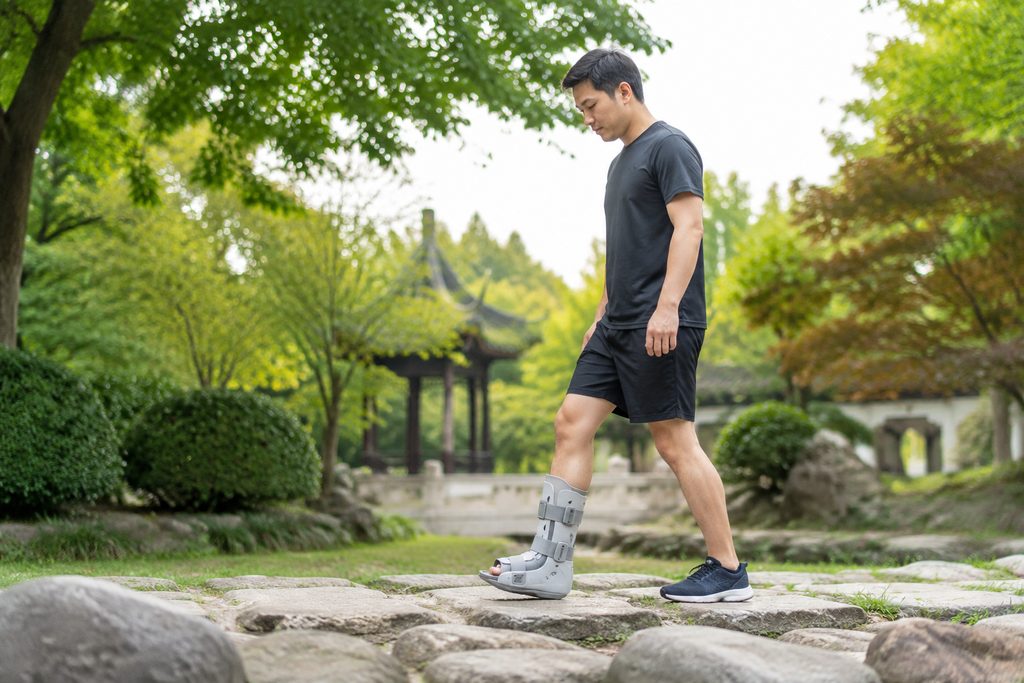
Ankle surgery cost China runs between $4,000 and $14,000 depending on the procedure, hospital tier, and implant type. That’s roughly one-fifth to one-third of what the same operation costs in the United States, where a total ankle replacement frequently exceeds $40,000 before insurance negotiations. According to the International Society of Arthroplasty Registries, China now performs over 12,000 ankle arthroplasty and fusion procedures annually across its top-tier orthopedic centers. The volume matters. Surgeons who do a procedure thousands of times see complications that occasional operators never encounter.
But cost is only one variable. Hospital selection, surgeon experience, implant availability, and post-operative follow-up all shape outcomes. This guide walks through the real process of getting ankle surgery in China as an international patient — what it costs, who does it well, how long recovery actually takes, and where things can go sideways.
How This Actually Works, Step by Step
You cannot email a Chinese hospital and book a surgery date. That’s not how the system works. The sequence looks like this:
Step 1: Gather your records. You need recent X-rays, MRI reports, and any prior surgical notes. If your documents are not in English or Chinese, get them professionally translated. Most top hospitals request imaging from within the last 6 months.
Step 2: Choose a hospital and department. This is where most international patients stall. China has 35,000+ hospitals. The top 5% — roughly 340+ facilities ranked by Fudan University’s hospital rankings or accredited by JCI — handle the overwhelming majority of complex orthopedic cases. For ankle surgery specifically, you want a hospital with a dedicated foot and ankle subspecialty within orthopedics, not a general orthopedic ward.
Step 3: Written evaluation or video consultation. You send your records to the department. A foot and ankle specialist reviews them and provides a written opinion: what procedure they recommend, whether you’re a candidate, and what the hospital would need before scheduling. This costs $100–800 depending on whether it’s a standard international department review or a top-specialist video consultation. Most patients start here because it’s far cheaper than flying to Shanghai on a guess.
Step 4: In-person consultation. If the remote review says surgery is indicated, you travel to China for a face-to-face evaluation. The surgeon examines your ankle, orders fresh imaging if needed, and confirms the surgical plan. Public hospital rules require this in-person visit before any operation can be scheduled. No exceptions.
Step 5: Surgery scheduling and admission. After the consultation, the hospital’s international department coordinates your admission. Lead times vary by hospital and surgeon demand — anywhere from 2 to 6 weeks for a standard case. Complex revisions may take longer.
Step 6: Post-operative care and discharge. Most ankle surgeries require 3–7 days in the hospital, followed by 2–3 weeks of local follow-up before you’re cleared to fly home. Your home orthopedic surgeon takes over long-term rehabilitation.
What Ankle Surgery Actually Costs in China
The primary search — ankle surgery cost China — deserves a straight answer. Prices vary by procedure type, hospital tier, implant brand, and whether you go through the standard public channel or the international/VIP department. Here’s what current market data shows:
| Procedure | China (Top Public Hospital) | China (International/VIP Dept) | United States (Average) |
|---|---|---|---|
| Ankle arthroscopy | $3,000–$5,500 | $6,000–$9,000 | $12,000–$20,000 |
| Ankle ligament reconstruction | $4,500–$7,000 | $8,000–$12,000 | $18,000–$35,000 |
| Ankle fusion (arthrodesis) | $5,000–$8,000 | $9,000–$14,000 | $25,000–$45,000 |
| Total ankle replacement | $8,000–$14,000 | $14,000–$22,000 | $40,000–$70,000 |
These are all-in surgical fees: operating room, anesthesia, surgeon, standard implant, and hospital stay. They do not include airfare, accommodation, or rehabilitation. The international department premium — roughly 1.5 to 2 times the standard channel — buys English-speaking coordination, faster appointment access, and a private room. Whether that’s worth it depends on your Chinese language ability and tolerance for navigating a massive public hospital alone.
One thing often surprises Western patients: the implant itself can be the single largest line item. If your surgeon specifies a particular prosthetic brand — such as the INFINITY or STAR ankle systems — confirm whether that exact implant is available in China and whether it’s included in the quoted price. Some international patients choose to pay extra for a Western-manufactured implant rather than a domestic equivalent. Ask before you commit.
Who Actually Does This Well? Finding the Best Ankle Surgeon in Shanghai
Searching for the best ankle surgeon Shanghai turns up a lot of noise. Here’s how to cut through it.
China’s Fudan University hospital rankings publish a specialty reputation list for orthopedics each year. Hospitals like Shanghai Sixth People’s Hospital, Peking University Third Hospital, and West China Hospital consistently appear in the top tier for orthopedic surgery. Shanghai Sixth People’s Hospital, in particular, has a dedicated foot and ankle surgery department that handles a high volume of complex reconstructions — not just routine sprains. That matters when you’re evaluating a surgeon for a revision or a failed prior operation.
But a hospital’s reputation is not the same as a specific surgeon’s skill. When you review a surgeon’s profile, look for three things:
- Annual case volume: A foot and ankle specialist doing 200+ ankle procedures per year has seen complications a general orthopedist doing 20 per year has never encountered.
- Subspecialty training: Did they complete a dedicated foot and ankle fellowship? Many top Chinese orthopedic surgeons train abroad — in the US, Germany, or Switzerland — before returning to lead departments.
- Implant familiarity: If you need a total ankle replacement, the surgeon should have experience with the specific implant system they’re recommending. Not all prosthetics suit all patients.
You can browse orthopedic department rankings across 45 specialties on our specialty hospital directory, which lists top-ranked centers by city and procedure type.
A Realistic Timeline
People underestimate the calendar. Here’s what an ankle surgery journey to China actually looks like, week by week:
| Phase | What Happens | Duration |
|---|---|---|
| Week 1–2 | Gather medical records, translate documents, submit for remote evaluation | 7–14 days |
| Week 2–4 | Written second opinion or video consultation with foot and ankle specialist | 3–10 days after submission |
| Week 4–6 | S2 visa application with hospital invitation letter | 5–15 business days depending on embassy |
| Week 6–7 | Travel to China, in-person consultation, fresh imaging | 2–4 days |
| Week 7–10 | Surgery scheduled and performed | 2–6 weeks lead time after consultation |
| Week 10–13 | Post-operative hospital stay and local follow-up | 3–7 days inpatient, 2–3 weeks local |
| Month 3–6 | Return home, continue rehabilitation with local orthopedic team | Ongoing |
The forgotten steps are document translation and visa processing. Start both early. A missing MRI report or an expired passport delays everything downstream. And if you’re considering a book ankle surgery package China option — some private international hospitals in Shanghai and Beijing do offer bundled surgical packages that include airport pickup, hospital stay, and interpreter services — read the fine print carefully. Packages typically exclude implant upgrades, extended rehabilitation, and any complication-related care.
What Can Go Wrong — and What Happens Then
Let’s be direct about failure modes. Ankle surgery has real risks, and doing it abroad adds a layer of complexity.
Infection. The risk of surgical site infection after ankle arthroplasty or fusion runs 1–3% in high-volume centers, slightly higher in revision cases. Top Chinese hospitals follow international sterile protocols, but no facility eliminates this risk. If infection occurs, you’ll need extended antibiotics, possibly additional surgery, and a longer stay than planned. Your travel insurance should cover complication-related care in China — verify this before departure.
Implant mismatch or failure. If the implant loosens or the fusion doesn’t take, you may need a revision. Revision ankle surgery is more complex than the primary operation and costs more. Ask your surgeon about their personal revision rate before you book. A good surgeon will tell you. A defensive one will dodge the question.
Language and coordination gaps. Public Chinese hospitals are enormous. The outpatient hall of a top Shanghai hospital handles over 10,000 patient visits per day. Without Chinese language ability, you will struggle to navigate registration, imaging, pharmacy pickup, and discharge paperwork. This is not a small inconvenience — it’s a structural barrier. Hiring a bilingual medical companion for $300/day eliminates most of this friction. Many international patients say the coordinator was more valuable than the surgeon’s fee.
Follow-up continuity. Your Chinese surgeon will not manage your six-month rehabilitation. That falls to your home orthopedic team. Before you leave, get a detailed discharge summary in English, including implant serial numbers, surgical approach, weight-bearing restrictions, and a phased rehab protocol. Hand this to your local surgeon the week you return.
Is Ankle Replacement Safe in China? What the Numbers Say
The question “is ankle replacement safe in China” deserves a data-driven answer, not reassurance. Here’s what published registry data and meta-analyses show.
Chinese joint replacement registries report 5-year implant survival rates for total ankle arthroplasty between 88% and 94%, depending on the implant system and patient selection. That’s comparable to European registry outcomes. The caveat: Chinese registries are younger than Sweden’s or New Zealand’s, so long-term 10- and 15-year data remains thinner. For ankle fusion, union rates in high-volume Chinese centers run 90–95%, again consistent with international benchmarks.
Safety also depends on hospital infrastructure. The top 340+ hospitals in China’s Fudan ranking system maintain anesthesia departments, ICU capacity, and infection control protocols that meet international standards. A hospital performing 500+ orthopedic surgeries per year has systems in place that a small county hospital does not. Choose accordingly.
One honest limitation: if you need a specific Western implant system that is not yet approved for sale in China, you cannot bring your own implant. Confirm implant availability before you commit to surgery abroad. Some patients discover too late that the prosthesis their US surgeon recommended is not available in China at all.
How Long Is Recovery from Ankle Fusion Surgery? A Realistic Answer
If you’re weighing fusion versus replacement, recovery time is a deciding factor. Here’s the honest timeline for ankle fusion, which remains the gold standard for end-stage arthritis in younger, active patients.
Weeks 0–2: Splint or cast, non-weight-bearing. Elevation and pain control. You’ll need help with daily tasks.
Weeks 2–6: Cast changed, still non-weight-bearing for most patients. Some surgeons allow partial weight-bearing at week 4 if X-rays show early fusion.
Weeks 6–12: Progressive weight-bearing in a walking boot. Physical therapy starts. Swelling persists for months.
Months 3–6: Transition to regular shoes. Most patients return to work and driving by month 4 if the fusion is progressing on imaging.
Months 6–12: Full fusion confirmed on CT. Residual stiffness is permanent — the fused joint does not move. That’s the trade-off: pain relief at the cost of motion.
Total ankle replacement recovery is faster in the early phase — some patients bear weight at 3–4 weeks — but the implant has a finite lifespan. Replacement suits older, lower-demand patients. Fusion suits younger, active ones. A good surgeon tells you which camp you’re in based on your age, activity level, and arthritis pattern.
Practical Considerations: Visas, Payment, and Follow-Up
You need an S2 visa for medical treatment in China. It covers short stays for private affairs, including medical care. Your hospital’s international department provides the invitation letter and treatment confirmation that the embassy requires. Family members accompanying you also apply for S2 visas. Processing takes 5–15 business days depending on your home country’s Chinese embassy. The M visa is for commercial trade and has nothing to do with medical travel — do not apply for it.
Payment is upfront. Chinese public hospitals require a deposit before admission, and you settle the balance before discharge. Most international patients pay by bank transfer or international credit card through the hospital’s international department. US insurance rarely covers elective surgery in China directly — you pay first, then submit for out-of-network reimbursement if your policy allows. Some private international hospitals in China, including those in our private hospital directory, offer direct insurance billing with major international insurers.
Language is the single biggest practical barrier. Everything from registration forms to discharge instructions is in Chinese. A bilingual medical companion handles the logistics so you can focus on recovery. Airport transfer, hospital navigation, pharmacy pickup, and translation during consultations — these are the things that make or break the experience.
For city-specific hospital options, see our guides to orthopedic hospitals in Shanghai and top hospitals in Beijing. Both cities host the highest concentration of Fudan-ranked orthopedic departments in China.
Frequently Asked Questions
Ankle surgery cost China runs $4,000–$14,000 for most procedures, versus $12,000–$70,000 in the US. The exact figure depends on the procedure type, hospital tier, implant brand, and whether you use the standard or international department. Always request a written itemized quote before committing.
In top-tier Fudan-ranked hospitals, 5-year implant survival rates for total ankle replacement run 88–94%, comparable to European registries. Safety depends heavily on hospital selection. Choose a high-volume foot and ankle center, not a general orthopedic ward at a smaller facility.
Most patients are non-weight-bearing for 6 weeks, transition to a walking boot by week 8, and return to normal shoes by month 3–4. Full fusion confirmation on CT typically happens between 6 and 12 months. The fused joint remains permanently stiff — that’s the intended outcome.
Some private international hospitals offer surgical packages that bundle hospital stay, interpreter services, and airport transfers. However, no reputable public hospital will schedule surgery without an in-person consultation first. Remote evaluation can confirm you’re a candidate, but the final surgical plan requires a face-to-face visit.
Ankle arthroscopy in China costs $3,000–$9,000 depending on hospital tier, while the same procedure in the US or Western Europe runs $12,000–$20,000. The international department premium in China narrows the gap somewhat, but the cost advantage remains substantial even at the higher end.
Your Next Step
Ankle surgery in China is a real, data-backed option for patients facing long wait times or high out-of-pocket costs at home. The key is choosing the right hospital and surgeon — not just the cheapest quote. Our team at China Medical Services helps international patients navigate the process: hospital matching based on your specific diagnosis, remote consultation coordination, and on-the-ground support once you arrive. We do not perform surgery, and we do not promise outcomes. We do help you get the right records in front of the right specialist, which is often the hardest part. When you’re ready to explore whether this path makes sense for your ankle, For more medical information and treatment options in China, visit chinamedservices.com (China Medical Services).
