Can You Get Parkinson Treatment in China? Costs, Hospitals & DBS Explained
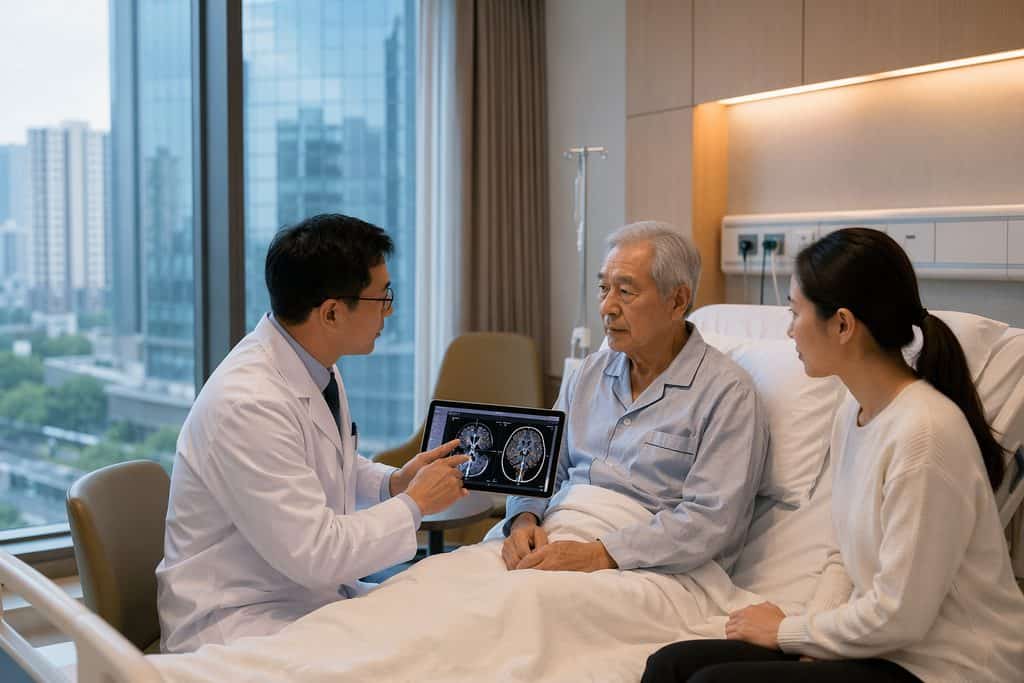
Parkinson’s disease treatment cost China is, for many Western patients, the first number they search after a diagnosis. And the gap is stark. A deep brain stimulation (DBS) procedure that runs $35,000–$100,000 in the United States typically lands between $25,000 and $40,000 at a top-tier Chinese hospital. That is not a typo. But cost is only one part of the question. The deeper question is whether the clinical quality, surgical volume, and post-operative care justify getting on a plane. Our team at China Medical Services has spent years helping international patients evaluate exactly that. This article breaks down what you need to know before you decide.
Key Takeaways
- China’s top neurology centers perform over 500 DBS implantations annually at single hospitals — volumes that exceed most Western centers.
- Total DBS cost in China is roughly one-third to one-half of US pricing, including device, surgery, and hospital stay.
- Language, hospital navigation, and post-operative programming are real barriers — not insurmountable, but they require planning.
- Stem cell therapy for Parkinson’s in China is largely experimental and not approved as standard care — understand this before paying for anything.
The Problem: Parkinson’s Care Costs Are Crushing Western Patients
According to a 2022 study published in npj Parkinson’s Disease, the average annual cost of Parkinson’s care in the United States is approximately $25,000 per patient, with DBS surgery adding a one-time cost that routinely exceeds $60,000 when device, operating room, anesthesia, and hospitalization are combined. In the UK, NHS wait times for DBS assessment have stretched beyond 18 months in some regions. In Canada, patients wait an average of 12–24 months from referral to surgery.
That is the reality for a progressive neurodegenerative disease. Every month of waiting means more tremor, more rigidity, more lost independence. And for patients whose medication response is wearing off — the so-called “on-off” fluctuations — the delay is not just inconvenient. It is functionally disabling.
Now add insurance. Many US plans cover DBS but with high deductibles and out-of-network exclusions. Self-pay patients face the full bill. That is where the search for alternatives begins.
Why China Delivers Results for Parkinson’s Treatment
China’s neurological surgery sector has scaled up faster than almost anywhere else on earth. The reasons are structural, not accidental.
Clinical Volume Drives Surgical Precision
A single top-tier Chinese hospital — such as Ruijin Hospital in Shanghai or Xuanwu Hospital in Beijing — performs between 400 and 600 DBS procedures per year. Compare that to the average US academic center, which might do 50 to 100 annually. Volume matters in DBS because electrode placement accuracy is measured in millimeters. A surgeon who has done 3,000 implantations has seen anatomical variations that a surgeon who has done 300 has not.
China’s functional neurosurgery teams also benefit from centralized referral networks. Patients from across the country funnel into a handful of elite centers. That concentration creates a feedback loop: more cases, more experience, better outcomes, more referrals.
Technology Adoption Without the Wait
Chinese hospitals were early adopters of directional leads and rechargeable implantable pulse generators (IPGs). The latest rechargeable devices — which can last 15 years before replacement — are widely available at major centers. In some Western systems, patients wait years for access to the newest hardware because of procurement cycles and budget constraints. Chinese centers often stock multiple device brands and models, letting surgeons match hardware to the patient’s specific symptoms.
That is a practical advantage. Not a marketing slogan.
Cost Advantage Without Quality Compromise
Lower cost does not mean lower quality here. It means different economics. Chinese hospital labor costs are lower. Device manufacturers price differently for the Chinese market. Hospital stays are shorter because post-operative monitoring is efficient. The result: a DBS procedure that would cost $60,000 in the US can cost $28,000–$38,000 in China at a Fudan-ranked hospital. Medication costs are also lower — levodopa and dopamine agonists are typically 40–70% cheaper.
Is the quality the same? For DBS specifically, published outcomes from Chinese centers show motor improvement rates comparable to Western benchmarks. The Chinese Medical Journal reported in 2021 that DBS patients at major Chinese centers experienced a 40–60% improvement in Unified Parkinson’s Disease Rating Scale (UPDRS) motor scores — in line with international outcomes.
Is Deep Brain Stimulation Available in China? Yes — Here Is How It Works
Yes. Deep brain stimulation is available in China at multiple top-tier hospitals. The process differs from what Western patients may expect, so understanding the sequence matters.
The standard pathway at a major center like neurology departments in Fudan-ranked hospitals works like this:
- Step 1 — Remote records review: You send your medical records, medication history, recent MRI, and UPDRS scores. A neurologist reviews them. This is where a written second opinion or video consultation helps determine if you are a candidate.
- Step 2 — In-person evaluation: If the records suggest you are a candidate, you travel to China for a levodopa challenge test and neuropsychological assessment. This typically takes 2–3 days.
- Step 3 — Surgery scheduling: After approval, surgery is scheduled. At high-volume centers, the wait is usually 1–3 weeks, not months.
- Step 4 — Implantation and initial programming: The surgery itself takes 3–6 hours. You stay in the hospital for 5–7 days. Initial programming happens before discharge.
- Step 5 — Follow-up programming: DBS requires fine-tuning over weeks and months. Many centers offer remote programming for international patients after they return home.
Total time in China for the full surgical pathway: 2 to 4 weeks. Compare that to a 12-month wait in some Western systems.
How Much Does Parkinson’s Stem Cell Therapy Cost in Beijing? A Reality Check
This is the question we get asked most often — and the one that requires the most caution. Stem cell therapy for Parkinson’s is not a standard, approved treatment in China. It is experimental. Clinical trials exist. Some private clinics offer it. But no major regulatory body — including China’s NMPA — has approved stem cell therapy as a routine Parkinson’s treatment.
Prices quoted by clinics in Beijing for experimental stem cell procedures range from $20,000 to $50,000 per treatment course. We have seen higher quotes. But here is the honest truth: there is no established evidence that these treatments reverse Parkinson’s or provide lasting benefit beyond placebo. The International Society for Stem Cell Research has repeatedly warned patients about unproven stem cell interventions.
If you are considering this path, ask for the clinical trial registration number. Ask for published outcome data. Ask who the principal investigator is. If the clinic cannot answer those three questions, walk away. We tell every patient the same thing: DBS and medication optimization are the evidence-based treatments. Stem cell therapy is a research question, not a treatment plan.
Important: No legitimate hospital in China offers guaranteed outcomes for Parkinson’s treatment. Be wary of any clinic promising “cure” or “reversal.” Parkinson’s is managed, not cured.
Best Neurology Hospital for Parkinson’s Shanghai: What the Rankings Actually Show
For medical treatment in China, the correct visa category is S2 — a short-stay visa for private affairs, including medical treatment. The M visa is for commercial and trade activities, not medical care. You will need supporting documents from the hospital, typically an invitation letter or treatment confirmation from the international medical department. Family members accompanying you also apply for S2 visas. Processing time is usually 1–2 weeks, but check with the Chinese embassy or consulate in your country for current requirements. We never guarantee visa approval — that is the consulate’s decision.
Chinese public hospitals require prepayment for surgery. You deposit funds with the hospital, and charges are deducted as services are provided. International medical departments often accept international credit cards and bank transfers. Private international hospitals — like United Family or Jiahui — may bill insurance directly.
Most international insurance plans do not cover treatment in China unless you have a specific international plan. Check with your insurer before committing. Some patients pay out of pocket and seek reimbursement later. Reimbursement is never guaranteed.
Records: Bring Everything, Translated
Bring your complete medical records: diagnosis, medication list, MRI images (on CD or USB), UPDRS scores, and any prior DBS evaluations. Have key documents translated into Chinese or English. The hospital’s international department can help with translation, but having your records organized before you arrive saves days.
Language: You Will Need Help
Even at international medical departments, not every nurse, technician, and pharmacist speaks English. The operating room team may speak limited English. A bilingual medical companion — someone who handles registration, queueing, payment, translation, and navigation — is not a luxury. It is the difference between a smooth process and a stressful one. Our team provides this service, but we are transparent about why it exists: Chinese hospitals are large, busy, and not designed for non-Chinese speakers.
Frequently Asked Questions
How much does Parkinson’s treatment cost in China compared to the US?
For DBS surgery, total cost in China ranges from $25,000 to $40,000 including device, surgery, and hospitalization. In the US, the same procedure typically costs $35,000 to $100,000. Medication costs are also 40–70% lower in China. Parkinson’s disease treatment cost China varies by hospital, device brand, and case complexity — always get a written quote before committing.
Is deep brain stimulation available in China for foreign patients?
Yes. Major centers like Ruijin Hospital in Shanghai and Xuanwu Hospital in Beijing accept international patients for DBS. The pathway requires an in-person evaluation first. You cannot book surgery remotely. The evaluation typically takes 2–3 days, and surgery can often be scheduled within 1–3 weeks after approval.
What if something goes wrong during treatment in China?
Top-tier Chinese hospitals carry malpractice insurance and have international patient departments that handle complications. Surgical complication rates for DBS in China are comparable to Western benchmarks — infection rates around 2–5%, hardware complications under 5%. But you should understand that follow-up care after you return home is your responsibility. Confirm the hospital offers remote programming support before you leave.
Can I book a Parkinson’s treatment package in China from overseas?
You can book a coordination package — which includes records review, appointment scheduling, translation, and on-the-ground support — but not the surgery itself. Surgery requires in-person evaluation. Any service promising to book DBS surgery without seeing you first is not legitimate.
Your Next Step
If you are weighing Parkinson’s treatment options, the decision comes down to three things: surgical volume, total cost, and post-operative support. China’s top neurology centers deliver on the first two. The third requires planning. Our team at China Medical Services helps international patients evaluate whether Chinese hospitals are the right fit — we coordinate records review, arrange video consultations with specialists, and provide on-the-ground support if you decide to travel. We are not a hospital. We do not diagnose or treat. We are the bridge between you and the medical expertise you need. If you want to understand your options clearly, start with a free consultation. No pressure. Just answers.
For more medical information and treatment options in China, visit chinamedservices.com (China Medical Services).
