Meniscus Repair Cost in China: 2026 Price Guide for Foreign Patients
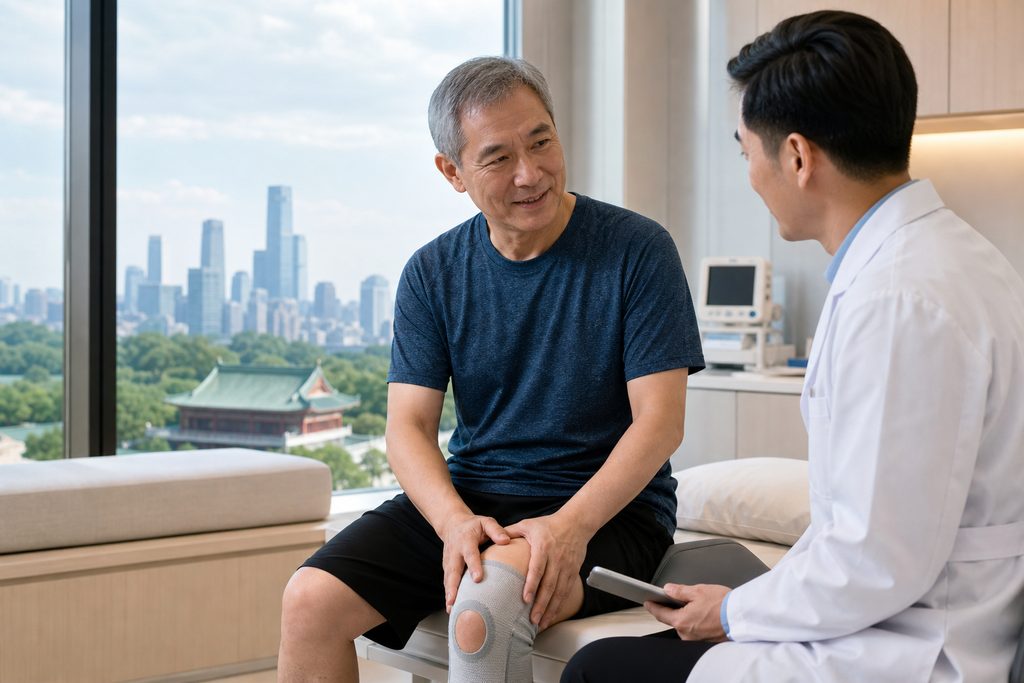
Meniscus Repair Cost in China: What International Patients Actually Pay in 2026
When 42-year-old Michael tore his medial meniscus playing recreational soccer in Manchester, his orthopedic surgeon quoted him £7,500 for arthroscopic repair at a private UK hospital. The NHS wait time was 11 months. He started searching for alternatives and typed “meniscus repair cost China” into Google at 2 a.m. What he found surprised him: top-tier Chinese orthopedic centers performing the same procedure for a fraction of the price, often within weeks, not months.
Michael is not alone. Hundreds of international patients travel to China each year for knee surgery. The meniscus repair cost China hospitals quote typically lands between $4,000 and $9,000 USD for the complete surgical package, depending on the hospital tier, surgeon seniority, and whether you choose the standard public pathway or the international VIP channel. That figure includes surgeon fees, anesthesia, operating room time, a 3–5 day hospital stay, basic rehabilitation instruction, and post-operative imaging. Compare that to the United States, where the same arthroscopic meniscus repair runs $15,000 to $40,000 before insurance adjustments, or Germany, where private clinics charge €8,000–€14,000. The math is not subtle.
But cost is only one variable. Safety, surgeon volume, hospital accreditation, and the practical mechanics of traveling to China for surgery matter just as much. This guide covers what you need to know before booking a flight.
How This Actually Works, Step by Step
The path from your living room to a Chinese operating table is more structured than most people assume. Here is the sequence, based on how our team at China Medical Services has coordinated cases for patients from the UK, US, Australia, and the Gulf states.
Step 1: You send your existing records. This means your MRI images (DICOM files preferred), the radiologist’s written report, your surgeon’s notes if you have them, and a brief summary of your symptoms and activity goals. You do not need a perfect translation. We handle that.
Step 2: A Chinese orthopedic specialist reviews your case. For meniscus injuries, this is typically a sports medicine surgeon at a top orthopedic department. They assess tear location, pattern, and whether repair is even indicated — some tears do better with partial meniscectomy or conservative management. You receive a written second opinion, usually within 5–7 business days.
Step 3: You decide whether to proceed. If surgery is recommended and you want to move forward, we coordinate with the hospital’s international department to schedule your outpatient consultation and surgery slot. Public hospitals in China do not let overseas patients book surgery directly without an in-person consultation first. The international VIP channel is the exception — it allows pre-arranged scheduling at roughly 1.5–2× the standard price.
Step 4: You apply for your visa. Medical travel to China uses the S2 visa, annotated for treatment purposes. You will need an invitation letter from the hospital, your passport, a completed application form, and proof of accommodation. Processing time varies by consulate, but most patients receive approval within 1–3 weeks.
Step 5: You arrive, consult, and undergo surgery. Most hospitals schedule the in-person consultation 1–2 days before the operation. The surgery itself takes 60–90 minutes for a standard meniscus repair. You stay in the hospital for 3–5 days, then recover at a nearby hotel or serviced apartment before flying home.
Meniscus Repair Cost China: Breaking Down the Numbers by City and Hospital Tier
Not all Chinese hospitals charge the same. The spread is wide, and understanding it helps you avoid overpaying or under-securing care.
| Hospital Category | City Examples | Estimated Total Cost (USD) | What You Get |
|---|---|---|---|
| Public Grade-A tertiary, standard pathway | Beijing, Shanghai, Guangzhou, Chengdu | $4,000 – $6,500 | Experienced surgeons, basic wards, Chinese-language environment, longer in-person registration process |
| Public Grade-A tertiary, international/VIP department | Beijing, Shanghai, Hangzhou | $6,500 – $9,000 | Senior surgeons, English-speaking coordinators, private rooms, expedited scheduling |
| Private international hospital (JCI-accredited) | Shanghai, Beijing, Shenzhen | $8,000 – $12,000 | Western-style care, direct insurance billing, English-speaking staff throughout |
These ranges reflect what we have seen in actual case coordination, not brochure prices. The arthroscopic knee surgery price Shanghai patients encounter at public hospital international departments tends to sit at the upper end of the public range, reflecting Shanghai’s higher cost base and concentration of top-ranked orthopedic programs. Beijing is comparable. Second-tier cities like Chengdu, Wuhan, or Xi’an often come in 15–25% lower for equivalent clinical quality.
What drives the price difference between the standard pathway and the VIP international channel? Not the surgeon’s skill — the same attending physician operates in both. The premium buys you English-language coordination, faster appointment scheduling, a private room, and a liaison who handles registration, payment, and discharge paperwork. For a foreign patient with no Chinese language ability, that liaison is not a luxury. It is the difference between a manageable process and a genuinely stressful one.
For context on hospital quality, our database covers 340+ top-ranked hospitals across 37 cities, selected from the Fudan University hospital rankings and JCI accreditation lists. These represent roughly the top 5% of China’s 35,000+ hospitals.
A Realistic Timeline
People underestimate the lead time. Here is what a typical meniscus repair journey looks like from first contact to walking again.
| Stage | Duration | What Happens |
|---|---|---|
| Document collection and translation | 3–7 days | You gather MRI files and records; we translate and format them for the Chinese hospital |
| Specialist review and written second opinion | 5–10 days | A Chinese orthopedic surgeon reviews your case and issues a written assessment with treatment recommendations |
| Hospital confirmation and scheduling | 1–3 weeks | The hospital confirms your consultation and surgery window; you receive an official invitation letter |
| Visa processing | 1–3 weeks | S2 visa application at your local Chinese consulate; timing varies significantly by country |
| Travel and in-person consultation | 2–3 days before surgery | You arrive, meet the surgeon, complete pre-operative tests |
| Surgery and hospital stay | 3–5 days | Arthroscopic meniscus repair under general or spinal anesthesia |
| Local recovery before flying home | 7–14 days | Wound check, early physical therapy, suture removal if needed |
| Full return to sport | 4–6 months | Guided rehabilitation, ideally with a local physiotherapist at home |
Total time from first message to surgery: typically 6–10 weeks. The visa step is the least predictable. Some consulates process S2 applications in five business days; others take three weeks or more. Plan around that uncertainty.
What Can Go Wrong — and What Happens Then
Honesty matters here. Traveling abroad for surgery carries real risks, and you should understand them before committing.
Your tear is not repairable. Not every meniscus tear can be sutured. If the tear is in the avascular zone or is severely degenerative, the surgeon may recommend a partial meniscectomy instead — trimming the damaged tissue rather than repairing it. This changes the procedure, the recovery timeline, and potentially the cost. A good second opinion will flag this possibility before you travel. But the final decision happens on the operating table, under arthroscopic visualization. You should sign consent forms that explicitly cover this contingency.
The surgeon you wanted is unavailable. Top specialists have busy schedules. If a particular surgeon’s slot shifts due to an emergency or administrative change, the hospital will typically offer an alternative from the same department. You have the right to decline and reschedule, but that may mean extending your stay or returning home and coming back. This is rare, but it happens.
Complications occur. Infection rates for arthroscopic knee surgery in Chinese top-tier hospitals are low — typically under 1% — but not zero. Deep vein thrombosis, nerve injury, and stiffness are all documented risks of meniscus surgery anywhere in the world. Chinese hospitals manage these complications competently. The practical challenge is that if a complication arises after you return home, your local surgeon will need to take over management. That handoff works best when you leave China with complete operative notes, discharge summaries, and imaging in English.
Insurance refuses to reimburse. Many Western insurers will not cover elective surgery performed in China, or they reimburse only a fraction of the cost. Some international insurers do cover treatment at JCI-accredited Chinese hospitals. Check your policy before you book anything. The private international hospitals in our JCI-accredited network offer direct insurance billing, which simplifies this significantly.
Is Meniscus Repair Safe in China? What the Data Shows
The short answer is yes, at the right hospitals. The longer answer requires understanding what “safe” means in a Chinese context.
China’s top orthopedic centers perform enormous volumes of arthroscopic knee surgery. A single high-volume sports medicine department in Shanghai or Beijing may complete 3,000–5,000 arthroscopic knee procedures annually. Volume correlates with outcomes in orthopedic surgery — surgeons who perform a procedure hundreds of times per year simply have lower complication rates than those who do it dozens of times. This is not a China-specific phenomenon. It is true in the US, Germany, and everywhere else.
Infection control at Fudan-ranked public hospitals and JCI-accredited private facilities follows international protocols. Operating rooms are modern, equipment is current, and anesthesia teams are experienced. The gap between a top Chinese hospital and a top Western hospital is far smaller than most Western patients assume. The gap between a top Chinese hospital and an average Chinese hospital is much larger — which is why hospital selection matters enormously.
So when people ask is meniscus repair safe in China, the honest answer is: at a top-tier orthopedic center, the risk profile is comparable to what you would face at a good Western hospital. At an unvetted facility, it is not. This is precisely why we maintain a curated database rather than a comprehensive directory. The orthopedics department rankings on our site draw from the Fudan specialty reputation list, which ranks hospitals by peer assessment within each of 45 specialties.
Best Orthopedic Hospital for Knee Surgery China: How to Evaluate Your Options
Choosing a hospital from 8,000 kilometers away is hard. Here is what actually matters.
Specialty reputation over general reputation. A hospital may be excellent at cardiac surgery and mediocre at orthopedics. The Fudan specialty rankings evaluate hospitals within each discipline separately. For meniscus repair, you want a hospital ranked in the top 10 for orthopedics or sports medicine, not just a famous general hospital. Beijing, Shanghai, and Chengdu all host multiple top-10 orthopedic programs.
Arthroscopic case volume. Ask directly: how many meniscus repairs does this department perform per year? A good answer is 500 or more. A vague answer is a red flag.
Surgeon experience and language. The surgeon’s technical skill matters more than their English ability — a translator can bridge the language gap, but no amount of communication fixes a technically poor repair. That said, many senior orthopedic surgeons at Chinese international departments have trained or completed fellowships in the US, UK, Germany, or Japan. Ask about their background.
Rehabilitation infrastructure. Meniscus repair outcomes depend heavily on post-operative rehabilitation. A hospital with an integrated physiotherapy department and a structured rehab protocol will serve you better than one that discharges you with a sheet of paper. Ask what rehab support is included in your package.
When patients ask us about the best orthopedic hospital for knee surgery China, we typically start by reviewing their MRI and functional goals, then match them with two or three hospitals from our ranked database that fit their budget and preferred city.
Practical Considerations: Records, Visa, Payment, and Follow-Up
These are the details that make or break a medical trip.
Medical records. Bring everything: MRI DICOM files on a USB drive, written reports, prior surgical notes if relevant, and a list of current medications. Digital copies are fine. Chinese hospitals will want their own imaging anyway — a fresh MRI is often required before surgery, which adds $300–$600 to your total cost.
Visa category. Use the S2 visa for medical treatment, annotated with the purpose of your visit. Your accompanying family member also applies for an S2. Do not apply for an M visa — that is for commercial and trade activities, not medical care. The hospital’s international department will provide the invitation letter you need for your application.
Payment. Public hospitals in China require pre-payment before surgery. You will typically deposit the estimated total cost upfront, and the hospital settles the final bill at discharge. Credit cards are accepted at international departments, though some hospitals charge a processing fee. Private international hospitals often bill your insurer directly.
Language. Even at top public hospitals, the standard pathway operates in Chinese. The international department provides English-speaking coordinators, but the nursing staff on the ward may not speak English. A bilingual medical companion who stays with you through registration, surgery day, and discharge eliminates most of the friction. This is not a concierge luxury — it is a practical necessity for most foreign patients.
Follow-up at home. Meniscus repair rehabilitation lasts months. Before you leave China, get a written rehab protocol in English, your operative report, and your post-operative MRI if one was taken. Your local physiotherapist will need these to guide your recovery properly.
Frequently Asked Questions
Beijing and Shanghai are broadly comparable. Expect to pay $5,000–$9,000 at a public hospital international department in either city, with Shanghai sometimes running 5–10% higher due to cost of living and demand. Private international hospitals in both cities charge $8,000–$12,000. Second-tier cities like Chengdu or Wuhan typically cost 15–25% less for equivalent clinical quality.
You cannot book a confirmed surgery date at a public hospital without an in-person consultation first — that is a hard rule of the Chinese public hospital system. What you can do is book a meniscus tear surgery China package through the hospital’s international department, which includes the pre-arranged consultation, surgery scheduling, hospital stay, and coordination. The surgery date is confirmed after your consultation, but the package gives you a defined window and price. Private international hospitals offer more flexibility for pre-booking.
This happens in roughly 20–30% of cases where repair was initially planned. A partial meniscectomy is actually less expensive and has a faster initial recovery, though long-term outcomes for the knee joint are generally better with successful repair. Your surgeon will make the final call arthroscopically. Your consent form should cover both possibilities.
It depends entirely on your policy. Some international health insurance plans cover treatment at JCI-accredited facilities worldwide, including China. Most domestic US or European policies do not cover elective surgery abroad, though some reimburse a portion after the fact. Private international hospitals in China offer direct billing with major international insurers. Public hospital international departments typically require upfront payment with reimbursement claimed afterward.
Plan for 10–14 days after surgery before flying home. This allows for your initial wound check, early physical therapy sessions, and suture removal if needed. Flying too soon after lower-extremity surgery increases deep vein thrombosis risk. Your surgeon will clear you for travel based on your individual recovery.
Your Next Step
For more medical information and treatment options in China, visit chinamedservices.com (China Medical Services).
