Pacemaker Implantation in China: Costs, Safety, and How to Book
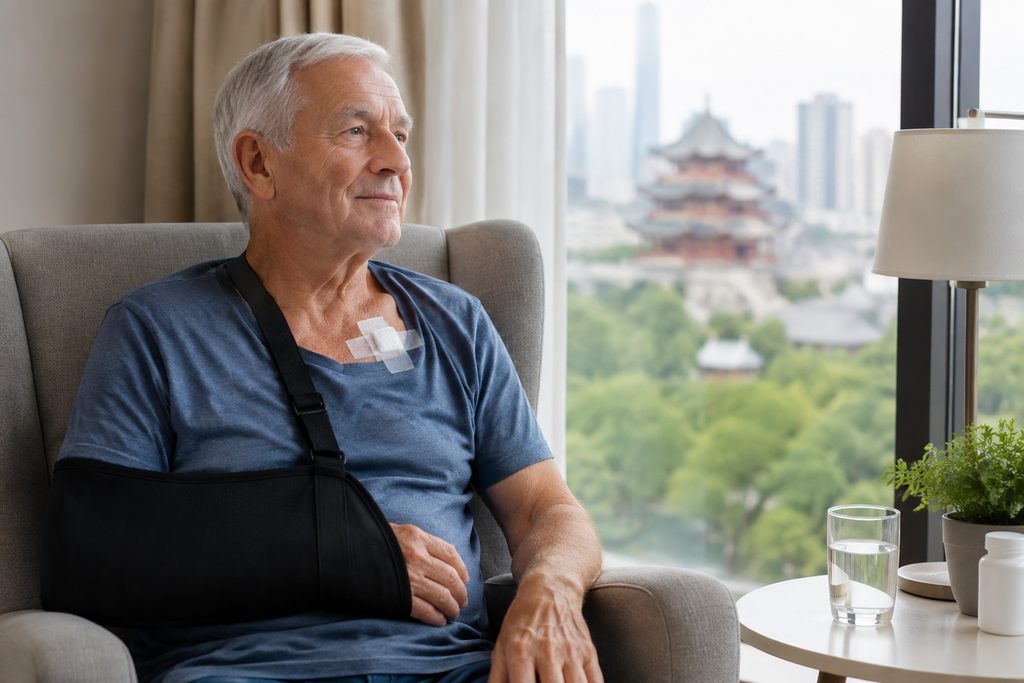
Can You Get a Pacemaker Implantation in China?
Yes. International patients can receive pacemaker implantation in China, and the pacemaker implantation cost China typically ranges from $8,000 to $18,000 depending on the device type and hospital tier. That figure often includes the device itself, surgeon fees, and a 3-5 day hospital stay. For comparison, the same procedure in the United States averages $35,000 to $70,000 without complications. The question is not whether it is possible. The real question is how to do it safely, which hospital to choose, and what the process actually looks like from overseas.
Key Takeaways
- China’s top cardiac centers, including Fuwai Hospital in Beijing, perform over 14,000 cardiac surgeries annually — among the highest volumes globally.
- Pacemaker implantation costs in China run 60-75% lower than US prices, with comparable device technology from Medtronic, Abbott, and Biotronik.
- Public hospital outpatient clinics cannot be pre-booked from abroad; international patients typically use hospital VIP/international departments for scheduled care.
- An S2 visa is the correct category for medical treatment in China, not an M visa, which is reserved for commercial trade activities.
The Problem: Cardiac Device Costs Are Crushing Patients in Western Systems
Have you ever looked at a hospital bill and felt the numbers were simply not designed for a real person to pay? For patients with bradycardia, heart block, or sick sinus syndrome, a pacemaker is not optional. It is the difference between living with constant fatigue, fainting spells, and the risk of sudden cardiac arrest — or regaining a normal rhythm. Yet in the United States, the average total charge for pacemaker implantation without insurance runs north of $50,000. Even with insurance, out-of-pocket costs frequently exceed $5,000 to $10,000 after deductibles and coinsurance.
In the United Kingdom, NHS wait times for non-urgent cardiology procedures stretched to a median of 14.6 weeks for treatment in 2024, according to the British Heart Foundation. In Canada, the Fraser Institute reported a median wait of 13.1 weeks between seeing a specialist and receiving treatment for cardiology patients. For someone whose heart rate drops into the 30s at night, waiting three months is not a scheduling inconvenience. It is a daily gamble.
And here is the part few people talk about: the device itself is often the most expensive line item. A dual-chamber pacemaker from a major manufacturer costs $4,000 to $8,000 for the hardware alone in Western markets. The same device, purchased through Chinese hospital procurement channels, often costs 30-50% less. That is not a quality difference. It is a pricing structure difference.
Why China Delivers Results for Pacemaker Implantation
Clinical Volume That Western Centers Cannot Match
Fuwai Hospital in Beijing, part of the Chinese Academy of Medical Sciences, performs more cardiac surgeries than any other hospital in the world. Its annual volume exceeds 14,000 cardiac operations, including a substantial share of device implantations. By contrast, a high-volume US cardiac surgery center might perform 1,500 to 3,000 procedures annually. Volume matters because pacemaker implantation, while minimally invasive, still requires precise lead placement. A surgeon who has done 500 implantations has seen anatomical variations that a surgeon who has done 50 has not.
The best cardiac hospital Shanghai pacemaker patients often consider is Zhongshan Hospital, affiliated with Fudan University. Its department of cardiology consistently ranks among China’s top three in the Fudan specialty reputation rankings, and it operates one of the largest electrophysiology labs in Asia. For international patients, the hospital maintains a dedicated international medical center with English-speaking coordinators. You can explore more cardiac surgery options on our specialty hospital rankings page.
Device Technology Parity With the West
One of the most persistent myths about Chinese healthcare is that the technology lags. For pacemakers, this is demonstrably false. Chinese hospitals implant the same FDA-approved and CE-marked devices used in the US and Europe: Medtronic Azure and Micra, Abbott Assurity and Gallant, Biotronik Edora and Evia. Leadless pacemakers, which eliminate the subcutaneous pocket and lead wires entirely, are available at major centers in Beijing, Shanghai, and Guangzhou. The question “is pacemaker surgery safe in China” deserves a direct answer: at top-tier hospitals with international departments, complication rates for device implantation are comparable to Western benchmarks. Infection rates run below 1%, and pneumothorax rates are under 2%, according to published data from Chinese registries.
Structural Cost Advantages Without Quality Compromise
Why is the pacemaker surgery China medical tourism price so much lower? It comes down to three structural factors. First, hospital construction and operating costs are lower — a cardiac catheterization lab in Shanghai costs roughly 40% less to build and staff than an equivalent facility in Boston or London. Second, physician compensation is lower, which reduces procedure fees without reducing training quality; Chinese cardiologists complete 8-10 years of postgraduate training, including fellowships in electrophysiology. Third, device procurement is centralized and negotiated at scale. When a hospital system purchases 5,000 pacemakers annually, the per-unit price drops significantly. These savings transfer to the patient, not to shareholders.
But let me be direct: lower cost does not mean every Chinese hospital is excellent. The country has over 35,000 hospitals. The top 5% — roughly 1,700 institutions, including the 340+ hospitals in our database — deliver care that meets or exceeds international standards. Below that tier, quality varies dramatically. Choosing the right hospital is the single most important decision you will make.
What the Pacemaker Implantation Process Actually Looks Like in China
If you are searching “how long does pacemaker surgery take abroad,” the answer for China is similar to Western centers: 45 to 90 minutes for a standard transvenous implantation. But the total time in China is longer. Here is a realistic timeline:
Day 1-2: Arrival and hospital admission. You will undergo pre-operative testing: ECG, echocardiogram, blood work, and a chest X-ray. The cardiologist reviews your medical history and explains the device choice — single-chamber, dual-chamber, or leadless.
Day 3: Implantation. The procedure is performed under local anesthesia with sedation. You will be awake but comfortable. The surgeon makes a small incision below the collarbone, threads the leads into the heart via the subclavian vein, and connects them to the pulse generator. The pocket is closed with absorbable sutures.
Day 4-5: Post-operative monitoring and device programming. The electrophysiologist tests the leads and programs the pacemaker’s settings — lower rate limit, sensing thresholds, and mode. You will have a chest X-ray to confirm lead position.
Day 6-7: Discharge and device education. You receive a pacemaker identification card, instructions on wound care, and a schedule for remote monitoring follow-up. Most patients fly home 7-10 days after arrival.
This timeline assumes no complications and a straightforward case. Patients with complex anatomy, prior device infections, or concurrent conditions should expect a longer stay.
How to Choose a Hospital and Avoid Costly Mistakes
The decision to travel abroad for a pacemaker is not one to make lightly. If you are considering the option to book pacemaker surgery China package deals, understand what those packages include and exclude. A legitimate package covers hospital fees, device cost, surgeon fees, and basic post-operative care. It does not cover airfare, visa fees, hotel stays, or complications requiring extended hospitalization. Read the fine print before signing anything.
Here is what to evaluate when comparing hospitals:
| Factor | What to Look For | Why It Matters |
|---|---|---|
| Annual device implant volume | 500+ pacemaker implantations per year | Higher volume correlates with lower complication rates |
| International department | Dedicated English-speaking staff, overseas patient coordinator | Without this, language barriers become a real safety risk |
| Device manufacturer options | Access to Medtronic, Abbott, Biotronik, or Boston Scientific | You want the same device brands available in your home country |
| Lead extraction capability | On-site laser lead extraction program | If a lead fails later, you need a hospital that can remove it safely |
| Remote monitoring support | Home monitoring after discharge | Pacemakers require lifelong follow-up; remote monitoring bridges the gap |
One mistake we see repeatedly: patients choose a hospital based on a single online review or a low price quote, without verifying the institution’s credentials. The Fudan University Hospital Rankings are the most authoritative source for Chinese hospital quality. The comprehensive list covers the top 100 hospitals nationwide, while the specialty reputation rankings identify the top 10 hospitals in each of 45 specialties, including cardiology and cardiac surgery. You can browse the full list of top-ranked hospitals by city on our site.
Another consideration: private international hospitals. Facilities like United Family Healthcare and Jiahui International Hospital offer Western-style care with English-speaking physicians and direct insurance billing. The trade-off is cost — private hospital pacemaker implantation runs 30-50% higher than public hospital international departments. For some patients, the familiarity and convenience justify the premium. For others, the public hospital VIP channel offers the best balance of clinical excellence and price. We profile both options on our private international hospitals page.
Practical Considerations: Visa, Payment, and Follow-Up After Returning Home
Getting a pacemaker in China requires more than booking a flight. The logistics matter, and getting them wrong can delay treatment or create legal problems.
Visa: The correct visa category for medical treatment in China is the S2 visa, issued for short-term personal affairs including medical treatment. You will need a medical certificate or treatment confirmation letter from the Chinese hospital, proof of funds, and a valid passport. The S2 visa typically allows a stay of up to 180 days. Family members accompanying you also apply for S2 visas. Do not apply for an M visa — that is strictly for commercial and trade activities, and using it for medical treatment can lead to denial or complications at the border. Visa requirements change, so always verify with the nearest Chinese embassy or consulate before applying.
Payment: Chinese public hospitals require upfront payment or a deposit before admission. International departments accept major credit cards and international wire transfers. Private international hospitals often bill insurance directly; public hospital international departments typically require you to pay first and seek reimbursement from your insurer afterward. Check with your insurance provider before traveling — some policies exclude overseas elective procedures, while others reimburse after the fact.
Medical records: Bring everything. ECG tracings, Holter monitor reports, echocardiogram images, stress test results, current medication list, and any prior device implant records. The more complete your file, the faster the Chinese cardiology team can evaluate your case and confirm the device type you need. If your records are not in English or Chinese, arrange certified translation before you travel.
Follow-up: A pacemaker is a lifelong commitment. After you return home, you need a local cardiologist or electrophysiologist willing to take over device management. Before traveling to China, confirm that your home cardiologist will accept follow-up care. Remote monitoring systems from Medtronic and Abbott transmit data to any clinic with the corresponding platform, which makes continuity of care feasible across borders. But do not assume — ask first.
Important: Pacemaker implantation is a real surgical procedure with real risks. Infection, lead dislodgement, pneumothorax, and device malfunction are possible in any country. Choosing a top-tier hospital reduces these risks but does not eliminate them. No hospital or coordinator can guarantee a complication-free outcome.
Frequently Asked Questions
At top-tier hospitals with high device implant volumes and dedicated international departments, pacemaker implantation carries complication rates comparable to Western centers. Infection rates run below 1%, and major complications are rare. The key is hospital selection — the quality gap between China’s best hospitals and its average hospitals is significant. Choose a Fudan-ranked institution or a JCI-accredited private hospital.
The pacemaker implantation cost China ranges from $8,000 to $18,000 for a standard single or dual-chamber device, including hospital fees. In the US, the same procedure costs $35,000 to $70,000. The savings come from lower hospital operating costs, lower physician fees, and centralized device procurement — not from inferior technology or training. Devices used in China are the same FDA-approved models used in Western hospitals.
This is the hardest question, and the honest answer is that cross-border follow-up requires planning. Before traveling, identify a local cardiologist willing to manage your device. Arrange remote monitoring through the device manufacturer’s platform. Keep all implantation records, including lead measurements and programming parameters, so your local physician can take over seamlessly. If a lead fails or the device needs replacement, that can typically be handled in your home country — you are not obligated to return to China for future care.
Public hospital outpatient clinics in China cannot be pre-booked from overseas — the standard system requires same-day registration and an in-person consultation before surgery is scheduled. However, hospital international departments and VIP channels allow advance scheduling. This is where a coordination service adds value: arranging the pre-operative review, scheduling the admission, and confirming the device availability before you travel. The China Medical Services team handles this coordination for international patients.
Plan for 7 to 10 days total. The procedure itself takes 45 to 90 minutes, but you need 1-2 days for pre-operative testing, 2-3 days for post-operative monitoring, and a day for device programming and discharge education. Patients with complex cases or those receiving leadless pacemakers may need an extra day or two. If you want to minimize time away from home, ask about the coordination services that streamline the pre-arrival evaluation.
Your Next Step
The decision to travel abroad for a pacemaker is significant, and it deserves careful evaluation — not a rushed booking. We are not a hospital, and we do not provide diagnoses or medical advice. What we do is help international patients navigate the Chinese healthcare system: identifying the right hospital for your specific cardiac condition, coordinating with international departments, arranging bilingual support, and guiding you through the visa and travel logistics. If you are weighing your options, start with a conversation. It costs nothing, and it will give you a clearer picture of what is possible. Get a free consultation with our team and we will help you evaluate whether pacemaker implantation in China is the right choice for you.
For more medical information and treatment options in China, visit chinamedservices.com (China Medical Services).
