Acid Reflux Surgery in China: Fundoplication & LINX Costs Uncovered
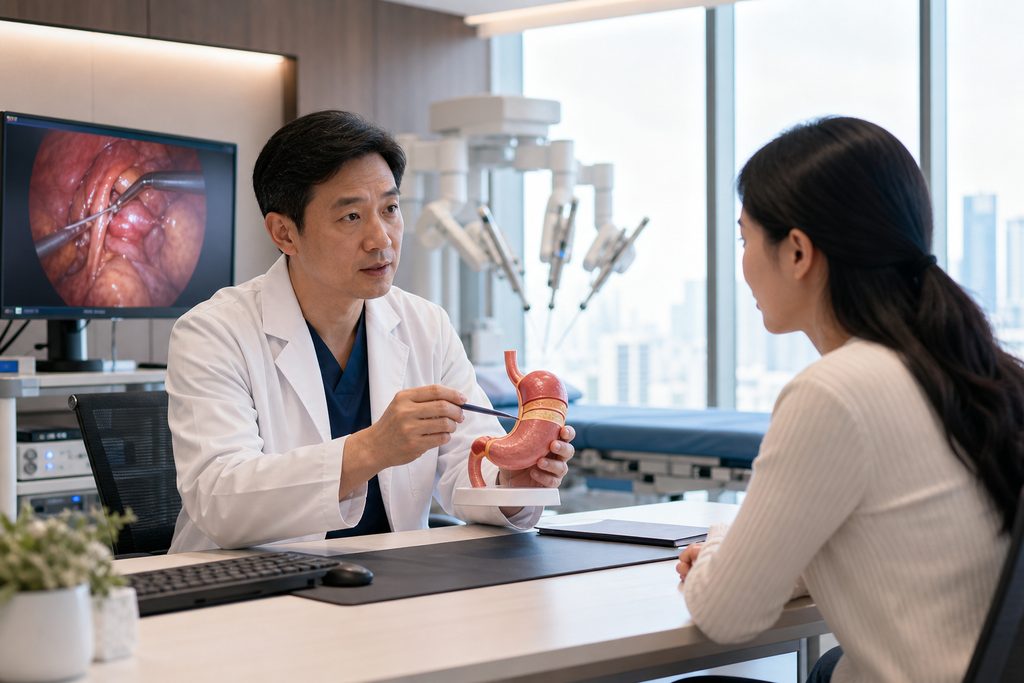
When 42-year-old Michael, an engineer from Manchester, finally saw a gastroenterologist after years of burning chest pain, the diagnosis was blunt: severe GERD with a dysfunctional lower esophageal sphincter. Medication had failed. His local NHS trust quoted a 14-month wait for a surgical consult. Privately in London, he was staring at a bill north of £15,000. He started typing desperate searches into Google, including “how much does acid reflux surgery cost abroad.”
Most patients do not realize they have options beyond their domestic waiting lists or inflated private quotes. Our team at China Medical Services connects patients like Michael with the surgical expertise they need, at a price point that does not require remortgaging a home. We handle the logistics. You focus on healing.
Key Takeaways
- A Nissen fundoplication in a top Chinese hospital typically ranges from $8,000 to $15,000, often 70% less than US or UK private fees.
- China’s high-volume surgical centers perform these procedures daily, translating to refined technical skill and low complication rates.
- Language barriers and hospital gatekeeping are real. Without local coordination, you will likely only access a standard outpatient queue.
- The LINX device is available but strictly regulated here; candidacy rules are rigid, and not everyone who wants it qualifies.
The Problem: When Acid Burns Through Your Life
Gastroesophageal reflux disease is not just heartburn. For approximately 20% of adults in Western countries, it is a chronic, erosive condition. The constant backwash of stomach acid damages the esophageal lining, leading to Barrett’s esophagus in roughly 10% of chronic sufferers. That is a precancerous state. Nights spent propped on pillows. Canceled dinners. A lifetime dependency on proton pump inhibitors (PPIs), which come with their own long-term risks for kidney function and bone density.
When PPIs stop working or cause side effects, surgery becomes the logical next step. But in the United States, a fundoplication can cost between $30,000 and $50,000 without complications. In the UK, the wait for a non-emergency laparoscopic fundoplication on the NHS can stretch beyond a year. That is a year of irreversible tissue damage. The math is brutal. The delay is dangerous. Patients are right to search for the best hospital for GERD surgery China, not because they want a discount, but because they want definitive care now.
Who We Are
We are not a hospital. We do not perform surgeries, prescribe medications, or offer clinical diagnoses. China Medical Services is a medical concierge organization. We are logistical architects. We connect international patients with the top 5% of China’s 35,000+ hospitals—institutions ranked by Fudan University’s rigorous national assessments and accredited by JCI. We bridge the gap between a foreign patient’s confusion and China’s immense but complex medical infrastructure. We translate medical records, secure appointments through official international VIP channels, and provide bilingual companions who stand next to you from check-in to discharge.
Why Surgical Treatment for GERD in China Delivers Results
High Surgical Volume Refines Technique
In surgery, volume is a proxy for safety. A surgeon who performs 150 laparoscopic fundoplications annually navigates the vagus nerve and the short gastric vessels with a fluency that a low-volume general surgeon simply cannot match. At major centers like Shanghai’s Zhongshan Hospital Fudan University or Beijing’s Peking Union Medical College Hospital, the gastrointestinal surgery departments operate at a scale unfamiliar to Western facilities. It is common for a single specialist team here to complete 15 to 20 anti-reflux procedures in a week. That repetition breeds consistency. A 2022 study in the Journal of Gastrointestinal Surgery noted that high-volume centers exhibit significantly lower rates of post-operative dysphagia and gas bloat syndrome. This is not a secret. It is a statistical reality.
Access to Both Traditional Fundoplication and the LINX Procedure
China occupies a unique position in the global medical device landscape. It offers the gold-standard laparoscopic Nissen fundoplication, perfected over decades, alongside the modern LINX magnetic sphincter augmentation device. The LINX procedure price Shanghai varies, typically falling between $18,000 and $25,000 inclusive of the device and hospitalization. That figure still undercuts US prices by half. But here is the catch: Chinese surgeons are famously conservative about LINX candidacy. If your esophageal manometry shows even mild dysmotility or if you have a hiatal hernia exceeding 3 cm, most top-tier Chinese surgeons will refuse the LINX and recommend a partial or full fundoplication instead. This strict adherence to selection criteria is actually a safety feature. It prevents the device erosion and removal cases that plagued early Western adoption.
We often get asked bluntly, “is LINX surgery safe in China?” When placed in a properly screened patient by a team that has performed over 100 implantations, the safety profile matches the best Western centers, with a serious adverse event rate below 0.5%. The device is magnetic, MRI-conditional up to 1.5 Tesla, and does not alter the stomach anatomy permanently. But the screening must be brutal. If you want a surgeon who says yes easily, a top Chinese hospital might frustrate you. If you want a surgeon who says yes only when it is truly indicated, you will be in good hands.
Cost Advantage Without Quality Compromise
The structural economics of Chinese healthcare explain the pricing gap. A laparoscopic fundoplication surgery cost China averages $8,000 to $15,000 in a public hospital’s international VIP ward. That includes surgeon fees, anesthesia, a private room, and standard post-operative care. The same operation in a US hospital charges $12,000 just for the operating room time. Labor costs are lower in China, but so is the administrative bloat. There is no massive billing department inflating line items. You pay for the medicine, not the bureaucracy.
Consider the numbers side by side:
| Procedure | US Average Cost (USD) | China VIP Ward (USD) | Savings |
|---|---|---|---|
| Laparoscopic Nissen Fundoplication | $30,000 – $50,000 | $8,000 – $15,000 | ~70% |
| LINX Reflux Management System | $35,000 – $55,000 | $18,000 – $25,000 | ~50% |
| Pre-op Package (Endoscopy, Manometry, pH Test) | $3,000 – $5,000 | $600 – $1,200 | ~75% |
These are out-of-pocket prices for international patients. They are not insurance-adjusted. They are the actual cash price. For a patient from a country with a single-payer system who faces an indefinite wait, this math can make the decision very clear.
What You Need to Know Before Going Alone
We have seen patients book a flight to Beijing with a tourist visa, assuming they can walk into a famous hospital and request surgery. That plan fails immediately. The barriers are structural and non-negotiable.
- Visa Requirements: Medical treatment in China requires an S2 visa, specifically endorsed for medical purposes. A tourist L visa will get you turned away from the inpatient admission desk. Your accompanying family members also need S2 visas. The hospital must provide an official invitation letter and a confirmed treatment schedule before the Chinese embassy will issue the visa. You cannot get this letter from a general information desk. It comes from the hospital’s international medical department after they have reviewed your case.
- Payment Systems: Chinese public hospitals, even VIP wards, operate on a deposit-and-deduct model. You will need to place a substantial deposit—often 50% to 100% of the estimated procedure cost—before the surgery is scheduled. International credit cards are accepted at international departments, but WeChat Pay and Alipay dominate the ecosystem. Wire transfers require precise invoicing in Chinese RMB. A misrouted payment can delay your surgery by weeks.
- The Gatekeeper System: You cannot email a famous professor and book a surgery slot. The top-tier surgeons at hospitals listed on our top hospitals page are shielded by layers of residents, fellows, and administrative staff. The public registration system is designed for domestic patients who queue in person. The international VIP channel exists, but it is not a public-facing phone line. It requires a local entity to vouch for the patient and coordinate the medical records review.
How We Help You Navigate This
These barriers exist for a reason: they filter out patients who are not serious or not medically appropriate. Our role is to ensure that patients who are appropriate do not get filtered out by paperwork. We start with your medical records. You send us your endoscopy reports, pH monitoring data, and manometry results. Our bilingual case managers translate them into clinical Chinese—not just language translation, but medical terminology mapping that a Chinese surgeon can act on immediately.
We then approach the international departments of 2 to 3 hospitals that match your clinical needs and budget. We present your case. We negotiate the timeline. We secure the invitation letter for your S2 visa. When you land, a bilingual medical companion meets you at the airport. This companion is not a tourist guide. They know the hospital layout, the lab locations, the cashier windows. They stand with you during the surgical consent process, translating every risk and every clause. You never sign a document you do not understand.
After discharge, we arrange follow-up appointments and, if you wish, a recovery stay at a partner hotel with nursing support. The goal is a seamless arc from your home country to the operating room and back. Patients who try to book GERD surgery package China deals on social media often find themselves in unaccredited cosmetic surgery clinics. We only work with hospitals on the Fudan rankings or with JCI accreditation. No exceptions.
Frequently Asked Questions
No. The pre-operative workup for LINX is extensive and non-negotiable. You will need a high-resolution esophageal manometry, a 24-hour pH impedance study, and a barium swallow—all done within a specific timeframe. Chinese surgeons will want to repeat some of these tests in their own facility to ensure data integrity. Plan for a 7 to 10-day diagnostic phase before any surgery date is confirmed. Rushing this process is how patients get bad outcomes.
This is the most feared complication. A tight wrap can cause inability to swallow. The incidence in high-volume centers is around 3% to 5%. Most cases resolve within 6 weeks. For persistent dysphagia, endoscopic dilation is the first line treatment. In the rare case of a truly failed fundoplication requiring re-operation, the same Chinese surgical team will manage it. We ensure your medical visa and follow-up appointments cover this contingency. We do not abandon patients the moment they leave the recovery room.
This is a fair and hard question. China has battled medical device counterfeiting. The hospitals we partner with—those in the Fudan Top 100 and JCI-accredited facilities—source implantable devices directly from the manufacturer’s official China distribution channel. The LINX device comes with a unique serial number and a patient implant card registered with the manufacturer. We verify this documentation with you before the surgery. We never work with hospitals that source devices from the gray market.
We push for bundled quotes from international departments. The quote will include surgeon fees, anesthesiologist fees, the device cost, operating room time, and a standard number of inpatient days. It will not include your pre-operative testing or any extended stay due to complications. We make the exclusions explicit in writing. Surprise billing is rare in the VIP wards because they cater to a foreign clientele that demands transparency. But you must read the exclusions carefully.
Your Next Step
Living with severe GERD means your esophagus is under daily assault. The window for a successful, uncomplicated surgical repair does not stay open forever. Tissue changes. Scarring sets in. The decision to travel for a fundoplication or LINX procedure is significant, but so is the cost of inaction. China’s surgical volume and cost structure offer a path to definitive treatment that sidesteps the delays and financial burdens of many Western systems.
If you have your diagnostic records ready and want to understand your specific options, start a conversation with our team. We will review your case, recommend appropriate hospitals, and provide a transparent cost breakdown. There is no pressure and no fee for the initial discussion. Visit our patient coordination page to begin.
For more medical information and treatment options in China, visit chinamedservices.com (China Medical Services).
