Can I Trust a Remote Diagnosis? What 2026 Data Actually Shows
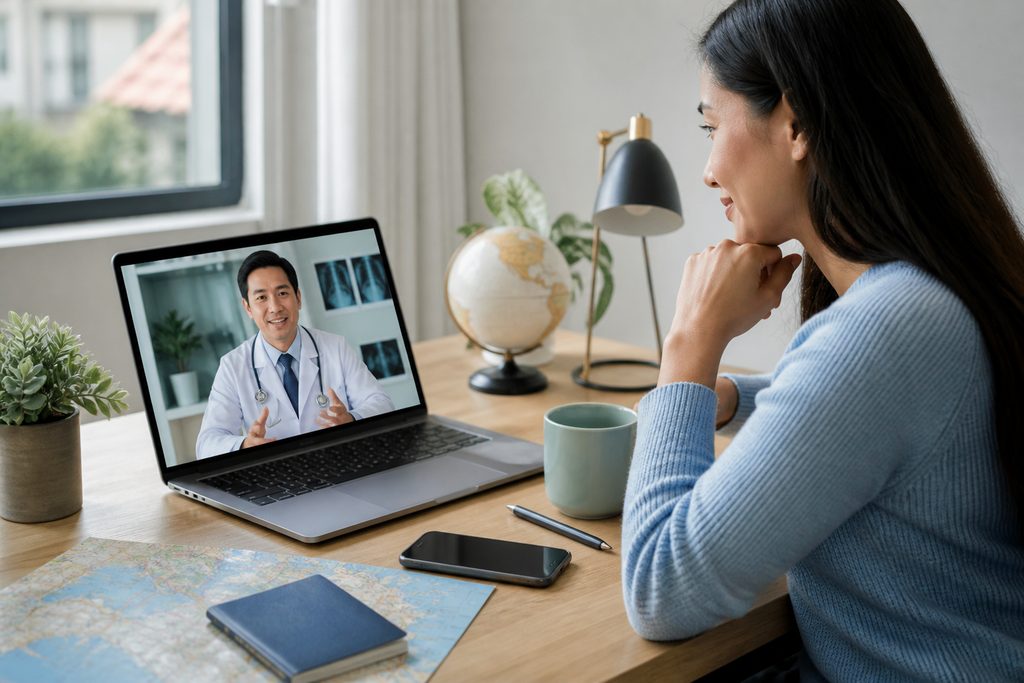
Have you ever stared at a scan report and wondered if a doctor hundreds of miles away could really understand what is happening inside your body? You’re not alone. The remote second opinion China cost question comes up in nearly every initial consultation we handle. Patients want certainty. They worry about paying for an opinion that turns out to be incomplete, rushed, or simply wrong because the specialist never touched them.
The honest answer is more nuanced than a yes or no. A remote diagnosis is not a replacement for an in-person examination. But in specific situations — particularly for reviewing existing imaging, pathology slides, and lab results — it can be remarkably accurate. A 2024 study published in JCO Global Oncology found that structured second-opinion programs changed or refined the initial diagnosis in 22% of oncology cases. That cuts both ways. It shows the value of a second look. It also shows that even in-person first diagnoses are frequently incomplete.
Key Takeaways
- Remote diagnosis accuracy depends heavily on record quality — complete DICOM imaging and pathology slides raise reliability dramatically.
- Written second opinions from top Chinese specialists typically range from $300–500, with video consultations at $100–300 for standard international departments.
- China’s high-volume hospitals give specialists exposure to rare presentations that Western counterparts may see only a handful of times per year.
- Remote evaluation cannot replace physical examination for conditions requiring palpation, dynamic testing, or real-time symptom assessment.
The Problem: When a Local Diagnosis Leaves You Doubting
In the United States, the average time to see a specialist for a new oncology referral is 26.6 days, according to a 2022 Merritt Hawkins survey. In Canada, the median wait between specialist referral and treatment sits at 27.4 weeks, per the Fraser Institute’s 2023 report. In the UK, NHS England data shows that 7.54 million people were waiting for treatment as of late 2023. These are not small numbers.
What happens during those months? Patients sit with uncertainty. Some pursue second opinions domestically, only to face another wait. Others turn to the internet, reading fragmented information without the clinical context to interpret it. The cost of inaction is real: delayed treatment, disease progression, and the psychological toll of not knowing. But here is the thing patients rarely consider — the bottleneck is not the diagnosis itself. It is access to a specialist who has seen enough cases to recognize what is in front of them.
A radiologist at a mid-sized Western hospital might review 20 chest CT scans per day. A thoracic radiologist at a top Chinese cancer center might review 80. Volume shapes pattern recognition. And pattern recognition is what turns ambiguous findings into a confident read.
Why Remote Second Opinions From China Deliver Results
Clinical Volume Builds Diagnostic Pattern Recognition
Fuwai Hospital in Beijing performs more than 14,000 cardiac surgeries annually — the highest volume of any heart center globally. That means a cardiac imaging specialist there sees more echocardiograms, CT angiograms, and complex congenital presentations in a single month than many Western cardiologists encounter in a year. The same pattern holds across oncology, neurology, and orthopedics.
This matters for remote diagnosis. When you send your imaging to a specialist who reviews thousands of similar cases each year, the probability that they have seen your specific presentation — even an atypical one — rises substantially. A 2023 retrospective review in The Lancet Digital Health found that diagnostic concordance between high-volume specialist centers and initial community reads was lowest for rare and complex cases, precisely where volume matters most. Remote review lets you tap that volume without traveling.
Structured Second-Opinion Programs Are More Reliable Than Ad-Hoc Consultations
Not all remote diagnoses are created equal. A structured program — where records are translated, organized, and reviewed according to a defined protocol — produces different results than a rushed video call with whatever specialist happens to be available. The difference is in preparation.
When our team coordinates a remote consultation with a Chinese specialist, the process includes translating all reports into English, organizing imaging in DICOM format, and providing the specialist with a complete clinical summary before the session. The specialist reviews everything beforehand. The video call is not the diagnosis — it is the discussion of a diagnosis that has already been forming during record review. That distinction matters when you ask whether you can trust a doctor on a video call. You are not trusting the video call. You are trusting the preparation and expertise behind it.
Remote Second Opinion China Cost Is Structurally Lower
Let us address the financial question directly. A remote second opinion China cost typically ranges from $300 to $500 for a written review by a top specialist. Standard video consultations through hospital international departments run $100 to $300. Top-specialist video consultations range from $500 to $800. Compare this to a US second opinion at a major academic center, which can run $700 to $1,500 or more, often without insurance coverage for out-of-network reviews.
The cost difference is not a quality signal. It reflects structural economics: lower physician salaries, higher patient volumes, and streamlined administrative overhead. Chinese public hospitals operate at a scale that Western systems simply do not match. A single outpatient department at West China Hospital in Chengdu handles over 20,000 patient visits per day. That operational efficiency translates into lower per-consultation costs without compromising the specialist’s clinical depth.
How Accurate Is Remote Cancer Diagnosis? What the Evidence Shows
Cancer is where remote second opinions are most frequently requested — and where the evidence base is strongest. A 2022 meta-analysis published in BMJ Open examined 17 studies of remote pathology review and found diagnostic discordance rates ranging from 2% to 23%, with the highest discordance in rare tumor subtypes. A separate 2023 study in JAMA Network Open looked at remote radiology second opinions for oncologic imaging and found that 31% of cases had a clinically significant change in interpretation.
Those numbers sound alarming. But read them carefully. They do not mean remote diagnosis is unreliable. They mean initial diagnoses are frequently incomplete — and a second review, whether remote or in-person, catches those gaps. The question is not whether remote diagnosis is perfect. No diagnosis is. The question is whether remote review adds value compared to proceeding with a single local read. The evidence says it frequently does.
For cancer specifically, the accuracy of a remote diagnosis depends on three factors: the completeness of the pathology slides, the quality of the imaging, and the clinical context provided. When all three are present, remote review approaches the accuracy of in-person specialist evaluation for many cancer types. When any one is missing — blurry slides, incomplete imaging series, no treatment history — accuracy drops sharply.
Is Online Diagnosis Reliable China? When It Works and When It Does Not
The short answer: online diagnosis is reliable for a specific subset of clinical questions and unreliable for others. Knowing the difference is the single most important thing you can do before booking a remote consultation.
Remote diagnosis works well for: imaging review (CT, MRI, PET-CT), pathology slide review, lab result interpretation, treatment plan evaluation, and second opinions on surgical recommendations. These are data-driven assessments. The specialist is interpreting objective findings, not performing a physical exam.
Remote diagnosis works poorly for: new undiagnosed symptoms requiring physical examination, conditions where palpation or dynamic testing is essential, psychiatric evaluations, and post-operative complications where wound inspection is necessary. In these cases, no amount of video quality substitutes for hands-on assessment.
This is not a limitation unique to Chinese telemedicine. The American Telemedicine Association’s own guidelines acknowledge that physical examination remains a barrier to fully remote diagnosis in many specialties. The difference is that Chinese hospitals have developed hybrid models — remote review followed by in-person confirmation when needed — that many Western systems are still building.
International Hospital Telemedicine Package Shanghai: What You Actually Get
| Service Type | Typical Cost (USD) | What Is Included | Best For |
|---|---|---|---|
| Written Second Opinion | $300–500 | Full record review, written analysis, treatment direction | Complex cases needing specialist input before travel |
| Standard Video Consultation | $100–300 | Record review plus 30–60 minute video discussion | Clarifying treatment options and asking direct questions |
| Top-Specialist Video Consultation | $500–800 | Consultation with a named senior specialist | Rare conditions or cases requiring specific expertise |
| Multidisciplinary Team (MDT) Review | $1,500–2,000 | Coordinated review by multiple specialties | Cancer cases where treatment spans surgery, oncology, and radiology |
Prices vary by hospital and case complexity. An international hospital telemedicine package Shanghai may bundle translation, record organization, and consultation into a single fee. Private international hospitals like Jiahui and United Family often include English-speaking coordinators and direct insurance billing, which changes both the experience and the price point. Public hospital international departments offer lower fees but typically require more patient-side preparation.
Before booking any remote consultation, request a written list of exactly what the fee includes. Translation? Record organization? A written report afterward? Follow-up questions? The cheapest option is rarely the best value if it skips the preparation that makes the consultation useful.
Practical Considerations: Records, Timing, and What to Send
Discordance happens in a meaningful percentage of second opinions — that is the point of seeking one. When opinions conflict, the next step is usually a third review or a multidisciplinary consultation. Do not assume the remote opinion is automatically correct because it is newer, or automatically wrong because it is remote. Weight the evidence: who had more complete records? Who has more experience with your specific condition?
Verify the hospital through official channels. The Fudan University hospital rankings list China’s top hospitals by specialty — cross-check any hospital you are considering. Legitimate programs will provide a written report on hospital letterhead, identify the reviewing specialist by name and credentials, and never promise specific treatment outcomes. If a program guarantees a cure or pressures you to book surgery immediately, walk away.
Acceptance varies. Many Western physicians welcome additional specialist input, particularly from high-volume centers. Insurers are less predictable — some reimburse remote second opinions, many do not. Request a detailed invoice and written report to submit for potential reimbursement. Do not assume coverage; verify before you pay.
The remote opinion is a starting point, not a treatment commitment. If you decide to proceed, you will still need an in-person evaluation at the hospital before any surgery or major treatment. Chinese public hospitals require an outpatient visit before scheduling procedures — this is standard practice. The remote review helps you decide whether the trip is worth making, and it gives the treating team a head start on understanding your case.
Your Next Step
A remote diagnosis is not a shortcut around medical rigor. It is a tool — one that works best when you understand its limits and prepare accordingly. If you are considering a remote second opinion from a Chinese specialist, start by gathering your records in the formats described above. That step alone will tell you whether remote review is viable for your case.
Our team at China Medical Services coordinates remote consultations with specialists across 340+ top-ranked Chinese hospitals. We are not a hospital and we do not provide diagnoses — we handle the logistics: record organization, translation, hospital coordination, and bilingual support. If you want to understand whether a remote consultation makes sense for your situation, request a free consultation and we will help you evaluate your options honestly.
Frequently Asked Questions
Yes. The hospitals used for international patients are JCI-accredited and follow the same international safety standards as top hospitals in the US and Europe. Surgical teams perform high volumes of procedures — often more than their Western counterparts — which studies show leads to better outcomes.
Costs vary by procedure and hospital, but international patients typically save 40-80% compared to US prices — even when factoring in travel and accommodation. A consultation with our team will give you an exact, all-inclusive quote with no hidden fees.
Send us your existing medical reports to get started. We handle everything from hospital selection and appointment scheduling to visa assistance and post-operative recovery planning. Your medical records are reviewed by the specialist before you even book a flight.
For more medical information and treatment options in China, visit chinamedservices.com (China Medical Services).
