Is Angiogram Painful? What Happens During Cardiac Catheterization and What It Costs in China
What an Angiogram Actually Is
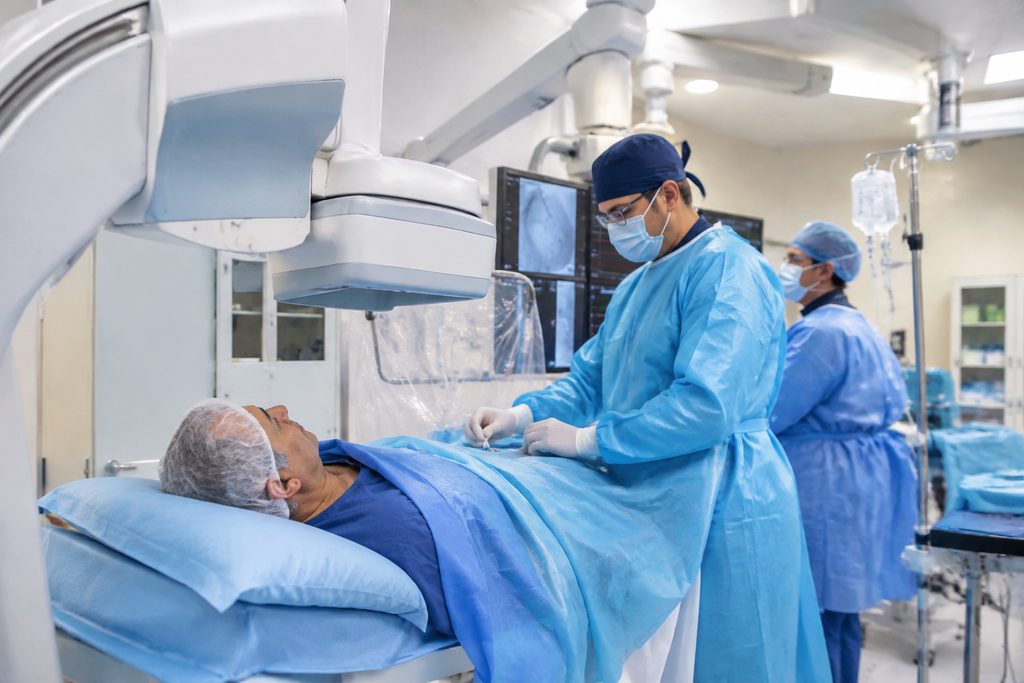
A coronary angiogram is a diagnostic test that shows blood flow through the arteries supplying your heart muscle. The procedure uses a thin, flexible tube called a catheter, which is inserted through a small puncture — usually in your wrist or groin — and guided up to the heart. A special dye is then injected through the catheter, and X-ray imaging captures real-time video of how the dye moves through your coronary arteries. That video reveals narrowings, blockages, or other abnormalities that could explain chest pain, shortness of breath, or an abnormal stress test.
So, is an angiogram painful? The short answer for most people: no, not in the way you might fear. You are awake but sedated. The puncture site receives local anesthetic. The catheter itself has no nerve endings, so you typically do not feel it moving inside your blood vessels. What you might feel is a brief warm flush when the contrast dye enters — some patients describe it as a wave of heat spreading through the chest and sometimes down into the legs. It lasts maybe 10 to 20 seconds. Uncomfortable, yes. Painful, rarely.
But the real question many international patients ask us is not only about pain. It is about whether the test is worth traveling for — and what the angiogram cost China figures look like compared to what they have been quoted at home. The difference is significant enough that some patients plan an entire cardiac evaluation around a trip.
We are China Medical Services, and our team helps international patients navigate diagnostics and treatment at top-ranked Chinese hospitals. We do not perform procedures. We coordinate access, translation, and logistics so you can make informed decisions.
How This Actually Works, Step by Step
Let us walk through the sequence from where you are now — searching for information — to completing an angiogram in China, if you choose to go that route.
Step 1: You send your existing records. That means any recent ECGs, echocardiogram reports, stress test results, blood work, and a summary from your treating cardiologist. You do not need everything translated before contacting us. We handle document organization and medical translation as part of case management.
Step 2: A Chinese cardiac team reviews your file. We route your materials to the international department of a hospital with a strong cardiology program — for example, Fuwai Hospital in Beijing, which performs more than 14,000 cardiac surgeries annually, or Zhongshan Hospital in Shanghai. A specialist reviews whether an angiogram is indicated for you at all. Sometimes the answer is no — a CT coronary angiogram might be more appropriate, or further non-invasive testing first.
Step 3: You receive a written recommendation. This is the written second opinion stage. The cardiologist explains what they see in your records, whether they recommend invasive catheterization, and what the expected timeline would be. This written opinion costs from $300–500 and is for reference only, not a prescription.
Step 4: You decide and we coordinate. If you proceed, we assist with S2 visa documentation support, hospital registration through the international or VIP channel, appointment scheduling, and a bilingual medical companion during your visit. You pay the hospital directly for the procedure. Our coordination fee is separate and quoted transparently.
Is Heart Angiogram Painful? What Patients Actually Report
The phrase “is heart angiogram painful” gets searched thousands of times a month. People want the unvarnished truth before committing to a procedure that sounds invasive. Here is what real patient experiences consistently show.
Local anesthesia at the puncture site stings briefly — like a bee sting or a sharp pinch — then the area goes numb. After that, you should not feel sharp pain at the access point. The catheter passing through the artery is usually not felt. Some patients notice a mild pressure or a sense of movement, but nothing sharp. The dye injection is the most commonly reported sensation: a sudden warmth, sometimes a metallic taste in the mouth, occasionally mild nausea that passes quickly. If the femoral artery in the groin is used instead of the radial artery in the wrist, you will need to lie flat for several hours afterward to prevent bleeding, which can be more uncomfortable than the procedure itself.
Rarely, patients experience chest discomfort during dye injection if they have significant blockages. Tell the team immediately if that happens. The cardiologist can adjust the injection rate or stop.
So the honest answer: most patients rate the discomfort as mild to moderate, not severe. The anxiety before the procedure is usually worse than the procedure.
Ask your cardiologist beforehand whether they will use the radial artery (wrist) or femoral artery (groin). Radial access generally means less bleeding risk and faster recovery — you can sit up sooner and walk earlier.
Angiogram Cost China vs. the United States and Europe
Here is where the numbers get compelling. A diagnostic coronary angiogram in the United States typically costs between $5,000 and $15,000 for uninsured or high-deductible patients, depending on the facility. In Western Europe, private-pay patients might see quotes from €3,000 to €8,000. In China, the angiogram cost China range at top public hospitals through the international or VIP channel typically falls between $1,500 and $4,000 — including the procedure, contrast dye, catheter lab fees, and one night of observation if needed. Prices vary by hospital, city, and case complexity.
| Region | Typical Private-Pay Cost (USD) | Wait Time for Elective Angiogram |
|---|---|---|
| United States | $5,000 – $15,000 | 1–4 weeks |
| Western Europe (private) | $3,500 – $8,500 | 2–6 weeks |
| China (top public hospital, international/VIP channel) | $1,500 – $4,000 | 3–10 days after records review |
Those figures reflect diagnostic catheterization only. If the cardiologist finds a blockage requiring stent placement during the same session — which happens in roughly 30–40% of diagnostic angiograms — the total rises. But even with one or two drug-eluting stents, the combined cost in China often remains below the diagnostic-only price in the US.
The “cardiac catheterization price abroad” question is not just about the procedure fee. Factor in the hidden costs: repeat consultations, facility fees, anesthesia, and follow-up imaging. A bundled international package through a Chinese hospital’s VIP department often includes the pre-procedure consultation, the catheterization itself, and a follow-up review before you fly home.
A Realistic Timeline
People underestimate how long the full process takes — not the procedure itself, which is usually 30 to 60 minutes, but everything around it. Here is what a realistic schedule looks like for an international patient.
| Stage | What Happens | Typical Duration |
|---|---|---|
| Week 1 | You send medical records. We translate and route them to the cardiac team. | 3–7 days |
| Week 2 | Written second opinion or video consultation with the cardiologist. | 5–10 days after records received |
| Week 3 | You decide to proceed. We coordinate hospital registration and appointment. | Appointment lead time: 3–10 days |
| Week 4 | S2 visa application with hospital invitation letter. | 5–15 business days, varies by consulate |
| Week 5–6 | Travel to China, pre-procedure consultation, angiogram, observation. | 3–5 days in-country |
| Week 7–8 | Recovery at home, follow-up report sent to your local cardiologist. | Ongoing |
Recovery from the angiogram itself is fast. Most patients go home the same day or the next morning. The puncture site needs 24–48 hours of care — no heavy lifting, no strenuous exercise. You can usually fly internationally 3 to 5 days after an uncomplicated diagnostic angiogram, though your cardiologist will confirm based on your specific case.
How long does an angiogram take recovery? In terms of returning to normal daily activity, most people are back to desk work within 2 to 3 days. Full physical activity resumes after about a week. If a stent was placed, recovery takes slightly longer and you will need antiplatelet medication for at least 6 to 12 months.
What Can Go Wrong — and What Happens Then
No honest discussion of an invasive procedure skips the complications. Coronary angiography is generally safe, with major complication rates below 1% in experienced centers. But things can go wrong, and you should know what that looks like.
Bleeding or hematoma at the puncture site is the most common issue, occurring in roughly 1–3% of cases. It is usually managed with manual pressure and observation. More serious but rare complications include damage to the artery, allergic reaction to contrast dye, irregular heart rhythm during the procedure, or — in very rare cases — heart attack or stroke. The risk of a major complication is approximately 1 in 1,000 to 1 in 2,000 procedures at high-volume centers.
What happens if something goes wrong during your procedure in China? You are in a hospital with a cardiac surgery team on standby. That is precisely why we recommend top-ranked centers like Fuwai Hospital or Zhongshan Hospital — these are not standalone catheterization labs. They are full cardiac centers with surgical backup, intensive care units, and interventional teams that handle thousands of cases annually. If a complication occurs, the response is immediate and comprehensive.
After you return home, what if you have concerns about the puncture site or new symptoms? You should see your local cardiologist. The Chinese hospital will provide a discharge summary and procedure report in English through the international department. Your local doctor can manage any late issues. We can also arrange a follow-up video consultation with the Chinese team if your local physician wants to discuss the findings directly.
Best Hospital for Angiogram Shanghai: How to Choose
If you search “best hospital for angiogram Shanghai,” you will see several names. The choice matters less than you might think for a diagnostic procedure — and more than you might think for anything requiring intervention.
Zhongshan Hospital, affiliated with Fudan University, consistently ranks among China’s top cardiac centers. Its cardiology department handles an enormous volume of coronary interventions annually, and the international department has experience with foreign patients. Ruijin Hospital, affiliated with Shanghai Jiao Tong University, is another excellent option with a strong cardiology reputation. Both are public hospitals with international/VIP channels that offer English-speaking coordination.
But here is the nuance. A diagnostic angiogram is a standardized procedure. The skill of the operator matters — more experienced interventionalists have lower complication rates — but the hospital’s brand name matters less than the volume and the backup infrastructure. What you are really choosing is access to a team that can act on the findings. If the angiogram shows a blockage, you want to be in a center that can proceed to stenting or refer you for surgery without delay. That is the real advantage of a top cardiac hospital.
For patients considering private international hospitals in Shanghai — United Family, Jiahui, Parkway — those facilities offer a more Western-style experience with direct insurance billing. But for complex cardiac cases, the public top-tier hospitals still hold the edge in sheer case volume and interventional experience. We discuss this trade-off openly with every patient.
You can browse our department rankings across 45 specialties to see how cardiac surgery and cardiology programs compare across Chinese cities.
Practical Considerations: Records, Visa, Payment, and Follow-Up
Bringing this down to logistics. What do you actually need to arrange before booking an angiogram in China?
Medical records. You need recent cardiac tests — ECG, echocardiogram, stress test, and any prior coronary imaging. If you have had a previous angiogram elsewhere, bring the images and report. The Chinese cardiologist will review everything before agreeing to the procedure.
Visa. The correct category for medical treatment in China is the S2 visa, annotated for medical purposes. Your accompanying family member also applies for an S2. The hospital’s international department provides an invitation letter and treatment confirmation letter to support the application. Processing times vary by consulate — plan for 1 to 3 weeks. M visas are for commercial trade and are not appropriate for medical travel.
Payment. Public hospitals in China generally require prepayment for planned procedures. You pay a deposit at admission, and the final bill is settled before discharge. International insurance with direct billing is rarely accepted at public hospitals — you pay first and claim reimbursement from your insurer afterward. Private international hospitals are more likely to offer direct billing. We can advise you on which hospitals work with your insurance.
Language. This is where a bilingual medical companion earns their fee. Top public hospitals see thousands of patients daily. Signage is increasingly bilingual in international departments, but the flow of registration, payment, lab tests, and procedure prep still runs in Chinese. Having someone who knows the hospital layout, the forms, and the staff cuts hours of confusion. Our companion service starts from $300 per day and covers registration, queueing, payment, translation, and escorting between departments.
Follow-up at home. Your local cardiologist should receive a full procedure report and discharge summary. We ensure those documents are provided in English. Any medication changes — especially antiplatelet therapy after stenting — must be communicated clearly to your home physician. Do not stop or change medications without consulting a doctor.
Frequently Asked Questions
Most patients report mild discomfort, not pain. The local anesthetic injection stings briefly. The contrast dye causes a warm flushing sensation lasting 10 to 20 seconds. The catheter itself is usually not felt. Severe pain is uncommon and should be reported immediately.
The procedure itself takes 30 to 60 minutes. Recovery in the hospital is usually 4 to 6 hours for radial access, or overnight for femoral access. Most patients resume normal daily activities within 2 to 3 days and full physical activity within a week. International travel is typically safe 3 to 5 days after an uncomplicated diagnostic angiogram.
At top public hospitals through the international or VIP channel, a diagnostic coronary angiogram typically costs between $1,500 and $4,000. That includes the procedure, contrast dye, catheter lab fees, and short observation. Prices vary by hospital and case complexity. Stent placement, if needed during the same session, adds to the total.
No reputable hospital will schedule an invasive procedure without a prior consultation. The standard path is records review, then a written second opinion or video consultation, then scheduling if the cardiologist confirms the procedure is indicated. Anyone promising to book an angiogram sight unseen is cutting corners you do not want cut.
For an uncomplicated diagnostic angiogram, most patients can fly 3 to 5 days after the procedure. If a stent was placed, your cardiologist may recommend waiting 5 to 7 days and will advise on antiplatelet medication during the flight. Always get written clearance from the treating cardiologist before booking your return ticket.
Your Next Step
An angiogram is not something to fear, but it is also not something to arrange casually. The pain question has a reassuring answer — most patients find it far less uncomfortable than they expected. The bigger decisions are about cost, timing, and choosing a center with the volume and backup to handle whatever the test reveals.
Our team at China Medical Services helps international patients arrange written second opinions, video consultations, and in-person diagnostic procedures at top-ranked Chinese cardiac hospitals. We do not perform medical procedures and we do not promise outcomes. What we do is handle the coordination, translation, and logistics so you can focus on the decision itself.
If you are weighing a cardiac evaluation in China, send us your records and questions. We will review them and tell you honestly whether this path makes sense for you. No pressure, no obligation — just a clear-eyed assessment from people who navigate this system every day.
For more medical information and treatment options in China, visit chinamedservices.com (China Medical Services).
