Is an Endoscopy Painful? The Truth About Sedation, Cost, and Comfort in China
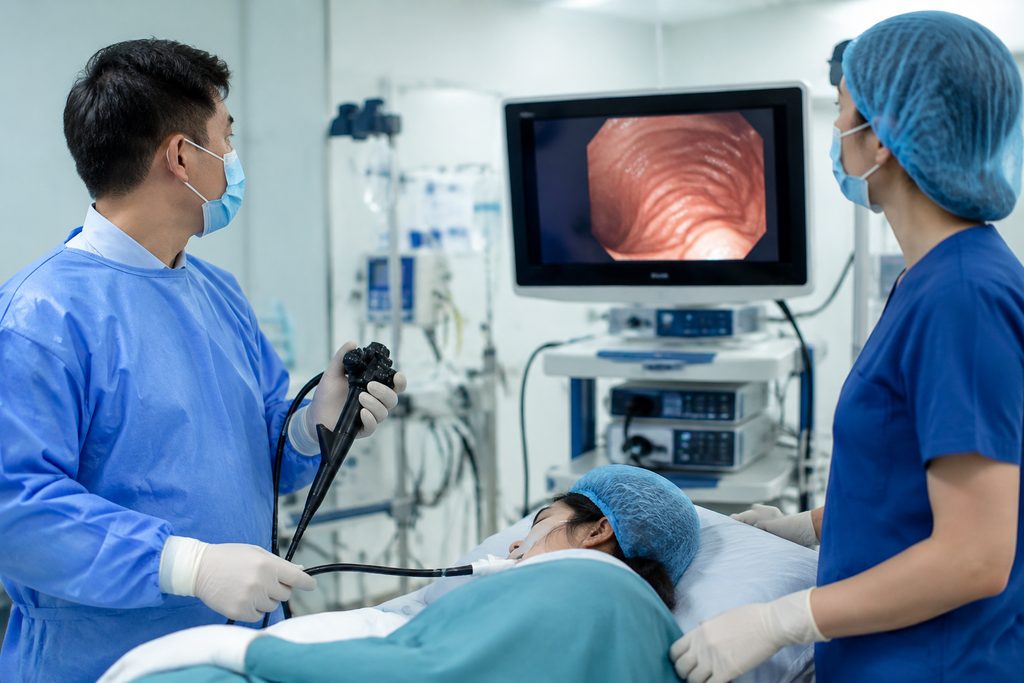
You have probably heard horror stories about endoscopies performed while wide awake, gagging on a camera tube. The reality is more nuanced, and in China, it is often completely different from what you fear. Most patients at top-tier Chinese hospitals now receive sedation for upper endoscopies, turning a historically dreaded procedure into a forgettable nap. But the answer to “Is an endoscopy painful?” depends on one critical variable: whether you choose sedation or try to tough it out without medication. Let us walk through exactly what happens, what it costs, and how to arrange a comfortable experience if you are considering the procedure abroad.
Is an Endoscopy Painful? The Short Answer
For most patients, a sedated upper endoscopy is not painful. You receive intravenous medication that puts you into a light sleep, and the procedure typically takes 5 to 10 minutes. You wake up with no memory of the scope going down. Without sedation, the experience is different: you feel pressure, gagging, and sometimes genuine discomfort as the tube passes through your throat. A 2021 study in the journal Endoscopy found that approximately 40% of unsedated patients reported moderate to severe discomfort, while fewer than 5% of sedated patients did. So the short answer is: with sedation, no. Without it, possibly yes.
That is the honest framing. The procedure itself is not inherently painful in the way a cut or burn is painful — your esophagus and stomach lining do not have the same density of pain receptors as your skin. What you feel is mechanical: pressure, fullness, and the urge to retch. Sedation removes the sensation and the memory. And in China, sedation is now standard at major international departments and private hospitals.
Who This Is Right For — and Who It Isn’t
An endoscopy is a diagnostic tool, not a treatment. It is right for you if you have persistent symptoms that need a direct look: unexplained weight loss, difficulty swallowing, chronic acid reflux that has not responded to medication, blood in your stool, or a family history of gastric cancer. China performs a massive volume of these procedures — gastric cancer screening is routine there, and gastroenterologists at top centers see more cases in a month than many Western specialists see in a year.
Good candidates for having an endoscopy in China include:
- Patients who want a comprehensive upper GI check without a long wait
- Travelers or expatriates already in China who need a diagnostic procedure quickly
- Patients comparing costs between home countries and Asia
- Those who want sedation but have been told it is unavailable or expensive at home
Who should not pursue this casually? Anyone with unstable heart or lung disease needs a pre-procedure anesthesia clearance. Patients on blood thinners must coordinate timing with their prescribing doctor. And if you have a known bleeding disorder or severe sleep apnea, sedation requires extra monitoring. None of these are absolute barriers — but they change the preparation. A remote evaluation before you travel is the sensible first step.
The Options, Compared: Sedated vs. Unsedated, China vs. Abroad
You have two core decisions: sedation or not, and where to have it done. The table below compares what actually matters — cost, comfort, and wait time — across the most common scenarios.
| Option | Comfort Level | Typical Cost | Wait Time | Best For |
|---|---|---|---|---|
| Sedated endoscopy — China public hospital (international dept.) | High — asleep throughout | $300–$700 | 3–10 days | Cost-conscious patients wanting full comfort |
| Sedated endoscopy — China private international hospital | High — asleep, English-speaking staff | $600–$1,200 | 1–5 days | Expatriates, travelers, patients wanting direct insurance billing |
| Unsedated endoscopy — China public hospital | Low to moderate — gagging, pressure | $100–$250 | Same day to 3 days | Patients with sedation contraindications or very tight budgets |
| Sedated endoscopy — United States | High | $1,500–$4,000+ (insured out-of-pocket varies) | 2–6 weeks | Patients with comprehensive US insurance |
| Sedated endoscopy — Western Europe (private) | High | $800–$2,500 | 1–4 weeks | Patients already in Europe |
Which column fits you? If you are paying out of pocket and want sedation, the endoscopy price China is hard to beat. A private international hospital in Shanghai or Beijing still comes in below the US cash price, and the public international departments are cheaper still. The trade-off is travel and coordination — which is manageable with the right preparation.
What Sedation Actually Feels Like — and Why Patients Still Worry
The fear is rarely about pain. It is about loss of control. You lie on your side, a nurse places an IV, and the anesthesiologist says something like “you will feel sleepy now.” Within 10 to 15 seconds, you are out. There is no countdown, no struggle. You wake up in recovery, often asking when the procedure will start. It already happened.
That is the experience most patients report at JCI-accredited facilities in China. The medication used is typically propofol, a short-acting sedative that wears off within 30 to 60 minutes. You need someone to accompany you afterward — you cannot drive or sign legal documents for the rest of the day. But the procedure itself? For the vast majority, it is a blank space in memory.
So why do people still ask how painful is an endoscopy procedure? Because the unsedated version is still common in some countries, and older accounts persist online. In China, unsedated gastroscopy remains available and is cheaper, but it is increasingly the minority choice at international-facing departments. If comfort matters to you, specify sedation when you book.
Is Endoscopy Painful Without Sedation? What to Expect
Let us be direct. Is endoscopy painful without sedation? For many patients, yes — at least uncomfortable. The scope is roughly the diameter of a finger. It goes through your mouth, past the back of your tongue, and down into the esophagus. Your body’s natural response is to gag. The gag reflex is involuntary; you cannot simply decide not to have it. Some patients retch repeatedly during the 5 to 8 minutes the scope is in place. Others feel chest pressure, a sensation of fullness, or the urge to belch.
There are techniques to reduce this. A numbing throat spray helps. Breathing slowly through your nose helps more. But the honest answer is that unsedated endoscopy requires real tolerance. Some patients manage it fine. Others find it genuinely distressing. If you have a strong gag reflex, a history of anxiety around medical procedures, or simply do not want to remember the experience, choose sedation. The cost difference in China is modest — often $150 to $300 more — and most patients say it is worth every yuan.
Endoscopy Cost Abroad Comparison: China vs. the US and Europe
Cost is the reason many international patients consider China for diagnostic procedures. The endoscopy cost abroad comparison is stark. In the United States, a diagnostic upper endoscopy with sedation routinely bills at $1,500 to $4,000 before insurance. Even with insurance, a high-deductible plan can leave you paying most of that. In the UK, private gastroscopy runs £800 to £1,500. In Germany or France, expect €600 to €1,800 at private clinics.
In China, the same procedure at a top-tier public hospital’s international department costs $300 to $700. At a private international hospital like United Family or Jiahui, the range is $600 to $1,200 — still below US cash prices, with English-speaking staff and direct insurance billing. The endoscopy price China advantage is real, but it comes with travel costs. A round-trip flight and a few nights in a hotel can add $800 to $1,500. For a single endoscopy, the savings may be modest. For a combined package — endoscopy plus colonoscopy, or endoscopy plus a full health screening — the math shifts significantly in China’s favor.
Best Hospital for Endoscopy Shanghai: Where Patients Actually Go
If you are asking about the best hospital for endoscopy Shanghai, you are asking the right question. Shanghai has the densest concentration of top-tier gastroenterology departments in China. Three names come up repeatedly for international patients:
Zhongshan Hospital (Fudan University) — consistently ranked among China’s top 10 for gastroenterology in the Fudan specialty rankings. Its endoscopy center handles over 100,000 procedures annually. The international medical center provides English coordination, and sedation is standard for foreign patients who request it.
Ruijin Hospital (Shanghai Jiao Tong University) — another Fudan-ranked gastroenterology powerhouse. Known for advanced endoscopic techniques, including early cancer detection using narrow-band imaging. The international department arranges same-week appointments for overseas patients in many cases.
Shanghai United Family Hospital — a private JCI-accredited option with fully English-speaking gastroenterologists and anesthesiologists. Direct billing with major international insurers. If you want zero language friction and a Western-style experience, this is the choice — at a higher price point.
For a broader look at ranked gastroenterology departments across multiple cities, our specialty rankings page lists top-10 hospitals for GI and other departments. And if you are comparing public and private options, the private international hospital guide explains the insurance and service differences.
How to Book an Endoscopy Package in China
You cannot simply call a Chinese public hospital from overseas and reserve a next-day endoscopy. The system does not work that way. Public hospital outpatient registration is same-day, in-person, and conducted in Chinese. To book endoscopy package China as a foreign patient, you need one of two routes.
Route one: go through a hospital’s official international department. Some, like Zhongshan and Ruijin, accept email inquiries from overseas patients. You send your passport copy, a brief medical summary, and your requested procedure. They respond with available dates and a cost estimate. The limitation is that response times vary, and some departments require a local phone number for confirmation.
Route two: use a coordination service. This is where we come in. Our team contacts the hospital on your behalf, arranges the appointment, and provides a bilingual companion on the day of the procedure. The companion handles registration, payment, translation during pre-procedure consultation, and post-procedure instructions. You pay a service fee on top of the hospital charges — typically from $300 for appointment coordination, with bilingual companion services starting at $300 per day.
Practical Considerations: Records, Visa, Payment, and Follow-Up
Before you book anything, gather your records. A referral letter from your home doctor stating why you need the endoscopy is helpful but not always required. Bring any previous endoscopy reports, biopsy results, and a current medication list. If you take blood thinners, you will need instructions on when to stop — typically 5 to 7 days before the procedure, but this must be confirmed by a doctor.
Visa is the next step. For medical treatment in China, the applicable short-stay category is the S2 visa, which covers private affairs including medical treatment. You will need supporting documents from the hospital — usually an appointment confirmation or treatment invitation letter. Processing times vary by embassy, so allow 2 to 4 weeks. Your accompanying family member applies for the same S2 category.
Payment at Chinese public hospitals is prepaid. You deposit funds at registration, and the hospital deducts charges as services are rendered. International departments accept major credit cards; standard public departments may require cash or a Chinese payment app. Private international hospitals accept credit cards and often bill insurers directly.
Follow-up after you return home: the hospital provides a written report, usually within 24 to 48 hours. If biopsies are taken, pathology results take 3 to 7 days. You can have results emailed to you and to your home physician. Any treatment decisions should be made with your regular doctor, not based solely on the Chinese report.
Frequently Asked Questions
No. With intravenous sedation, you are asleep within 15 seconds and have no memory of the procedure. Most patients describe it as the easiest part of their medical visit. You need someone to accompany you afterward and should not drive for 24 hours.
Unsedated endoscopy is still performed, but it is genuinely uncomfortable for many patients. You will feel gagging and pressure. A throat numbing spray helps, and some patients tolerate it well. But if you have a strong gag reflex or high anxiety, discuss alternatives with the gastroenterologist before committing to an unsedated procedure.
Expect $300 to $700 at a public hospital’s international department and $600 to $1,200 at a private international hospital. This typically includes the procedure, sedation, and the doctor’s fee. Biopsy and pathology are extra, usually $100 to $300. Prices vary by hospital and case complexity.
Yes, through a hospital’s international department or a coordination service. You cannot book through the standard public registration system from overseas. Allow 1 to 2 weeks for appointment confirmation and 2 to 4 weeks for visa processing.
The hospital will provide a written report and, if biopsies were taken, pathology results within a week. If a significant finding is identified, you will be advised on next steps — which may include further imaging, endoscopic treatment, or surgery. You are never obligated to continue treatment at the same hospital. Take the results to your home physician and make an informed decision.
Your Next Step
The question “Is an endoscopy painful?” has a simple answer: with sedation, no. The more complicated question is where to have it done and how to arrange it. At China Medical Services, we help international patients navigate Chinese hospitals — from identifying the right gastroenterology department to coordinating appointments and providing bilingual support on the day. We are not a hospital, and we do not provide medical advice or diagnoses. What we do is make the process clear and manageable. If you are considering an endoscopy in China, start with a conversation. Tell us your situation, and we will tell you honestly whether it makes sense to travel.
Comfort matters. Sedation is available. And the cost does not have to be prohibitive.
For more medical information and treatment options in China, visit chinamedservices.com (China Medical Services).
