Botox for Gummy Smile: Cost in China, Results, and How to Book
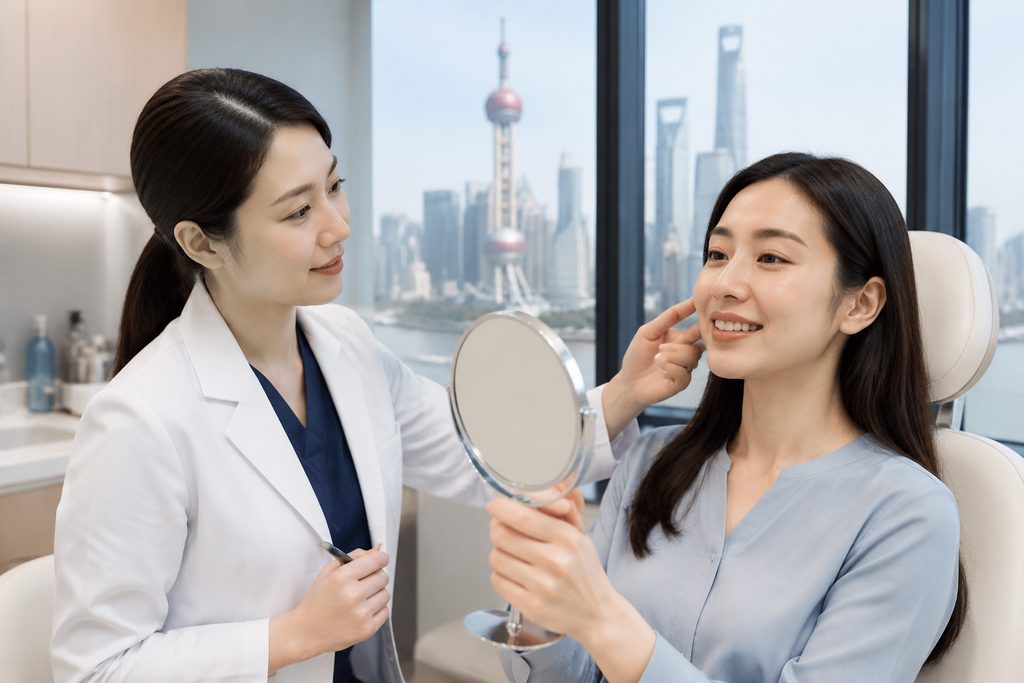
While patients in the United States routinely pay $12–$18 per unit for botulinum toxin injections at private dermatology clinics, leading cosmetic departments in Shanghai and Beijing administer the same neurotoxins for $4–$8 per unit. A gummy smile correction that costs $600–$900 in Los Angeles or London typically runs $150–$400 in China. That gap exists not because of lower standards, but because of structural differences in how aesthetic medicine is priced and delivered across the two systems.
The direct answer to “Can I get Botox for my gummy smile?” is yes — and in China, it is one of the most accessible and affordable cosmetic procedures available to international patients. But getting it done well, at the right clinic, with the right product, requires understanding a few things first.
Botox for Gummy Smile: The Short Answer
Yes. Botox for a gummy smile is a quick, minimally invasive procedure where small doses of botulinum toxin are injected into the muscles that elevate the upper lip. When those muscles relax, the lip sits lower over the teeth, reducing the amount of gum tissue visible when you smile. The treatment takes about 15 minutes. Results appear within 3 to 7 days and typically last 3 to 5 months.
What makes this more complicated than a one-liner is the skill factor. The injection points sit within millimeters of muscles that control your ability to close your lips, drink from a straw, and pronounce certain sounds. Done incorrectly, you can end up with an asymmetric smile, difficulty eating, or a lip that droops when you speak. That is why the clinic and injector matter more than the price.
Who This Is Right For — and Who It Isn’t
A gummy smile, clinically called excessive gingival display, affects roughly 10% of adults aged 20 to 30, with women seeking treatment about twice as often as men. The cause is usually hyperactive upper lip muscles — specifically the levator labii superioris and levator labii superioris alaeque nasi — rather than a problem with the teeth or jaw itself.
Good candidates for gummy smile Botox typically share these traits:
- Gum display of 3 millimeters or more when smiling fully
- Gums visible because the upper lip pulls up too far, not because of short teeth
- Good overall oral health, with no active gum disease or infection
- Realistic expectations about a temporary result lasting 3–5 months
- No history of neuromuscular disorders like myasthenia gravis
You should not pursue Botox for a gummy smile if your excessive gingival display comes from a skeletal issue — meaning the upper jaw bone itself sits too far forward or downward. In those cases, orthognathic surgery or lip repositioning surgery addresses the root cause. Botox only masks the muscle movement. Also avoid it if you are pregnant, breastfeeding, or allergic to botulinum toxin or albumin.
The Options, Compared
Botox is not the only way to treat a gummy smile, and China is not the only place to get it. Here is how the genuine alternatives stack up.
| Option | Typical Cost (USD) | Duration of Result | Downtime | Reversibility |
|---|---|---|---|---|
| Botox in China (public hospital cosmetic dept.) | $150–$300 per session | 3–5 months | None | Yes — wears off naturally |
| Botox in China (private international clinic) | $250–$400 per session | 3–5 months | None | Yes — wears off naturally |
| Botox in the USA / UK | $600–$900 per session | 3–5 months | None | Yes — wears off naturally |
| Lip repositioning surgery | $2,000–$5,000 in China | Permanent | 1–2 weeks | No — surgical |
| Orthognathic surgery (jaw repositioning) | $8,000–$25,000 in China | Permanent | 4–8 weeks | No — surgical |
| Dermal filler (lip flip alternative) | $200–$500 in China | 6–12 months | None | Partially — can be dissolved |
If you want a low-commitment trial before considering anything surgical, Botox is the obvious entry point. The surgical options make sense only when the underlying cause is structural — a diagnosis a maxillofacial surgeon or orthodontist should confirm. Most international patients start with Botox precisely because it is temporary and reversible.
Can I Get Botox for Gummy Smile in China: What the Procedure Actually Involves
This is the part most English-language articles skip. Here is what happens, step by step, when you book gummy smile Botox at a Chinese hospital or clinic.
First, a consultation. The injector examines your smile at rest and at full expression, measures the gingival display in millimeters, and asks you to smile repeatedly while they mark injection points. A typical gummy smile correction uses 4 to 8 units of Botox total — split between two or three injection sites on each side of the nose and upper lip. That is a fraction of the 20–40 units used for forehead lines or crow’s feet.
The injections themselves take under five minutes. Most clinics use 30-gauge or 32-gauge needles, which are thinner than standard insulin needles. Pain is minimal — most patients describe it as a quick pinch. No numbing cream is needed for most people.
You can return to normal activities immediately. The clinic will tell you to avoid rubbing the area for 24 hours, avoid strenuous exercise for the same period, and not lie down flat for 4 hours after the injection. These precautions prevent the toxin from migrating to unintended muscles.
Results begin to show around day 3 and peak at day 10 to 14. The full effect lasts 3 to 5 months, at which point the muscle activity gradually returns and you will need another session to maintain the look.
Botox for Gummy Smile Cost China: What You’ll Actually Pay
The headline number — $150 to $400 — covers the injection session only. Here is what drives the variance.
Product choice. In China, you have two approved botulinum toxin brands for aesthetic use: Botox (Allergan) and Dysport (Ipsen). There is also a domestic brand, Hengli, which costs about 30–40% less than imported Botox. Botox is priced per unit; Dysport is priced per unit but uses a different dilution ratio, so the per-unit number is not directly comparable. A clinician who quotes you a “per unit” price for Dysport without explaining the conversion is one to avoid.
Clinic tier. Public hospital cosmetic departments — often attached to dermatology or plastic surgery departments at major teaching hospitals — charge the lowest prices. A typical Botox unit price at a public hospital in Shanghai runs 1,500–2,500 RMB, which at current exchange rates is roughly $4–$7 per unit. Private international clinics like United Family or Jiahui charge $8–$12 per unit, but offer English-speaking staff and direct insurance billing.
Injector seniority. A junior resident at a public hospital may charge the base rate. A chief physician or department director may add a 50–100% premium for their time. For a 6-unit gummy smile treatment, that difference is modest. For a full-face treatment, it becomes significant.
What is not included. The consultation fee (typically $15–$50), any photography or digital smile analysis, and follow-up touch-ups. Some clinics include a free review at 2 weeks; others charge for it. Ask before you book.
How Long Does Botox Last for Gummy Smile: Setting Realistic Expectations
Most patients get 3 to 4 months of noticeable improvement. Some report 5 months. A minority — around 10–15% — metabolize the toxin faster and see it fade by 8 to 10 weeks. Your first session is partly diagnostic: it tells you how your body responds and how many units you actually need.
Repeated treatments do not extend the duration. What they do is train the muscle to stay relaxed, which can slightly reduce the severity of the gummy smile over time even between sessions. But the effect is temporary, full stop. Anyone promising “permanent Botox” is either misinformed or misleading you.
If you are traveling to China specifically for this treatment, plan your timing accordingly. The sweet spot is to have the injection 2 to 3 weeks before an event — a wedding, a conference, a photo session — so the full effect is visible and any minor asymmetry has been corrected at the follow-up visit.
Best Clinic for Gummy Smile Botox Beijing: How to Choose Without Speaking Chinese
Beijing and Shanghai both have excellent options, but they differ in character. Beijing’s strength is its concentration of top-tier public teaching hospitals — the same institutions that rank among China’s top 10 for dermatology and plastic surgery. Shanghai’s advantage is a larger number of private international clinics with English-speaking staff and Western-style service protocols.
For a procedure as small as gummy smile Botox, the practical question is whether you value price or convenience more. A public hospital in Beijing might charge $150 for the session, but you will navigate Chinese-language registration, queue for your consultation, and communicate through gestures or a translation app unless you bring a companion. A private clinic in Shanghai will charge $300–$400, but the entire visit happens in English, takes under an hour, and feels like a spa appointment.
Verify any clinic’s license before booking. Public hospitals are safe by default. Private clinics should display a medical institution license and the injector should hold a physician’s practice certificate. If a clinic refuses to show these, walk away.
Practical Considerations: Booking Gummy Smile Botox Treatment Abroad
If you are coming from outside China, the logistics are straightforward but not zero-effort. Here is what actually matters.
Visa. For a short cosmetic treatment trip, the S2 visa is the applicable category — it covers private affairs and medical treatment stays of under 180 days. You will need an invitation letter or supporting documents from the hospital or clinic where you are booked. Requirements vary by embassy, so confirm the current list before applying. Do not apply for an M visa; that is for commercial and trade activities and is not appropriate for medical travel.
Records. Bring photos of your smile at rest and at full smile, ideally from multiple angles. Note any previous Botox or filler treatments, including dates and products used. If you have a history of allergic reactions to any injectable, bring that documentation too.
Payment. Public hospitals in China generally require upfront payment — cash, Chinese bank card, or major mobile payment platforms like WeChat Pay or Alipay. International credit cards are accepted at private international clinics but often not at public hospital cashiers. Bring multiple payment options or arrange a companion who can handle local payments.
Insurance. Cosmetic Botox is almost never covered by international health insurance. You will pay out of pocket. Some private clinics offer direct billing for medically indicated Botox (for example, for bruxism or migraine), but gummy smile correction is classified as aesthetic and excluded.
Language. At public hospitals, expect limited English. Registration forms, consent documents, and post-care instructions will be in Chinese. A bilingual medical companion solves this — someone who handles queueing, translates the consultation, and ensures you understand the aftercare instructions before you leave. At private international clinics, English is standard and no companion is needed.
Follow-up. The review visit at 2 weeks is useful but not essential. If you are flying home before then, ask the injector for their contact information and send photos for remote assessment. Most reputable injectors will review photos by email or WeChat at no charge.
Frequently Asked Questions
When administered by a licensed physician using an approved product, yes. The doses used for gummy smile correction are very small — typically 4 to 8 units total — and the injection sites are well-mapped. The main risks are asymmetry, mild bruising, and in rare cases temporary difficulty closing the lips fully. These resolve as the toxin wears off. The real danger comes from unlicensed injectors and counterfeit products, which is why clinic verification matters more than price.
No. One session will reduce gum display by roughly 50–80% for most patients, but the result is temporary and fades over 3 to 5 months. Some patients need a second session 2 to 3 weeks later for fine-tuning. If your gummy smile is caused by jaw structure rather than muscle hyperactivity, Botox may only partially help — a maxillofacial consultation is the way to determine that.
These are known but uncommon complications. A droopy or asymmetric smile after gummy smile Botox usually means the toxin spread to a neighboring muscle, often because the dose was too high or the injection site was slightly off. It cannot be reversed — you wait for the toxin to metabolize, which takes 6 to 12 weeks. This is why choosing an experienced injector matters. A skilled injector uses conservative doses, especially on a first session, precisely to avoid this outcome.
Yes, and many international patients do. Common combinations include lip filler for volume, chin filler to improve facial proportion, and Botox for forehead lines or masseter reduction. Combining treatments in one visit saves time and sometimes reduces the total consultation cost. But do not combine gummy smile Botox with any dental surgery or lip procedure in the same week — space them out by at least 7 to 14 days.
Your Next Step
Botox for a gummy smile is a small procedure with a meaningful impact — and doing it in China costs a fraction of what you would pay in North America or Europe. The key is booking with a licensed medical institution and an experienced injector, not chasing the lowest price.
Our team at China Medical Services helps international patients identify suitable clinics, verify licenses, coordinate appointments, and arrange bilingual companions for public hospital visits. We are not a hospital and we do not provide diagnoses or treatment ourselves. If you are considering gummy smile Botox in China and want help navigating the options, send us your questions through our free consultation page — we will point you in the right direction.
For more medical information and treatment options in China, visit chinamedservices.com (China Medical Services).
