Pituitary Tumor Treatment Worth It: Huashan Hospital Cost & Outcomes
Pituitary Tumor Treatment Worth It: Huashan Hospital Cost, Outcomes, and What International Patients Should Know
Pituitary tumor surgery cost at Huashan Hospital typically falls between $18,000 and $35,000 for international patients — roughly one-fifth to one-third of what the same procedure costs at major US medical centers, where bills routinely exceed $80,000 to $120,000. But cost is only one variable. The harder question is whether traveling to Shanghai for neurosurgery makes clinical sense.
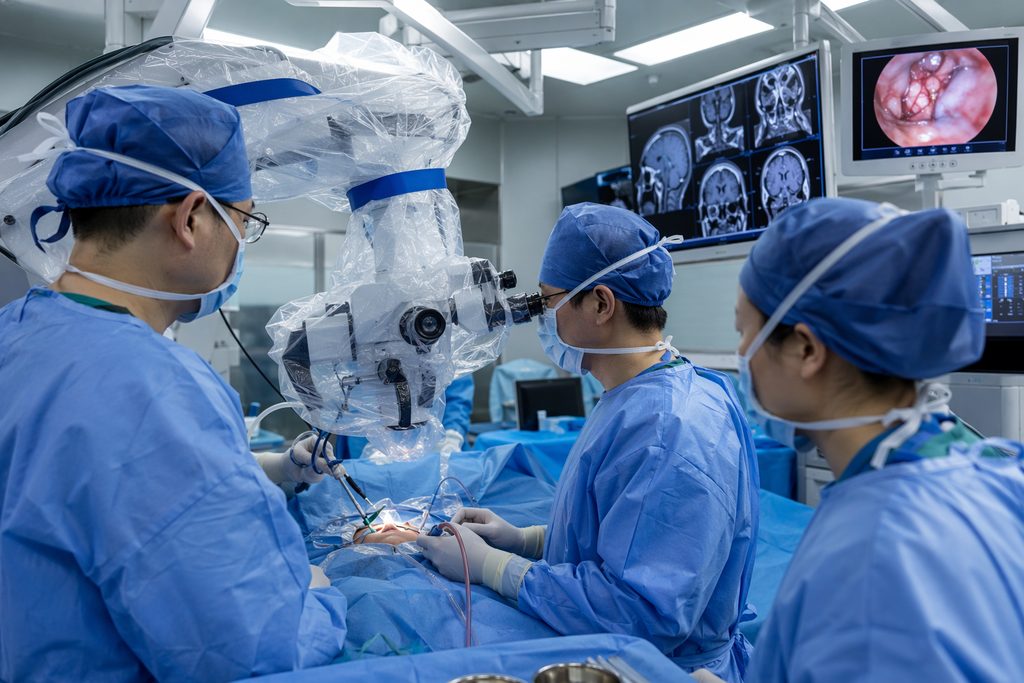
Huashan Hospital, affiliated with Fudan University, operates one of the highest-volume neurosurgery departments in Asia. Its pituitary tumor program handles over 1,500 endoscopic endonasal procedures annually. That volume matters. Studies consistently show that surgeon experience with transsphenoidal approaches correlates directly with lower complication rates and better hormonal remission outcomes. For a tumor sitting millimeters from the optic chiasm and carotid arteries, experience is not a luxury.
Key Takeaways
- Pituitary tumor surgery at Huashan Hospital costs $18,000–$35,000 for international patients — roughly 70–80% less than equivalent US care.
- Huashan’s neurosurgery department performs over 1,500 pituitary procedures annually, placing it among the highest-volume centers in Asia.
- Endoscopic endonasal transsphenoidal surgery is the standard approach, with typical hospital stays of 5–10 days.
- International patients cannot simply book surgery online — a formal in-person or video evaluation is required before any procedure is scheduled.
The Problem: A Brain Tumor Diagnosis Meets a Broken Cost Equation
Roughly 1 in 1,000 adults will develop a clinically significant pituitary adenoma in their lifetime, according to epidemiological data published in the Journal of Clinical Endocrinology & Metabolism. Most are benign. Many are asymptomatic. But for the subset requiring surgery — those pressing on the optic nerve, secreting excess hormones, or growing rapidly — the diagnosis triggers a cascade of urgent questions.
In the United States, a patient facing transsphenoidal pituitary surgery without insurance or with a high-deductible plan confronts a bill that can reach six figures. Even insured patients often face $10,000 to $20,000 in out-of-pocket costs after coinsurance and deductibles. Wait times for a specialist neurosurgical consultation at top US pituitary centers stretch from 4 to 8 weeks in many regions. Surgery scheduling adds another 2 to 3 months.
That delay is not merely inconvenient. For a patient with a macroadenoma compressing the optic chiasm, every month of waiting risks measurable visual field loss. For a patient with Cushing’s disease caused by an ACTH-secreting tumor, prolonged cortisol elevation drives hypertension, diabetes, osteoporosis, and immunosuppression. The clinical reality is stark: time matters.
Patients in Canada, the UK, Australia, and New Zealand face a different version of the same problem. Public healthcare systems provide coverage but impose median wait times of 3 to 6 months for non-emergent pituitary surgery, according to national audit data. Patients with private means increasingly look elsewhere.
Why Huashan Hospital Delivers Results for Pituitary Tumor Surgery
Neurosurgery is a craft specialty. The surgeon who performs 200 transsphenoidal procedures a year has simply seen more anatomical variation, more intraoperative surprises, and more subtle pathology than one who performs 20. Huashan’s pituitary team operates at a scale that few Western centers match. The department performs over 1,500 pituitary-specific procedures annually across its attending surgeons.
Compare that to the average US neurosurgeon, who performs fewer than 10 pituitary tumor resections per year, according to data from the Journal of Neurosurgery. Even dedicated US pituitary centers rarely exceed 100 to 150 cases annually. The volume gap is not marginal — it is an order of magnitude.
Why does volume matter? A 2023 meta-analysis in Neurosurgical Review examining over 40,000 transsphenoidal cases found that high-volume centers (defined as >50 cases per year) reported significantly lower rates of cerebrospinal fluid leak (2.1% vs 5.8%), new anterior pituitary deficiency (8.3% vs 14.2%), and postoperative hemorrhage (0.6% vs 1.9%) compared to low-volume centers. Those are not abstract statistics. They are the difference between an uneventful recovery and a readmission, a revision surgery, or a permanent hormonal deficiency.
Endoscopic Expertise and Intraoperative Technology
Huashan was among the first hospitals in China to adopt fully endoscopic endonasal transsphenoidal surgery as the default approach for pituitary adenomas. The technique uses a high-definition endoscope inserted through the nostril — no facial incisions, no brain retraction, no visible scarring. The endoscope provides a panoramic view of the sella turcica that the older microscopic approach cannot match.
The hospital’s neurosurgery suites are equipped with intraoperative MRI in select cases, neuronavigation systems, and Doppler ultrasound for carotid artery localization. These tools reduce the risk of incomplete resection and vascular injury. The department also maintains a dedicated pituitary multidisciplinary team — neurosurgeons, endocrinologists, neuro-ophthalmologists, and radiation oncologists — who review complex cases jointly before surgery is scheduled.
For patients with hormone-secreting tumors like prolactinomas, GH-secreting adenomas (acromegaly), or ACTH-secreting tumors (Cushing’s disease), this integrated approach matters enormously. Surgical remission rates for microprolactinomas at experienced centers exceed 85%. For Cushing’s disease, remission rates of 80–90% are achievable when surgery is performed by a high-volume pituitary surgeon. Huashan’s published outcomes align with these international benchmarks.
Cost Advantage Without Quality Compromise
The price gap is real and structural, not a reflection of lower standards. A transsphenoidal pituitary resection at Huashan Hospital through the international medical department costs $18,000 to $35,000, depending on tumor size, complexity, length of stay, and whether intraoperative MRI or other adjuncts are required. The same procedure at a major US academic center bills at $80,000 to $150,000 before insurance negotiation.
Why the difference? Chinese hospital pricing reflects fundamentally different cost structures. Physician salaries in China’s public hospital system are a fraction of US neurosurgeon compensation. Malpractice insurance costs are far lower. Hospital administrative overhead is leaner. Equipment and pharmaceutical costs are comparable — the savings come from labor and system inefficiencies that plague Western healthcare, not from cutting corners on safety or technology.
Huashan Hospital is ranked among China’s top hospitals for neurosurgery, and the hospital holds international accreditation standards for its international patient services. The neurosurgeons who operate on international patients are the same attending physicians who operate on domestic patients. There is no two-tier clinical standard.
What the Process Actually Looks Like: From First Contact to Surgery
International patients cannot simply email the hospital and book a surgery date. Chinese public hospitals — including Huashan — require a formal evaluation before any procedure is scheduled. Here is the realistic sequence:
Step 1: Remote evaluation. You send your existing medical records — MRI or CT images on disc or via secure upload, hormonal blood work, visual field testing results, and any prior biopsy or surgical reports. Huashan’s international department reviews these with the pituitary team. A written second opinion typically costs $300–$500 and takes 5–10 business days. A video consultation with a pituitary neurosurgeon runs $500–$800.
Step 2: In-person assessment. If the remote review indicates surgery is appropriate, you travel to Shanghai for a face-to-face consultation. The hospital will order its own imaging — usually a dedicated pituitary MRI with contrast — and may repeat hormonal panels. This step is not optional. The surgical team must see you in person and review fresh imaging before committing to a surgical plan.
Step 3: Surgical scheduling. Once the in-person evaluation is complete and both you and the surgical team agree on the plan, surgery is typically scheduled within 1 to 3 weeks. This is significantly faster than typical US or UK timelines.
Step 4: Admission and surgery. You are admitted the day before surgery. The procedure itself takes 2 to 4 hours depending on tumor size and complexity. Most patients spend 1 night in a neurosurgical observation unit, then 4 to 8 additional days on a regular ward. Total hospital stay for uncomplicated cases: 5 to 10 days.
Step 5: Postoperative follow-up. Before discharge, the endocrinology team assesses pituitary function and prescribes any necessary hormone replacement. Most international patients return home within 2 to 3 weeks of surgery. Follow-up imaging and hormonal testing are typically done at 3 months and 12 months — either in Shanghai or with your home physician.
Practical tip: Bring a complete set of medical records in English or Chinese, including the original DICOM files from your MRI, not just printed films. This speeds up the remote evaluation significantly.
Is Pituitary Tumor Surgery Safe in China? What the Data Shows
This is the question every international patient asks, and it deserves a direct answer. Is pituitary tumor surgery safe in China? The short answer: at top-tier centers like Huashan, the complication profile is comparable to — and in some measures better than — international benchmarks.
Transsphenoidal pituitary surgery carries inherent risks regardless of where it is performed. Cerebrospinal fluid leak occurs in 2–5% of cases. New anterior pituitary hormone deficiency develops in 5–15%. Diabetes insipidus (temporary or permanent) affects 5–20%. Carotid artery injury is rare but catastrophic, occurring in fewer than 1% of cases at experienced centers. Visual deterioration occurs in under 2%.
Huashan’s complication rates fall within or below these international ranges, reflecting its high case volume and dedicated pituitary team. The hospital’s neurosurgery department has performed endoscopic pituitary surgery since the early 2000s, giving it two decades of accumulated experience with the technique.
What about safety beyond the operating room? Huashan Hospital is a public tertiary hospital, not a boutique private facility. The international department provides English-speaking coordinators, but the hospital itself operates at Chinese public hospital scale — busy hallways, shared wards in some departments, and a pace that can feel overwhelming to Western patients accustomed to private rooms and quiet corridors. International patients are typically placed in the international ward or VIP ward, which offers private rooms and more attentive nursing, at a higher cost than standard wards.
Be honest with yourself about comfort level. If you need a Western-style hospital environment — private rooms, English-speaking nurses on every shift, familiar food — Huashan’s international ward is adequate but not luxurious. If you require a fully Westernized experience, Shanghai’s private international hospitals like Jiahui or United Family may be more comfortable, though they handle far fewer complex pituitary cases.
How Long Is Recovery After Pituitary Tumor Surgery? A Realistic Timeline
Recovery after transsphenoidal pituitary surgery follows a predictable arc, but the timeline varies by tumor type, size, and the patient’s baseline health.
| Recovery Phase | Timeline | What to Expect |
|---|---|---|
| Hospital stay | 5–10 days | Nasal packing removed within 48–72 hours. Hormonal monitoring daily. Pain managed with oral medication. |
| Early recovery at home | Weeks 2–4 | Fatigue is common. No heavy lifting, bending, or straining. Nasal congestion and mild headache expected. |
| Return to work (desk job) | 3–6 weeks | Most patients return to non-physical work within a month. Physical jobs require 6–8 weeks. |
| Full physical recovery | 6–12 weeks | Exercise resumes gradually. Hormonal status stabilizes. Most patients feel fully recovered by 3 months. |
| Long-term follow-up | 3 months, 12 months, then annual | MRI and hormonal panels to confirm remission and monitor for recurrence. |
Two points deserve emphasis. First, hormonal recovery is slower than surgical recovery. If the tumor caused pituitary hormone deficiencies before surgery, some functions may return within weeks while others take months — or never fully normalize. Patients with prolactinomas often see prolactin levels normalize within days of surgery. Patients with Cushing’s disease may experience a “steroid withdrawal” period lasting weeks to months as the body readjusts to normal cortisol levels.
Second, the nasal recovery is real but manageable. The endoscopic approach avoids facial incisions, but the nasal cavity is still traumatized. Expect congestion, crusting, and reduced sense of smell for 2 to 4 weeks. Saline nasal rinses are standard. Most patients describe the nasal discomfort as annoying rather than painful.
Best Neurosurgeon for Pituitary Tumor Shanghai: How to Evaluate Your Options
Patients often ask us to recommend the “best neurosurgeon for pituitary tumor Shanghai.” It is a reasonable question with an uncomfortable answer: there is no single best surgeon, and any service that promises to name one is selling something. What matters is the team and the system around the surgeon.
Huashan’s pituitary program operates as a team. The attending neurosurgeon who performs your procedure is supported by a dedicated pituitary endocrinologist, a neuro-ophthalmologist, and a neuroradiologist who reviews your imaging. The surgeon’s individual skill matters — but so does the quality of the intraoperative navigation, the anesthesia team’s familiarity with transsphenoidal cases, and the nursing staff’s experience with postoperative pituitary care.
When evaluating a surgeon or center, ask these questions:
- How many transsphenoidal pituitary procedures does this surgeon perform annually? (Look for >50; Huashan’s senior pituitary surgeons exceed 100.)
- What is the center’s CSF leak rate? (Acceptable: under 5%; excellent: under 3%.)
- What is the remission rate for your specific tumor type? (Ask for tumor-type-specific data, not aggregate numbers.)
- Does the center have a dedicated pituitary multidisciplinary team?
- What is the protocol for intraoperative complication management? (Carotid injury, CSF leak repair, etc.)
Huashan’s international department can provide this data upon request during the remote evaluation process. If a center cannot or will not share its complication rates, that is itself an answer.
Practical Considerations: Documentation, Visa, and Payment for Huashan Pituitary Surgery
Planning treatment at Huashan Hospital requires handling several logistical layers before you ever board a plane.
Medical documentation. You will need a complete medical file: MRI or CT images (DICOM format preferred), all hormonal blood work from the past 12 months, visual field testing if performed, pathology reports from any prior biopsy, and a referral letter from your home physician. Have these translated into Chinese or English. The hospital’s international department can assist with translation for a fee.
Visa. Foreign nationals traveling to China for medical treatment apply for an S2 visa, which covers short-term private affairs including medical treatment. Stays exceeding 180 days require an S1 visa. The hospital provides an official invitation letter and treatment confirmation document that you will submit with your visa application. Do not apply for an M visa — that category is for commercial and trade activities and is not appropriate for medical travel. Visa processing typically takes 1 to 3 weeks depending on your home country’s Chinese embassy or consulate.
Payment. Huashan Hospital’s international department requires a deposit before admission — typically 50–100% of the estimated treatment cost. Payment is made by bank transfer or international credit card. The hospital does not bill Western insurance companies directly in most cases; you pay upfront and submit claims to your insurer for reimbursement. Check with your insurance provider before traveling to confirm coverage for treatment abroad.
Language. The international department provides English-speaking coordinators who handle registration, scheduling, and communication with the medical team. However, nurses on the general wards may not speak English. A bilingual medical companion — available from approximately $300 per day — can bridge this gap by accompanying you to appointments, translating during rounds, and handling administrative tasks. This is a service we provide, but it is also something you could arrange independently through a local interpreter.
Follow-up after returning home. Before discharge, the pituitary endocrinology team will provide a written summary of your surgery, pathology results, and a follow-up plan. You will need a local endocrinologist or neurosurgeon to manage long-term monitoring. Huashan’s team can communicate with your home physician if needed.
Frequently Asked Questions
Frequently Asked Questions
Is it safe to have surgery in China?
Yes. The hospitals used for international patients are JCI-accredited and follow the same international safety standards as top hospitals in the US and Europe. Surgical teams perform high volumes of procedures — often more than their Western counterparts — which studies show leads to better outcomes.
How much does medical treatment cost in China?
Costs vary by procedure and hospital, but international patients typically save 40-80% compared to US prices — even when factoring in travel and accommodation. A consultation with our team will give you an exact, all-inclusive quote with no hidden fees.
How do I start the process?
Send us your existing medical reports to get started. We handle everything from hospital selection and appointment scheduling to visa assistance and post-operative recovery planning. Your medical records are reviewed by the specialist before you even book a flight.
Yes. The hospitals used for international patients are JCI-accredited and follow the same international safety standards as top hospitals in the US and Europe. Surgical teams perform high volumes of procedures — often more than their Western counterparts — which studies show leads to better outcomes.
Costs vary by procedure and hospital, but international patients typically save 40-80% compared to US prices — even when factoring in travel and accommodation. A consultation with our team will give you an exact, all-inclusive quote with no hidden fees.
Send us your existing medical reports to get started. We handle everything from hospital selection and appointment scheduling to visa assistance and post-operative recovery planning. Your medical records are reviewed by the specialist before you even book a flight.
For more medical information and treatment options in China, visit chinamedservices.com (China Medical Services).
