Maternity Care in Suzhou for Foreigners: Private Obstetrics with a Full-Time Local Companion
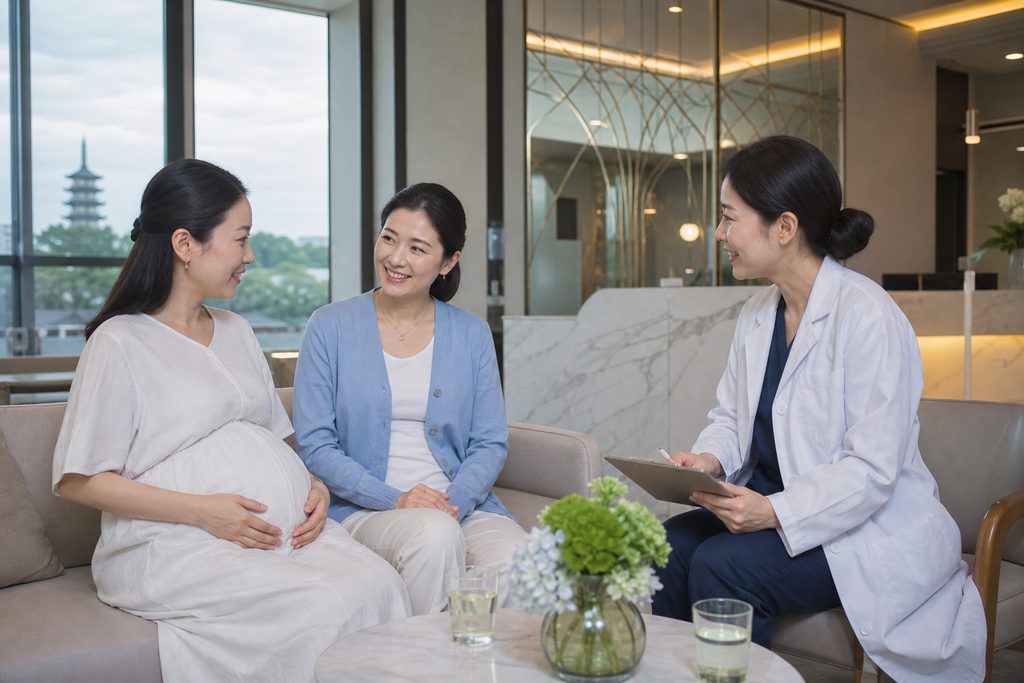
When Sarah and her husband relocated from Manchester to Suzhou Industrial Park, the excitement of the new job was eclipsed by a single, pressing worry. She was sixteen weeks pregnant. The language barrier, the unfamiliar hospital system, and the sheer distance from her mother made the prospect of giving birth feel less like a joyful milestone and more like a logistical nightmare. She spent her first week in China not unpacking boxes, but frantically searching for how maternity care actually works for expats. The core question, the one that kept her up at night, was straightforward: what is the real private maternity hospital Suzhou price, and what exactly does that buy you when you cannot read a single character on a registration form?
The direct answer is that a comprehensive private obstetrics package in Suzhou, covering prenatal care through a standard vaginal delivery with a private room, typically ranges from $8,000 to $22,000 USD. A C-section adds $3,000 to $5,000. That is the headline number. But that figure is just the hospital’s bill. It does not account for the hidden cost that derails most expat birth plans: the mental and physical toll of navigating a system where every form, every hallway sign, and every critical consent conversation happens in Mandarin. This is why the smartest investment you can make is not just a private room. It is a human bridge.
The Real Cost of Giving Birth in Suzhou for Foreigners
We need to break down the cost of giving birth in Suzhou China for foreigners into its actual components. A hospital’s package price is not an all-inclusive resort fee. You are buying clinical safety and a physical space. You are not automatically buying communication, cultural mediation, or advocacy.
A standard private package at a facility like Suzhou Kowloon Hospital’s International Clinic or the VIP wing of the Affiliated Suzhou Hospital of Nanjing Medical University will typically bundle the following: scheduled prenatal checkups, routine blood work and ultrasounds, the delivery charge, a private recovery room for three to five nights, newborn screening, and basic vaccinations. What it often excludes are the unexpected interventions. An epidural might be a separate line item. An emergency C-section will reset the pricing structure. NICU care for the baby, if needed for even 48 hours, is billed independently and can add $1,500 to $3,000 per day. A high-risk pregnancy requiring more frequent scans or specialist consultations sits outside the standard package entirely.
Then there is the logistics layer. If you arrive at the hospital in labor at 2 a.m., you need someone who can argue with the night-shift clerk about your pre-registration status. You need someone who understands that the form asking for your “Chinese name” cannot be left blank and knows the workaround. That person is a bilingual medical companion. Their fee, starting from $300 per day, is the line item that prevents the other line items from spiraling out of control due to a simple misunderstanding.
How Does Maternity Care Work in China for Expats?
The workflow is fundamentally different from a Western OB-GYN model. Understanding this structure is the difference between a calm third trimester and a panicked one. In the UK or US, you likely had a dedicated obstetrician you saw for every visit. That doctor knew your history, your preferences, and your birth plan. In China, even in the private sector, you are often booking into a team rather than an individual.
Here is the standard flow. You choose a hospital, not a specific doctor. You register and pay for a prenatal package. At each visit, you will see whichever senior consultant is on rotation in the VIP clinic that day. Your file is electronic and shared, but you will need to re-explain your key concerns each time. The doctor who does your 20-week anatomy scan is almost certainly not the doctor who will deliver your baby. The delivery is handled by the on-call obstetrics team. This system works efficiently for a high-volume population, but it can feel impersonal and disjointed if you expect continuity of care.
This is where a local companion shifts the dynamic. They do not replace the medical team. They create continuity on your side of the equation. They arrive early, confirm which doctor is on duty, brief you on their background, and ensure the doctor has your full history before they walk in. They translate your questions and, more importantly, the nuance of the answers. “The baby’s head is slightly down” means something very different from “the head is engaged.” A companion captures that distinction. They also handle the chaotic post-consultation sprint: taking the prescription to the pharmacy window, queuing for the next scan appointment, and paying the deposit at a separate counter on a different floor. You sit. You wait. They run.
What Is Included in a Private Obstetrics Package in Suzhou?
You need to read the fine print with a skeptic’s eye. When a hospital markets a “VIP Maternity Package,” the definition of VIP can mean anything from a larger room to genuine concierge-level care. We have reviewed the standard inclusions across Suzhou’s private and international clinic wings. Here is what you should insist on seeing in writing.
| Package Component | Typically Included | Often Excluded (Ask Directly) |
|---|---|---|
| Prenatal Care | 12-14 scheduled checkups, routine ultrasounds, basic blood panels | NIPT (non-invasive prenatal testing), amniocentesis, extra growth scans |
| Labor & Delivery | Standard vaginal delivery, standard C-section fee, epidural anesthesia | Emergency C-section surcharge, forceps/vacuum assistance, labor induction drugs |
| Room & Board | Private room for 3-5 nights, basic meals for mother | Partner meals, extra bed for partner, room upgrade to a suite |
| Newborn Care | Initial pediatric exam, standard vaccinations, hearing screen | NICU admission, phototherapy for jaundice, formula supply |
| Support Services | Lactation consultant visit (sometimes) | Postpartum doula, birth certificate translation, visa medical report |
A package is a starting point, not a guarantee. The single most valuable thing a companion does during the booking phase is sit across the desk from the hospital’s billing department and ask the blunt questions. “If my client needs an unplanned C-section at 3 a.m., what is the exact surcharge? Is the anesthesiologist’s fee bundled or separate? If the baby needs phototherapy for two days, is that billed under pediatrics or neonatology?” These are not theoretical. These are the charges that turn a $12,000 plan into a $20,000 reality.
Finding the Best Private OBGYN Clinic Suzhou for International Patients
Suzhou does not have the sheer density of expat-focused private hospitals that Shanghai offers, but what exists is high-quality and far less crowded. Your choice comes down to a fundamental trade-off: a dedicated international clinic within a large public hospital, or a standalone private hospital.
The international clinic inside a major public hospital, such as the one at the First Affiliated Hospital of Soochow University, offers a critical safety net. If something goes catastrophically wrong during delivery—a rare but real possibility—you are already inside a facility with a top-tier NICU, a 24-hour blood bank, and every surgical subspecialty down the hall. The trade-off is that the environment still feels institutionally Chinese. The VIP wing is nicer, but the corridors outside are crowded. The nursing staff may have one English-speaking nurse on rotation, not on your personal call button.
A standalone private hospital, like Suzhou Kowloon Hospital, which operates a dedicated international clinic, offers a more familiar, hotel-like experience. The staff-to-patient ratio is higher. English proficiency is more consistent. The food is better. The cost is also higher, often by 30-40%. The trade-off is that for severe, unexpected neonatal complications, a private hospital may need to transfer your baby to a public children’s hospital. That transfer protocol should be a question you ask during your tour. Not if it exists. But how it works. Who calls the ambulance? Who accompanies the baby? How are the medical records transferred? A companion ensures these answers are documented, not just verbally promised.
How to Book a Private Maternity Hospital in Suzhou with a Translator
The phrase “with a translator” undersells what you actually need. A translator converts words. A bilingual medical companion converts a system. When you contact us to book a private maternity hospital in Suzhou with a translator, the process is not simply hiring someone who speaks both languages. You are hiring institutional knowledge.
The booking sequence is critical and often counterintuitive. You cannot simply call a hospital and reserve a delivery bed for a date six months in the future. Chinese hospitals, even private ones, operate on a registration-first model. You must physically go to the hospital to create a medical file. You need your passport, your visa, and a local phone number. You pay a registration fee. Only then can you schedule your first prenatal appointment and secure your spot in the maternity package.
Our team handles this entire front-end process before you even arrive in Suzhou, or on your very first day. We take your passport copy, create the hospital file, pay the initial deposit on your behalf, and book your first consultation. When you walk into the hospital for the first time, you are not a stranger filling out forms at the admissions desk. You are a pre-registered patient with a scheduled appointment. Your companion meets you at the entrance, hands you your hospital card, and walks you directly to the correct clinic floor. That shift—from administrative chaos to clinical calm—is what the coordination fee actually buys.
The companion’s role during appointments is equally specific. They do not just interpret. They advocate. If a doctor recommends an induction at 39 weeks without a clear medical indication, your companion asks for the rationale and translates the answer in detail. If you want to decline a routine intervention, they ensure the refusal is documented correctly in your file. They are not a passive conduit. They are your voice, calibrated for the cultural and clinical context of a Chinese hospital.
Navigating the Visa and Documentation for Maternity Care
The medical dimension is only half the puzzle. The bureaucratic dimension can be just as stressful if you are unprepared. For maternity care, the applicable visa category is the S2 short-stay visa, or the S1 for stays exceeding 180 days. This is not a medical visa in the commercial sense—the M visa is strictly for trade and business activities and is not appropriate for medical treatment. You will need an invitation letter from the hospital or a formal documentation trail showing your booked medical service. We guide you through the exact documentation the local Exit-Entry Administration Bureau requires, which can vary by city and by the officer reviewing your case.
After the birth, you face a second wave of paperwork. The hospital issues a birth certificate in Chinese. You will need a notarized translation for your embassy, for your home country’s passport application, and for the child’s residence permit in China. The hospital will not handle this for you. Your companion coordinates the translation, the notarization, and the consular appointment. They ensure the baby’s name is spelled consistently across every document—a simple error that can take months to untangle.
Frequently Asked Questions
Can I have a natural birth in a Chinese private hospital, or do they push for C-sections?
The historical reputation of Chinese hospitals having excessively high C-section rates has changed significantly in top-tier private and VIP settings. In Suzhou’s international clinics, the C-section rate is much closer to Western norms, provided you have a low-risk pregnancy. However, the system still defaults to a more medicalized approach. You need to be explicit about your preference for an unmedicated birth, delayed cord clamping, or immediate skin-to-skin contact. A companion communicates this birth plan clearly at your 36-week appointment and ensures it is flagged in your file. Without that advocacy, the default clinical protocols will apply.
What if something goes wrong and my baby needs a NICU?
This is the scenario that justifies choosing a hospital with a Level III NICU, even if it means a less luxurious room for you. If your baby requires intensive care, the NICU team takes over, and your access to the baby will be governed by strict infection-control protocols. The NICU will communicate with you in Mandarin unless you have a companion. They will present consent forms for procedures, treatment plans, and daily updates. In a moment of extreme vulnerability, you cannot rely on a translation app. This is when a companion’s ability to sit in on the NICU rounds and translate the neonatologist’s assessment becomes the most valuable service you have ever paid for.
Is the cost of giving birth in Suzhou really cheaper than going back to my home country?
For a standard delivery without complications, the cost of giving birth in Suzhou China for foreigners is substantially lower than the uninsured cash price in the United States, where a vaginal delivery can easily exceed $30,000. It is comparable to, or slightly less than, the out-of-pocket cost in a private London hospital. The real savings are not just financial. They are in continuity. Flying home at 32 weeks means separating from your partner if they must stay for work. It means finding a new provider late in pregnancy. The value of delivering where you live, with a team that has managed your entire prenatal journey, is difficult to quantify but easy to feel.
How do I know if a companion is medically qualified?
A bilingual medical companion is not a midwife or a nurse. We are not clinically qualified to take your blood pressure or interpret a fetal heart tracing. Our expertise is in medical process coordination and accurate, contextual translation. We know the difference between “fetal distress” and “variable decelerations.” We know what a Bishop score is and why the doctor is discussing it. We will never give you medical advice. We will ensure you understand exactly what the doctor is advising, and we will ensure the doctor understands your response. That clarity is a safety measure in itself.
Your Next Step
Having a baby in a country where you cannot read the hospital signs is not a leap of faith. It is a logistics project with a profoundly emotional outcome. The private maternity hospital Suzhou price is the visible cost. The invisible cost is the stress of navigating it alone. Our team at China Medical Services does not deliver babies. We are not a hospital. We do not diagnose conditions or make clinical recommendations. What we do is ensure that when you walk into a Suzhou hospital for your prenatal visit or in labor, you are not walking in alone. You have someone who knows the floor plan, the paperwork, the right questions, and the language to ask them.
To begin the process, we invite you to request a free consultation through our patient coordination page. We will discuss your due date, your preferred hospital type, your budget, and your specific concerns. From there, we can outline a clear, staged plan. You focus on the pregnancy. We will handle the system.
For more medical information and treatment options in China, visit chinamedservices.com (China Medical Services).
