What Is Ultherapy and Does It Tighten Skin? A 2026 Guide to Results, Safety, and Ultherapy Cost China
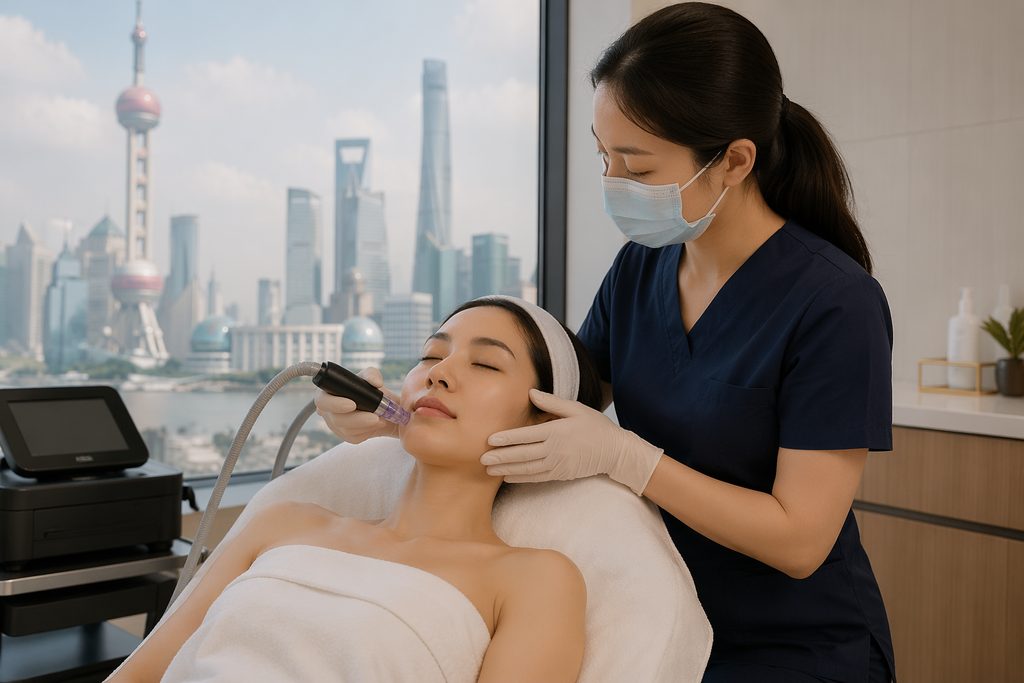
What Is Ultherapy and Does It Tighten Skin? Understanding the Treatment, Results, and Ultherapy Cost China
According to the American Society of Plastic Surgeons, nonsurgical skin tightening procedures grew by over 30% between 2019 and 2023, with ultrasound-based treatments among the fastest-growing categories. If you are searching for “What Is Ultherapy and does it tighten skin?”, you are likely weighing a nonsurgical facelift against surgical options — and wondering whether the results justify the price. Ultherapy, cleared by the U.S. FDA in 2009 for lifting the brow, chin, and neck, has since been performed millions of times worldwide. For international patients, the ultherapy cost China is often 40–60% lower than in the United States or Western Europe, which is why medical travelers increasingly include this treatment in broader health and aesthetic journeys.
This article explains exactly what Ultherapy does, what the evidence shows about skin tightening results, how long those results last, what safety considerations matter, and what you should know about booking treatment in Chinese cities like Shanghai or Beijing. We are China Medical Services, and our team helps international patients evaluate aesthetic and medical options across China’s top-ranked hospital network. We do not perform treatments and we do not give medical advice — we connect you with qualified providers and help you make an informed decision.
Key Takeaways
- Ultherapy is the only FDA-cleared, non-invasive procedure using micro-focused ultrasound with real-time visualization to lift and tighten skin at depths up to 4.5 mm.
- Clinical studies show measurable skin lifting in 65–70% of patients, with results developing gradually over 3–6 months as new collagen forms.
- Ultherapy cost China typically ranges from $600–$1,800 for a full face and neck treatment, compared with $2,500–$5,500 in the U.S. — a structural cost difference, not a quality compromise.
- Not everyone is a good candidate: severe skin laxity, very thin skin, or unrealistic expectations are common reasons for disappointing results.
The Problem: Skin Laxity Arrives Earlier Than Most People Expect
Facial skin begins losing measurable elasticity around age 30, with collagen production declining by roughly 1% per year after that point. By age 50, the average person has lost approximately 30% of their facial collagen. The visible consequences — jowls forming along the jawline, a softening neck contour, drooping brows — drive millions of people to consider surgical facelifts each year. But a traditional facelift costs $12,000–$25,000 in the United States, requires general anesthesia, and involves 2–4 weeks of visible recovery. For many people, that trade-off is unacceptable.
Dermal fillers offer a temporary fix, but they add volume rather than lifting tissue. Topical creams do almost nothing for structural laxity. Thread lifts produce variable results and carry their own complications. That gap — between doing nothing and going under the knife — is precisely where Ultherapy sits. It is not a replacement for a surgical facelift in patients with advanced laxity. But for mild to moderate skin laxity, it is one of the most studied nonsurgical options available.
Why Ultherapy Delivers Measurable Skin Tightening
Ultherapy uses micro-focused ultrasound energy to target the same tissue layer that a plastic surgeon pulls and tightens during a facelift — the superficial musculoaponeurotic system, or SMAS. That is the key structural difference between Ultherapy and other energy-based devices like radiofrequency or laser treatments, which mostly heat the upper dermis. By delivering focused thermal coagulation points at depths of 1.5 mm, 3.0 mm, and 4.5 mm, Ultherapy creates controlled micro-injuries that trigger the body’s natural wound-healing response. New collagen and elastin form over the following months, gradually lifting and firming the treated area.
Clinical Evidence Supports the Mechanism
A 2014 multicenter study published in the Journal of Drugs in Dermatology evaluated 93 patients treated with Ultherapy for facial skin laxity. At 90 days post-treatment, 65.6% of patients showed clinically significant improvement in brow elevation and lower face tightening, as assessed by blinded reviewers. A separate 2016 study in Dermatologic Surgery followed patients for one year and found that skin lift measurements improved by an average of 1.9 mm at the brow and 2.2 mm at the submental (under-chin) area. Those numbers sound small, but in facial aesthetics, a 2 mm brow lift is visibly noticeable — and it is achieved without a single incision.
Real-Time Imaging Reduces Guesswork
One structural advantage of Ultherapy over older ultrasound devices is its integrated ultrasound imaging. The practitioner sees the exact tissue layers on screen before delivering energy, which reduces the risk of hitting bone, nerve, or blood vessel. That imaging capability matters for safety and consistency — and it is one reason is Ultherapy safe in China is a question with a generally reassuring answer when the procedure is performed by a trained physician using authentic equipment. The key variable is operator skill, not geography.
Cost Advantage Without Quality Compromise
Lower prices in China do not reflect inferior technology or untrained providers. The structural reasons are straightforward: lower facility overhead, lower labor costs for nurses and administrative staff, and high patient volume in major urban centers. A board-certified dermatologist in Shanghai may perform 10–15 Ultherapy sessions per week, compared with 3–5 for a comparable U.S. practitioner. That volume drives efficiency. The device itself — manufactured by Merz Aesthetics — is the same FDA-cleared platform used in New York, London, or Seoul. When patients ask about ultherapy skin tightening Shanghai price, they are usually quoted $700–$1,200 for a full face treatment at a reputable private international clinic, or $500–$900 at a public hospital’s international medical department. The same treatment in Manhattan typically runs $3,000–$4,500.
What Happens During an Ultherapy Session: A Step-by-Step Timeline
A reader searching “What Is Ultherapy and does it tighten skin?” usually wants to know what the actual experience feels like. Here is what to expect, from arrival to walking out the door.
Before treatment (days 1–7): Your provider reviews your medical history, examines your skin laxity, and photographs the treatment area. You should stop retinoids, alpha-hydroxy acids, and any blood-thinning supplements like fish oil or vitamin E for 5–7 days prior. If you are traveling internationally for the procedure, schedule the consultation and treatment on the same trip — most clinics in China can accommodate this.
Day of treatment (60–90 minutes): The practitioner cleanses your skin and applies ultrasound gel. They then use the device’s imaging screen to map your tissue depth and mark treatment zones. A full face and neck session delivers between 300 and 400 ultrasound lines. You will feel brief, sharp pulses of heat as each line is delivered — most patients rate the discomfort 4–6 on a 10-point scale, with the jawline and under-chin being the most sensitive areas. Some clinics in China offer topical numbing cream or oral pain relief; others use the newer, faster handpieces that reduce total treatment time to under 45 minutes.
Immediately after: Mild redness and swelling are common and typically resolve within 2–4 hours. Some patients notice a subtle “lifted” feeling immediately, but that is temporary swelling, not the final result. You can return to normal activities the same day — no downtime, no bandages, no restrictions on flying.
Weeks 1–4: The treated collagen begins remodeling. Most people see little visible change during this period, which is normal and expected. Do not judge results at week two.
Months 2–6: This is when the lifting becomes visible. New collagen has formed and tightened the SMAS layer. Most patients see peak results around month 3–4, with continued improvement through month 6.
Practical tip: If you are traveling from abroad for Ultherapy, book your session for the first or second day of your trip. This gives you time to schedule a follow-up assessment before you fly home, and any minor redness will have resolved long before your departure.
How Long Does Ultherapy Last? Realistic Expectations for 2026
The most honest answer to how long does ultherapy last is: 12 to 18 months for most people, with significant individual variation. The collagen stimulated by treatment does not disappear at a fixed date. Instead, the tightening effect gradually fades as natural aging continues. A 2020 follow-up study in the Journal of Cosmetic Dermatology found that 62% of patients still showed measurable improvement at 18 months post-treatment, but the degree of lift had declined from the 6-month peak.
Maintenance protocols vary. Many providers recommend a touch-up session every 12–18 months to sustain results. Some patients combine Ultherapy with other modalities — a small amount of filler for volume loss, or a light laser treatment for surface texture — to extend the overall aesthetic benefit. What Ultherapy does not do is stop the aging process. Skin will continue to lose collagen at roughly 1% per year regardless of treatment. Ultherapy resets the clock partially; it does not pause it.
Ultherapy Cost China: What You Will Actually Pay in 2026
Prices for Ultherapy in China vary significantly by city, facility type, and treatment area. The figures below reflect current market ranges for international patients, based on published price lists from private international clinics and public hospital international departments in major Chinese cities. Always confirm current pricing with your chosen provider, as rates shift with currency exchange and clinic policy.
| Treatment Area | Shanghai (Private International Clinic) | Beijing (Public Hospital International Dept.) | United States (Average) |
|---|---|---|---|
| Full face | $800–$1,200 | $600–$900 | $2,500–$4,000 |
| Full face + neck | $1,100–$1,600 | $800–$1,200 | $3,500–$5,500 |
| Lower face + jawline | $600–$900 | $450–$700 | $1,800–$3,000 |
| Brow lift only | $400–$600 | $300–$500 | $1,200–$2,000 |
These are cash-pay prices for international patients. Chinese public hospitals require prepayment for aesthetic procedures; private international clinics may accept credit cards or direct insurance billing if your policy covers cosmetic treatment abroad. Most international health insurance plans do not cover elective aesthetic procedures, so plan to pay out of pocket. The ultherapy cost China advantage is real — savings of 50–65% versus U.S. pricing — but it only makes sense if you are already traveling to China or combining the treatment with other medical care. A standalone trip solely for Ultherapy may not justify the airfare.
Is Ultherapy Safe in China? What International Patients Should Verify
Safety concerns about aesthetic procedures abroad are legitimate. Counterfeit devices, untrained operators, and unregulated clinics exist in every country — including China. But the question is Ultherapy safe in China has a different answer depending on where you go. The Chinese medical aesthetic market is large and increasingly regulated. Since 2020, China’s National Health Commission has tightened oversight of medical aesthetic clinics, requiring licensed physicians for energy-based device treatments and cracking down on unlicensed operators.
What should you verify before booking? First, confirm the device is genuine Merz Ultherapy — ask to see the device serial number and verify it through Merz’s official channel. Second, confirm the practitioner is a licensed physician, not a beautician or “aesthetic consultant.” In China, only medical doctors may legally perform Ultherapy. Third, ask about the clinic’s complication protocol: what happens if you experience nerve injury, burns, or unsatisfactory results? Reputable clinics will have clear answers. Our team at China Medical Services can help you evaluate providers, verify credentials, and arrange consultations — but we always recommend you do your own due diligence as well.
For patients considering non surgical facelift abroad packages, China offers a particular advantage: many top-tier public hospitals now operate dedicated international medical departments with English-speaking staff, transparent pricing, and the same physicians who treat domestic patients. These departments were originally built for expatriates and foreign dignitaries, and they provide a level of oversight that independent aesthetic clinics may not match. If you want to book Ultherapy Beijing clinic appointments through a public hospital international department, expect to pay slightly more than at a private clinic, but with stronger institutional accountability.
Who Should Not Get Ultherapy
Ultherapy is not for everyone. Patients with severe skin laxity — significant jowling, deep nasolabial folds, pronounced neck banding — will likely be disappointed. A surgical facelift remains the gold standard for advanced laxity, and no amount of ultrasound energy will replicate surgical skin excision. Patients with very thin skin (common after age 70 or with long-term steroid use) may have insufficient tissue for safe energy delivery. Active skin infections, open wounds, or metal implants in the treatment area are contraindications. Pregnant women should postpone treatment. And anyone expecting a “liquid facelift” result from one session is setting themselves up for disappointment. Ultherapy lifts and tightens; it does not remove excess skin or reposition facial fat pads.
For patients with realistic expectations and mild to moderate laxity, Ultherapy remains one of the best-studied nonsurgical options. The American Society for Dermatologic Surgery’s 2023 consensus statement on energy-based skin tightening listed micro-focused ultrasound as a first-line treatment for early facial laxity, with a Grade A recommendation — the highest level of evidence support.
Practical Considerations: Booking Ultherapy as an International Patient
If you are traveling to China for treatment, several logistical points deserve attention. First, visa requirements: medical treatment falls under the S2 visa category for short stays (up to 180 days). You will need a letter from the treating hospital or clinic confirming your appointment, along with standard visa application materials. The M visa is for commercial and trade activities and is not appropriate for medical travel. Second, payment: Chinese public hospitals require prepayment at registration, and most do not accept foreign credit cards directly. Bring sufficient cash or arrange payment through your clinic’s international department, which typically handles foreign transactions. Third, language: even at international departments, not all nursing staff speak fluent English. A bilingual medical companion can handle registration, translation, and post-treatment instructions — services our team provides for international patients. Fourth, follow-up: Ultherapy requires no stitches or wound care, so post-treatment follow-up is minimal. But you should schedule a virtual check-in with your provider at the 3-month mark to assess results, which most Chinese international clinics now offer via video consultation.
One more consideration: combining treatments. Many of our patients schedule Ultherapy alongside other aesthetic or medical procedures — a full health screening, a dermatology consultation, or a dental appointment — to maximize the value of their trip. China’s top hospitals offer comprehensive packages through their international departments. If you are exploring top-ranked hospitals in China, look for institutions with dedicated dermatology and plastic surgery departments, as these are most likely to offer genuine Ultherapy with trained physician operators. Some patients also visit private international hospitals like United Family or Jiahui, which cater specifically to English-speaking patients and offer direct insurance billing for covered services.
Frequently Asked Questions
The evidence is real but modest. Clinical studies show measurable lift in roughly two-thirds of patients, with average improvements of 1–2 mm at the brow and jawline. That is visible but subtle — not a surgical result. Patients who see dramatic before-and-after photos online should understand that those often combine Ultherapy with fillers, Botox, or favorable lighting.
Full face and neck treatment in China typically costs $800–$1,600 at reputable clinics, compared with $3,500–$5,500 in the United States. The savings come from lower overhead and labor costs, not from inferior equipment or training. Always confirm the device is genuine Merz Ultherapy and the operator is a licensed physician.
What if my results are disappointing or I have a complication?
Unsatisfactory results are usually due to poor candidate selection or unrealistic expectations. Nerve injury and burns are rare but possible — reported in less than 1% of cases in published studies. Reputable clinics will have a clear protocol for managing complications and a follow-up policy.
For more medical information and treatment options in China, visit chinamedservices.com (China Medical Services).
