Is Hair Restoration Permanent? Real Data on Grafts, Costs and China Options
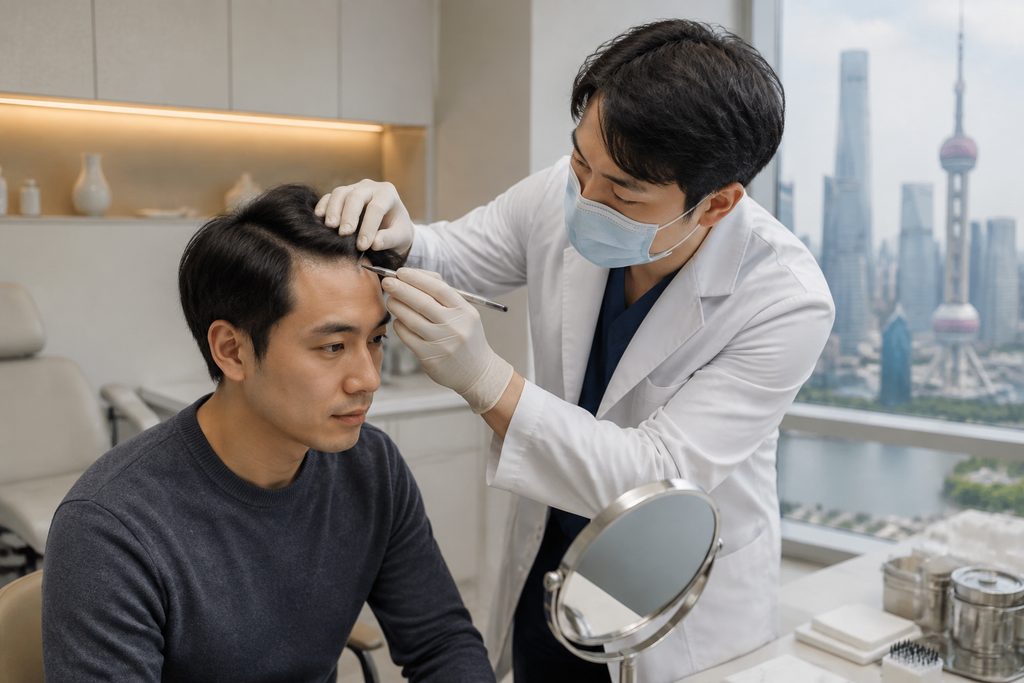
Is Hair Restoration Permanent? What the Data Actually Shows About Grafts, Survival Rates, and Hair Transplant Cost China
Hair restoration surgery moves healthy follicles from the back of your scalp to thinning areas. Those transplanted follicles keep their genetic resistance to DHT, the hormone that causes pattern baldness. So in the strictest biological sense, the grafts themselves are permanent. But the full picture is more complicated than a yes or no answer. And it has direct implications for what you pay — including the hair transplant cost China clinics quote versus what you might spend in the US, UK, or Turkey.
According to the International Society of Hair Restoration Surgery (ISHRS), over 700,000 hair restoration procedures were performed worldwide in 2021. The global market is projected to reach $43.3 billion by 2028. Patients fly across borders for this procedure. The reason is simple: the same FUE technique costs $15,000 in New York and $3,000 in Shanghai. That gap drives decisions.
But before you book anything, you need to understand what “permanent” actually means — and what it doesn’t. Because a hair transplant is not a one-time fix. It is a surgical intervention with a biological timeline. And the longevity of your result depends on factors most clinics won’t volunteer.
Key Takeaways
- Transplanted grafts are genetically permanent — but up to 10% may fail in the first year, and native hair around them keeps thinning without medication.
- Hair transplant cost China runs from $1.50 to $4 per graft at top-tier hospitals, versus $6 to $12 per graft in the United States.
- FUE hair transplant price Shanghai at reputable public and private hospitals typically lands between $2,800 and $6,000 for 2,000 grafts.
- No clinic anywhere can guarantee 100% graft survival. Be wary of any provider that promises “lifetime results” without explaining ongoing maintenance.
The Problem: Most Patients Misunderstand What “Permanent” Means
A 2022 survey published in the Journal of Cosmetic Dermatology found that 61% of men considering hair restoration believed the procedure would stop all future hair loss. That is not what happens. The transplanted hair keeps growing. The hair around it does not stop falling.
Here is the biological reality. Androgenetic alopecia — the most common form of hair loss, affecting approximately 50 million men in the US and 30 million women — is driven by dihydrotestosterone (DHT). Follicles on the top and front of the scalp are genetically sensitive to DHT. Follicles on the back and sides are not. When a surgeon extracts grafts from the donor zone at the back of your head and implants them into the balding crown or hairline, those follicles retain their original genetic programming. They remain resistant to DHT. So they continue to grow hair for the rest of your life, assuming they survive the transplant process.
But survival is not automatic. Graft survival rates vary from 85% to 95% depending on surgeon skill, graft handling time, and post-operative care. That means if you transplant 2,000 grafts, you might lose 100 to 300 of them in the first year. Those follicles are gone permanently. You cannot get them back.
And then there is the native hair problem. The hair you had before surgery keeps thinning. Without finasteride or minoxidil, many men see their non-transplanted hair continue to recede behind the transplanted zone within three to five years. The transplant looks permanent. The overall result does not.
So the honest answer to “is hair restoration permanent?” is this: the transplanted follicles are permanent, but the cosmetic result is not guaranteed to remain stable without medical maintenance. That distinction matters enormously when you are deciding whether to spend $15,000 in Los Angeles or look at the hair transplant cost China hospitals offer.
Why Hair Transplant Cost China Is Structurally Lower — Without Sacrificing Graft Survival
Patients often assume a lower price means lower quality. In hair restoration, the math is more nuanced. The gap between a $12,000 procedure in Miami and a $3,500 procedure in Shanghai is not explained by inferior surgeons. It is explained by labor economics, clinical volume, and the structure of Chinese hospital systems.
Clinical Volume Drives Surgical Reproducibility
Top-tier Chinese public hospitals perform hair restoration at volumes that dwarf Western clinics. A single hair transplant team at a major Shanghai hospital may complete 15 to 25 FUE procedures per week. That is 750 to 1,300 surgeries annually from one department. By comparison, a typical US hair restoration clinic performs 200 to 400 procedures per year.
Volume matters for one reason: FUE is a repetitive, technically demanding procedure. Each graft extraction requires precision. A surgeon who performs 800 extractions per week develops a level of motor consistency that a surgeon performing 100 per week cannot match. This does not mean Chinese surgeons are inherently more talented. It means the system gives them more repetitions.
That volume also drives down cost per procedure. When a hospital amortizes equipment, surgical suites, and staff across 1,000 annual cases instead of 300, the fixed cost per patient drops substantially. Those savings pass through to the patient.
Labor Economics Explain Most of the Price Gap
The average annual salary for a registered nurse in Shanghai is approximately $18,000 to $25,000. In the United States, a registered nurse earns $75,000 to $90,000. Surgical technicians, anesthesiologists, and support staff follow similar ratios. Hair restoration is labor-intensive — a 2,000-graft FUE procedure takes 6 to 8 hours with a team of 4 to 6 people. Labor is the dominant cost driver.
That is why the FUE hair transplant price Shanghai clinics quote — typically $2,800 to $6,000 for a standard 2,000-graft session — is not a red flag. It reflects the local wage structure. The same procedure in London costs £6,000 to £12,000. In New York, $10,000 to $20,000. The grafts are the same. The technique is the same. The labor cost is not.
Hospital Infrastructure Absorbs Quality Control Costs
One of the structural advantages of seeking treatment at a major Chinese hospital is that hair restoration sits inside a broader medical institution. The best hair restoration clinic Beijing patients choose is often a department within a large public hospital — not a standalone cosmetic clinic. That means the facility has in-house pathology labs, infection control protocols, and emergency response capabilities that a strip-mall hair clinic in the US cannot match.
This matters for graft survival. Infection is a leading cause of graft failure. A hospital with a dedicated infection control department and on-site microbiology lab catches problems faster than a clinic that sends cultures to an external lab. The result is not just lower cost. It is often better safety infrastructure.
How Long Does Hair Transplant Last: The Biological Timeline
A reader searching “how long does hair transplant last” wants a number. Here is the honest timeline, based on published clinical data and standard post-operative physiology.
Days 1-14: Grafts are fragile. Scabs form around each implanted follicle. Any trauma — scratching, bumping, aggressive washing — can dislodge grafts. Most early graft loss happens in this window.
Weeks 2-8: Shock loss begins. The transplanted hairs fall out. This is normal and expected. The follicle itself remains alive under the scalp, entering a resting phase. Patients who are not warned about this often panic. But it is part of the process.
Months 3-6: New hair begins to emerge from the transplanted follicles. Growth is thin and uneven at first. By month 6, most patients see approximately 50-60% of the final cosmetic result.
Months 9-12: The transplanted hair thickens and matures. Full results are typically visible at 12 to 18 months. At this point, graft survival rates stabilize.
Years 3-10: The transplanted hair continues to grow. It will not fall out due to DHT. But native hair around it may continue thinning. Without finasteride, the contrast between transplanted and native zones becomes more visible over time. This is why many patients return for a second procedure to fill in areas that thinned after the first transplant.
So the answer to “how long does hair transplant last” is: the transplanted follicles last a lifetime. The cosmetic result lasts as long as you maintain the surrounding hair. For most men, that means medication. For some, it means a second procedure within 5 to 10 years.
Is Hair Transplant Permanent Results? What the Research Shows
Several long-term studies have tracked hair transplant patients over 5 to 10 years. The findings are consistent. A 2019 study in the Aesthetic Surgery Journal followed 112 FUE patients for 5 years. Graft survival at year 5 averaged 88.4%. Patient satisfaction was 82%. The main driver of dissatisfaction was not graft failure — it was progressive thinning of native hair behind the transplanted zone.
Another study from the Journal of Cutaneous and Aesthetic Surgery examined 10-year outcomes in patients who underwent FUT (strip harvesting). Over 90% of transplanted follicles remained viable at the 10-year mark. But nearly half of the patients had undergone at least one additional procedure to address ongoing native hair loss.
This is the pattern. The transplant itself is durable. The disease process — androgenetic alopecia — is progressive. You cannot transplant your way out of a progressive condition. You can only stay ahead of it.
That is why any honest discussion of “is hair transplant permanent results” must include the role of medical therapy. Finasteride 1mg daily reduces DHT levels in the scalp by approximately 60-70%. Minoxidil stimulates follicular blood flow. Together, they slow or stabilize native hair loss in most men. Without them, the transplanted hair remains, but the overall appearance degrades as surrounding hair thins.
| Procedure | Average Cost (US) | Average Cost (UK) | Hair Transplant Cost China |
|---|---|---|---|
| FUE — 2,000 grafts | $10,000 – $20,000 | £6,000 – £12,000 | $2,800 – $6,000 |
| FUE — 3,000 grafts | $15,000 – $30,000 | £9,000 – £18,000 | $4,200 – $9,000 |
| FUT — 2,500 grafts | $8,000 – $15,000 | £5,000 – £10,000 | $2,500 – $5,000 |
| Topical finasteride (annual) | $300 – $600 | £200 – £450 | $80 – $200 |
Prices vary by hospital tier, surgeon seniority, and case complexity. The figures above reflect typical ranges for international patients at accredited facilities, not promotional pricing.
Choosing the Best Hair Restoration Clinic Beijing or Shanghai: What to Verify Before You Book
If you are considering traveling to China for hair restoration, you need a decision framework. The best hair restoration clinic Beijing or Shanghai for one patient may be wrong for another. Here is what to check.
Surgeon involvement. In many clinics worldwide, technicians perform most of the extraction and implantation. The surgeon designs the hairline and supervises. Ask directly: who extracts the grafts? Who makes the recipient incisions? In top Chinese hospital departments, the attending surgeon performs or directly supervises all critical steps. In some private clinics, technicians do the work. This affects graft survival.
Graft count transparency. Some clinics quote a flat package price without specifying graft count. That is a red flag. A legitimate clinic quotes per graft or per graft range. You should know exactly how many grafts you are paying for.
Donor zone assessment. Not everyone is a good candidate. If your donor density is below 60 follicular units per square centimeter, a large transplant may leave visible scarring. A responsible clinic will measure donor density before quoting. If a clinic promises 4,000 grafts without examining your donor area, walk away.
Medical history review. Hair loss can be caused by thyroid disease, iron deficiency, autoimmune conditions, or medications. A proper clinic reviews your blood work and medical history before scheduling surgery. If they skip this step, they are not practicing medicine — they are selling procedures.
Our team has helped international patients evaluate options at hospitals across China. We do not perform surgery. We connect you with hospital departments and help you navigate the process. You can review top-ranked hospitals by city or explore specialty departments to understand where hair restoration sits within the broader hospital system.
Book Hair Transplant China Package: What the Process Actually Looks Like
Many patients search “book hair transplant China package” expecting a simple online checkout. That is not how Chinese hospitals work. The process is more structured — and in many ways safer — than a package deal.
Step one is remote evaluation. You send photos of your scalp from multiple angles, your age, medical history, and any prior hair loss treatments. A hospital dermatology or hair restoration department reviews your case. They assess donor density, hair loss pattern, and candidacy. This typically takes 3 to 7 days.
Step two is the consultation. If the hospital accepts your case, you schedule a video consultation with the treating surgeon or department head. This is where you discuss graft count, technique (FUE vs FUT), expected results, and risks. The consultation fee ranges from $100 to $300 for a standard hospital international department, or $500 to $800 for a top specialist.
Step three is scheduling. Chinese public hospitals do not allow overseas patients to book surgery without a prior in-person or video consultation. Once the surgeon approves your case, the hospital schedules the procedure. Surgery dates are typically available within 2 to 6 weeks, depending on the department’s volume.
Step four is travel and surgery. You will need an S2 visa for medical treatment in China. The hospital provides an invitation letter and treatment plan to support your visa application. You arrive, complete pre-operative blood work, and undergo the procedure. Most FUE sessions are completed in a single day.
Step five is follow-up. You return home with post-operative instructions. The hospital schedules video follow-ups at 1 month, 3 months, and 6 months. Some patients choose to return for a 12-month in-person review.
This is not a package you buy online. It is a medical process you enter. The difference matters. A package implies a fixed product. A medical process implies evaluation, candidacy screening, and individualized planning. The latter is what protects you.
Practical Considerations: Visas, Payment, and Follow-Up After Returning Home
If you travel to China for hair restoration, you are entering a foreign medical system. The logistics are manageable, but they require planning.
Visa. Medical treatment in China falls under the S2 visa category. This is a short-stay visa for private affairs, including medical treatment. You will need an invitation letter from the hospital, a treatment plan, and proof of appointment. The S2 visa typically allows stays of up to 180 days. Family members accompanying you also apply for S2 visas. Do not apply for an M visa — that is for commercial and trade activities, not medical care. Visa requirements change, so check with the Chinese embassy or consulate in your country before applying.
Payment. Chinese public hospitals require pre-payment. You pay a deposit before surgery, and the balance is settled before discharge. Most hospitals accept international credit cards at their international patient departments, but some procedures may require bank transfer. Private international hospitals in China often accept direct insurance billing. Public hospitals generally do not — you pay upfront and seek reimbursement from your insurer afterward. Check with your insurance provider before traveling.
Language. Top-tier Chinese hospitals have international patient departments with English-speaking staff. But outside those departments, most signage, forms, and staff communication are in Chinese. This is the single biggest practical barrier for international patients. A bilingual medical companion can handle registration, payment queues, pharmacy pickup, and translation during consultations. Our team provides this service — you can learn more about how our patient coordination works.
Follow-up after returning home. Hair restoration follow-up is mostly visual. You send photos at scheduled intervals. The hospital reviews them and adjusts your post-operative care plan. If complications arise — infection, poor growth, scarring — you may need local follow-up with a dermatologist in your home country. Most hospitals will provide your medical records and surgical notes so a local doctor can continue your care.
Frequently Asked Questions
Is hair transplant permanent results guaranteed?
No. Transplanted follicles are genetically resistant to
For more medical information and treatment options in China, visit chinamedservices.com (China Medical Services).
