Can I Get Eyelid Surgery in China? Costs, Safety, and Top Hospitals for Foreigners
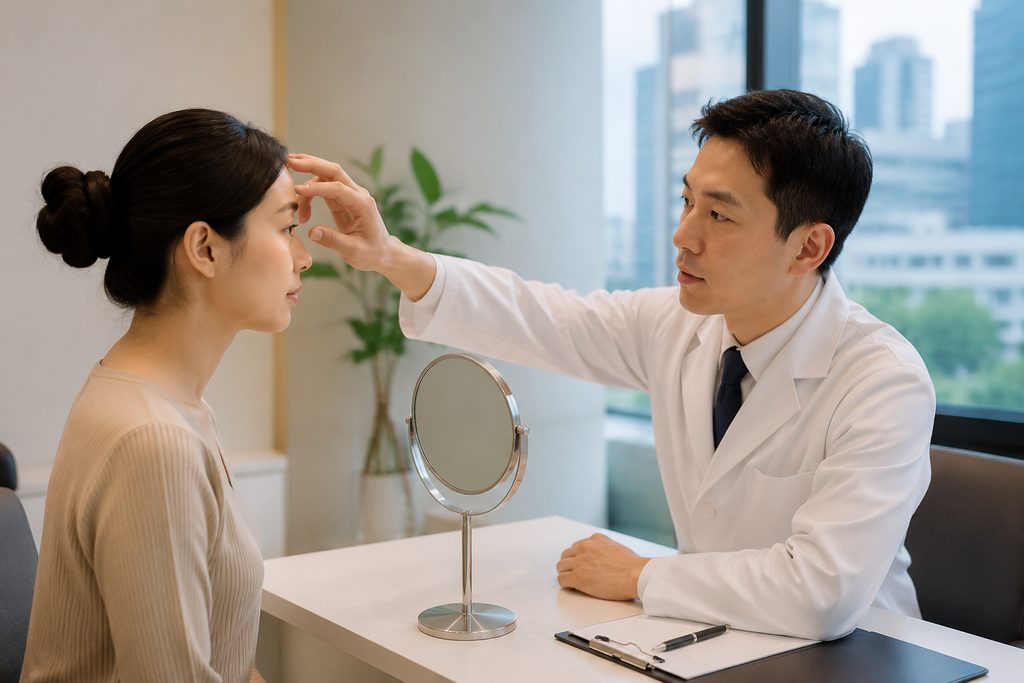
When 34-year-old Amira from London started researching blepharoplasty, the quotes she received back home stopped her cold. Upper and lower eyelid surgery in the UK was running between £6,000 and £9,000. Her insurance called it cosmetic and refused to cover a penny. She started searching for alternatives and typed the same question thousands of patients ask every month: can I get eyelid surgery in China?
The short answer is yes. Foreigners can absolutely undergo blepharoplasty in China. The real questions are where, how much it costs, and how to do it safely. This guide breaks down the eyelid surgery cost China patients should expect, the safety landscape, hospital selection, and the practical steps for booking a procedure from overseas.
Key Takeaways
- Eyelid surgery in China typically costs $1,500–$5,000 at top-tier hospitals, compared to $6,000–$12,000 in the US or UK.
- China’s leading oculoplastic surgeons perform hundreds of blepharoplasty procedures annually, far exceeding typical Western volumes.
- The biggest barrier for foreign patients is not surgical quality — it is navigating registration, language, and post-operative follow-up without local support.
- Double eyelid surgery (Asian blepharoplasty) is one of the most commonly performed cosmetic procedures in China, giving surgeons deep experience with diverse eyelid anatomies.
The Problem: Eyelid Surgery Costs Have Spun Out of Control in Western Countries
Blepharoplasty in the United States now averages $4,500 for upper lids alone, according to the American Society of Plastic Surgeons. That figure excludes anesthesia, facility fees, and follow-up visits. Add lower lids and the total easily crosses $8,000. In the UK, private clinics quote £4,000–£7,000 for upper blepharoplasty, with London specialists charging more. Australia and Canada sit in similar ranges.
What makes these prices sting is that insurance almost never helps. Eyelid surgery is classified as cosmetic unless a documented visual field defect proves functional impairment. Even then, insurers demand months of documentation, visual field testing, and pre-authorization. Most patients pay out of pocket.
The result? Patients delay surgery they genuinely want. Some live with drooping lids that impair peripheral vision. Others accept a look they are unhappy with. And a growing number look abroad.
Why China Delivers Results for Eyelid Surgery Patients
Volume Creates Surgical Fluency
Double eyelid surgery is among the most requested cosmetic procedures in East Asia. A senior oculoplastic surgeon at a major Chinese teaching hospital may complete 300 to 600 blepharoplasty cases per year. A typical Western plastic surgeon might perform 50 to 100. That gap matters. Eyelid anatomy varies enormously — skin thickness, fat distribution, crease height, epicanthal folds. Surgeons who see this variation daily develop a precision that occasional operators cannot match.
This is not a vague claim. Chinese ophthalmic plastic surgery departments publish extensively on Asian eyelid anatomy and surgical technique. The volume is structural, built into a system where demand is high and hospitals run efficient surgical schedules.
Cost Advantage Without Quality Compromise
The eyelid surgery cost China hospitals quote reflects structural economics, not lower standards. Labor costs for nurses and support staff are lower. Hospital infrastructure is already built and amortized. High patient volume spreads fixed costs. None of that reduces surgical quality.
At China’s top-ranked public hospitals and accredited private international facilities, the surgeons are fellowship-trained, the operating rooms meet international sterilization standards, and the anesthesia teams handle complex cases daily. The price difference comes from the system, not from corners cut.
Is Eyelid Surgery Safe in China? A Direct Answer
The honest answer: yes, at the right hospitals, and no, at the wrong ones. China’s healthcare market is vast and uneven. The top 5% of hospitals — roughly 340+ facilities ranked by the Fudan University hospital rankings or accredited by Joint Commission International — operate at standards comparable to good Western hospitals. These are the only facilities an international patient should consider.
At these hospitals, blepharoplasty is a routine, low-risk procedure. Complication rates for infection, asymmetry requiring revision, and dry eye are low and comparable to international benchmarks. The risk lies in choosing an unvetted clinic based on a social media ad. That is where problems happen — not in the top-tier academic centers.
What the Procedure Actually Costs: A Realistic Breakdown
Prices vary by hospital tier, surgeon seniority, and whether you need upper lids, lower lids, or both. Here is what international patients should budget at reputable facilities:
| Procedure Type | China (Top Public Hospital) | China (Private International Hospital) | US Average |
|---|---|---|---|
| Upper blepharoplasty (double eyelid) | $1,500 – $3,000 | $3,000 – $5,000 | $4,500 – $7,000 |
| Lower blepharoplasty (bag removal) | $1,800 – $3,500 | $3,500 – $5,500 | $5,000 – $8,000 |
| Combined upper and lower | $3,000 – $5,500 | $5,500 – $8,000 | $8,000 – $12,000 |
| Revision blepharoplasty | $2,500 – $5,000 | $4,500 – $7,000 | $7,000 – $15,000 |
These are ranges, not quotes. Final pricing depends on the surgeon, the hospital’s international department fees, and case complexity. A patient with significant asymmetry or prior surgery will pay more than a straightforward primary case.
So how much is double eyelid surgery in China at the budget end? A competent surgeon at a reputable public hospital can perform upper blepharoplasty for around $1,500–$2,000. That is roughly a third of the US average. But budget patients should understand what that price includes — typically the procedure, basic anesthesia, and one or two follow-up visits. It does not include translation, airport transfers, or a bilingual companion.
Where Foreigners Actually Get Treated: Hospital Types Compared
China offers three distinct hospital categories for eyelid surgery. Each has trade-offs.
Public Top-Ranked Hospitals
These are the academic powerhouses — the hospitals on the Fudan University Top 100 list and the specialty reputation rankings. For oculoplastic surgery, hospitals like Zhongshan Hospital Fudan University in Shanghai and Peking Union Medical College Hospital in Beijing run dedicated ophthalmic plastic surgery departments. The surgeons are professors, the equipment is modern, and the prices are the lowest of the three categories.
The catch: these hospitals are crowded, fast-paced, and largely Chinese-speaking. Registration happens on the day of your appointment. You queue with thousands of local patients. Without Chinese language ability or a local guide, the process is genuinely difficult. This is where many foreign patients struggle.
Private International Hospitals
Facilities like United Family Healthcare, Jiahui Health, and ParkwayHealth operate in major Chinese cities with English-speaking staff, direct insurance billing, and Western-style patient flow. The best eyelid surgery hospital Shanghai for a foreigner who wants English communication and a calmer experience is often one of these private international facilities. Prices run 1.5 to 2 times higher than public hospitals, but still below Western private rates.
These hospitals also handle the S2 visa documentation more smoothly, since their international patient departments process foreign patients routinely.
Specialized Cosmetic Surgery Hospitals
China has a large private cosmetic surgery sector, ranging from excellent to dangerous. Some chains are reputable and employ board-certified plastic surgeons. Others are marketing machines with aggressive sales tactics and variable surgical quality. Foreign patients without local knowledge should avoid this category unless a trusted coordinator has vetted the specific facility and surgeon.
Can Foreigners Get Blepharoplasty in Beijing? Yes, With These Steps
Beijing is one of the easiest Chinese cities for foreign patients to navigate, partly because it hosts 21 of the Fudan Top 100 hospitals and a cluster of private international facilities. The question can foreigners get blepharoplasty in Beijing has a straightforward answer: yes, and the pathway is well established.
The process generally works like this:
Step 1: Remote evaluation. Most reputable hospitals now offer video consultations for international patients. You send photos of your eyelids from multiple angles, describe your goals, and speak with the surgical team through a translator or in English at international hospitals. Cost ranges from $100 to $300 for standard consultations, and $500–$800 if you want a top specialist’s time.
Step 2: In-person consultation and surgical planning. You cannot skip this step. Chinese hospitals require an in-person evaluation before any surgery. The surgeon examines your eyelid skin, measures crease height, checks for ptosis or asymmetry, and finalizes the surgical plan. This happens after you arrive in China, typically 1–3 days before surgery.
Step 3: Surgery. Upper blepharoplasty takes 45–90 minutes under local anesthesia with sedation. Lower lid surgery runs similar. Combined cases take up to two hours. You go home the same day.
Step 4: Follow-up and suture removal. Stitches come out 5–7 days after surgery. You need at least one follow-up visit in that window. Swelling peaks around day 3 and subsides substantially by day 10–14. Most international patients stay in China for 10–14 days total.
What Could Go Wrong: The Hard Truths International Patients Must Hear
Blepharoplasty is low-risk, but it is not zero-risk. Infection is rare but possible. Asymmetry happens — sometimes requiring revision surgery months later. Overcorrection can leave a surprised or hollow look. Undercorrection means the crease fades or the bags return. Dry eye can worsen temporarily.
The harder truth for foreign patients: if a complication arises after you return home, your Chinese surgeon is thousands of miles away. Revision surgery in your home country means paying Western prices to fix something a Chinese surgeon did. Some patients accept this risk. Others buy medical travel insurance that covers complications. Almost none of them think about it until it is too late.
This is not an argument against surgery in China. It is an argument for choosing your surgeon carefully, understanding the revision policy before you book, and budgeting for the possibility that follow-up care might happen at home.
Patients considering a full book eyelid surgery package China approach should read the fine print. Packages often bundle surgery, hotel, and transport. Some are legitimate and convenient. Others hide surgeon fees, charge separately for anesthesia, or switch surgeons at the last minute. A reputable coordinator will tell you exactly who is operating, where, and what happens if you are unhappy with the result.
Practical Considerations: Visa, Payment, and Recovery Logistics
For medical treatment in China, foreign patients apply for an S2 visa, which covers short-term private affairs including medical treatment. The hospital or coordinating service provides an invitation letter and treatment confirmation to support the application. The S2 visa typically allows stays of up to 180 days, which is more than enough for blepharoplasty and recovery. Family members traveling with you apply for their own S2 visas.
Payment is another practical hurdle. Chinese public hospitals generally require prepayment before surgery. International credit cards are not always accepted at public hospital cashiers. Private international hospitals accept major credit cards and often bill insurance directly. Bring multiple payment methods, and confirm card acceptance with the hospital before you fly.
Language is the third hurdle. Public hospital staff rarely speak functional English. Signs are in Chinese. Registration kiosks are in Chinese. A bilingual companion — whether a friend, a hired interpreter, or a service coordinator — changes the entire experience. Patients who skip this step often describe the process as overwhelming, even when the surgery itself goes perfectly.
Recovery after returning home is straightforward. You will have a scar that fades over 3–6 months. Your surgeon should provide written post-operative instructions in English. Some hospitals offer video follow-up at the 1-month and 3-month marks. Ask about this before surgery.
Frequently Asked Questions
At top-ranked public hospitals and accredited private international hospitals, yes. These facilities meet international surgical standards and handle high volumes of blepharoplasty cases. The risk comes from unvetted cosmetic clinics. Choose a hospital from the Fudan Top 100 list or a JCI-accredited private facility, and verify the surgeon’s credentials before booking.
Upper blepharoplasty at a top Chinese public hospital runs $1,500–$3,000. At a private international hospital, expect $3,000–$5,000. The US average for upper lid surgery alone is $4,500–$7,000. Chinese prices are typically one-third to one-half of American rates for comparable quality.
This is the biggest risk of traveling for surgery. Most Chinese surgeons offer revision within a defined window — often 6–12 months — but you would need to return to China for it. Some patients choose to pay for revision locally instead. Before surgery, ask about the revision policy, who covers what, and whether the surgeon does video follow-up. Get it in writing.
You can book a consultation and reserve a surgical slot, but no reputable hospital will perform surgery without an in-person evaluation first. The typical flow is: remote video consultation, travel to China, in-person assessment, surgery 1–3 days later. Be wary of any service that promises surgery on arrival without a prior in-person evaluation.
Yes, the S2 visa is the correct category for short-term medical treatment and private affairs. The hospital or your coordinating service provides supporting documents. The S2 visa is not a guarantee of entry — approval rests with the Chinese embassy or consulate reviewing your application. Apply well in advance of your planned surgery date.
Your Next Step
Eyelid surgery in China is a serious option for patients who want experienced surgeons at a fraction of Western prices. The key is choosing the right hospital and handling the logistics properly. Our team at China Medical Services helps international patients identify suitable hospitals, arrange remote consultations, and navigate the on-the-ground process. We are not a hospital and we do not provide medical advice or diagnoses. We are the bridge between you and the right surgical team. If you are considering blepharoplasty in China, start with a conversation — no commitment, just clarity on your options.
Take the first step with a free consultation to discuss your situation and what a realistic treatment pathway looks like.
For more medical information and treatment options in China, visit chinamedservices.com (China Medical Services).
