Fibroid Removal Without Hysterectomy: Costs, Options, and Hospitals in China
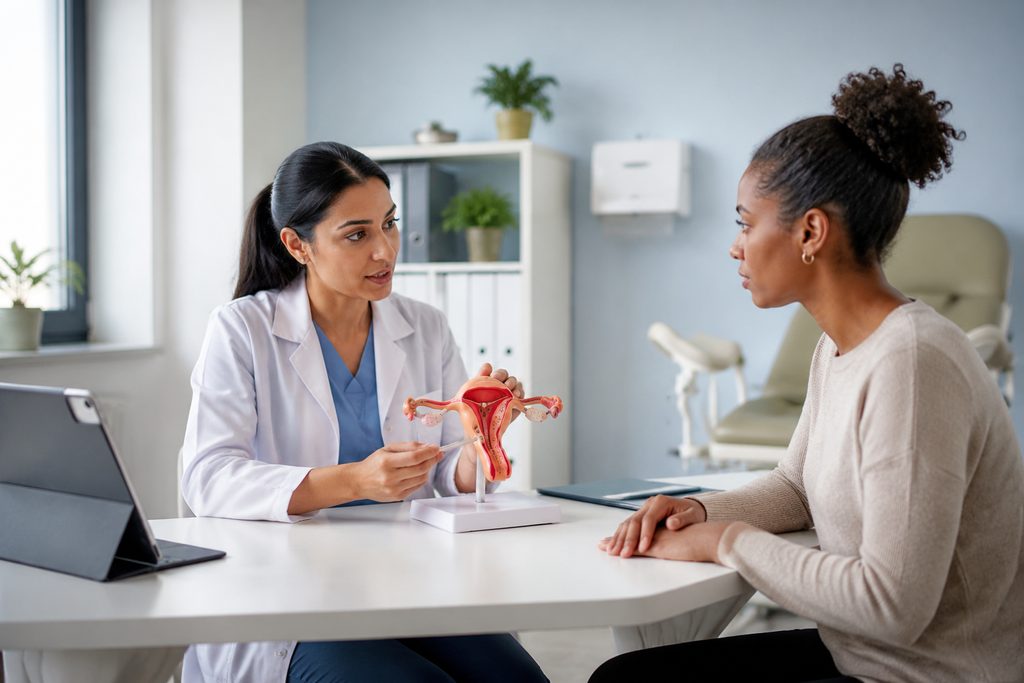
A hysterectomy removes the entire uterus. A myomectomy removes only the fibroids and leaves the uterus intact. If you are asking whether fibroids can be removed without a hysterectomy, the answer is yes — for most patients. The procedure is called a myomectomy, and it is the standard option for women who want to preserve fertility or simply keep their uterus. The real question is not whether it is possible, but where to have it done well and what the fibroid removal without hysterectomy cost China actually looks like compared to Western prices.
Uterine fibroids affect roughly 70% of women by age 50. Not all need surgery. But when symptoms — heavy bleeding, pelvic pressure, pain, or fertility problems — become unmanageable, myomectomy is often the right path. In the United States, a myomectomy typically costs between $15,000 and $35,000 depending on the approach and hospital. In China’s top-tier hospitals, the same procedure often ranges from $4,000 to $9,000. That gap is not because of lower quality. It reflects different cost structures, high surgical volumes, and a system built for scale.
We work with patients from Europe, North America, the Middle East, and Southeast Asia who are weighing exactly this decision. Many arrive with the same worry: will I be pushed into a hysterectomy? The short answer is no — not at the hospitals we coordinate with. Chinese gynecologic surgeons perform myomectomies routinely, including laparoscopic and robotic-assisted approaches. But understanding the options, the realistic timeline, and the risks matters before you book a flight.
How This Actually Works, Step by Step
The process starts with your existing medical records. You send us your ultrasound or MRI reports, any blood work, and a brief symptom history. Our team translates these documents into Chinese and forwards them to the gynecology department at one or more of our partner hospitals — typically a top-ranked public hospital or a private international hospital, depending on your preference and budget.
Within 3 to 5 working days, you receive a written preliminary assessment. This is not a formal diagnosis. It is a specialist’s read on whether you are a candidate for myomectomy, which surgical approach seems appropriate, and whether any additional imaging is needed before a final decision. If the case is complex — multiple large fibroids, prior surgeries, or suspected adenomyosis — we may recommend a video consultation before you travel.
Once you decide to proceed, we coordinate the appointment and admission logistics. That includes hospital registration, scheduling the pre-operative workup, arranging a bilingual medical companion if you want one, and providing visa guidance. You do not need to navigate a Chinese hospital alone. That is the part most international patients underestimate — the sheer scale of a top Chinese hospital. A single outpatient department can see thousands of patients daily. Having someone who speaks the language and knows the building cuts days of confusion down to hours.
Myomectomy vs Hysterectomy: What the Numbers Actually Mean
When patients search for myomectomy vs hysterectomy price Shanghai, they are usually trying to understand two things: the cost difference and the clinical trade-off. Here is the honest breakdown.
| Procedure | What It Removes | Fertility Impact | Typical Cost in China (USD) | Recovery Time |
|---|---|---|---|---|
| Laparoscopic myomectomy | Fibroids only | Preserved | $4,500 – $7,500 | 2–4 weeks |
| Robotic-assisted myomectomy | Fibroids only | Preserved | $6,000 – $9,000 | 2–4 weeks |
| Abdominal myomectomy (open) | Fibroids only | Preserved | $3,500 – $6,000 | 4–6 weeks |
| Total hysterectomy | Uterus and cervix | Ended | $3,000 – $5,500 | 4–6 weeks |
These are reference ranges, not quotes. Final pricing depends on the hospital tier, the surgeon’s seniority, the number and location of fibroids, and whether you go through the public international department or a private hospital. The key point: myomectomy is not dramatically more expensive than hysterectomy in China. The cost difference is small enough that preserving your uterus should rarely be a financial decision.
Recovery matters too. Laparoscopic myomectomy usually means 3 to 5 days in hospital and 2 to 4 weeks before normal activity. An open myomectomy takes longer. Your surgeon will recommend the approach based on fibroid size, number, and location — not just your preference. A 10-cm intramural fibroid is not a candidate for a small-incision laparoscopic procedure. That is a fact, not a limitation of Chinese hospitals.
A Realistic Timeline
| Stage | What Happens | Duration |
|---|---|---|
| Week 1 | You send records; we translate and submit to gynecology department | 3–5 working days for written assessment |
| Week 2 | Video consultation with specialist (optional but recommended for complex cases) | $500–800 for top-specialist video consult |
| Week 3–4 | Visa application (S2 visa for medical treatment) | 5–15 working days depending on embassy |
| Week 5 | Arrival in China; pre-operative workup (blood tests, ECG, repeat ultrasound if needed) | 2–3 days |
| Week 5–6 | Surgery | 1.5–4 hours depending on approach |
| Week 6–7 | Hospital recovery | 3–5 days typical |
| Week 7–8 | Post-op follow-up; return flight if cleared | 1–2 outpatient visits |
The steps people forget: document translation takes time. Visa processing varies by country. And you should not book a return flight before your surgeon confirms you are fit to fly — usually 7 to 10 days after laparoscopic surgery, longer for open procedures. Budget 3 to 5 weeks total in China for the full episode, not just the surgery itself.
What Can Go Wrong — and What Happens Then
No surgery is risk-free. Myomectomy carries the same general risks as any abdominal or pelvic surgery: bleeding, infection, anesthesia complications, and damage to surrounding structures. The specific risks for myomectomy include adhesion formation, which can cause future pain or fertility issues, and a small chance that the surgeon cannot remove all fibroids in one operation.
There is also a possibility the surgeon converts a laparoscopic procedure to an open one mid-surgery. This happens when bleeding obscures the view or the fibroid is larger than imaging suggested. The conversion rate at experienced centers is low — typically under 5% — but it is not zero. If it happens, your hospital stay extends by a few days and recovery takes longer. You should know this before signing consent.
And then there is the honest question: what if the surgeon recommends a hysterectomy after all? This can happen if the fibroids are too numerous, if there is evidence of malignancy (rare, but possible with a type called leiomyosarcoma), or if the uterus is so distorted that reconstruction is not feasible. In that situation, you have the right to decline and seek a second opinion. You are never obligated to proceed with a surgery you did not consent to. Our role in that moment is to help you get a second specialist read — not to push you toward one outcome.
How to Evaluate a Hospital for Fibroid Surgery in China
If you are searching for the best hospital for fibroid surgery China, start with the Fudan University hospital rankings. These are the most authoritative hospital rankings in China, updated annually. The obstetrics and gynecology specialty ranking lists the top 10 hospitals in the country for this exact field. Hospitals like Peking Union Medical College Hospital in Beijing and Obstetrics & Gynecology Hospital of Fudan University in Shanghai consistently appear in the top tier.
But rankings alone do not answer the question is fibroid surgery safe for international patients in China. Safety for international patients depends on three things: the hospital’s experience with foreign patients, the availability of English-speaking coordination, and the quality of post-operative follow-up once you return home. A hospital can be clinically excellent and still be overwhelming if you do not speak Chinese.
That is where the choice between a public hospital international department and a private international hospital matters. Public hospital international departments offer access to the same senior surgeons as the regular departments, with English-speaking staff and shorter queues. Prices run about 1.5 to 2 times the standard public rate. Private international hospitals — United Family, Jiahui, Parkway — offer a Western-style experience with direct insurance billing, but their gynecology departments may have less surgical volume than a top public hospital. Neither is universally better. The right choice depends on your case complexity and your need for comfort versus raw surgical volume.
We maintain a database of 340+ top-ranked hospitals across 37 Chinese cities. For gynecology specifically, the department rankings page shows which hospitals rank among China’s top 10 for obstetrics and gynecology. That is where we usually start for myomectomy cases.
Practical Considerations: Records, Visa, Payment, and Follow-Up
Bring every imaging report you have. Ultrasound images on a CD or USB, MRI reports, and any prior surgical notes. Chinese specialists want to see the actual images, not just the written summary. If your records are not in English or Chinese, we arrange certified translation.
Visa is straightforward but requires planning. The S2 visa is the correct category for short-stay medical treatment in China. It is issued for private affairs, including medical treatment, and typically allows stays of up to 180 days depending on the consulate’s discretion. You will need an invitation letter or supporting documents from the hospital — we help prepare this. Family members accompanying you also apply for S2 visas. Do not apply for an M visa; that is for commercial and trade activities, not medical care.
Payment is almost always out-of-pocket upfront. Chinese public hospitals require a deposit before admission, and you settle the balance on discharge. If you have international insurance, you pay first and claim reimbursement afterward. Private international hospitals with direct billing arrangements are the exception. Bring a credit card with a high limit or arrange a bank transfer in advance.
Follow-up at home matters. Your surgeon in China will give you a discharge summary in English (we verify this) with instructions for wound care, activity restrictions, and warning signs. You should schedule a follow-up ultrasound with your local gynecologist 4 to 6 weeks after surgery. Fibroids can recur — the recurrence rate after myomectomy is roughly 15 to 30 percent within 5 years, depending on your age and the number of fibroids removed. That is not a failure of the surgery. It is the biology of the condition.
Frequently Asked Questions
Yes. A myomectomy removes fibroids while preserving the uterus. It is the standard surgical option for women who want to keep their fertility or avoid hysterectomy. The approach — laparoscopic, robotic, or open — depends on fibroid size, number, and location.
Typical ranges are $3,500 to $9,000 depending on the surgical approach, hospital tier, and case complexity. Laparoscopic myomectomy at a top public hospital international department usually falls between $4,500 and $7,500. Private international hospitals run higher. These are reference ranges, not quotes — final pricing requires a formal hospital assessment.
Medically, yes — the surgery itself is routine at high-volume centers. Logistically, it is much harder alone. You will need help with registration, payment, language, and post-operative mobility. A bilingual medical companion costs from $300 per day and removes most of the friction. Many patients also bring a family member on an S2 visa.
You are never locked into a procedure you did not consent to. If the surgeon’s recommendation changes after seeing your imaging or during pre-operative assessment, you can pause and request a second opinion. Some patients search for how to book myomectomy surgery package Beijing expecting a fixed-price bundle. In practice, Chinese hospitals do not sell fixed packages for surgery. You pay for the hospital admission, surgeon fee, anesthesia, and consumables separately. We help you understand the estimate before you commit.
Your Next Step
The decision to have fibroid surgery abroad is not one to rush. Start with your records. Send us what you have, and we will get a written specialist assessment before you spend a dollar on flights or visas. We are not a hospital and we do not perform surgery. We are the coordination layer — translation, hospital matching, appointment logistics, and on-the-ground support through our bilingual companions. If you want to understand your options without pressure, request a free consultation at our patient services page. We will tell you honestly whether China is the right choice for your case.
You do not have to choose between keeping your uterus and getting excellent surgical care. The question is not whether it can be done. It is whether you have the right information and the right team to do it well.
For more medical information and treatment options in China, visit chinamedservices.com (China Medical Services).
