Peripheral Neuropathy Surgery in China: Lower Costs, Faster Diagnosis, and Expert Nerve Decompression
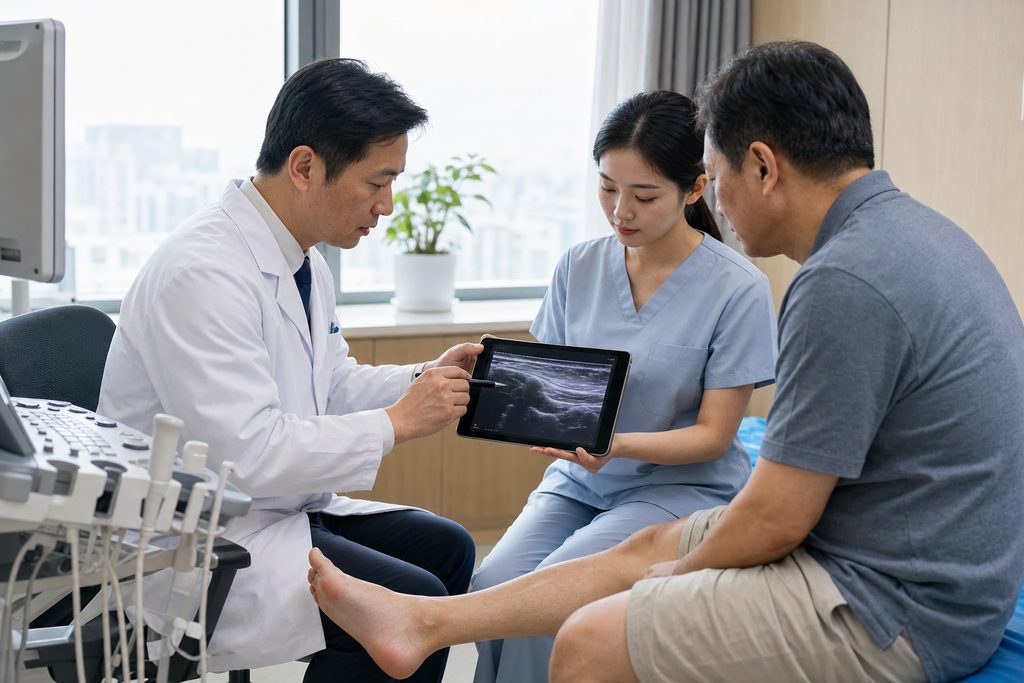
You have probably heard that affordable surgery abroad means compromising on safety. The truth is more nuanced—and far more hopeful. For patients with peripheral neuropathy, the combination of relentless pain and limited treatment options at home can feel like a dead end. The peripheral neuropathy surgery cost in China, often 60-80% lower than in the United States, is not a reflection of lower quality. It is a function of economic scale, high surgical volume, and a healthcare system structured differently than what Western patients are accustomed to. Our team at China Medical Services has spent years connecting international patients with this system. We do not perform surgeries or offer medical advice. We handle the logistics—the hospital matching, the visa paperwork, the bilingual coordination—so you can focus entirely on recovery.
Key Takeaways
- Nerve decompression surgery in China costs approximately $8,000–$15,000, compared to $40,000–$70,000 in the United States for similar procedures.
- Chinese hospitals ranked in the top 5% nationally by the Fudan University ranking system perform high volumes of peripheral nerve surgeries annually.
- Independent navigation of China’s public hospital system is extremely difficult without Mandarin fluency—appointments, payments, and surgical scheduling require local coordination.
- Surgical decompression is not a cure-all. Outcomes depend heavily on the underlying cause of neuropathy, and a thorough pre-operative diagnostic workup is non-negotiable.
The Problem: Neuropathy Pain That Won’t Let Up
Peripheral neuropathy affects approximately 1 in 15 adults over the age of 40 in the United States and Europe. That is roughly 20 million Americans living with numbness, burning, or stabbing pain in their hands and feet. Diabetes is the leading cause, but chemotherapy, autoimmune disorders, and idiopathic factors account for a significant share of cases. For many, the standard treatment pathway—gabapentin, pregabalin, physical therapy, and pain management—offers partial relief at best. The pain persists. Sleep suffers. Mobility declines.
When medication fails, patients often hear the same message: learn to live with it. But that message is incomplete. Surgical nerve decompression, a procedure pioneered and refined over the past three decades, offers a mechanical solution for a mechanical problem. Entrapped nerves in the lower legs—the common peroneal nerve, the tibial nerve at the tarsal tunnel—can be physically released. The surgery does not reverse nerve damage that has already occurred. What it can do is halt the progression and restore sensation where compression was the primary driver of symptoms. The challenge for Western patients is not a lack of surgical expertise. It is cost, wait times, and a healthcare culture that often underemphasizes surgical options for neuropathy until the disease is far advanced.
Who We Are
We are China Medical Services, a medical concierge organization based in China and serving international patients exclusively. We are not a hospital. We do not provide medical treatment, clinical diagnoses, or surgical opinions. What we provide is the logistical architecture that makes treatment in China possible for someone who does not speak the language, does not understand the hospital system, and cannot afford to navigate it alone. Our database covers 340+ top-ranked hospitals across 37 Chinese cities. We connect you with the right surgical team, coordinate your diagnostic workup, and ensure that every step—from visa application to post-operative recovery—is handled by someone who understands both Chinese and Western expectations.
Why China’s Approach to Nerve Decompression Delivers Results
Surgical Volume and Specialized Nerve Centers
A surgeon who performs 150 tarsal tunnel releases per year simply sees patterns that a surgeon performing 15 per year cannot. This is not a criticism of Western surgeons—it is a mathematical reality. In China’s top-tier hospitals, peripheral nerve surgery is concentrated in dedicated hand and foot surgery departments or neurosurgery units that handle high patient volumes daily. Peking Union Medical College Hospital in Beijing and Huashan Hospital in Shanghai are two examples of centers where peripheral nerve surgery is a subspecialty, not an afterthought. The Fudan University hospital ranking system, which evaluates clinical reputation and research output across 45 specialties, consistently places these hospitals among China’s top 10 for neurosurgery and orthopedics. When you search for the best hospital for nerve decompression surgery in Shanghai, you are not looking at a single institution—you are looking at a cluster of high-volume centers with documented outcomes.
Diagnostic Efficiency That Saves Months
In many Western healthcare systems, the path from symptom onset to surgical consultation can stretch across 12 to 18 months. You wait for a neurologist referral. You wait for nerve conduction studies. You wait for an MRI. Then you wait for a surgical consult. In China’s top hospitals, the same diagnostic sequence can be compressed into a single week. This is not because the medicine is rushed. It is because the infrastructure is designed for throughput. A patient arriving through the international medical center of a major Chinese hospital can complete electromyography (EMG), nerve conduction velocity (NCV) testing, high-resolution ultrasound, and surgical consultation within days. Our team coordinates these appointments in advance so that when you arrive, the diagnostic engine is already moving. This matters enormously for neuropathy patients. Nerve compression that persists for years without intervention can lead to irreversible axonal loss. Time is literally tissue.
Peripheral Neuropathy Surgery Cost China: The Economics of Scale
Let us address the question that brings most patients to our door. The peripheral neuropathy surgery cost China ranges from approximately $8,000 to $15,000 for a bilateral lower extremity decompression, including hospital stay, surgeon fees, and anesthesia. In the United States, the same procedure typically costs between $40,000 and $70,000. For patients paying out of pocket or facing high deductibles, the difference is life-changing. Why the gap? Chinese hospital operating costs are structurally lower—labor, facilities, and medical device pricing all operate on a different economic base. This does not mean the care is inferior. The top 5% of Chinese hospitals, those ranked by Fudan and accredited by JCI, use the same surgical microscopes, the same intraoperative nerve monitoring equipment, and the same microsurgical techniques you would find in a major American academic medical center. The savings come from systemic efficiency, not corner-cutting. And for patients exploring nerve decompression surgery abroad affordable options, China represents a convergence of quality and value that few other destinations can match.
| Procedure | Estimated Cost in China (USD) | Estimated Cost in US (USD) |
|---|---|---|
| Unilateral tarsal tunnel release | $5,000–$8,000 | $20,000–$35,000 |
| Bilateral lower extremity decompression | $8,000–$15,000 | $40,000–$70,000 |
| Comprehensive diagnostic workup (EMG/NCV, imaging, consultation) | $800–$1,500 | $3,000–$6,000 |
Costs vary by hospital, surgeon seniority, and case complexity. Figures are estimates based on international patient department pricing at top-tier public hospitals.
How Is Peripheral Neuropathy Treated Surgically in China?
The question how is peripheral neuropathy treated surgically in China deserves a precise answer. The surgical approach is fundamentally the same as in any advanced medical system—decompression of entrapped peripheral nerves at known anatomical choke points. The common peroneal nerve at the fibular head. The tibial nerve and its branches in the tarsal tunnel. The deep peroneal nerve over the dorsum of the foot. The surgery involves a small incision, careful dissection under magnification, and release of the overlying fascia or ligament compressing the nerve. What differs in China is not the technique but the clinical decision-making threshold. Chinese peripheral nerve surgeons, particularly those in high-volume centers, tend to recommend surgical decompression earlier in the disease course than their Western counterparts. This is partly philosophical and partly practical—when patients travel from another province or another country for treatment, the expectation is a definitive intervention, not another six months of conservative management.
Pre-operative evaluation is rigorous. You will undergo nerve conduction studies to confirm the location and severity of compression. High-resolution ultrasound or MRI neurography may be used to visualize the entrapped nerve. The surgeon will test for Tinel’s sign—a tingling sensation when the nerve is tapped at the compression point. If the clinical picture and electrodiagnostic findings align, surgery is scheduled. The procedure itself takes 45 to 90 minutes per limb, performed under regional or general anesthesia. Most patients stay in the hospital for 2 to 4 days post-operatively, during which time wound care, pain management, and initial mobilization are supervised by the surgical team.
What Is the Recovery Time After Nerve Decompression for Neuropathy?
Patients researching what is the recovery time after nerve decompression for neuropathy often want a simple number. The honest answer is that recovery follows a curve, not a calendar. The first two weeks are about wound healing. Sutures come out at 10 to 14 days. You can walk, but prolonged standing is uncomfortable. By week four, most patients are back to light daily activities. The nerve itself, however, heals on its own timeline. Sensory improvement can begin within weeks but often takes 3 to 6 months to become noticeable. Motor recovery, if there was weakness, may take 6 to 12 months. Some patients experience immediate relief of tingling upon waking from surgery—this is likely due to restored blood flow to the nerve. Others notice gradual improvement over months. A small percentage see no improvement at all, typically because the nerve damage was already irreversible at the time of surgery. This is why early intervention matters.
Our team coordinates post-operative follow-up care whether you recover in China or return home. We arrange for wound checks, suture removal, and communication with your surgeon during the critical first month. If you need to book peripheral neuropathy treatment package China that includes post-op rehabilitation, we can connect you with physiotherapy services near your recovery accommodation. The goal is continuity of care across borders.
What You Need to Know Before Going Alone
China’s healthcare system rewards those who come prepared. It punishes those who arrive expecting Western-style walk-in service. Here is what stands between you and a successful surgical outcome if you attempt this independently:
- Visa Requirements: Medical treatment in China requires an S2 visa, specifically annotated for medical purposes. You will need an invitation letter from the hospital confirming your treatment plan. Obtaining this letter without a local contact inside the hospital’s international department is extremely difficult. M visas are for business and will be rejected if presented for medical travel. Your accompanying family member also needs an S2.
- Language and Navigation: A top Chinese public hospital sees 10,000 to 15,000 outpatients daily. Signage in English is rare outside international wards. Registration kiosks, payment terminals, and pharmacy counters operate entirely in Mandarin. Without a bilingual companion, you will spend hours lost in queues that lead nowhere.
- Payment Systems: Chinese public hospitals operate on a pre-payment model. You deposit funds at admission, and services are deducted from your balance. International credit cards are not accepted at most hospital cashiers. WeChat Pay and Alipay dominate, and linking a foreign card to these platforms is inconsistent. Cash deposits work, but carrying large sums of RMB is impractical.
How We Help You Navigate This
These barriers exist for structural reasons, not because the system is hostile to foreigners. China’s hospitals are designed to serve a domestic population of 1.4 billion people. International patients are an afterthought in the public system—which is precisely why the international departments and VIP channels exist. Our job is to route you through those channels efficiently.
We begin with a free consultation. You tell us your diagnosis, your surgical history, and your goals. We review your medical records and match you with 2 to 3 hospitals from our network of 340+ top-ranked institutions. We handle the invitation letter for your S2 visa. We schedule your diagnostic appointments and surgical consultation before you board the plane. When you land, a bilingual medical companion meets you at the hospital, handles registration, translates every conversation with your surgeon, and ensures you understand your treatment plan completely. After surgery, we coordinate wound care, medication refills, and follow-up visits. If you need a video consultation with your surgeon six months later, we arrange that too. The coordination fee starts from $300 for hospital appointment scheduling, and any consultation fee you pay is credited in full toward on-the-ground coordination if you proceed with treatment within 90 days.
Practical Tip: Bring all prior nerve conduction study reports and imaging on a USB drive in DICOM format. Chinese hospitals can read these files directly, which avoids repeat testing and accelerates your surgical evaluation.
Frequently Asked Questions
In hospitals ranked among China’s top 5% by the Fudan University system and holding JCI accreditation, surgical safety protocols meet international standards. Infection rates, complication rates, and surgical outcomes are comparable to major Western centers. The key variable is hospital selection. A lower-tier Chinese hospital is not equivalent to a top-tier one—the gap is significant. We only coordinate with hospitals that meet rigorous quality benchmarks.
This is the hardest question, and it deserves an honest answer. Surgical decompression is effective for patients whose neuropathy is driven primarily by nerve compression. It is less effective—and sometimes ineffective—for patients whose neuropathy is purely metabolic, toxic, or autoimmune in origin. The pre-operative diagnostic workup is designed to identify who is likely to benefit. But no test is perfect. Some patients undergo surgery and see minimal improvement. This is a reality of peripheral nerve surgery everywhere, not just in China. Your surgeon will discuss the probability of success based on your specific electrodiagnostic findings.
You cannot book a specific surgery date before an in-person consultation. This is a universal rule in Chinese public hospitals, even through international channels. The surgeon must examine you, review your studies, and confirm the surgical plan before a date is scheduled. What we can do is compress the timeline—diagnostics in the morning, surgical consultation in the afternoon, and surgery within the same week if the surgeon’s schedule permits. But a pre-booked surgery date without a face-to-face evaluation is not possible in this system.
We coordinate a discharge summary in English, including operative notes, post-operative instructions, and medication lists. Your surgeon will specify a follow-up schedule—typically a wound check at 2 weeks and a virtual consultation at 3 months. We arrange the video follow-up through the hospital’s international department. For in-person follow-up, you would see your local neurologist or primary care physician, sharing the Chinese surgical records for continuity of care.
Your Next Step
Peripheral neuropathy does not have to be a life sentence of pain and medication. Surgical decompression, performed by an experienced team at a top-ranked Chinese hospital, offers a path toward relief that is both clinically sound and financially accessible. The logistics are real—visas, language, hospital navigation—but they are solvable. That is what we do. If you are considering nerve decompression surgery and want to understand your options in China, start with a conversation. No commitment, no pressure. Just clarity on what is possible.
For more medical information and treatment options in China, visit chinamedservices.com (China Medical Services).
