Facelift Results: How Long Do They Last and What Affects Longevity
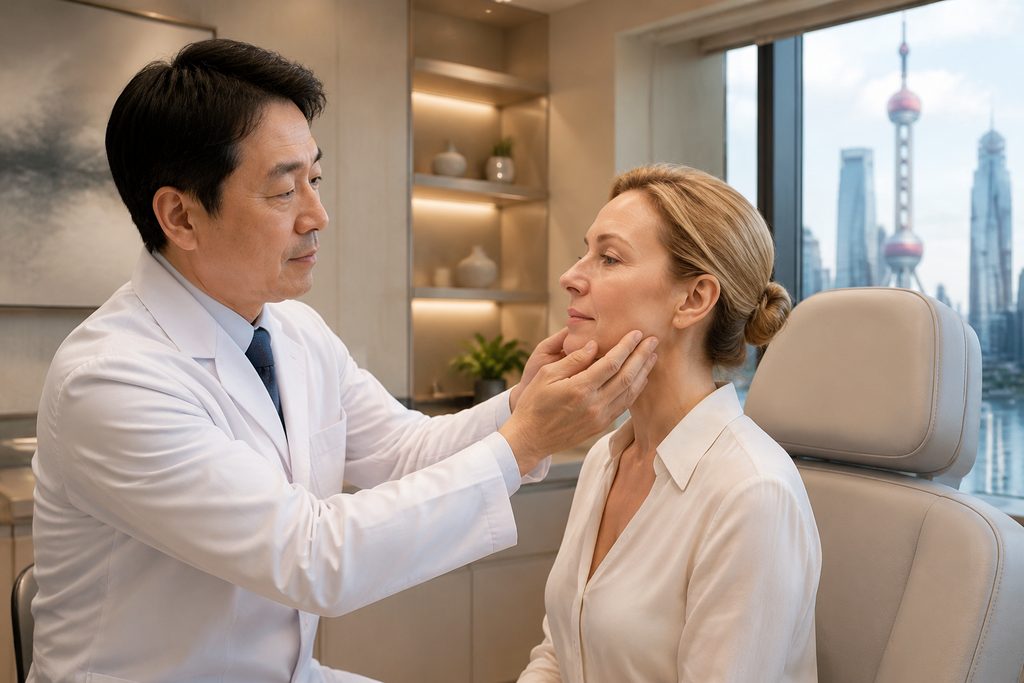
Have you ever wondered whether the money and downtime you invest in a facelift will actually hold up five, ten, or fifteen years from now? It is the question every serious patient asks before committing to surgery. The honest answer is nuanced. A well-executed deep-plane facelift performed by an experienced surgeon can deliver results that last a decade or more, but the exact duration depends on skin quality, bone structure, surgical technique, and how aggressively your tissues continue to age after the procedure. No surgeon can stop the clock permanently.
Key Takeaways
- A modern deep-plane or SMAS facelift typically lasts 10–15 years, while a mini-lift may only hold for 3–6 years before visible laxity returns.
- Facelift cost China runs roughly $4,000–$12,000 at top-tier public and private hospitals, compared to $15,000–$40,000 in the United States for comparable technique.
- Surgical skill is the single biggest variable in longevity. A poorly executed lift can show recurrent sagging within 2–3 years.
- Recovery abroad requires realistic planning: expect 10–14 days before you can comfortably fly home, and up to 6 weeks before strenuous activity.
The Problem: You Are Paying for Permanence That Does Not Exist
Between 2019 and 2023, the American Society of Plastic Surgeons reported that facelift procedures in the United States held steady at roughly 125,000 to 135,000 operations per year, with an average surgeon fee near $12,000 — before anesthesia, facility charges, and postoperative care. All in, most American patients spend $20,000 to $35,000. That is a staggering number for a procedure that does not, and cannot, permanently stop facial aging.
Here is the uncomfortable truth. Skin continues to lose elasticity. Fat compartments keep shifting. Gravity never takes a day off. What a facelift does is reset the clock — it repositions deeper facial layers, removes lax skin, and restores a more youthful baseline. But the clock starts ticking again the moment you leave the operating room. Patients who misunderstand this often feel cheated. They expected a permanent fix. What they got was a decade-long improvement that gradually fades. The real question is not whether a facelift lasts forever. It is whether you are getting the longest possible duration for the money you spend.
Why Surgical Technique, Not Geography, Determines How Long a Facelift Lasts
Longevity is not a lottery. It is a predictable function of what the surgeon does under the skin. The layer that gets lifted makes all the difference.
SMAS and Deep-Plane Lifts Outlast Skin-Only Procedures
A skin-only facelift — where the surgeon simply pulls and trims the outer skin — is the cheapest and fastest approach. It is also the shortest-lived. Because the underlying muscle and connective tissue are not repositioned, tension on the skin causes it to stretch back out, often within 3 to 5 years. A SMAS (superficial musculoaponeurotic system) lift goes deeper, anchoring the muscle layer itself. A deep-plane lift goes further still, releasing and repositioning the midface as a composite unit. Published reviews in Plastic and Reconstructive Surgery consistently show that deep-plane and extended SMAS techniques maintain visible improvement at 10 years and beyond, while skin-only lifts show significant recurrence much earlier.
So when a patient asks “how long does a facelift last,” the first honest answer is: it depends on which facelift you are actually getting. A cheap lift that only tightens skin will not last as long as a properly executed deep-plane procedure, no matter where in the world it is performed.
High Surgical Volume Builds Judgment That Cannot Be Taught
Facial plastic surgeons in major Chinese cities operate at volumes that are hard to match in most Western practices. A senior aesthetic surgeon at a high-volume public hospital in Shanghai or Beijing may perform 300 to 500 facial procedures per year. That repetition builds an intuitive grasp of tissue behavior, scar formation, and vector planning that directly influences how long the result holds. Volume alone does not guarantee skill, but it is a strong structural advantage. The best facelift surgeon Shanghai patients choose is often someone who has done thousands of lifts, not hundreds.
Cost Advantage Without Cutting Corners on Safety
Let us address the obvious objection. Lower price does not automatically mean lower quality. The structural reasons facelift cost China is lower are straightforward: lower hospital overhead, lower labor costs for nursing and ancillary staff, and a healthcare system built around high patient throughput. The surgical techniques are the same ones taught in Western fellowship programs. Many top-tier Chinese plastic surgery departments use the same implant materials, the same sutures, and the same anesthesia protocols found in Seoul or Beverly Hills. The price difference is economic, not clinical.
Facelift Cost China vs the United States and Seoul: A Real Comparison
If you are weighing options, you need concrete numbers. Here is how pricing breaks down across three major destinations for international patients in 2025.
| Procedure Type | United States | South Korea | China (Top Public/Private) |
|---|---|---|---|
| Mini-lift (skin-only) | $8,000–$15,000 | $6,000–$10,000 | $3,500–$6,000 |
| SMAS facelift | $15,000–$25,000 | $10,000–$18,000 | $5,000–$9,000 |
| Deep-plane facelift | $20,000–$40,000 | $15,000–$25,000 | $6,000–$12,000 |
| Neck lift (combined) | +$5,000–$8,000 | +$3,000–$5,000 | +$2,000–$4,000 |
Figures are approximate ranges for surgeon and facility fees, excluding travel and accommodation. Actual quotes vary by hospital tier, surgeon seniority, and case complexity. The facelift price Beijing vs Seoul comparison is especially relevant for patients in Asia or the Middle East. Seoul has long marketed itself as the plastic surgery capital of Asia, but Beijing and Shanghai now offer comparable technical skill at 30–50 percent lower cost for many procedures. The trade-off is that Korea has a more established English-language medical tourism infrastructure. China is catching up, but you will need more planning and, ideally, a bilingual coordinator.
Is Facelift Surgery Safe in China? What the Data and Structure Show
The short answer is yes — if you choose the right hospital. The longer answer requires understanding how Chinese healthcare is tiered. China has over 35,000 hospitals. The top 5 percent — roughly 1,700 institutions — are classified as Grade III Class A (三级甲等), the highest accreditation tier. Within that group, the hospitals ranked by Fudan University‘s annual hospital rankings represent the absolute elite. These are teaching hospitals with rigorous infection control, board-certified plastic surgeons, and modern operating suites. The top-ranked hospitals across China are concentrated in Beijing, Shanghai, and Guangzhou, with 21 in Beijing alone and 18 in Shanghai.
Safety is not a function of the country. It is a function of the institution. A facelift performed in a Fudan-ranked teaching hospital in Shanghai is done under the same sterile protocols you would expect at a major American academic medical center. The risk profile is no higher. What is different is the administrative experience: registration, payment, imaging, and discharge are all conducted in Mandarin, and the public system is not built for walk-in international patients. That is where preparation matters. Many foreign patients use the international medical departments of these hospitals, which offer English-speaking staff and streamlined scheduling for a premium of roughly 1.5 to 2 times the standard rate. Even with that premium, the total cost remains well below Western pricing.
Facelift Recovery Time Abroad: A Week-by-Week Timeline
Recovery does not pause because you are in a foreign country. You need to plan your trip around the biology of healing, not just the surgery date.
Days 1–3: Swelling peaks. Bruising is most visible. Drains, if placed, are usually removed within 24–48 hours. You will be in the hospital or a nearby recovery hotel. You should not be alone.
Days 4–7: Sutures or staples in front of the ear are typically removed. Swelling starts to subside but you will still look visibly “done.” Walking is encouraged. No bending, lifting, or straining.
Days 8–14: This is the earliest safe window for most patients to fly home. Bruising has faded to yellow-green. You can go out in public with makeup. The face feels tight and numb in places — normal.
Weeks 3–6: Most swelling resolves. The jawline definition starts to emerge. Light exercise can resume. No contact sports, no heavy weights.
Months 3–6: The final result becomes visible. Residual firmness softens. Scars fade from pink to pale. This is when you can truly judge whether the lift achieved what you wanted.
Flying too early is a real risk. Cabin pressure and prolonged immobility can worsen swelling and, in rare cases, contribute to hematoma formation. Plan for at least 10–14 days on the ground after surgery. Anyone who tells you that you can fly home 5 days after a deep-plane facelift is not prioritizing your safety.
Practical Considerations: Documentation, Visa, and Payment for Surgery in China
If you are seriously considering traveling to China for a facelift, the logistics are as important as the surgery itself. Do not underestimate them.
Medical records and consultation. Most Chinese plastic surgeons will want to see recent photographs, a medical history summary, and any relevant lab work before confirming a surgical plan. A written second opinion — where a specialist reviews your records and provides a treatment recommendation — costs $300–$500 through our coordination service and is credited toward later on-the-ground support if you proceed. Video consultations with top specialists run $500–$800. These remote steps let you evaluate the surgeon’s approach before committing to travel.
Visa category. Medical treatment in China falls under the S2 visa, which covers short-term private affairs including medical visits. Your accompanying family member also applies for an S2. Processing typically takes 1–2 weeks at a Chinese embassy or consulate, and you will need supporting documents from the treating hospital. Do not apply for an M visa — that is for commercial and trade activities, not medical care. Requirements change, so verify with the consulate before booking flights.
Payment and insurance. Public hospitals in China generally require prepayment. Most international patients pay by credit card, international wire transfer, or cash. Some private international hospitals such as United Family or Jiahui offer direct insurance billing if you have a plan that covers overseas elective surgery — but most cosmetic procedures are excluded from insurance. Assume you are paying out of pocket. Budget for hospital fees, accommodation, food, local transport, and a contingency of 15–20 percent for unexpected costs.
Language and navigation. The top public hospitals see 10,000+ outpatient visits per day. Even with an appointment, you will face registration queues, payment windows, lab draws, and imaging departments — all in Mandarin. A bilingual medical companion costs from $300 per day and handles queueing, translation, and wayfinding. You can certainly attempt this alone with a translation app, but for a surgical trip, the cost of a companion is often less than the cost of one missed appointment or miscommunication.
Follow-up after returning home. Your Chinese surgeon will want postoperative photos at set intervals. Most are willing to communicate via email or WeChat. If a complication arises after you return — infection, hematoma, asymmetry — you will need a local plastic surgeon to manage it. Chinese hospitals do not provide remote aftercare for surgical complications. This is a real limitation of traveling for surgery, and you should weigh it honestly before booking.
Frequently Asked Questions
A properly performed SMAS or deep-plane facelift typically maintains visible improvement for 10 to 15 years. A skin-only or mini-lift may show recurrent laxity within 3 to 6 years. Your face continues to age after surgery, so you will always look younger than if you had never had the lift — but you will not look the same at year 12 as you did at year one.
At a Fudan-ranked teaching hospital or an accredited private international hospital, the safety standards are comparable to Western academic centers. The key is choosing the right institution. The risk profile changes if you go to an unaccredited clinic or an unverified surgeon. Always verify hospital accreditation and surgeon credentials before committing.
Quotes vary. Some hospitals bundle surgeon fee, anesthesia, operating room, and one night of inpatient stay. Others quote only the surgeon fee and bill everything else separately. Always ask for a written breakdown. Our coordination service helps patients obtain itemized quotes so there are no surprises on arrival.
This is the hardest question, and you deserve a straight answer. Your Chinese surgeon can advise remotely, but they cannot treat you across borders. You will need a local plastic surgeon for any postoperative complication. Budget for that possibility before you travel. It is not common — serious complication rates for facelift surgery are low, generally under 2 percent for hematoma and under 1 percent for infection — but it is not zero.
Your Next Step
You now know what determines how long a facelift lasts: surgical technique, surgeon volume, and realistic postoperative planning. You also know that facelift cost China offers a substantial saving without an inherent safety trade-off at the right hospitals. China Medical Services helps international patients navigate these decisions — we are not a hospital and do not provide medical advice, but we can connect you with accredited specialists, arrange remote consultations, and coordinate your on-the-ground logistics. If you want to explore your options with real numbers and no pressure, request a free consultation and we will help you map out a plan.
For more medical information and treatment options in China, visit chinamedservices.com (China Medical Services).
