Ear Tubes for Kids: Are They the Right Choice for Your Child?
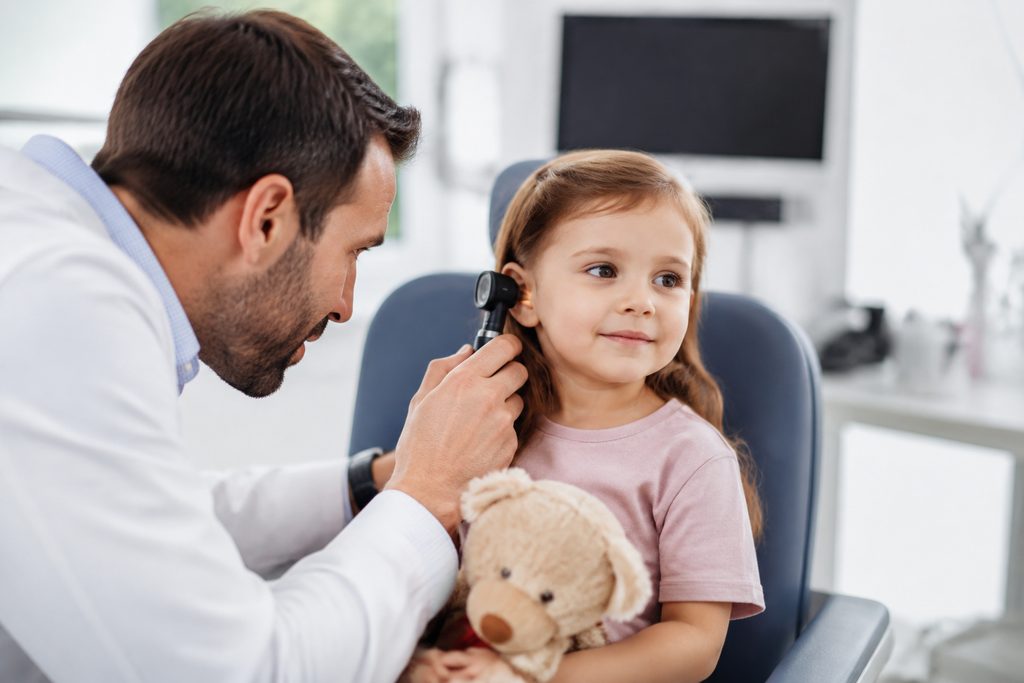
Ear tubes are tiny cylinders — usually plastic or metal — placed through a child’s eardrum to let air into the middle ear and let fluid drain out. The procedure is called a myringotomy. It takes about 10 to 15 minutes under general anesthesia. The idea sounds simple. But deciding whether your child needs it, and where to have it done, raises real questions. A growing number of parents are comparing ear tubes cost China against prices back home, especially when insurance doesn’t cover the full bill or wait times stretch for months.
Let’s get one thing straight. Ear tube surgery is not a cure for ear infections. It’s a pressure-relief valve. For kids with recurrent acute otitis media or persistent middle-ear fluid that affects hearing and speech, tubes can be genuinely life-changing. For others, they’re unnecessary. The decision hinges on frequency, duration, hearing impact, and what you’ve already tried. We’ll walk through all of that.
How This Actually Works, Step by Step
Here’s the real sequence, not the brochure version. You start by gathering your child’s records: audiogram results, ENT consultation notes, any imaging, and a list of every antibiotic course and ear infection episode from the past year. If those records are in a language other than English or Chinese, you’ll need certified translation. That alone can take a week.
Next, you send everything to a pediatric ENT team for a written second opinion. A specialist reviews the history and tells you whether tubes are indicated, what type they’d recommend, and whether any additional testing is needed before surgery. This step costs between $300 and $500 for a top-hospital written review. It’s not a prescription. It’s an expert read on whether the surgery makes sense at all.
If the opinion is “yes, tubes are reasonable,” you then schedule a video consultation. That’s where you speak directly with the surgical team. You ask about anesthesia protocols for young children, what happens if the tube falls out early, and how follow-up works once you’re back home. This video call typically runs $100 to $300, or $500 to $800 if you want a named top specialist on the line.
Only after that do you plan travel. You’ll need an S2 visa for medical treatment, which requires a hospital invitation letter and supporting documents. The visa itself can take two to four weeks depending on your consulate. Then you fly, meet the surgeon in person for the pre-operative consultation, and schedule the procedure. In China’s public hospitals, you cannot book surgery from overseas without that in-person visit first. That’s the rule, not an exception.
Ear Tubes Cost China: What Parents Actually Pay
Let’s talk numbers. In the United States, ear tube surgery for a child without insurance typically runs between $4,000 and $8,000 when you factor in the surgeon’s fee, anesthesia, and facility charges. With high-deductible plans, families often pay $2,000 to $5,000 out of pocket. In China, the same procedure at a top-tier public hospital’s international department generally costs between $1,200 and $3,000 all-in. That includes surgeon, anesthesia, operating room, and one night of observation if needed. Private international hospitals like United Family or Jiahui run higher — typically $3,000 to $5,000 — but still below the US uninsured rate.
| Cost Component | US Typical Range (USD) | China Public Int’l Dept (USD) | China Private Int’l Hospital (USD) |
|---|---|---|---|
| Surgeon + anesthesia + OR | $3,500 – $7,000 | $1,000 – $2,500 | $2,500 – $4,500 |
| Pre-op consultation & tests | $300 – $800 | $150 – $400 | $200 – $500 |
| Written second opinion (optional) | $250 – $600 | $300 – $500 | Often bundled |
| Total estimated | $4,000 – $8,000 | $1,200 – $3,000 | $3,000 – $5,000 |
Prices vary by hospital and case complexity. A child with prior ear surgeries or anatomical differences will cost more. A straightforward first-time tube placement costs less. Always get a written quote before booking flights.
Is Ear Tube Surgery Safe in China?
This is the question every parent asks, and it deserves a straight answer. China’s top-tier pediatric ENT departments perform thousands of myringotomies every year. Fudan University’s hospital ranking system places several Chinese children’s hospitals among the top in Asia for otolaryngology. The procedure itself is low-risk: brief general anesthesia, a tiny incision in the eardrum, suction of fluid, and tube insertion. Serious complications — persistent perforation, tube displacement into the middle ear, infection requiring tube removal — occur in roughly 2% to 5% of cases, which matches international rates.
What matters more than the country is the specific hospital and surgeon. China’s best pediatric ENT centers are concentrated in Beijing, Shanghai, and Guangzhou. These are large academic centers with dedicated pediatric anesthesia teams. That matters. Anesthesia for a 2-year-old is different from anesthesia for a 40-year-old. You want a team that does this daily, not occasionally.
Do not choose a hospital based on price alone. A low quote from an unfamiliar facility tells you nothing about anesthesia protocols, infection control, or what happens if something goes wrong at 2 a.m. Ask about pediatric anesthesiologist staffing, the hospital’s annual tube volume, and their readmission rate.
And no, we don’t promise outcomes. No ethical provider does. What we do is connect you with hospitals that publish real volume data and have JCI accreditation or Fudan top-tier ranking. You can review options on our top-ranked hospital directory and then make your own call.
A Realistic Timeline
Parents often underestimate how long this takes. Here’s a grounded view, assuming you start from zero and everything goes smoothly.
| Stage | What Happens | Realistic Duration |
|---|---|---|
| Week 1 – 2 | Gather records, audiograms, ENT notes; translate if needed | 7 – 14 days |
| Week 2 – 3 | Written second opinion from pediatric ENT team | 5 – 10 days |
| Week 3 – 4 | Video consultation with surgical team; decide on travel | 3 – 7 days |
| Week 4 – 8 | S2 visa application with hospital invitation letter | 14 – 30 days |
| Week 8 – 9 | Fly to China; in-person pre-op consultation | 2 – 3 days |
| Week 9 | Surgery; typically discharge same day or next morning | 1 – 2 days |
| Week 10 – 12 | Post-op check before flying home; remote follow-up | 7 – 14 days |
Total: about 8 to 12 weeks from first email to surgery. The visa is usually the bottleneck. If your child’s condition is urgent — say, significant hearing loss affecting speech development — you might compress this to 6 weeks. But don’t plan on less. Rushing a pediatric procedure is how mistakes happen.
What Can Go Wrong — and What Happens Then
Let’s be blunt about the failure modes. The written second opinion might come back saying tubes aren’t indicated. That’s not a failure of the service — that’s the service doing its job. You’ve spent $300 to $500 to avoid an unnecessary surgery. Worth it.
The visa might be delayed. Consulates ask for more documents. The hospital invitation letter has an error. The fix is usually straightforward: we work with the hospital’s international office to correct and resubmit. But it can add two weeks.
Your child might get an ear infection the week before travel. Surgery gets postponed. This happens constantly. The hospital will reschedule, but you may need to extend your visa or rebook flights. Travel insurance that covers medical rescheduling is not optional here.
And the honest one: the tube might fall out early, or the fluid might return after the tube extrudes. That’s not a China-specific problem. It’s the biology of ear tubes everywhere. About 20% of children need a second set of tubes within two years. If that happens after you’ve returned home, you’ll need local ENT follow-up. We can coordinate remote consultations with the original surgical team, but the physical exam happens where you live.
How Long Does Ear Tube Surgery Take for Children?
The actual procedure is remarkably quick. From the moment the anesthesiologist starts induction to the moment the surgeon finishes, you’re looking at 10 to 15 minutes for a routine bilateral myringotomy with tube placement. Add 20 to 30 minutes for anesthesia induction and emergence. Your child will be away from you for roughly 45 minutes total.
But the hospital visit is longer. Expect two to three hours for check-in, pre-op vitals, the procedure, and recovery. Most children are discharged the same day. Some hospitals prefer overnight observation for children under 2 or those with complex histories. That’s not a red flag — it’s conservative pediatric practice.
Recovery at home is fast. Most kids are back to normal activity within 24 hours. Ear drops for a few days. No swimming or submerging the head for two weeks. A follow-up hearing test at 4 to 6 weeks. That’s the whole arc.
Myringotomy Price Shanghai: A Closer Look at One City
Shanghai is a natural choice for families considering ear tube surgery abroad. The city has three children’s hospitals ranked in Fudan’s top tier for pediatric ENT, plus multiple private international options. Myringotomy price Shanghai varies significantly by facility type.
At a public hospital’s international department — think Shanghai Children’s Medical Center or Children’s Hospital of Fudan University — expect to pay $1,500 to $2,800 for the full procedure. At a JCI-accredited private hospital like Jiahui or Parkway, the same surgery runs $3,500 to $5,000. The private option buys you English-speaking staff throughout, direct insurance billing, and a more Western-style parent experience. The public international department gives you the same surgical expertise at roughly half the price, but with more paperwork and less hand-holding unless you bring a bilingual medical companion.
That companion role is exactly what we provide. A bilingual escort handles registration, payment, translation during the pre-op consultation, and communication with nurses. It’s a service that starts at $300 per day and changes the entire experience when you don’t speak Mandarin.
Book Pediatric ENT Surgery China: What to Look For
If you’ve decided to pursue this path, how do you actually evaluate a hospital? Start with volume. Ask directly: “How many pediatric myringotomies did your department perform last year?” A strong answer is 500 or more. Under 100 is a caution flag.
Second, ask about the anesthesia team. Is there a dedicated pediatric anesthesiologist? Will the same anesthesiologist be present from induction to emergence? What’s the protocol if the child has a difficult airway? These questions reveal more than any brochure.
Third, clarify follow-up. Will the surgeon review the child before you fly home? What if the tube falls out in month one? Is there a remote follow-up pathway? If the hospital can’t answer these, walk away.
And fourth, understand the payment structure. Public hospitals in China require prepayment. Private international hospitals may bill your insurer directly. Your insurance at home may or may not reimburse overseas surgery — check before you commit. Some policies exclude elective procedures abroad entirely.
Practical Considerations: Records, Visa, Payment, Follow-Up
At a public hospital’s international department, expect $1,200 to $3,000 all-in. Private international hospitals run $3,000 to $5,000. That compares to $4,000 to $8,000 uninsured in the US. Prices vary by hospital and case complexity.
The surgical procedure itself takes 10 to 15 minutes. With anesthesia induction and recovery, your child is away from you for about 45 minutes. The full hospital visit runs two to three hours. Most children go home the same day.
No. Public hospitals require an in-person consultation before scheduling surgery. You can complete a written second opinion and video consultation remotely, but the final pre-op visit and surgery booking happen after you arrive. Plan for at least two to three days in-country before the procedure.
It depends entirely on your policy. Some international plans cover treatment at JCI-accredited hospitals in China. Most US domestic plans do not. Check with your insurer before committing. Private international hospitals in China often handle direct billing; public international departments typically require upfront payment with reimbursement later.
Your Next Step
Ear tubes are a small surgery with a big decision behind it. The right choice depends on your child’s specific history — how many infections, how much fluid, what the hearing test shows. A written second opinion from a pediatric ENT team can tell you whether surgery is even indicated before you spend a dollar on travel. That’s the smart first move.
Our team at China Medical Services coordinates written second opinions, video consultations, and on-the-ground support for families considering pediatric ENT care in China. We don’t perform surgery, we don’t promise outcomes, and we don’t sell access. We translate records, connect you with ranked pediatric ENT departments, and handle logistics. If you’d like to understand whether this path makes sense for your child, request a free consultation and we’ll talk through your situation honestly.
The core message: ear tubes help many children, but not all. Get an expert read on your child’s records first. Then decide where and how to proceed. You have more options than you think.
Frequently Asked Questions
Yes. The hospitals used for international patients are JCI-accredited and follow the same international safety standards as top hospitals in the US and Europe. Surgical teams perform high volumes of procedures — often more than their Western counterparts — which studies show leads to better outcomes.
Costs vary by procedure and hospital, but international patients typically save 40-80% compared to US prices — even when factoring in travel and accommodation. A consultation with our team will give you an exact, all-inclusive quote with no hidden fees.
Send us your existing medical reports to get started. We handle everything from hospital selection and appointment scheduling to visa assistance and post-operative recovery planning. Your medical records are reviewed by the specialist before you even book a flight.
For more medical information and treatment options in China, visit chinamedservices.com (China Medical Services).
