Can I Get Tested for Food Allergies? Costs & Clinics in China
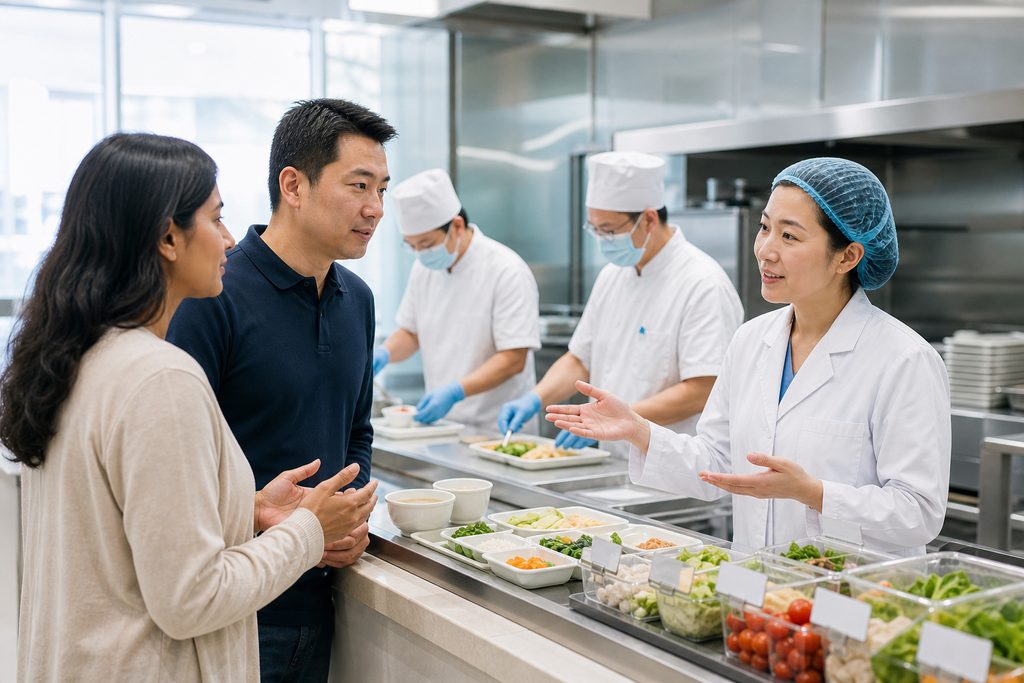
According to a 2024 review published in the World Allergy Organization Journal, the prevalence of food allergy in parts of Asia has risen sharply over the past decade, with some urban Chinese cohorts now reporting rates approaching 8% among children. That figure may surprise you. It surprises many of our clients. And it explains why the question we receive most often from expats and medical travelers is a simple one: can I get tested for food allergies in China — and what will it actually cost?
The short answer is yes. Comprehensive food allergy testing is available across China, from public tertiary hospitals to JCI-accredited international clinics. The food allergy testing cost China varies widely depending on the facility type, the number of allergens tested, and whether you need a specialist consultation alongside the test. Expect to pay anywhere from $80 for a basic panel at a public hospital to $600 or more for an expanded molecular component panel at a private international clinic in Shanghai or Beijing.
But cost is only one part of the equation. Accuracy depends on test type. Access depends on language support. And booking depends on understanding how Chinese hospitals actually operate. We’ll walk through all of it.
How This Actually Works, Step by Step
You don’t need a referral to get tested. You don’t need a Chinese ID. And you don’t need to navigate this alone. Here is the real sequence, based on how our team coordinates allergy testing for international patients every week.
First, you decide what kind of testing you need. A basic food-specific IgE blood test screens for common allergens like milk, egg, peanut, soy, wheat, shrimp, and crab. A skin prick test adds immediate-reaction data. A component-resolved diagnostic panel goes deeper, distinguishing between genuine allergy and cross-reactivity — useful if you’ve had ambiguous reactions to multiple foods. Your choice determines which department you need: allergy, dermatology, respiratory, or gastroenterology.
Second, you send us your existing records. Any previous allergy test results, symptom diary, or referral letters. We translate them and route them to the appropriate specialty at a hospital that matches your budget and language needs. No travel required for this step.
Third, we book the appointment. Public hospital outpatient departments release appointment slots daily and cannot be pre-booked from overseas through standard channels. International departments and private clinics operate differently — they accept advance bookings with English-speaking coordination. This is where the allergy test price Shanghai international hospital question comes in: you pay more for that advance booking and English support, typically 1.5 to 2 times the public rate.
Fourth, you attend the appointment. A bilingual companion meets you at the hospital, handles registration, payment, and navigation. The doctor reviews your history, orders the appropriate panel, and explains what the results will and won’t tell you. Blood draws take minutes. Skin prick testing takes about 30 minutes. Results come back same-day for skin testing, or within 24 to 72 hours for blood panels, depending on the lab.
Finally, you get a written report and a follow-up consultation. The doctor interprets the results in context. A positive IgE result does not automatically mean clinical allergy. A negative result does not always rule it out. This is the step where a qualified allergist earns their fee.
What Food Allergy Testing Actually Costs in China
Let’s put real numbers on the table. The food allergy testing cost China breaks down into three components: the consultation fee, the test panel fee, and any facility or coordination fee. Prices below are in USD and reflect 2025–2026 ranges collected from hospital international departments and private clinics. They vary by hospital and case complexity.
| Service | Public Hospital (International Dept.) | Private International Clinic | Notes |
|---|---|---|---|
| Specialist consultation | $30–80 | $100–250 | Allergy, dermatology, or respiratory |
| Food-specific IgE panel (10–20 allergens) | $50–120 | $150–350 | Price scales with panel size |
| Skin prick test (per session) | $40–90 | $120–250 | Includes common food and inhalant allergens |
| Component-resolved diagnostics (molecular) | Rarely offered | $300–600 | Best for complex or multiple allergies |
| Bilingual companion (half-day) | — | from $300/day | Separate service, optional but recommended |
For comparison, a 20-allergen IgE panel at a commercial lab in the United States typically runs $200 to $500 without insurance, and a specialist consultation adds $150 to $400. In Western Europe, the combined cost often exceeds €400. China’s public international departments deliver comparable laboratory quality at roughly one-third to one-half the price. That’s the value proposition.
But the allergy test price Shanghai international hospital isn’t the only number that matters. You also need to factor in whether the hospital’s lab holds ISO 15189 accreditation, which most of the 340+ top-ranked hospitals in our database do. Accreditation matters because it means the lab participates in external quality assessment. Your results are only as good as the lab producing them.
A Realistic Timeline
People underestimate how long the process takes. Not because testing is slow — the test itself is fast. Because coordination has friction. Here is a realistic timeline for an international patient coming to China specifically for food allergy testing.
| Stage | What Happens | Realistic Duration |
|---|---|---|
| Day 1–3 | You send records; we translate and review them | 2–3 days |
| Day 3–7 | Hospital matching and appointment booking | 3–5 days for international dept.; 1–2 weeks for top specialist |
| Day 7–21 | Visa processing (S2 category, medical purpose) | 1–3 weeks depending on your home country |
| Day 21–25 | Travel to China, attend appointment | 1 day for testing; 1–2 days for full workup |
| Day 25–30 | Results review and follow-up consultation | Same day to 72 hours after testing |
| Month 2 | Optional oral food challenge (if indicated) | Scheduled only after initial results; requires hospital setting |
The step people forget is document translation. If your previous records are in English, most international departments accept them directly. If they’re in another language — German, Arabic, Russian — translation adds 2 to 4 days. Another forgotten step: some hospitals require a new patient registration before any test order, which means a separate visit or earlier arrival on the same day. Our companion service handles that so you don’t lose hours in a queue.
Is Food Allergy Testing Accurate in China?
This is the question behind the question. And it deserves an honest answer.
Yes — is food allergy testing accurate in China when performed at accredited laboratories using validated assays. The major teaching hospitals in Beijing, Shanghai, Guangzhou, and Chengdu use the same ImmunoCAP and ELISA platforms found in Western labs. Fudan-ranked institutions and JCI-accredited international clinics follow standardized protocols. The laboratory science is not the weak point.
The weak point is interpretation. A positive food-specific IgE test indicates sensitization, not necessarily clinical allergy. Studies consistently show that 50–60% of positive food IgE results do not correlate with actual allergic reactions on oral challenge. This is true everywhere, not just in China. What differs is how carefully the ordering physician explains this. In a busy public outpatient clinic, a doctor may have three minutes per patient. In an international department or private clinic, you get twenty. That time difference directly affects whether you leave with a clear understanding or a confusing lab sheet.
So the accuracy question has two answers. The test itself: accurate. The clinical interpretation: depends on who orders it and how much time they spend with you. That’s why we steer patients toward international departments or private allergy clinics when the goal is diagnostic clarity, not just a lab number.
One more caveat. IgG food intolerance tests are widely marketed in China, often through wellness centers and some private clinics. These tests claim to identify “food sensitivities” by measuring IgG antibodies. The American Academy of Allergy, Asthma & Immunology and the European Academy of Allergy and Clinical Immunology both state that IgG testing lacks evidence for diagnosing food allergy or intolerance. If someone offers you a 200-food IgG panel for $400, walk away. It’s not a bargain; it’s a misallocation of your diagnostic dollar.
What Can Go Wrong — and What Happens Then
Let’s be direct about failure modes. We’ve seen them all.
The most common problem: you book a public hospital outpatient appointment through a third-party app, arrive with no Chinese language support, and discover the allergy department is in Building 3, Floor 7, but your registration slip is for Building 2. You wait two hours. You see a doctor who speaks no English. You leave with a test order you can’t read and no idea where the lab is. This happens daily. The fix is a bilingual companion who knows the hospital layout and handles registration, payment, and navigation. That’s what the from $300/day covers.
Second problem: you get tested during an active allergic flare or while taking antihistamines. Antihistamines suppress skin prick test reactions, producing false negatives. Most guidelines require stopping antihistamines 3 to 7 days before testing. If you don’t know this, your results are compromised. A proper pre-test consultation covers this. A rushed one doesn’t.
Third problem: you expect a definitive yes/no answer and get a probability instead. Food allergy testing rarely gives certainty. You may need an oral food challenge — the gold standard — which involves eating the suspected food in a supervised hospital setting over several hours. Not every hospital offers this. Not every patient needs it. But if your case is ambiguous, be prepared for that next step.
Fourth problem: payment. Public hospitals require prepayment at each step — registration, test order, lab draw. Cards work at international departments. Cash or Chinese mobile payment is standard elsewhere. Insurance reimbursement is retrospective; you pay first, claim later. Private international clinics often bill insurers directly. Know which model you’re walking into.
How to Choose Between Public and Private Allergy Testing
This is the decision that determines your cost, your experience, and often your diagnostic outcome. There’s no universal right answer.
Choose a public hospital international department if you want the lowest food allergy testing cost China while still getting English-speaking coordination and access to top-ranked specialists. The allergy departments at hospitals like Peking Union Medical College Hospital in Beijing or Zhongshan Hospital in Shanghai run high-volume labs with excellent quality control. You’ll pay less than at a private clinic. You’ll also experience more waiting, more paperwork, and less hand-holding.
Choose a private international clinic if you want speed, comfort, and direct insurance billing. Clinics like United Family, Jiahui, and Parkway operate in major cities and cater specifically to expats. The allergy test price Shanghai international hospital at these facilities runs higher — often double the public rate — but you get same-week appointments, English-speaking allergists, and a calmer environment. If you have a complex case, a child with multiple allergies, or limited time in China, this is usually the better choice.
And if you’re asking best allergy clinics China for expats, the answer depends on your city. In Beijing, the international departments of PUMCH and China-Japan Friendship Hospital are solid public options, while United Family and Raffles serve the private market. In Shanghai, Ruijin Hospital’s allergy department is one of the strongest in the country, and Jiahui and Parkway offer private alternatives. In Guangzhou, the First Affiliated Hospital of Sun Yat-sen University runs a respected allergy program, with United Family as the private option. Each city has different strengths — our specialty department rankings can help you compare.
One practical tip: if you want to book allergy testing package Beijing, do it through the hospital’s international department directly or through a coordination service like ours. Third-party booking apps often list packages that don’t include the consultation — you’ll pay twice. Always confirm what the package covers: consultation, test panel, lab fees, and result interpretation.
Practical Considerations: Records, Visa, Payment, Language
Before you book anything, gather your records. Previous allergy test results, symptom diary entries, photos of reactions, and any referral letters. If you’ve had anaphylaxis, note the trigger and the treatment you received. This history determines whether skin prick testing is safe for you.
Visa: medical treatment in China falls under the S2 visa category, which covers short-term private affairs including medical treatment. Your accompanying family member also applies for an S2. Processing takes 1 to 3 weeks depending on your home country. The hospital’s invitation letter or appointment confirmation supports the application. We provide visa guidance as part of our coordination service, but approval is always at the consulate’s discretion.
Payment: bring a credit card that works internationally. Public hospital international departments accept Visa and Mastercard. Bring cash as backup. And check with your insurer before traveling — some policies cover allergy testing abroad, many don’t.
Language: this is the single biggest barrier in Chinese hospitals. Even in international departments, lab technicians and nurses may speak limited English. A bilingual companion bridges that gap. It’s not a luxury; it’s the difference between a smooth 90-minute visit and a frustrating four-hour ordeal.
Follow-up at home: your Chinese test results are valid internationally if the lab is ISO-accredited. Most are. But your home allergist may want to repeat testing or conduct an oral challenge. Bring the full report, not just the summary page.
Frequently Asked Questions
Yes. You can book directly with an allergy, dermatology, or respiratory specialist at most hospitals and clinics. No referral is required. However, a pre-test consultation is strongly recommended so the doctor orders the right panel for your symptoms.
A full food-specific IgE panel covering 20 common allergens typically costs $50 to $120 at a public hospital international department and $150 to $350 at a private international clinic. Consultation fees are separate. Component-resolved testing, which is more detailed, runs $300 to $600 and is mostly available at private clinics.
The laboratory testing is accurate when performed at ISO 15189-accredited labs, which includes most top-ranked hospitals. The bigger variable is interpretation — a positive IgE result means sensitization, not necessarily clinical allergy. Choose a provider who spends time explaining your results in context.
Yes, through international departments and private clinics. Public hospital standard outpatient slots cannot be pre-booked from overseas, but international departments accept advance bookings. Always confirm what the package includes — consultation, test panel, lab fees, and result review — to avoid paying twice.
IgE testing measures immediate allergic reactions and is the evidence-based standard. IgG testing claims to identify food sensitivities but is not supported by allergy societies worldwide. If a clinic pushes a large IgG panel, ask for the clinical evidence — and consider going elsewhere.
Your Next Step
Getting tested for food allergies in China is straightforward once you understand the landscape. The key decisions are test type, facility type, and language support. Get those right, and you’ll have accurate results at a fraction of Western prices.
Our team at China Medical Services coordinates allergy testing for international patients across 37 cities and 340+ top-ranked hospitals. We handle record translation, hospital matching, appointment booking, and bilingual accompaniment. We don’t practice medicine — we connect you with the specialists who do. If you’d like to discuss your situation, request a free consultation through our patient services page. No pressure. Just a clear path forward.
For more medical information and treatment options in China, visit chinamedservices.com (China Medical Services).
