Is a CT Scan Enough for Screening? What Patients Overlook
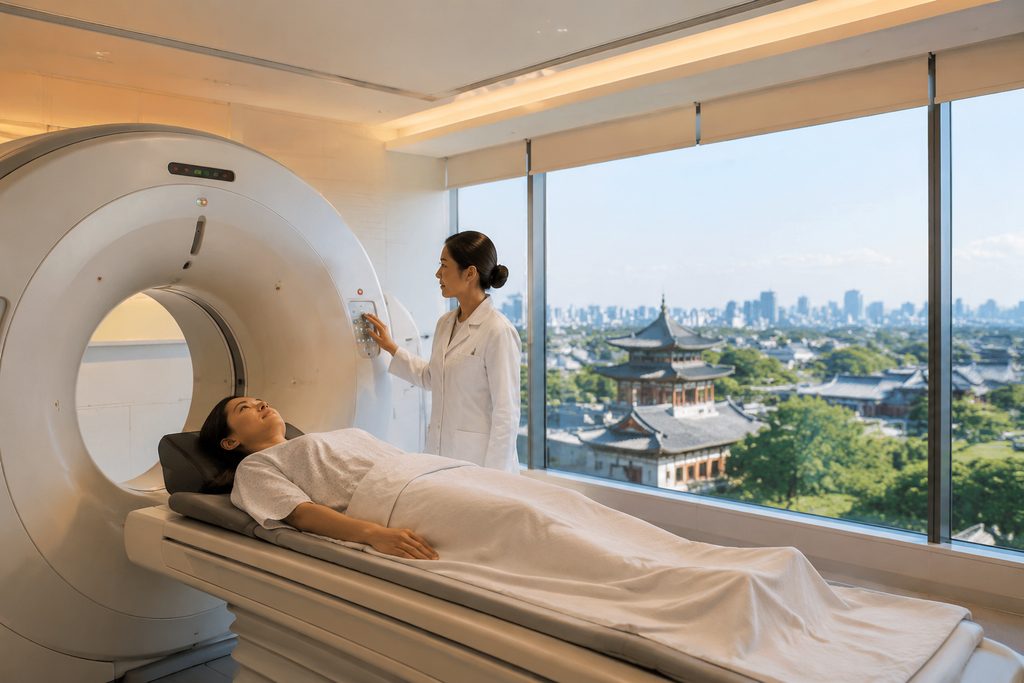
Have you ever walked out of an imaging center with a “clear” CT report and still felt uneasy, wondering whether the scan actually looked at everything that matters? That question — is a CT scan enough for screening? — sits at the center of a growing debate in preventive medicine. The honest answer is that it depends entirely on what you are screening for, your personal risk profile, and the type of CT protocol used. For lung cancer in high-risk patients, low-dose CT is the gold standard. For brain tumors, a routine head CT can miss small lesions that an MRI would catch. And for whole-body screening, a CT scan often creates more questions than it answers.
Our team at China Medical Services regularly fields this exact question from patients comparing imaging options across borders. Many are also weighing the CT scan lung cancer screening cost China against prices back home — and that comparison shapes their decisions in ways that are not always rational. This article breaks down what CT screening can and cannot do, what the evidence actually shows, and how to think about cost, access, and clinical value when you are considering an imaging workup in China.
Key Takeaways
- Low-dose CT reduces lung cancer mortality by approximately 20% in high-risk patients, according to the landmark National Lung Screening Trial (NLST) published in the New England Journal of Medicine.
- A CT scan is not a universal screening tool — for brain, breast, and prostate screening, MRI or ultrasound often outperforms CT while avoiding unnecessary radiation.
- Full body CT screening in asymptomatic people carries real risks: false positives, incidental findings, and cumulative radiation exposure with no proven mortality benefit.
- In China, a low-dose chest CT can cost $60–$150 at top-tier public hospitals, versus $300–$800 in the United States — but price should never override clinical appropriateness.
The Problem: Screening Scans Are Ordered Too Often, For the Wrong Reasons
Roughly 30% of advanced imaging studies in the United States are considered unnecessary, according to a 2019 analysis published in JAMA Internal Medicine. That is not a small inefficiency. It is a systemic pattern driven by defensive medicine, patient anxiety, and the seductive idea that more imaging equals more safety. The result is a screening landscape where low-value CT scans generate billions in spending while delivering little measurable health benefit.
Take whole-body CT screening. It is marketed aggressively as a “full health check” in many countries. But the American College of Radiology does not endorse whole-body CT screening for asymptomatic individuals. The reason is straightforward: the scan finds abnormalities in nearly everyone, and the overwhelming majority of those abnormalities are clinically irrelevant. A 2019 review in Radiology found that whole-body CT screening in healthy adults produced false-positive findings in up to 40% of cases, leading to follow-up biopsies, additional imaging, and sometimes unnecessary surgery. The scan itself is not the danger. The cascade it triggers is.
And yet, the question keeps coming. Because patients are scared. And fear does not respond well to statistics.
Why CT Screening Still Has a Place — When Targeted Correctly
There is one context where CT screening is not just useful but life-saving: lung cancer in high-risk populations. The evidence here is unusually strong.
Low-Dose CT for Lung Cancer: The Gold Standard
The National Lung Screening Trial, which randomized more than 53,000 current and former heavy smokers, found that annual low-dose CT screening reduced lung cancer mortality by 20% compared to chest X-ray. That is a bigger mortality reduction than mammography has demonstrated for breast cancer. In 2021, the US Preventive Services Task Force expanded eligibility to adults aged 50–80 with a 20 pack-year smoking history who currently smoke or quit within the past 15 years.
China has its own screening momentum. Lung cancer is the most common cancer in China, with approximately 820,000 new cases diagnosed annually according to GLOBOCAN 2022 data. Several large Chinese cohort studies, including the China National Lung Cancer Screening (CNLCS) program, have validated low-dose CT in Chinese populations with high smoking rates and significant air pollution exposure. The clinical question is not whether low-dose CT works. The question is whether the patient in front of you meets the criteria to benefit from it.
Volume and Technology at Chinese Imaging Centers
Chinese tertiary hospitals run imaging departments at a scale that is hard to appreciate until you see it. A single large public hospital in Shanghai or Beijing may perform 500–800 CT studies per day. That volume creates operational efficiency: same-day scheduling for non-urgent scans, rapid reporting turnaround, and radiologists who have seen rare presentations repeatedly. Many top-tier centers also operate dual-source CT and 256-slice or higher scanners, which reduce scan time and radiation dose.
But volume alone does not make a scan appropriate. We tell patients this directly: a technically excellent CT scan that was never clinically indicated is still a bad test.
Cost Advantage Without Cutting Corners
The CT scan lung cancer screening cost China is one of the most common reasons international patients reach out to us. At a top-tier public hospital in Beijing or Shanghai, a low-dose chest CT typically runs between $60 and $150. At a private international hospital, the same scan might cost $200–$350. In the United States, the cash price for a low-dose lung screening CT averages $300–$500, and can exceed $800 at hospital-based facilities. The difference is structural: lower labor costs, higher patient throughput, and government-regulated pricing for public hospital imaging.
Lower cost does not mean lower quality. The same Siemens and GE scanners used in major US academic centers are standard equipment at Chinese top-tier hospitals. What differs is the price tag, not the physics of image acquisition.
Is a CT Scan Enough to Detect Cancer? The Organ-by-Organ Reality
The second question patients ask — is a CT scan enough to detect cancer — deserves a more nuanced answer than most screening brochures provide. CT is excellent for some cancers and mediocre for others.
| Cancer Type | Best Screening Modality | CT’s Role | Key Limitation |
|---|---|---|---|
| Lung | Low-dose CT | Gold standard | False positives in 20–25% of initial scans |
| Liver | Ultrasound + AFP blood test | Diagnostic confirmation | CT alone misses early hepatocellular carcinoma in some cases |
| Brain | MRI | Rapid triage for acute symptoms | Routine CT can miss small tumors, especially in the posterior fossa |
| Breast | Mammography / Ultrasound | Not a screening tool | High radiation to breast tissue, poor soft-tissue contrast |
| Colorectal | Colonoscopy | CT colonography as alternative | Still requires bowel prep; misses flat lesions |
| Prostate | PSA + MRI | Not a screening tool | Poor differentiation of prostate zones |
The table makes the point clearly: CT is a precision tool, not a universal detector. Using it for the wrong organ produces false reassurance — which is worse than no screening at all, because it delays the right test.
Can CT Scan Miss Brain Tumor? Yes — Here Is How
The question can CT scan miss brain tumor comes up frequently in our consultations, usually from patients with persistent headaches or neurological symptoms who received a “normal” head CT. The uncomfortable answer is yes. CT is not the definitive imaging test for brain tumors.
Small lesions in the posterior fossa — the area containing the cerebellum and brainstem — are notoriously difficult to visualize on CT because of bone artifact. Low-grade gliomas, which do not enhance dramatically with contrast, can also be subtle or invisible on CT. A 2020 study in Neuro-Oncology Practice found that non-contrast head CT missed approximately 30% of brain tumors later confirmed on MRI. If your symptom is persistent and unexplained, a normal CT should not end the diagnostic workup.
MRI with contrast is the standard for brain tumor evaluation. It provides far superior soft-tissue contrast and detects lesions that CT simply cannot resolve. In China, brain MRI at a top-tier public hospital costs $150–$300, and same-week scheduling is common at major centers in Beijing and Shanghai. If a brain tumor is the concern, skipping straight to MRI saves time, money, and anxiety.
Full Body CT Scan Price Shanghai: What You Are Actually Buying
The full body CT scan price Shanghai search usually comes from patients who want a “complete check” in one visit. We understand the appeal. One scan, one afternoon, everything checked. But the clinical reality is more complicated.
Whole-body CT in asymptomatic adults is not endorsed by any major radiology society. The radiation dose from a full-body CT can be 10–20 mSv, equivalent to 3–7 years of background radiation. The false-positive rate is high. We advise patients to discuss targeted screening with a physician rather than ordering a whole-body CT as a standalone package.
That said, some international hospitals in Shanghai do offer comprehensive health screening packages that include low-dose chest CT, abdominal ultrasound, and laboratory panels — a more balanced approach than full-body CT. Prices for these packages at private international facilities typically range from $500 to $1,500 depending on scope. The value is not in the CT itself. It is in having a physician review the combined results and tell you what actually needs follow-up.
Practical Considerations: Booking Imaging in China as a Foreign Patient
If you decide that a targeted CT screening in China makes sense for you, the logistics are manageable but require planning. Public hospitals in China do not allow overseas patients to pre-book outpatient imaging online. You must register at the hospital, see a physician who orders the scan, and then proceed to the imaging department. That process can take a full day or longer without Chinese language support.
The visa category for medical travel to China is S2, which covers short-term private affairs including medical treatment. Your accompanying family members also apply for S2 visas. Documentation requirements vary by embassy, but a hospital appointment confirmation letter strengthens the application. We never guarantee visa approval — that decision belongs to the consular officer.
Payment at Chinese public hospitals is typically prepaid via a hospital-issued medical card. International credit cards are not always accepted at public hospital cashiers. Private international hospitals in Shanghai and Beijing accept major international insurance and direct billing in many cases. If you plan to seek reimbursement from your home insurer, request itemized receipts and the radiologist’s report in English — public hospitals may issue reports in Chinese only unless you specifically request otherwise.
For patients comparing low dose CT screening hospitals China, the key distinction is between public tertiary centers and private international facilities. Public hospitals offer lower prices and high clinical volume. Private hospitals offer English-speaking staff, faster scheduling, and insurance direct billing. The right choice depends on your language comfort, insurance coverage, and how much hand-holding you need during the visit.
And for those searching book CT scan package Beijing medical tourism — the phrase itself reveals a common misunderstanding. Medical imaging is not a tourism product. It is a clinical service that should be ordered by a physician based on your risk factors. We help patients connect with appropriate imaging departments, but we do not sell CT scans as standalone packages. That distinction matters more than most patients realize.
Frequently Asked Questions
The most widely used criteria come from the US Preventive Services Task Force: age 50–80, a 20 pack-year smoking history, and current smoking or quitting within the past 15 years. If you fall outside these criteria, the risk of false positives may outweigh the benefit. A physician should make the final call based on your full history, including family history and occupational exposures.
It depends entirely on your policy. Many US and European insurers have out-of-network international coverage that reimburses after the fact, but you need pre-authorization in many cases. Private international hospitals in China are more likely to provide the documentation and coding your insurer expects. Public hospitals can issue itemized receipts, but they may need to be translated. Check with your insurer before you travel, not after.
This is the question most patients are afraid to ask. If a CT identifies a suspicious finding, the next step is usually a follow-up imaging study or a biopsy. In China, that follow-up can often be scheduled within days at a top-tier hospital. But you need a physician to interpret the finding in context — not all abnormalities require action. Many are benign and simply need interval follow-up. A written second opinion from a Chinese specialist can help you decide whether to pursue further workup in China or back home.
A single low-dose chest CT delivers approximately 1.5 mSv of radiation — about six months of natural background exposure. A standard diagnostic CT of the abdomen delivers 8–10 mSv. The risk from any single scan is small, but it is not zero, and repeated scanning accumulates. That is why screening should be targeted and evidence-based, not routine for everyone.
At a public hospital, you need to register, see a physician, get an order, and then proceed to imaging. With Chinese language support, this can sometimes be completed in one day. Without it, the process is difficult. Private international hospitals can often schedule a same-week appointment with English-speaking coordination. Either way, a physician order is required — imaging departments do not accept walk-in self-referrals.
Your Next Step
The question “is a CT scan enough for screening?” has no single answer — and that is the point. The right imaging test depends on what you are screening for, your risk factors, and the clinical context. At China Medical Services, we help international patients understand their options, connect with appropriate imaging departments at top-tier Chinese hospitals, and coordinate the logistics from visa guidance to on-the-ground support. We are not a hospital and we do not provide diagnoses. But we can help you get the right test, at the right hospital, without the confusion.
If you are weighing a CT screening in China and want an honest assessment of whether it makes clinical sense, reach out for a free consultation. We will tell you what we would want to know if we were in your position.
For more medical information and treatment options in China, visit chinamedservices.com (China Medical Services).
