Endoscopy in China: What This Test Shows, Detects, and Costs
What Does an Endoscopy Show? The Short Answer
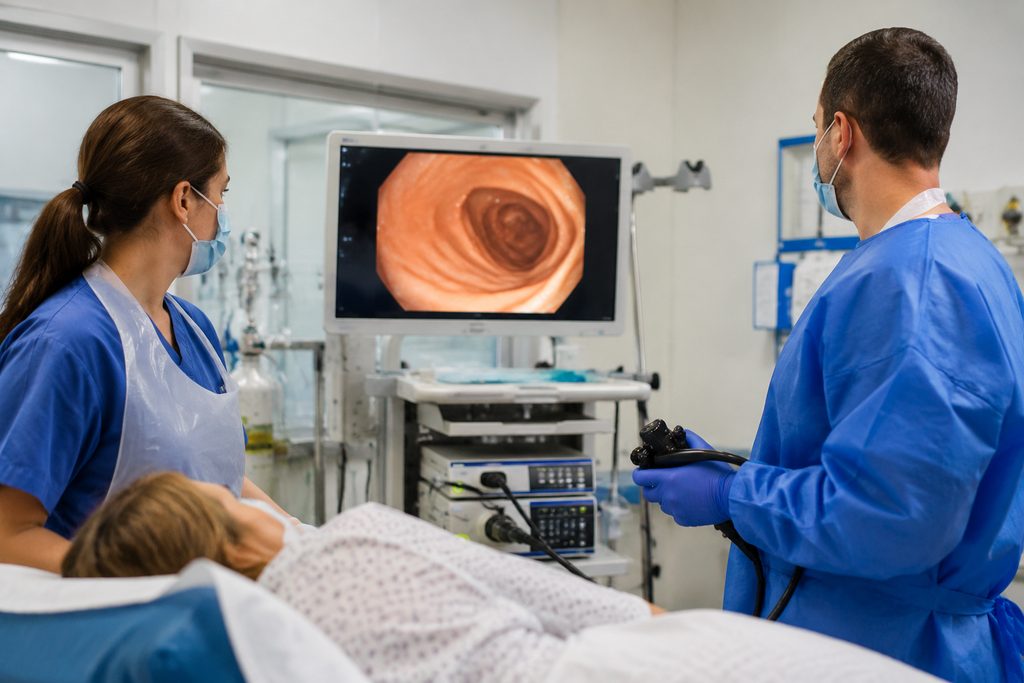
An endoscopy shows the inside lining of your upper digestive tract in real time. A thin, flexible tube with a camera enters through your mouth, sending high-definition images of your esophagus, stomach, and the first part of your small intestine to a monitor. The doctor sees inflammation, ulcers, polyps, bleeding, strictures, and early-stage tumors that don’t appear on X-rays or routine blood work. If something looks abnormal, the doctor can take a biopsy during the same procedure — tissue that a pathologist examines under a microscope.
But here’s what a standard endoscopy does not show. It cannot see the liver, gallbladder, pancreas, or the lower digestive tract. It shows the mucosal surface, not the deeper muscle layers. And the quality of what it detects depends heavily on the operator’s experience and the equipment used. That last point matters more than most patients realize.
What Can an Endoscopy Detect: A Practical List
Patients searching for this usually have symptoms. Heartburn that won’t quit. Difficulty swallowing. Unexplained weight loss. Black stools. Chronic nausea. What can an endoscopy detect that explains these symptoms? Quite a lot, and with surprising precision.
- Gastroesophageal reflux disease (GERD) — visible irritation, erosions, and Barrett’s esophagus, a precancerous change in the esophageal lining.
- Peptic ulcers — open sores in the stomach or duodenum, often caused by H. pylori bacteria or long-term NSAID use.
- Gastritis — inflammation of the stomach lining, sometimes erosive, sometimes atrophic.
- Hiatal hernia — part of the stomach pushing up through the diaphragm.
- Esophageal varices — swollen veins that can rupture and bleed, often linked to liver disease.
- Celiac disease — flattening of the small intestine’s villi, confirmed by biopsy.
- Early gastrointestinal cancers — esophageal, gastric, and duodenal tumors. This is where high-definition scopes with narrow-band imaging make a measurable difference.
- Polyps and submucosal lesions — growths that can be removed or biopsied on the spot.
- Strictures and obstructions — narrowing from scar tissue, tumors, or rings like Schatzki’s ring.
One thing patients often misunderstand: an endoscopy is diagnostic first. If the doctor finds a polyp or a suspicious lesion, removal or biopsy happens during the same session. You wake up with answers, not just pictures.
Who Should Get an Endoscopy — and Who Shouldn’t
Not every stomach complaint warrants a scope. Good doctors know when to order one and when to wait. Here’s the honest breakdown.
Good candidates typically include:
- Adults over 45 with new-onset dyspepsia or persistent reflux symptoms lasting more than a few weeks despite medication.
- Anyone with alarm symptoms: unintended weight loss, vomiting blood, black tarry stools, difficulty swallowing, or anemia with no clear cause.
- People with a family history of gastric or esophageal cancer, especially those from regions with higher baseline rates.
- Patients needing surveillance for Barrett’s esophagus, atrophic gastritis, or prior polyps.
- Anyone with suspected celiac disease or chronic unexplained iron deficiency.
Who should not rush into an endoscopy:
- Young patients with classic reflux symptoms and no alarm signs — a trial of medication and lifestyle changes often comes first.
- People with active, unstable heart or lung disease where sedation carries meaningful risk.
- Anyone with a known bleeding disorder that hasn’t been medically optimized.
- Patients with acute pancreatitis or suspected perforation — this is a medical emergency, not a routine scope.
If you’re unsure, a written second opinion based on your existing records can clarify whether an endoscopy is the right next step. That’s often cheaper than flying somewhere for a test you may not need.
Is Endoscopy Safe in China? Comparing the Options
Short answer: yes, when performed at accredited hospitals with modern equipment and experienced endoscopists. China’s top tertiary hospitals perform enormous volumes of endoscopic procedures. That volume translates into technical proficiency. But safety depends on where you go. A county-level clinic and a Fudan-ranked teaching hospital are not the same experience.
Here’s how the options compare for international patients considering an endoscopy in China:
| Factor | Top Public Hospital (International Dept.) | JCI-Accredited Private Hospital | Standard Public Hospital |
|---|---|---|---|
| Endoscopist experience | Very high; thousands of cases yearly | High; often former public hospital specialists | Variable; depends on department volume |
| Language support | English-speaking coordinators available | Fully English-speaking staff | Minimal; Chinese required |
| Sedation type | Conscious sedation or general anesthesia | General anesthesia common; Western-style comfort | Often unsedated or light sedation |
| Insurance billing | Pre-pay, then reimburse | Direct billing with many international insurers | Cash or Chinese insurance only |
| Typical cost for upper endoscopy | $150–$400 | $500–$1,200 | $80–$200 |
| Wait time for scheduling | 2–7 days via international department | Same week, often next-day | Same day if you queue at 6:00 AM |
Which column fits you? If you want the highest clinical volume at a moderate price and don’t mind some coordination, the international department of a top public hospital is the sweet spot. If you want zero language friction and direct insurance settlement, a JCI accredited hospital endoscopy Beijing or Shanghai makes more sense. Standard public departments are cheapest but demanding without Chinese language skills.
Endoscopy Cost China: What You’ll Actually Pay
The endoscopy cost China patients encounter varies more than most websites admit. Here’s the realistic picture, based on current hospital pricing structures across major cities.
| Procedure | Standard Public Hospital | Public Hospital Int’l Dept. | Private International Hospital |
|---|---|---|---|
| Upper GI endoscopy (no biopsy) | $80–$150 | $200–$400 | $500–$900 |
| Upper GI endoscopy with biopsy | $120–$200 | $300–$500 | $600–$1,100 |
| Colonoscopy (diagnostic) | $150–$300 | $400–$700 | $800–$1,500 |
| Gastroscopy + colonoscopy (combined) | $250–$450 | $600–$1,000 | $1,200–$2,200 |
| Endoscopic polyp removal (per polyp) | $100–$300 | $250–$600 | $400–$1,000 |
These figures are ranges, not quotes. Final pricing depends on the hospital tier, whether sedation is included, how many biopsies are taken, and whether polyps are removed. An endoscopy package price Shanghai or Beijing quote usually bundles the procedure, sedation, and basic pathology. But ask explicitly: some packages exclude biopsy interpretation or charge extra for sedation.
Compared to the United States, where an upper endoscopy without insurance often runs $1,500–$3,500, the savings are substantial. Even the top private international hospitals in China typically come in 50–70% lower than US self-pay rates.
How to Book an Endoscopy Procedure Abroad: The Sequence
Booking an endoscopy in China from overseas is not like booking a hotel. You cannot simply call a public hospital’s general registration line from abroad and reserve a slot. Public hospitals in China operate on a same-day queue system for standard outpatient care. International patients need a different route.
The practical sequence looks like this:
Step 1: Gather your records. Recent blood work, any prior endoscopy reports, imaging, and a referral letter from your home doctor if you have one. These documents determine whether you need a scope at all, and which type.
Step 2: Choose your hospital tier. A JCI accredited hospital endoscopy Beijing or Shanghai offers the smoothest experience for English speakers. A top public hospital’s international department offers higher clinical volume at a lower price. Both are valid.
Step 3: Arrange pre-procedure consultation. Most hospitals require a doctor to review your case before scheduling the scope. This can happen remotely via video consultation or on your first day in China. The remote option saves you from arriving without a confirmed plan.
Step 4: Schedule the procedure. Once the doctor approves the endoscopy, the hospital’s international coordination team sets a date. Expect 2–7 days of lead time at public international departments, less at private hospitals.
Step 5: Handle the visa. Medical treatment falls under the S2 visa category, which covers short-term private affairs including medical care. Supporting documents from the hospital — an invitation letter or treatment confirmation — strengthen your application. Family members accompanying you also apply for S2.
Step 6: Prepare for the prep. Upper endoscopy requires fasting for 6–8 hours. If you’re also doing a colonoscopy, you’ll need a full bowel prep the day before. Plan to be in China at least one day before the procedure.
And a practical note: if you’re flying in specifically for a diagnostic endoscopy, consider combining it with other health checks. Many patients add a comprehensive physical exam or relevant blood panels during the same trip. It makes the travel cost more efficient.
Practical Considerations: Records, Payment, and Follow-Up
Arranging an endoscopy abroad involves more than the procedure itself. Here’s what actually matters on the ground.
Medical records. Bring everything translated into English or Chinese. If your records are in another language, factor in translation time. Hospitals need to see your history before they’ll proceed. Our team handles record translation and formatting to match what Chinese hospital departments expect.
Payment. Public hospitals in China — including their international departments — generally require prepayment. You pay upfront, then claim reimbursement from your insurer. Private JCI hospitals often bill insurers directly. Bring a credit card with a sufficient limit, and confirm your bank won’t block overseas transactions.
Insurance. Check whether your policy covers diagnostic procedures performed abroad. Some international plans do; many domestic-only plans don’t. If your insurer requires pre-authorization, start that process before you book flights.
Language. Even in international departments, the pre-procedure consent forms and discharge instructions may be in Chinese. A bilingual medical companion who handles registration, payment queues, and translation removes the single biggest source of stress for foreign patients.
Follow-up after returning home. You’ll leave China with a written report and biopsy results if any were taken. Pathology typically takes 3–7 days. Make sure you receive the full report in English, including images. Your home doctor can then take over management. If the endoscopy finds something requiring treatment, you’ll need to decide whether to pursue that treatment in China or at home.
Frequently Asked Questions
An endoscopy shows the mucosal surface directly — the actual lining of the esophagus, stomach, and duodenum. CT and ultrasound show the organs from outside, missing flat lesions, subtle inflammation, and early mucosal cancers. An endoscopy can also take biopsies, which imaging cannot. But endoscopy only sees the inside surface. For deeper tumors or lymph node involvement, CT or endoscopic ultrasound adds information.
At top-tier hospitals, yes. The key variables are sedation protocols, scope sterilization, and endoscopist experience. JCI-accredited private hospitals follow international standards and have English-speaking staff. Top public hospital international departments perform enormous volumes, which builds technical skill. The risk of serious complications — perforation, major bleeding — is low, generally under 1 in 1,000 for diagnostic procedures. But no procedure is zero-risk. Ask about the hospital’s sedation monitoring and emergency response protocols before you book.
An upper endoscopy in a Chinese public hospital international department typically costs $200–$400 without insurance. The same procedure in a US hospital often bills $1,500–$3,500 for self-pay patients. Private JCI hospitals in China charge $500–$900, still well below US rates. Add travel costs and the savings shrink, but for patients already planning to visit China or combining the procedure with other care, the math works.
Not through standard public hospital channels. Standard outpatient registration in China is same-day, in-person, and in Chinese. International departments and private hospitals can pre-schedule after a doctor reviews your records. That review can happen remotely. So yes, you can arrive with a confirmed procedure date — but only through the right channel.
If a biopsy confirms cancer or a precancerous condition, you’ll get a pathology report within about a week. At that point, you have decisions to make. Some patients choose to pursue treatment at the same Chinese hospital, where surgical volumes for gastrointestinal cancers are among the highest in the world. Others return home with the full report and continue care with their local oncologist. The endoscopy report belongs to you — it’s portable. What matters is that you leave with complete, translated documentation.
Your Next Step
An endoscopy is a powerful diagnostic tool, but only when performed at the right facility and for the right reasons. If you’re considering the procedure in China, start with your records, not your flights. A remote review by a Chinese gastroenterology team can confirm whether an endoscopy is warranted, what type you need, and which hospital tier fits your case.
China Medical Services helps international patients navigate this process — from hospital matching to record translation to bilingual accompaniment on procedure day. We are not a hospital and we do not provide medical advice or diagnoses. What we do is coordinate the logistics so you can focus on the result, not the paperwork. If you’d like a free consultation to discuss your situation, tell us about your case and we’ll map out the practical path forward.
For more medical information and treatment options in China, visit chinamedservices.com (China Medical Services).
