Root Canal: What It Is, When You Need It, and What It Costs in China
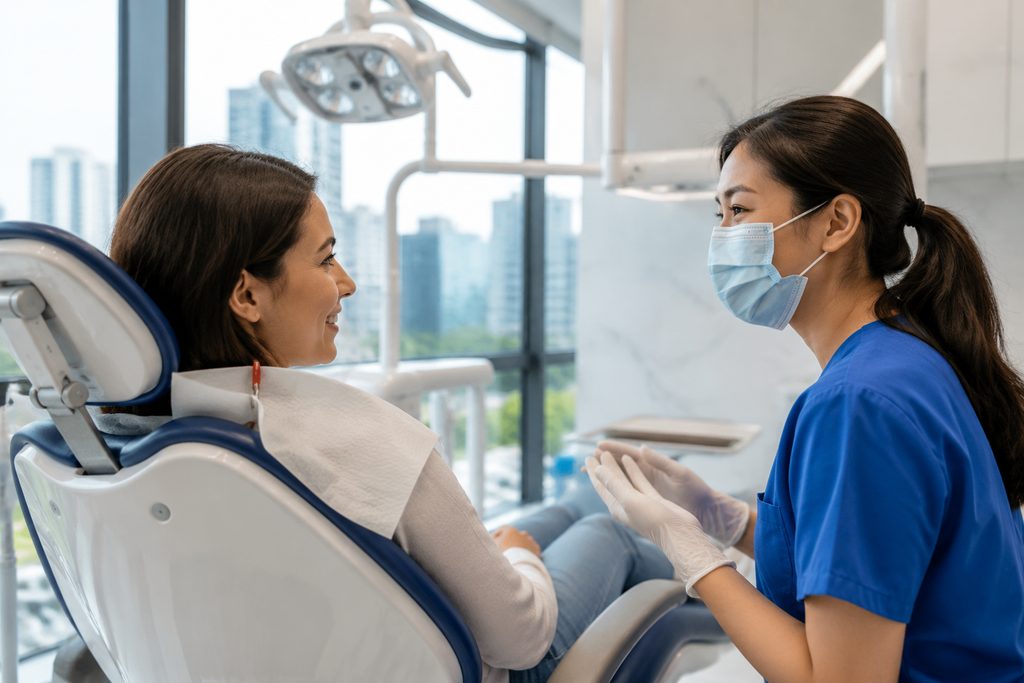
Root Canal: What It Is and When You Need It — Including Root Canal Cost China
A root canal sounds intimidating. But in plain terms, it means cleaning out an infected space inside your tooth, filling it, and keeping the tooth alive in your mouth for years to come. The “root canal” is actually the natural hollow chamber inside each tooth that holds nerves and blood vessels. When bacteria invade that chamber through a deep cavity, crack, or injury, the tissue inside gets inflamed and eventually dies. The procedure removes that infected tissue, disinfects the space, and seals it. That is the whole concept. And if you are comparing root canal cost China versus what you would pay at home, the numbers may surprise you.
Dental pain does not wait for convenient timing. You might be in Shanghai for work, studying in Beijing, or planning a trip and suddenly feeling that sharp, throbbing ache that gets worse at night. Or you have been quoted $2,400 for a molar root canal back home and started searching for alternatives. Either way, understanding what the treatment involves — and what it costs in China — helps you make a calmer decision.
How This Actually Works, Step by Step
Here is the real sequence from where you are now to a finished root canal in China.
Step 1: Confirm the diagnosis. You need an X-ray. A dentist checks whether the pain comes from irreversible pulpitis (inflamed nerve tissue that will not heal) or an abscess at the root tip. Not every toothache needs a root canal. Some need a filling, some need extraction, some need nothing more than a bite adjustment. The X-ray settles it.
Step 2: Choose your provider level. In China, you have three broad options. A public hospital stomatology department (high volume, lower price, limited English). A private dental clinic chain like Arrail or iByer (moderate price, some English, faster booking). Or an international dental clinic inside a private hospital such as United Family or Jiahui (full English service, direct insurance billing, highest price). Your choice affects both cost and comfort.
Step 3: The procedure itself. Most root canals in China take one to two visits. A front tooth (incisor) has one canal. A molar has three or four. The dentist numbs the area, opens the tooth, removes the infected pulp, shapes the canals with tiny files, flushes them with disinfectant, and fills them with a rubber-like material called gutta-percha. A temporary or permanent filling covers the opening. A crown usually comes later — sometimes weeks later, sometimes the same day if the clinic has CAD/CAM milling equipment.
Step 4: The crown decision. After a root canal, the tooth becomes more brittle. Back teeth almost always need a crown. In China, a porcelain-fused-to-metal crown runs $150–400. A full zirconia crown runs $300–700. This is a separate cost from the root canal itself. Ask upfront whether the quoted price includes the crown or not. Many patients get surprised by this.
Root Canal Cost China: Real Numbers for 2025
So what does a root canal actually cost in China? Prices vary by city, clinic tier, and tooth complexity. Here is a realistic breakdown.
| Tooth Type | Public Hospital (USD) | Private Dental Clinic (USD) | International Clinic (USD) |
|---|---|---|---|
| Front tooth (incisor/canine) | $60–120 | $120–250 | $350–600 |
| Premolar | $90–180 | $180–350 | $450–750 |
| Molar (3–4 canals) | $150–300 | $300–550 | $600–1,100 |
Compare that to the United States, where a molar root canal typically costs $1,200–2,500 without a crown, or Western Europe at $600–1,500. Even at an international clinic in Shanghai, you often pay half or less than the American price. And at a public hospital or mid-tier private clinic, the gap widens dramatically. That is the core appeal of root canal cost China for international patients.
But price is not the only factor. Language barriers, appointment availability, and post-treatment follow-up all matter. A $120 root canal at a public hospital means little if you cannot communicate your symptoms or understand the aftercare instructions. We will get into that.
Is Root Canal Treatment Safe in China?
Short answer: yes, when you choose the right provider. Longer answer requires some nuance.
China’s top dental hospitals handle enormous case volumes. The stomatology department at Peking University School of Stomatology or West China Hospital of Stomatology in Chengdu performs thousands of root canals annually. Volume builds skill. These institutions follow international protocols — rubber dam isolation, rotary instrumentation, apex locators, and digital radiography are standard in reputable clinics.
Infection control has improved dramatically over the past decade. Major private chains and international clinics use disposable instruments, autoclave sterilization, and single-use gloves and barriers. Public hospitals also sterilize properly, though the pace feels more rushed and the environment more crowded.
The real risks are the same as anywhere: a missed canal, an incomplete seal, or a fractured instrument left inside. These happen at low rates globally — roughly 2–5% of cases. Choosing an experienced endodontist reduces that risk. In China, you can find board-certified endodontists at university-affiliated hospitals and high-end private clinics. The dental specialty rankings on our site list top institutions by department, which helps narrow the field.
One honest caveat: at very low-cost clinics in smaller cities, standards vary. A $40 root canal at an unlicensed neighborhood clinic is a gamble. Stick to accredited hospitals, established chains, or internationally accredited private facilities. You are not saving money if you need a retreatment six months later.
Best Endodontist Shanghai: Where to Look
If you are specifically searching for the best endodontist Shanghai has to offer, start with these categories rather than a single name.
University-affiliated stomatology hospitals. Shanghai Ninth People’s Hospital (affiliated with Shanghai Jiao Tong University School of Medicine) runs one of China’s most respected dental departments. Its endodontics division handles complex retreatments, calcified canals, and cases referred from other clinics. Expect long queues and limited English, but top-tier clinical skill.
Private specialty clinics. Clinics like Arrail Dental, iByer Dental, and SDM Dental have multiple Shanghai locations. Many employ endodontists who trained overseas or at top Chinese programs. Booking is faster — often same-week. Some branches have English-speaking front desk staff.
International hospitals. United Family, Jiahui, and ParkwayHealth in Shanghai offer full English-language dental care. The endodontists are often foreign-trained or have extensive experience treating expatriates. Prices run higher, but still below typical Western rates. If you want zero language friction and direct insurance billing, this is the route.
For a broader view of top-ranked dental institutions across China, our hospital database includes stomatology departments with Fudan ranking labels, so you can verify institutional reputation before booking.
Root Canal Price Beijing vs Abroad: A Direct Comparison
Beijing prices track closely with Shanghai, though public hospital fees run slightly lower and international clinic fees slightly higher, depending on the district. Here is how a molar root canal plus crown stacks up.
| Location | Molar Root Canal (USD) | Zirconia Crown (USD) | Total (USD) |
|---|---|---|---|
| Beijing public hospital | $120–280 | $200–500 | $320–780 |
| Beijing private clinic | $250–500 | $350–650 | $600–1,150 |
| Beijing international clinic | $550–1,000 | $500–900 | $1,050–1,900 |
| United States (average) | $1,200–2,500 | $800–1,800 | $2,000–4,300 |
| United Kingdom (private) | $700–1,400 | $600–1,200 | $1,300–2,600 |
| Australia | $900–1,800 | $700–1,500 | $1,600–3,300 |
Even at Beijing’s most expensive international clinics, you typically pay less than a mid-range American dentist. At public hospitals, the savings are dramatic. But remember: public hospital care in Beijing means navigating Chinese-language registration systems and potentially waiting weeks for an appointment. The trade-off is real.
How Long Does a Root Canal Take in China?
The procedure itself is straightforward. A single-canal front tooth takes 30–60 minutes in the chair. A molar takes 60–120 minutes, sometimes split across two visits if the infection is severe or the canals are unusually curved.
What surprises most international patients is the total timeline, not the chair time.
Some clinics offer same-day crowns using in-house milling machines. That compresses the timeline to about one week. Others send impressions to an external lab, adding 5–10 days. Ask about this when booking.
If you are traveling to China specifically for dental work, plan for at least two weeks in-country. That covers the root canal, a follow-up check, and crown delivery. Trying to squeeze everything into five days often fails because of lab turnaround times.
Book Root Canal Treatment China Medical Tourism: What to Know Before You Commit
Dental tourism in China is growing, but it works differently from the well-known Thai or Hungarian models. China’s dental tourism infrastructure is newer, and the language barrier is steeper. That does not mean you should avoid it — it means you should plan differently.
First, do not book a root canal sight unseen. Start with a remote consultation. Send your existing X-rays and a description of your symptoms to a clinic or a coordination service. A dentist reviews them and tells you whether a root canal is even indicated. Sometimes the answer is no — maybe you need a simple filling, or maybe the tooth is too far gone and extraction plus implant makes more sense. Knowing this before you fly saves money and disappointment.
Second, understand the visa situation. Foreigners traveling to China for medical treatment apply for an S2 visa, which covers short-term private affairs including medical care. The hospital or clinic provides a treatment confirmation letter that supports your application. Processing typically takes 1–4 weeks depending on your home country’s Chinese embassy or consulate. Do not book flights until the visa is approved.
Third, budget realistically. A $300 root canal in a Chinese public hospital is real, but so is the $80–150 per night hotel, the $50–100 in local transport, and the $300–500 coordination fee if you use a bilingual companion service. Add it all up. For a single molar, the total trip cost might reach $1,500–2,500 once travel and accommodation are included. That still beats the American price for the procedure alone, but it is not pocket change.
A Realistic Timeline
Here is what a dental tourism trip for a root canal actually looks like, week by week.
| Stage | Duration | What Happens |
|---|---|---|
| Remote consultation | Week 1–2 | Send X-rays and symptom history. Dentist reviews and confirms whether root canal is needed. |
| Treatment plan and quote | Week 2–3 | Clinic provides itemized cost breakdown. You decide on clinic tier and crown type. |
| Visa application (S2) | Week 3–7 | Submit treatment confirmation letter, passport, photos, and application form. Wait 1–4 weeks. |
| Travel to China | Week 7–8 | Arrive, settle in, attend first in-person consultation and X-ray. |
| Root canal procedure | Week 8–9 | One or two visits over 3–10 days. Temporary filling placed. |
| Crown preparation and fitting | Week 9–10 | Tooth shaped, impressions taken, crown fitted. Same-day or lab-made depending on clinic. |
| Final check and departure | Week 10 | Bite adjustment, final X-ray, aftercare instructions. Fly home. |
Total: roughly 8–10 weeks from first inquiry to finished tooth. Some patients compress this to 4–6 weeks by applying for the visa early and choosing a same-day crown clinic. But the remote consultation and visa processing steps cannot be skipped.
What Can Go Wrong — and What Happens Then
Root canals fail. The honest failure rate is 5–15% over ten years, depending on tooth type, initial infection severity, and operator skill. In China, as anywhere, failures happen. Here is what they look like and what you do about them.
Persistent pain after the procedure. Some soreness for 2–5 days is normal. Pain that worsens after a week suggests an incomplete cleaning, a missed canal, or a new infection. You return to the same clinic for a re-evaluation X-ray. If the problem is confirmed, retreatment (removing the old filling, recleaning, refilling) is the standard fix. Retreatment costs 50–100% more than the original procedure because it is technically harder.
A fractured tooth. If you skip the crown after a molar root canal, the tooth can crack under chewing force. A crack below the gum line usually means extraction. This is why dentists insist on crowns for back teeth. Not getting the crown is the most common avoidable failure.
An instrument separated inside the canal. Tiny files occasionally break during the procedure. If the broken piece seals the canal cleanly, the tooth may be fine. If it blocks proper cleaning, the tooth may fail later. Experienced endodontists using fresh instruments have very low separation rates. Ask about the clinic’s protocol if you are concerned.
Language miscommunication. You thought you were getting a crown included. The clinic says the quote covered only the root canal. You need to pay another $400. This kind of confusion is common when patients navigate Chinese clinics without translation support. Written, itemized quotes in English prevent most of these disputes.
How to Evaluate a Dental Provider in China
Not all root canals are equal. Here is what separates a good provider from a risky one.
Rubber dam use. A rubber dam isolates the tooth from saliva and protects your airway from instruments. Every legitimate endodontist uses one. If a clinic skips this step, leave.
Digital X-rays and apex locators. Modern root canal treatment requires measuring canal length precisely. Clinics using only old film X-rays and guesswork produce more failures. Ask what equipment they use.
Endodontist vs general dentist. For straightforward front teeth, a general dentist is fine. For molars with curved canals, retreatments, or calcified canals, an endodontist (a specialist with 2–3 extra years of training) is worth the higher fee. In China, specialist endodontists work mainly at university hospitals and high-end private clinics.
Sterilization visibility. Watch how the clinic handles instruments. Are they opening sealed pouches in front of you? Is the chair wiped down between patients? These are basic infection control signals. In reputable Chinese clinics, they are standard.
English capability. If you cannot explain your symptoms in Chinese, you need a clinic with English-speaking staff or a bilingual companion
Frequently Asked Questions
Yes. The hospitals used for international patients are JCI-accredited and follow the same international safety standards as top hospitals in the US and Europe. Surgical teams perform high volumes of procedures — often more than their Western counterparts — which studies show leads to better outcomes.
Costs vary by procedure and hospital, but international patients typically save 40-80% compared to US prices — even when factoring in travel and accommodation. A consultation with our team will give you an exact, all-inclusive quote with no hidden fees.
Send us your existing medical reports to get started. We handle everything from hospital selection and appointment scheduling to visa assistance and post-operative recovery planning. Your medical records are reviewed by the specialist before you even book a flight.
For more medical information and treatment options in China, visit chinamedservices.com (China Medical Services).
