Endometrial Ablation Abroad: Is It Right for You and What It Costs
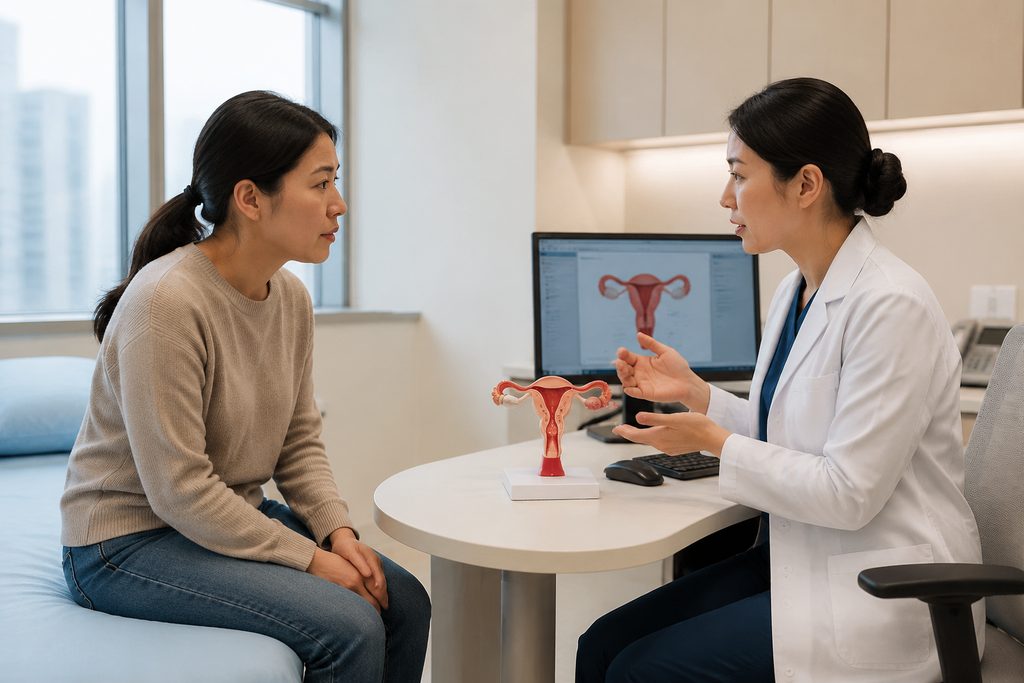
While patients in the United States can pay upwards of $10,000 out-of-pocket for an endometrial ablation, the same procedure at a top-tier Chinese hospital typically runs between $2,500 and $4,500 — a difference that covers the flight, a hotel, and still leaves money on the table. That stark gap explains why searches for endometrial ablation cost China have climbed steadily since 2023. But cost is only one variable. The harder question is whether the procedure matches your symptoms, your age, and your future fertility plans.
And that question deserves a straight answer before anyone books a plane ticket.
How This Actually Works, Step by Step
You do not simply arrive in Shanghai and walk into a procedure room. The sequence matters, and skipping steps creates delays. Here is the real flow, from where you are now to recovery.
First, you gather your gynecologic records: recent pelvic ultrasound, any endometrial biopsy results, Pap smear history, and a list of failed or discontinued treatments. If you have tried hormonal birth control, a levonorgestrel IUD, or tranexamic acid and still bleed heavily, that history matters. Chinese specialists will ask for it.
You then send those documents to a coordinator who arranges a written second opinion. A gynecologist at a hospital like Peking Union Medical College Hospital or Shanghai First Maternity and Infant Hospital reviews the records and responds with an assessment: whether ablation is appropriate, which technique fits, and what additional imaging you would need on arrival. That written review costs from $300 to $500 and is for reference only, not a prescription.
If the second opinion says proceed, the next step is a video consultation. You speak directly with the treating team, explain your symptoms and goals, and hear their recommendation. This costs $100 to $300 for a standard international department consult, or $500 to $800 for a named top specialist.
Only after both steps do you commit to travel. You apply for an S2 visa with a medical treatment annotation, supported by an invitation letter from the hospital’s international department. Processing takes one to three weeks depending on your consulate. You fly in, attend an in-person consultation and repeat ultrasound, and — if everything aligns — the ablation is scheduled within days, not months.
That staged approach protects you from spending $3,000 on flights before knowing whether ablation is even the right call.
Is Endometrial Ablation Right for You? The Clinical Filter That Matters
Endometrial ablation destroys the uterine lining to reduce or stop heavy menstrual bleeding. It is not a cancer treatment. It is not sterilization, though pregnancy after ablation is dangerous and strongly discouraged. It is a quality-of-life procedure for women with menorrhagia who have failed medical management and do not want a hysterectomy.
The ideal candidate fits a narrow profile: she is in her late 30s to late 40s, has completed childbearing or has no desire for future pregnancy, and her heavy bleeding has a benign cause. Fibroids can be treated with ablation only if they are small and mostly within the uterine cavity. Large intramural fibroids, adenomyosis that penetrates deeply into the muscle, or a uterus larger than 12 weeks’ size generally rule out standard ablation.
But here is what many patients miss: ablation treats the symptom, not the cause. If you have undiagnosed endometrial hyperplasia with atypia, ablation can mask a precancerous condition. That is why any responsible Chinese gynecologist will require an endometrial biopsy within the last six months before approving the procedure. No biopsy, no ablation. That rule protects you.
So, is endometrial ablation right for you? If you are over 35, done with fertility, and have heavy periods that disrupt work or cause anemia despite trying at least two medical options, the answer may be yes. If you are under 30 or want children, the answer is almost certainly no. Age matters more than most patients realize: ablation failure rates approach 20% in women under 35, compared with under 10% in women over 45.
A Realistic Timeline
People underestimate the pre-travel phase. Here is what a realistic schedule looks like, with ranges instead of optimistic single numbers.
| Stage | What Happens | Duration |
|---|---|---|
| Week 1–2 | Collect records, translate key pages, send for written second opinion | 5–10 business days for review |
| Week 3 | Video consultation with treating gynecologist | 30–60 minutes; scheduling takes 3–7 days |
| Week 4–6 | S2 visa application with hospital invitation letter | 1–3 weeks depending on consulate |
| Week 7 | Arrival, in-person consultation, repeat ultrasound and bloodwork | 1–2 days |
| Week 7–8 | Ablation procedure (radiofrequency, thermal balloon, or microwave) | Outpatient or one-night stay |
| Week 8–10 | Recovery in China, follow-up visit, flight home | 3–7 days before flying |
| Month 3 | First full cycle post-ablation; assess bleeding reduction | Ongoing with home gynecologist |
The hidden waiting steps are document translation and visa processing. Translation of a 20-page medical file takes two to three days. The S2 visa cannot be rushed by the hospital — consulates set their own pace. Plan for the whole process to take two months from first inquiry to procedure day, and you will not be caught off guard.
What Can Go Wrong — and What Happens Then
No procedure is risk-free, and ablation has specific failure modes worth naming plainly.
The most common problem: it does not work fully. About 10 to 15 percent of women still have heavy bleeding after ablation, and some eventually choose hysterectomy. If that happens after your procedure in China, the hospital’s international department will typically offer a follow-up video consultation at no additional coordination cost. But the revision surgery would happen in your home country — that is the honest limit of cross-border care.
Infection and perforation are rare but real. Uterine perforation occurs in roughly 1 in 500 to 1 in 1,000 cases depending on technique. Chinese hospitals with high procedure volumes report rates at the lower end of that range, but no one can promise zero. If a complication occurs while you are still in China, the treating hospital manages it. If it emerges after you fly home, your local gynecologist takes over — which is why we insist every patient identify a home provider before traveling.
Post-ablation tubal sterilization syndrome affects a small subset of women who had prior tubal ligation. It causes cyclic pelvic pain and may require hysterectomy. The risk is under 10 percent in that subgroup. If you have had your tubes tied, discuss this explicitly during the video consultation.
And one more failure mode: travel logistics. A delayed visa means a missed appointment window. That is why we build buffer days into every itinerary and never book flights until the visa is in hand.
Evaluating Hospitals: What the Data Actually Tells You
Searching for the best hospital for endometrial ablation Shanghai yields a list of names. But how do you compare them? Not by marketing. By volume, technique availability, and international department infrastructure.
Volume matters because ablation is a skill procedure. A gynecologist performing 200 ablations a year has seen the difficult anatomy, the retroverted uterus, the narrow cervix. A hospital performing 50 a year has not. Shanghai First Maternity and Infant Hospital, affiliated with Tongji University, runs one of China’s highest-volume gynecologic surgery programs and has a dedicated international clinic with English-speaking coordinators. Peking Union Medical College Hospital in Beijing offers a similar profile with a stronger research pedigree.
Technique matters too. Radiofrequency ablation (NovaSure) and thermal balloon ablation (Thermablate) are the two most common methods in China. Radiofrequency takes about 90 seconds of active treatment; thermal balloon takes 2 to 12 minutes depending on the system. Neither is universally better — the choice depends on your uterine cavity shape and the presence of small fibroids. A hospital offering both gives the surgeon flexibility. Ask which systems are available before committing.
Is endometrial ablation safe in China? The short answer is yes, at accredited tertiary hospitals. China’s top 5% of hospitals — the 340+ institutions in our database — are ranked by the Fudan University hospital rankings and many hold JCI accreditation. Their gynecology departments use the same devices cleared by the FDA and CE: NovaSure, Thermablate, Minerva, and microwave endometrial ablation systems. Infection control protocols at these centers match international standards. The risk profile is comparable to what you would face in the US or Europe, at a fraction of the cost.
The honest caveat: safety depends entirely on where you go. A small private clinic with no international experience is not the same as a Fudan-ranked tertiary center. That is why hospital selection is the single most important decision you make. Our top-ranked hospitals directory filters by Fudan ranking and JCI status, and our gynecology department rankings show which centers lead in procedure volume and clinical research.
Practical Considerations: Records, Visa, Payment, and Follow-Up
You need a valid passport, a recent pelvic ultrasound report, and — critically — an endometrial biopsy result from the past six months. Without the biopsy, no reputable Chinese gynecologist will proceed. Bring a printed copy and a digital backup.
The visa is an S2, not an M. The M visa is for commercial trade and has nothing to do with medical treatment. The S2 covers short-term private affairs including medical care, and the hospital’s international department will issue an invitation letter with your treatment dates. Your consulate may ask for proof of funds and a treatment plan. Processing times vary; apply as soon as the video consultation confirms you are a candidate.
Payment is upfront. Chinese public hospitals require a deposit before the procedure, and the international department will give you an itemized estimate. Expect the total — hospital fee, surgeon fee, anesthesia, one night of observation if needed — to land between $2,500 and $4,500. That compares with $8,000 to $12,000 in the US for the same device-based procedure. Some international insurance policies reimburse treatment in China; check your policy before you fly. Private international hospitals like United Family can bill insurers directly, but their procedure fees run higher, typically $6,000 to $9,000.
Language is a real barrier in public hospitals. The international department staff speak English, but the ultrasound technician and ward nurses may not. That is where a bilingual medical companion earns their fee — from $300 per day for queue management, translation, and navigation. For a procedure this quick, one or two days of companion service usually suffices.
Follow-up at home is non-negotiable. You need a gynecologist in your home country who will see you at three months and again at one year. Ablation results are not instant; bleeding patterns change over several cycles. Your Chinese team will send a discharge summary in English, but they cannot manage your long-term follow-up across an ocean.
Frequently Asked Questions
Most women return to desk work within 2 to 3 days and full activity within a week. Expect watery or bloody discharge for 2 to 4 weeks — that is normal. You should avoid intercourse, tampons, and swimming for at least 2 weeks. Flying home 3 to 4 days after the procedure is generally safe for uncomplicated cases.
At JCI-accredited or Fudan-ranked tertiary hospitals, yes. The devices and protocols are the same as in Western countries, and complication rates are comparable. The key is choosing a hospital with a dedicated international department and high procedure volume. Avoid small clinics without international experience.
No reputable hospital will book you for ablation without reviewing your records first. The written second opinion and video consultation are mandatory steps. They protect you from traveling for a procedure that might not suit your anatomy or diagnosis. Expect the remote evaluation phase to take 2 to 4 weeks before travel is even discussed.
Some international insurers reimburse treatment at Chinese hospitals, especially JCI-accredited ones. Check whether your policy covers overseas elective gynecologic procedures and whether it requires pre-authorization. Public hospitals require upfront payment; you then claim reimbursement. Private international hospitals may bill directly if they have an agreement with your insurer.
Then ablation is the wrong procedure. Pregnancy after ablation carries high risks: miscarriage, abnormal placental attachment, and preterm birth. If fertility is still a goal, discuss alternatives — hormonal IUD, tranexamic acid, or myomectomy if fibroids are the cause. Any responsible gynecologist in China or anywhere else will tell you the same.
Your Next Step
Endometrial ablation can be life-changing for the right patient — and a costly mistake for the wrong one. The decision hinges on your age, your fertility plans, and your biopsy results, not on the price tag alone. That said, for women who are clear candidates, seeking endometrial ablation for heavy periods abroad can mean accessing the same devices and skill at a third of the US price.
We help you figure out whether the procedure fits before you spend a dollar on travel. Tell us about your symptoms and send your records, and we will connect you with a gynecology team for a written second opinion. No pressure, no commitment — just clarity on whether this path makes sense for you.
For more medical information and treatment options in China, visit chinamedservices.com (China Medical Services).
