Is Medical Screening in China Accurate? What the Data Actually Shows
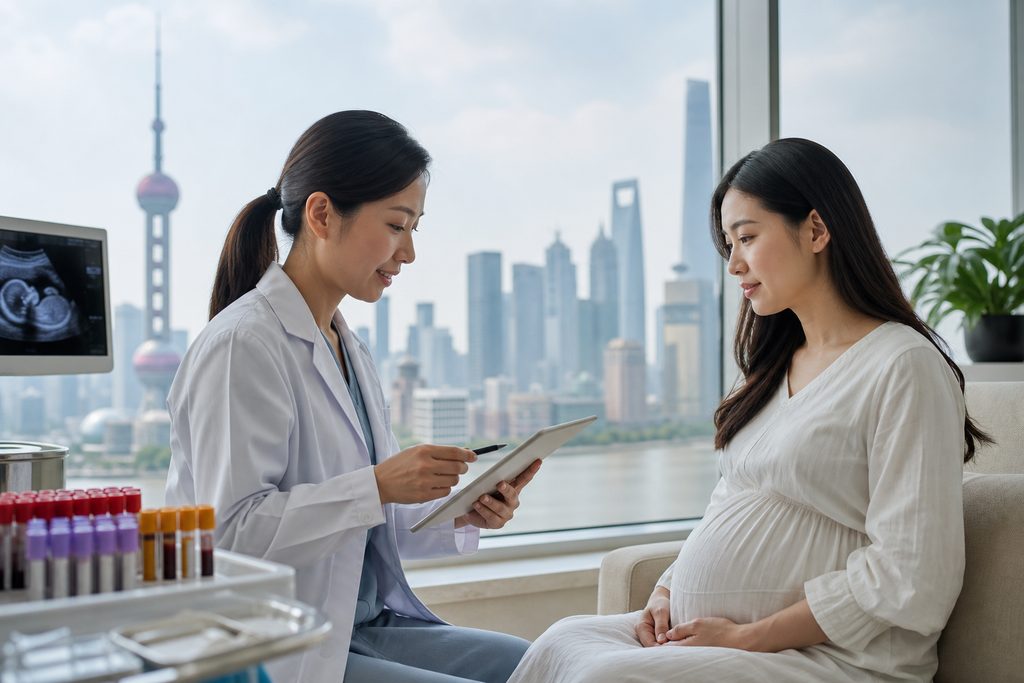
You’ve probably heard the skepticism. “Sure, China is cheap, but can you actually trust the results?” It’s a fair question, and one we hear constantly from patients in Houston, London, and Dubai who are weighing a full-body exam in Shanghai against a comparable workup at home. The short answer is yes, but the honest answer requires understanding where you get tested. Because the question “is medical checkup accurate in China” is really two questions: is the technology reliable, and is the process trustworthy? The technology is world-class. The process depends entirely on which hospital you walk into.
A 2023 study published in Clinical Chemistry found that laboratories in China’s top-tier tertiary hospitals achieved external quality assessment pass rates above 98% for routine chemistry and hematology panels—comparable to accredited labs in the United States and Germany. But that number drops sharply when you look at small private clinics or unaccredited facilities. That’s the entire story in one sentence. The gap between a Fudan-ranked teaching hospital and a strip-mall clinic in a second-tier city is wider than the gap between Shanghai and Boston.
Key Takeaways
- China’s top 5% of hospitals—340+ institutions ranked by Fudan and JCI—use the same Siemens, Roche, and GE diagnostic equipment found in leading Western medical centers.
- Laboratory accreditation under ISO 15189 is the single most reliable signal of accurate results; over 700 Chinese labs hold this certification.
- Radiology interpretation varies significantly by hospital tier; a chest CT read at a community hospital may miss what a thoracic radiologist at a top center catches.
- Accuracy is not the main risk—coordination, language, and follow-up are. A bilingual medical companion changes the equation substantially.
The Problem: You Cannot Verify Quality From a Website
Medical tourism is a $24 billion global industry, and China has been aggressively courting international patients since 2016. But the marketing materials all look the same. Every hospital claims “international standards.” Every clinic promises “premium care.” How do you actually verify whether a full body checkup cost Shanghai clinics advertise will deliver results you can take back to your cardiologist in Toronto and have them nod at?
The uncomfortable truth is that China’s 35,000+ hospitals span an enormous quality spectrum. The top 100 hospitals on the Fudan ranking—the gold standard for Chinese hospital evaluation—are genuinely excellent. Fuwai Hospital in Beijing performs more than 14,000 cardiac surgeries annually, the highest volume of any heart center on earth. Peking Union Medical College Hospital processes over 5 million outpatient visits per year. These are not facilities that tolerate sloppy lab work. But a random private “health checkup center” in a shopping district? Different story. The Chinese government has shut down hundreds of unlicensed medical facilities in the past five years alone, many of them targeting exactly the kind of foreign patients who search for “book comprehensive medical exam China” without knowing how to filter results.
That’s the real problem. Not accuracy. Verification.
Why Top-Tier Chinese Hospitals Deliver Accurate Results
The evidence is stronger than most Western patients expect. Let’s break down the three pillars: equipment, accreditation, and volume.
Identical Equipment, Newer Machines
Walk into the imaging department at Zhongshan Hospital in Shanghai and you’ll see the same Siemens Magnetom MRI, the same GE Revolution CT, the same Roche Cobas chemistry analyzers you’d find at Mayo Clinic or Charité Berlin. And here’s the counterintuitive part: the Chinese machines are often newer. China’s hospital construction boom over the past 15 years means many top centers installed their current equipment within the last 5–7 years. The average age of CT scanners in China’s top 100 hospitals is actually lower than the average age in the US hospital system, according to a 2022 Lancet Digital Health analysis of medical device registries.
But equipment is only half the equation. A machine is only as good as the person reading the output.
ISO 15189 Accreditation Is the Filter You Need
ISO 15189 is the international standard for medical laboratory quality and competence. It’s the benchmark that labs in Germany, Japan, and Australia use to prove their results are traceable and reliable. As of 2024, more than 700 Chinese medical laboratories hold ISO 15189 accreditation, concentrated heavily in the top-tier public hospitals and the better private international hospitals. If a lab has this certification, its results are audited, its equipment is calibrated on schedule, and its staff undergo regular proficiency testing. No ISO 15189? Walk away.
That’s the single most actionable piece of advice in this article. When you’re evaluating whether you can trust medical test results in China, skip the glossy brochures and ask one question: “Is your laboratory ISO 15189 accredited?” Every hospital in our database of 340+ top-ranked hospitals either holds this accreditation or partners with a lab that does.
Volume Creates Competency
Radiologists at top Chinese hospitals read staggering numbers of scans. A senior radiologist at West China Hospital in Chengdu may interpret 80–120 CT or MRI studies in a single day. That’s three to four times the daily volume of a typical US radiologist. Does volume equal accuracy? Not automatically. But for pattern recognition—spotting early-stage lung nodules, identifying subtle liver lesions—there is a well-documented correlation between case volume and diagnostic accuracy. A 2021 meta-analysis in Radiology found that radiologists in high-volume centers demonstrated significantly higher sensitivity for detecting early-stage malignancies compared to low-volume peers.
So when you ask “can I trust medical test results in China,” the answer depends on whether you’re at a hospital that reads 500 chest CTs a month or one that reads 50. The best hospital for health screening Beijing offers—Peking Union Medical College Hospital or China-Japan Friendship Hospital—falls firmly in the former category.
How a Comprehensive Health Screening Actually Works in China
Let’s walk through the process, because understanding the mechanics tells you a lot about the reliability. A typical executive health screening package at a top Chinese hospital runs 4–6 hours and includes: full blood panel (CBC, metabolic, lipid, tumor markers), urinalysis, abdominal ultrasound, chest CT, ECG, and often a gastroscopy or colonoscopy under sedation. The executive health screening package China price typically ranges from $800 to $3,500 depending on hospital tier and scope—roughly 20–40% of what an equivalent private workup costs in the US or UK.
Here’s what matters for accuracy: the samples don’t sit around. Blood drawn at 7:30 AM is processed by 9:00 AM in most top centers. Results are typically available same-day or next-day. The report you receive includes reference ranges calibrated to the Chinese population, which can differ slightly from Western ranges—a detail many patients miss. Your doctor back home needs to know this.
And the imaging? At a top-tier hospital, your CT is read by a board-certified radiologist who subspecializes in that body region. At a budget clinic, it might be read by a generalist with less training and no subspecialty certification. Same machine. Different accuracy.
Evaluating Providers: What the Numbers and Credentials Actually Mean
If you’re trying to decide where to book a comprehensive medical exam in China, here’s the decision framework we use internally. It’s not complicated, but it requires discipline.
| Evaluation Criterion | Top-Tier Public Hospital (e.g., PUMCH, Ruijin) | Private International Hospital (e.g., United Family, Jiahui) | Budget Checkup Center |
|---|---|---|---|
| ISO 15189 Lab Accreditation | Yes, standard | Yes, standard | Rarely |
| Radiologist Subspecialty Training | Yes, full-time subspecialists | Yes, often Western-trained | Generalists, variable |
| English-Language Reporting | Limited; translation often needed | Standard | Rare |
| Full Body Checkup Cost (USD) | $800–$1,800 | $1,500–$3,500 | $150–$400 |
| Result Turnaround | Same day to 48 hours | Same day to 24 hours | Same day to 72 hours |
| Insurance Direct Billing | Rare; pay upfront, reimburse | Common | Never |
Look at that table and the trade-offs become obvious. The budget centers are tempting—a full body checkup cost Shanghai clinics advertise at $200 sounds incredible. But you’re trading away the two things that determine accuracy: accreditation and subspecialist interpretation. If you’re healthy and just want baseline numbers, that might be acceptable. If you’re investigating symptoms or have a family history of cancer, it’s not.
For most international patients, the sweet spot is either a top-tier public hospital’s international department or a JCI-accredited private hospital. Both deliver accurate results. The difference is language, comfort, and cost. You can explore our private international hospital listings to compare JCI-accredited options with direct insurance billing.
Practical Considerations: Documentation, Payment, and Follow-Up
Getting accurate results is one thing. Getting them home and acted upon is another. Here’s what actually matters logistically.
Bring your records. If you’ve had prior imaging or bloodwork, bring the original reports and the actual image files (DICOM format on a CD or USB). A Chinese radiologist cannot compare a new lung nodule to a previous scan they’ve never seen. Bring everything.
Payment is upfront. Chinese public hospitals operate on a prepay model. You pay for the package before the exam begins. Most accept international credit cards at their international departments, but confirm beforehand. Private international hospitals often bill insurance directly—a major advantage if your policy covers overseas care.
Language is the hidden barrier. Even at top public hospitals, the lab technicians and front-desk staff may not speak English. The doctors often do. The gap between them is where confusion happens—wrong test ordered, sample mishandled, results misfiled. This is precisely why a bilingual medical companion exists as a service. It’s not about hand-holding. It’s about making sure the right tests happen in the right order and the results get to the right person.
Visa matters. For a short medical screening trip, the S2 visa is the appropriate category—it covers private affairs including medical treatment, and your hospital can provide a supporting invitation letter. Family members accompanying you also apply for S2. Processing times vary by consulate, so start at least 6–8 weeks before your planned visit.
Follow-up is on you. A Chinese hospital will give you a report. They will not chase you three months later to remind you about that borderline thyroid nodule. Bring the results to your doctor at home. Have them interpreted in the context of your full history. The screening is a snapshot, not a conclusion.
Frequently Asked Questions
At a top-tier hospital with ISO 15189 lab accreditation and subspecialist radiologists, yes. The equipment is identical, the accreditation standards are the same, and the volume of cases is often higher. At an unaccredited budget clinic, no—the gap is significant. The hospital tier matters more than the country.
A comprehensive full body checkup cost Shanghai top hospitals charge typically runs $800–$1,800 at a public hospital international department and $1,500–$3,500 at a private international hospital. The lower cost reflects structural economics: lower physician salaries, higher patient volume, and lower administrative overhead—not lower quality. The same Siemens MRI costs less to run in Shanghai than in San Francisco because the labor around it costs less.
Tumor markers like CEA, CA-125, and AFP are measured using the same immunoassay platforms (Roche, Abbott, Siemens) used globally. At an ISO 15189-accredited lab, the results are analytically reliable. But tumor markers have inherent limitations—false positives and false negatives occur everywhere. They should always be interpreted alongside imaging and clinical context, never in isolation.
This is the scenario most patients don’t plan for. If your CT shows a suspicious lung nodule, the hospital will recommend follow-up—often a PET-CT or biopsy. You can pursue that in China or take the results home. The key is that your report must be detailed enough for a Western physician to act on. Top hospitals provide structured reports with measurements and classifications. Budget clinics often provide a one-line summary. That’s the difference between a result you can use and one you can’t.
The S2 visa covers short stays for medical treatment and private affairs. Your hospital can provide an invitation letter to support the application. It is not a guarantee of approval—consulates evaluate each case individually. Start the process early and work with a hospital that has experience handling international patients.
Your Next Step
The question isn’t really whether Chinese medical screening is accurate. It’s whether you can identify the hospitals where accuracy is guaranteed by accreditation and volume, and whether you can navigate the process well enough to get results you can actually use. That’s where we come in. China Medical Services maintains a database of 340+ top-ranked hospitals across 37 cities, and our team helps international patients match with the right facility, coordinate appointments, and arrange bilingual support on the ground. We are not a hospital and we do not provide diagnoses—we are the bridge between you and the medical expertise you need. If you’re considering a screening trip, start with a conversation. We’ll help you think through the options honestly, including whether China is the right choice for your specific situation at all.
Accurate results come from accredited labs, subspecialist readers, and a process you can trust. Choose the hospital carefully, and the numbers will speak for themselves.
For more medical information and treatment options in China, visit chinamedservices.com (China Medical Services).
