What Are My Options if I Cannot Use My Own Eggs? A Complete Guide
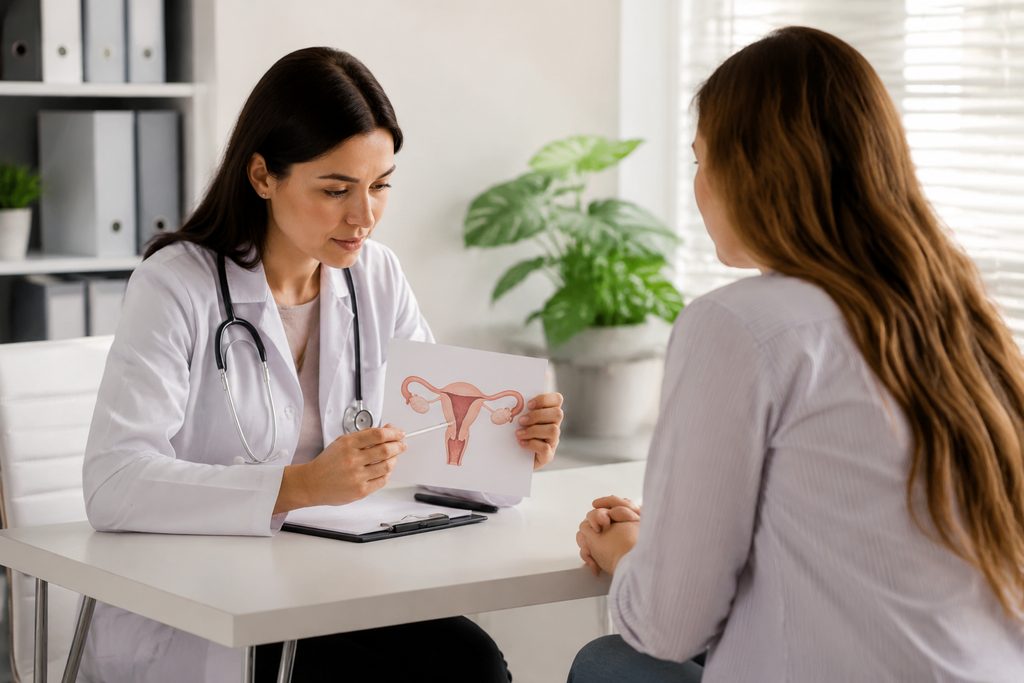
When 38-year-old Sarah sat in her fertility specialist’s office in Manchester, she already suspected the news. Her AMH had come back at 0.18 ng/mL. Her antral follicle count was three. The doctor was kind but direct: using her own eggs would likely mean multiple failed cycles, mounting costs, and no guarantee. “Have you considered donor eggs?” he asked. Sarah hadn’t. Not seriously. She had questions no one in that room could fully answer — especially about cost, waiting times, and whether traveling abroad for treatment was realistic.
If you’re asking “what are my options if I cannot use my own eggs,” you’re not alone. Roughly 1 in 8 couples struggle with infertility, and for a significant subset, egg donation is the only viable path to pregnancy. The options break down into three broad categories: donor egg IVF in your home country, donor egg IVF abroad, and alternatives like embryo adoption or living child-free. Each carries different price tags, legal frameworks, and emotional weight. And increasingly, patients are looking at the donor egg IVF cost China offers — often 40% to 70% lower than comparable programs in the United States or United Kingdom.
But cost is only one variable. This guide walks through the real decisions you’ll face.
What Are My Options if I Cannot Use My Own Eggs: The Short Answer
You have three realistic paths. First, donor egg IVF in your home country, where a single cycle typically costs $25,000 to $45,000 in the US or £12,000 to £20,000 in the UK. Second, donor egg IVF abroad — including China, where the donor egg IVF cost China clinics quote usually starts around $15,000 and can reach $30,000 depending on the program. Third, alternatives such as embryo adoption ($8,000 to $15,000 in the US) or pursuing a child-free life. The right choice depends on your budget, timeline, legal comfort, and medical history.
The complication? Not every country has the same rules about donor compensation, anonymity, and foreign patients. China’s regulatory environment is stricter than Spain’s or the Czech Republic’s, and that changes what “available” means in practice.
Who This Is Right For — and Who It Isn’t
Donor egg IVF is a serious medical and emotional undertaking. It’s not for everyone, and being honest about that upfront saves time and heartache.
Good candidates typically include:
- Women with diminished ovarian reserve (AMH below 0.5 ng/mL, AFC below 5, or FSH above 15 mIU/mL)
- Women who have experienced premature ovarian insufficiency before age 40
- Women who have had multiple failed IVF cycles using their own eggs
- Carriers of genetic conditions they do not wish to pass on
- Women who have undergone cancer treatment that damaged ovarian function
Who should pause before pursuing donor egg IVF abroad:
- Anyone with an untreated uterine condition (fibroids, adhesions, thin lining under 7mm) — donor eggs won’t fix implantation failure
- Patients whose male partner has severe sperm abnormalities and who have not yet explored sperm donation
- Anyone who feels unresolved grief about not using their own genetic material — counseling first is cheaper than a failed emotional adjustment
- Patients with medical conditions that make pregnancy itself high-risk
If you’re in the second list, address those issues before booking flights.
The Options, Compared
Here’s how donor egg IVF programs compare across three destinations patients commonly consider — the United States, Spain (Europe’s largest egg donation hub), and China.
| Factor | United States | Spain | China |
|---|---|---|---|
| Cycle cost (donor eggs + IVF) | $25,000 – $45,000 | €9,000 – €15,000 ($10,000 – $16,500) | $15,000 – $30,000 |
| Donor anonymity | Varies by state; open donation growing | Anonymous by law | Anonymous; regulated |
| Wait time for matched donor | 1 – 6 months | 2 – 4 months | 1 – 3 months |
| Foreign patient access | Open | Open | Open via hospital international departments |
| Regulatory oversight | FDA + ASRM guidelines | Spanish Ministry of Health | National Health Commission |
| Language barrier for English speakers | None | Moderate | Significant without a bilingual coordinator |
Spain wins on price for European patients. The US wins on convenience and legal familiarity. China wins for patients who want a lower-cost option with access to large, high-volume fertility centers — but who are willing to navigate a more complex logistical process. If you’re asking “can I use donor eggs in China,” the answer is yes, though the process typically runs through hospital international departments rather than standalone agencies.
Donor Egg IVF Cost China: What the Price Actually Covers
The donor egg IVF cost China clinics advertise is rarely all-inclusive. A base cycle price of $15,000 to $20,000 typically covers donor screening, ovarian stimulation for the donor, egg retrieval, fertilization via ICSI, embryo culture, and one fresh embryo transfer. What it often does not cover:
- Pre-treatment testing for the recipient (uterine evaluation, infectious disease panel, thyroid function)
- Medications for the recipient’s endometrial preparation ($500 – $1,500)
- Embryo freezing and storage beyond the first year ($500 – $1,000 annually)
- Genetic testing of embryos (PGT-A), which adds $2,000 – $5,000
- Additional frozen embryo transfers if the first fails ($2,000 – $4,000 each)
- Accommodation and travel for a 2 to 4 week stay
Realistically, budget $20,000 to $35,000 for a complete donor egg IVF package in China when you include travel, testing, and one frozen transfer backup. That’s still roughly half of what the same treatment costs in the US. But the gap narrows if you need multiple transfers.
Egg donation programs Shanghai price points tend to run slightly higher than Beijing or Guangzhou, reflecting the concentration of international private clinics in the city. A Shanghai program might quote $18,000 to $28,000 for the medical component alone, while a public hospital international department in a second-tier city might come in at $15,000 to $20,000.
How the Process Works in China — Step by Step
China’s regulatory framework for egg donation is among the stricter ones globally. Donors must be anonymous, compensation is limited to reasonable reimbursement for expenses, and donated eggs can only come from women already undergoing IVF who produce surplus eggs. This means egg supply is tighter than in countries with commercial donor markets like Spain or the US. Wait times can stretch longer than clinics initially estimate.
Here’s the typical sequence for a foreign patient:
Week 1–2: Remote evaluation. You send your medical records — AMH, FSH, prior IVF cycle summaries, uterine imaging, male partner’s semen analysis — to the hospital’s international department. A fertility specialist reviews them and confirms whether donor egg IVF is appropriate. Some hospitals offer a written second opinion for $300 to $500 before you commit to anything.
Week 3–6: Donor matching. The clinic matches you with an anonymous donor based on blood type, physical characteristics, and sometimes ethnicity. You will not see photos or meet the donor. This is non-negotiable under Chinese law.
Week 7–8: Travel to China. You arrive on an S2 visa, which is the short-stay category used for medical treatment and private affairs. Your partner (if applicable) applies for the same visa. The hospital provides supporting documentation for the visa application.
Week 9–10: Recipient preparation and donor retrieval. You undergo endometrial preparation with estrogen and progesterone. The donor undergoes retrieval. Fertilization happens via ICSI. Embryos develop for 5 to 6 days.
Week 11: Embryo transfer. One or two embryos are transferred. You remain in China for 10 to 14 days until a beta hCG blood test confirms pregnancy.
Total time in China: 3 to 4 weeks. Total time from first contact to transfer: 2 to 4 months.
Book Donor Egg IVF China Package: What to Ask Before You Commit
If you’re considering a “book donor egg IVF China package” offer from a clinic or agency, ask these questions before paying anything:
- Is the donor pool internal to the hospital, or does the clinic source eggs from another facility?
- What is the current average wait time for a matched donor — not the best-case scenario, but the actual recent average?
- Does the package price include one fresh transfer only, or one fresh plus one frozen?
- What happens if the donor produces fewer than expected eggs? Is there a refund or a credit toward a future cycle?
- Are embryo storage fees included for the first year? What happens after that?
- Will you receive a written treatment plan and cost breakdown before traveling?
- What is the clinic’s live birth rate per donor egg transfer for women in your age group?
Any clinic that cannot answer these questions in writing should be crossed off your list.
Best Fertility Clinics China Donor Eggs: How to Evaluate Them
Your options narrow considerably. If you cannot use your own eggs and a genetic link matters, the remaining paths are: using eggs from a known donor who is a relative (sibling or cousin), which carries its own medical and psychological complexities; embryo adoption, where the child has no genetic link to either parent; or accepting donor eggs from an anonymous donor. There is no medical technology currently available that can create viable eggs from other cell types in humans, despite research into in vitro gametogenesis.
A complete donor egg IVF cycle in China typically costs $20,000 to $35,000 including travel, testing, and one frozen transfer backup. In the US, the same treatment runs $35,000 to $60,000 all-in. The savings are real but not as dramatic as some marketing materials suggest. The larger savings in China come from lower medication costs and lower clinic fees, not from cheaper donor compensation, which is minimal by law.
You will have frozen embryos remaining in most cases. A frozen embryo transfer costs $2,000 to $4,000 in China and does not require a full repeat of the donor cycle. You would travel back for 1 to 2 weeks. If no embryos remain — meaning the donor cycle produced few viable embryos — you would need to repeat the entire process, including donor matching. Ask about the clinic’s refund or credit policy before paying for the initial cycle.
Yes. Chinese law mandates anonymous donation. You will not receive identifying information about the donor, and the donor will not receive information about you. This is similar to the system in Spain and differs from the growing trend toward open donation in the United States. If having the option for your child to contact the donor in adulthood is important to you, China’s system may not meet that need.
Your Next Step
Deciding to use donor eggs is a threshold moment. It means grieving one path and choosing another. The medical logistics — cost, clinics, visas — are solvable. The emotional readiness is the part only you can assess.
Our team at China Medical Services helps international patients navigate fertility treatment in China. We are not a hospital and we do not provide medical advice or diagnoses. What we do is connect you with licensed reproductive medicine departments, coordinate record translation, arrange bilingual support during your stay, and help you understand the realistic cost and timeline before you commit. If you want to explore whether donor egg IVF in China makes sense for your situation, start with a free consultation. No pressure. Just straight answers.
You have options. The path forward starts with understanding them clearly.
Frequently Asked Questions
Yes. The hospitals used for international patients are JCI-accredited and follow the same international safety standards as top hospitals in the US and Europe. Surgical teams perform high volumes of procedures — often more than their Western counterparts — which studies show leads to better outcomes.
Costs vary by procedure and hospital, but international patients typically save 40-80% compared to US prices — even when factoring in travel and accommodation. A consultation with our team will give you an exact, all-inclusive quote with no hidden fees.
Send us your existing medical reports to get started. We handle everything from hospital selection and appointment scheduling to visa assistance and post-operative recovery planning. Your medical records are reviewed by the specialist before you even book a flight.
For more medical information and treatment options in China, visit chinamedservices.com (China Medical Services).
