Vasectomy Reversal: Recovery Time Explained
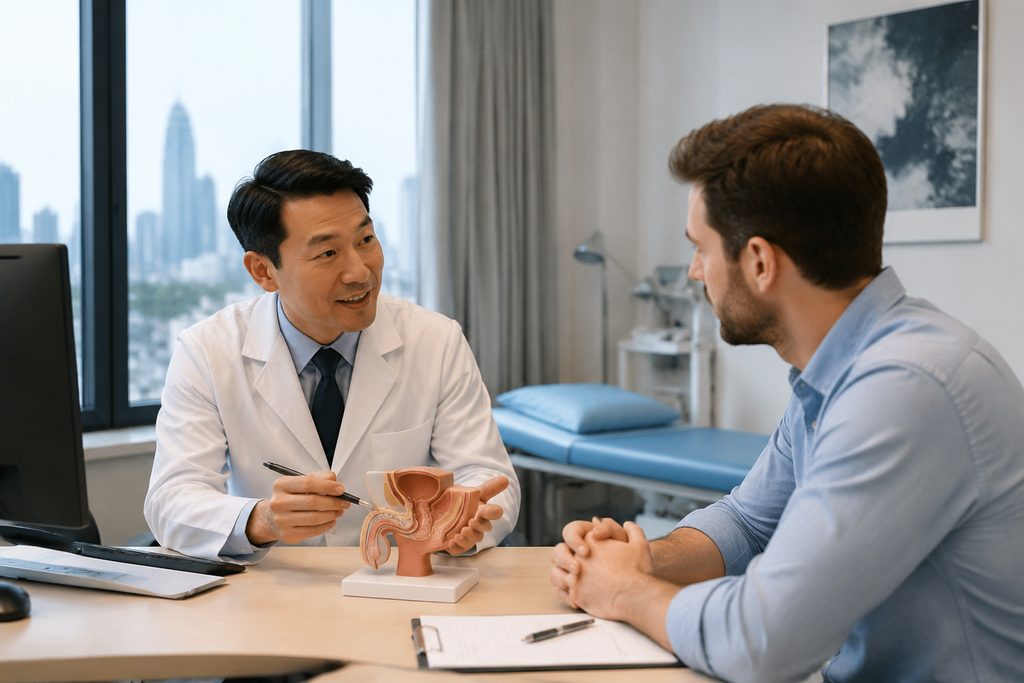
While a vasectomy reversal in the United States can easily exceed $15,000 out of pocket, the same microsurgical procedure at a top-tier Chinese hospital typically ranges from $3,000 to $6,000. That gap exists even though Chinese urologists at high-volume centers perform hundreds of these delicate operations each year. For men quietly researching whether they can afford to try again for a child, the difference changes the conversation.
Key Takeaways
- A vasectomy reversal is a 2–4 hour microsurgical procedure, but full recovery before returning to strenuous activity takes 4–6 weeks.
- Vasectomy reversal cost China typically runs from $3,000 to $6,000 at public tertiary hospitals, versus $10,000–$20,000 in the US or Western Europe.
- Patency rates (sperm returning to ejaculate) at experienced Chinese centers range from 75% to 95%, depending on how long ago the vasectomy occurred.
- You should not fly internationally for at least 7–10 days after surgery, and you need a clear plan for follow-up before leaving China.
The Problem: Recovery Is Longer Than Most Men Expect
Ask a urologist how long is recovery after vasectomy reversal, and you will get a layered answer. The incision heals in about a week. The scrotum stops aching after two to three weeks. But the deep tissue around the reconnected vas deferens needs four to six weeks before it can tolerate heavy lifting, running, or intercourse. That surprises many men who assumed this was a minor outpatient procedure.
Approximately 500,000 vasectomies are performed in the United States each year, and an estimated 3–6% of those men eventually seek reversal. The most common reason is a new relationship and the desire to have children. But the second most common reason is less romantic: persistent post-vasectomy pain syndrome, which affects somewhere between 1% and 15% of men after vasectomy depending on which study you read. For these men, reversal is not about fertility. It is about getting their life back.
The recovery timeline matters because most patients travel for this surgery. A man from London or Dubai considering vasectomy reversal cost China is not just budgeting for the operation. He is budgeting for hotels, flights, and time away from work. Getting the recovery timeline wrong means either leaving too early and risking complications, or staying too long and burning through savings.
Why China Delivers Comparable Results at a Fraction of the Price
Microsurgical Volume Drives Patency Rates
The single strongest predictor of a successful vasectomy reversal is not the country where it happens. It is the surgeon’s annual case volume. A urologist who performs 100 or more microsurgical reversals per year will have a patency rate significantly higher than a general urologist who does five. Chinese public hospitals operate at a scale that makes this volume routine. Large andrology departments in Shanghai and Beijing run dedicated microsurgery lists. That repetition matters when you are suturing a tube roughly 0.3 millimeters in diameter.
But volume alone is not the whole story. The technique also matters. Modern reversals use either a vasovasostomy (reconnecting the two ends of the vas deferens directly) or a vasoepididymostomy (connecting the vas to the epididymis when a blockage has formed). The second procedure is far more technically demanding. Chinese fellowship-trained microsurgeons perform both routinely. If you are researching the vasectomy reversal success rate China, the honest answer is that it mirrors international benchmarks when you choose a high-volume center: 90–95% patency for reversals within 3 years of the original vasectomy, dropping to 70–80% after 10 years, and lower still after 15.
Why the Cost Gap Is Structural, Not Qualitative
Let us address the obvious question. Why is the microsurgical vasectomy reversal price Shanghai so much lower than in New York or London? The answer is not that Chinese surgeons are less skilled. It is that the entire cost structure is different. Hospital overhead is lower. Physician salaries are lower. Malpractice insurance costs a fraction of what American urologists pay. The operating room, the anesthesia team, the surgical microscope — all priced in a different economy.
What you are not paying for is a middleman. In the US, a vasectomy reversal billed at $15,000 includes facility fees, anesthesia fees, surgeon fees, and often a markup because the procedure is rarely covered by insurance. In China, the same operation at a public tertiary hospital is billed directly at a rate that reflects local costs. This is the same reason a cardiac bypass that costs $120,000 in the US runs $12,000–$20,000 at Fuwai Hospital in Beijing. The clinical standard is the same. The economics are not.
Technology Without the Wait
Chinese hospitals have invested heavily in surgical infrastructure over the past decade. The operating microscopes used for vasectomy reversal at top centers are the same Zeiss or Leica models you would find in a German university hospital. The sutures — 10-0 nylon, thinner than a human hair — are the same. There is no waiting list of the kind you might face in the UK or Canada for an elective microsurgical procedure. From first contact to surgery date, the typical timeline at a Chinese hospital is two to four weeks, assuming your records are in order.
Vasectomy Reversal: Recovery Time Explained Week by Week
Here is what the recovery actually looks like, based on standard postoperative guidance from urology departments and the experience of our coordination team.
Days 1–3: Bed Rest and Ice
The procedure itself takes two to four hours under general or spinal anesthesia. You wake up with a scrotal support in place and a small dressing. The first 48 hours are the most uncomfortable. Swelling and bruising are normal. You will be told to lie flat as much as possible, apply ice packs intermittently, and wear tight-fitting underwear or an athletic supporter. Pain is usually manageable with oral medication. You will not want to walk much.
Days 4–7: Gentle Movement Only
By day four, most men can shuffle around a hotel room and take short, slow walks. The sutures are dissolving or will be removed around day seven. You can shower after 48 hours but should avoid soaking the incision. No driving, no lifting anything over 10 pounds, no bending at the waist repeatedly. If you traveled to China for the surgery, this is the window where you are mostly confined to your accommodation.
Weeks 2–3: The False Recovery
This is the dangerous phase. The external incision looks healed. The swelling is mostly gone. You feel almost normal. And then a man decides to carry his suitcase through the airport, and he sets himself back a week. The internal anastomosis — the reconnection site — is still fragile. The body is forming scar tissue around the suture line. Too much activity too early can cause a hematoma or, worse, disrupt the healing. During weeks two and three, you can return to desk work and light walking, but nothing else.
Weeks 4–6: Gradual Return to Normal
By week four, most men can resume moderate exercise. Jogging, cycling, and weightlifting are typically cleared between weeks four and six. Sexual activity is usually permitted after three to four weeks, but ejaculation may be uncomfortable the first few times. Full, unrestricted activity — heavy squats, contact sports, manual labor — generally waits until week six. Your surgeon will give you a specific timeline based on the complexity of your case.
Months 2–6: The Semen Analysis Waiting Game
The operation itself is only half the story. Sperm do not reappear in the ejaculate immediately. The first semen analysis is usually done at six to eight weeks post-op, then repeated every two to three months until the count stabilizes or pregnancy occurs. Some men see sperm return within a month. Others wait six months or longer. Patience is the hardest part of this recovery.
Can I Travel After Vasectomy Reversal Surgery? And Other Logistics
Can I travel after vasectomy reversal surgery? The short answer is yes, but not immediately. Most urologists recommend waiting at least 7–10 days before getting on a plane. That is not because of cabin pressure. It is because of the physical demands of travel: walking through terminals, lifting bags, sitting in cramped seats for hours. A long-haul flight from Shanghai to London is 12 hours. You do not want to do that on day five.
If you are coming from abroad, plan for a minimum two-week stay in China. That gives you time for the surgery, the initial recovery window, a follow-up appointment to check the incision, and a buffer in case of any early complication. Some patients stay three weeks. The cost of an extra week in a hotel is trivial compared to the cost of a botched recovery.
Here is what else you need to handle before you travel:
- Medical records: Bring your original vasectomy operative note if you have it, plus any recent semen analyses. The surgeon needs to know what type of vasectomy was performed and how long ago.
- Visa category: For medical treatment in China, you will need an S2 visa. This is the short-stay visa used for private affairs including medical care. Your hospital or coordination service will provide an invitation letter and treatment confirmation to support the application. The S2 is not a medical visa — that category does not exist — but it is the correct one for this purpose. Family members accompanying you apply for the same S2 category.
- Payment: Chinese public hospitals generally require prepayment. You will deposit funds at admission and settle the balance at discharge. International credit cards are accepted at hospital international departments, but confirm before you arrive. Wire transfer is often the most reliable option for larger amounts.
- Insurance: A vasectomy reversal is elective. Most international insurance plans will not cover it. You should assume this is an out-of-pocket expense and budget accordingly. Some patients use a medical travel insurance policy to cover complications, which is a reasonable middle ground.
- Language: Public hospital registration desks, billing offices, and pharmacy counters operate in Mandarin. Even at hospitals with international departments, the moment you step outside the consultation room, you are on your own. This is the single most common source of stress for foreign patients. A bilingual companion who handles registration, payment, and navigation removes that friction entirely.
| Cost Component | China (Public Tertiary Hospital) | United States | United Kingdom (Private) |
|---|---|---|---|
| Surgeon fee | $1,500 – $3,000 | $6,000 – $10,000 | $4,000 – $7,000 |
| Anesthesia + OR | $800 – $1,500 | $3,000 – $5,000 | $2,500 – $4,000 |
| Hospital stay (1 night) | $200 – $500 | $2,000 – $4,000 | $1,500 – $2,500 |
| Total estimated | $3,000 – $6,000 | $11,000 – $19,000 | $8,000 – $13,500 |
These are reference ranges based on published price lists and patient-reported costs, and they vary by hospital and case complexity. A vasoepididymostomy costs more than a straightforward vasovasostomy. An international department charges more than a standard public ward. But even at the high end, the arithmetic is hard to argue with.
Practical Considerations: Choosing a Provider Without Speaking the Language
Selecting a hospital for a vasectomy reversal in China is not like choosing one in your home country. You cannot simply read Google reviews. Many of the best andrology departments have almost no English-language web presence. That is both a barrier and an opportunity. The barrier is obvious: how do you evaluate a hospital you cannot research? The opportunity is that the lack of medical-tourism marketing means prices stay low.
What should you actually look for? Three things. First, is the surgeon a dedicated microsurgeon with a urology subspecialty in andrology? Ask directly. Second, what is the department’s annual reversal volume? A good answer is “over 50 per year.” A great answer is “over 100.” Third, what microscope and suture material do they use? If the answer is vague, walk away.
You can start your research through our department rankings, which list top hospitals by specialty across 45 fields including urology and andrology. For a broader overview of how the Chinese hospital system is structured, see our guide to top-ranked hospitals in China. And if you are weighing the option of a private international hospital with English-speaking staff against a public hospital with higher surgical volume, the tradeoffs are explained on our private hospital comparison page.
Do not book a vasectomy reversal in China based on price alone. A low-cost hospital with an inexperienced surgeon is a bad deal at any price. A failed reversal means a second surgery, which is harder, more expensive, and has a lower success rate. The skill of the surgeon is the product. Everything else is logistics.
Frequently Asked Questions
Plan for a minimum of two weeks, and three is safer. That covers the surgery, the initial recovery period when you should not fly, a follow-up appointment to check the incision, and a buffer for any minor complications. Flying home before day seven post-op is not recommended by most urologists.
Almost certainly not. Vasectomy reversal is classified as an elective procedure, and most international health insurance plans exclude elective fertility surgery. Some men use a separate medical travel policy to cover unexpected complications during the trip. Budget for the full cost out of pocket.
Patency failure — meaning no sperm returns to the ejaculate — happens in 5% to 25% of cases depending on how long ago the vasectomy was performed and whether a vasoepididymostomy was required. If the first reversal fails, a repeat procedure is possible but technically harder and has a lower success rate. This is why choosing a high-volume microsurgeon for the first attempt is the single most important decision you will make.
At high-volume centers, yes. Chinese microsurgeons train in the same techniques and use the same equipment as their Western counterparts. The published patency rates from major Chinese andrology departments fall within the same 75–95% range seen internationally. The key variable is not the country. It is the individual surgeon’s experience.
Yes, and for a procedure like this, it is strongly advisable. Your partner or a family member can apply for the same S2 visa category using the hospital’s invitation documentation. Recovery is easier with someone to handle meals, medication, and logistics during the first week when you are confined to bed rest.
Your Next Step
Recovery from a vasectomy reversal is measured in weeks, not days, and the decision to travel for surgery deserves careful planning. At China Medical Services, we help international patients navigate Chinese healthcare — from hospital selection to appointment coordination to bilingual support on the ground. We are not a hospital and we do not provide medical advice, but we can help you understand your options and connect you with the right department. When you are ready to explore whether a vasectomy reversal in China makes sense for your situation, start with a conversation.
For more medical information and treatment options in China, visit chinamedservices.com (China Medical Services).
