Is My Jaw Pain a TMJ Problem? Understanding Symptoms, Diagnosis, and Treatment Costs
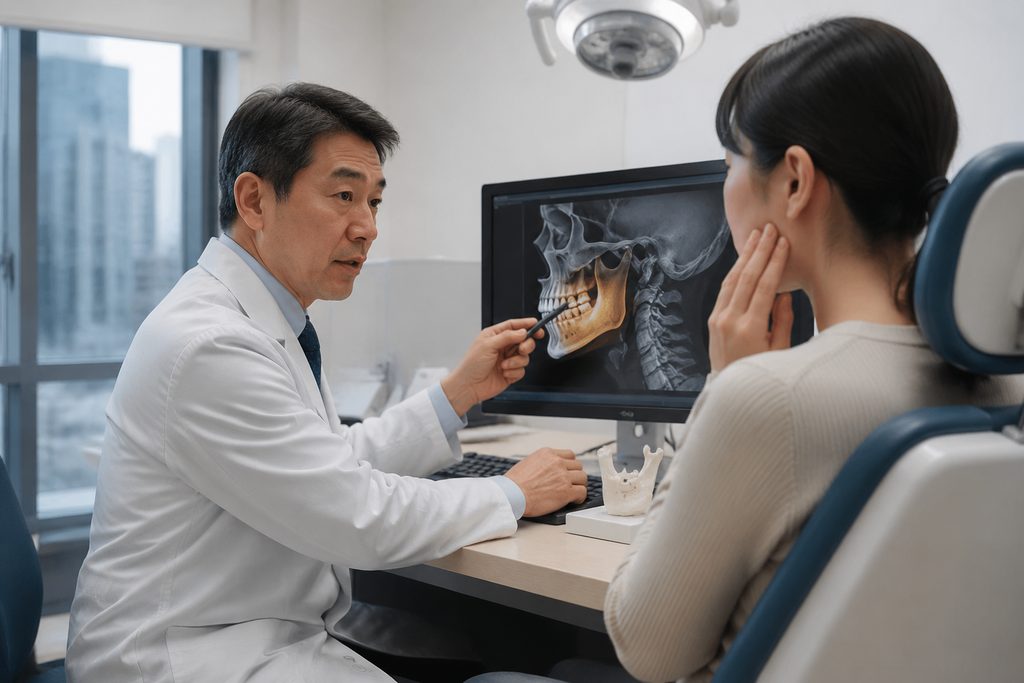
Is My Jaw Pain a TMJ Problem? Symptoms, Diagnosis, and What TMJ Treatment Cost China Really Means
Waking up with a locked jaw or a clicking sound when you chew is unsettling. You might wonder whether the pain is dental, muscular, or something structural. The temporomandibular joint connects your jawbone to your skull, and when it malfunctions, the pain can radiate to your ears, neck, and shoulders. Understanding whether your symptoms point to a temporomandibular disorder (TMD) is the first step. And for many patients facing high out-of-pocket costs at home, researching TMJ treatment cost China becomes a practical question, not just a theoretical one.
Approximately 5% to 12% of adults experience clinically significant TMD pain, according to the National Institute of Dental and Craniofacial Research. Women between 20 and 40 are disproportionately affected. Yet diagnosis often takes months — or years — because symptoms mimic ear infections, migraines, and dental abscesses. You deserve clarity. We work with patients every week who have spent thousands on night guards, root canals, and imaging that never addressed the actual joint problem.
Key Takeaways
- TMJ disorders affect roughly 1 in 10 adults, yet many patients wait over 12 months for a correct diagnosis due to overlapping symptoms with dental and ear conditions.
- Conservative treatments — physical therapy, splints, medication — resolve 80% to 90% of cases without surgery, making accurate early assessment critical.
- Imaging is the differentiator: cone-beam CT and MRI reveal joint degeneration or disc displacement that a clinical exam alone can miss.
- When conservative care fails, surgical options exist — but you need a surgeon who performs these procedures regularly, not occasionally.
The Problem: Jaw Pain Is Notoriously Misdiagnosed
A 2023 survey published in the Journal of Oral & Facial Pain and Headache found that patients with TMD saw an average of 3.2 different providers before receiving a correct diagnosis. In the United States, a single TMJ arthroscopy can cost between $15,000 and $40,000 depending on the facility and surgeon. Many insurance plans classify TMJ surgery as “experimental” or exclude it entirely, leaving patients with bills that rival a year of college tuition.
Meanwhile, the pain persists. You chew carefully. You avoid yawning. You stop eating bagels and steak. The joint clicks, locks, or grinds. Some people develop tinnitus or vertigo. The longer the joint is left untreated, the higher the risk of permanent cartilage damage and osteoarthritis. This is not a condition that rewards waiting.
But here is what most patients never hear: the majority of TMJ disorders are manageable without surgery. The problem is access — to the right imaging, the right specialist, and a treatment plan that starts conservative and escalates only when necessary.
Why China Delivers Results for TMJ Diagnosis and Treatment
China’s top dental and maxillofacial hospitals handle TMJ cases at a volume that is difficult to match elsewhere. Shanghai Ninth People’s Hospital, affiliated with Shanghai Jiao Tong University School of Medicine, operates one of the largest oral and maxillofacial surgery departments in Asia. Its TMJ clinic sees thousands of patients annually — many referred after failed conservative treatment elsewhere.
Clinical Volume Drives Diagnostic Precision
A specialist who sees 50 TMJ cases a month develops pattern recognition that a general dentist seeing five cannot. At major Chinese teaching hospitals, TMJ specialists routinely interpret their own cone-beam CT and MRI scans. That integration matters. In many Western systems, imaging is read by a radiologist who never examines the patient. The clinical correlation is lost.
Shanghai Ninth People’s Hospital alone performs over 1,000 TMJ-related surgical procedures annually, according to hospital-published data. That includes arthrocentesis, arthroscopy, and open joint surgery for advanced cases. Compare that to a typical US oral surgeon who might perform 10 to 20 TMJ surgeries per year. Volume does not guarantee better outcomes, but it correlates strongly with fewer complications and faster operative times.
Conservative-First Philosophy Saves Money and Joints
Chinese maxillofacial specialists follow the same international guidelines as their Western counterparts: splint therapy, physical therapy, behavioral modification, and pharmacologic management first. Surgery is reserved for patients who fail 3 to 6 months of structured conservative care. The difference is cost. A custom occlusal splint in Shanghai typically costs between $150 and $400, compared to $800 to $2,500 in the United States. Physical therapy sessions run $20 to $50 versus $100 to $250 in America.
That cost gap changes the risk calculus. Patients can afford a full conservative trial without draining savings. If surgery becomes necessary, they have already exhausted the cheaper options — and documented it properly.
Cost Advantage Without Quality Compromise
The structural reasons for lower Chinese healthcare costs are well-documented: lower labor costs for skilled staff, high patient throughput, and state investment in public hospital infrastructure. A 2024 analysis in The Lancet noted that China’s top-tier public hospitals deliver surgical outcomes comparable to OECD averages at roughly one-fifth the cost. This is not discount care. These are Fudan-ranked, JCI-accredited institutions with English-speaking international departments.
So when a patient asks about TMJ treatment cost China, they are not asking about bargain medicine. They are asking whether the same procedure — performed by a high-volume specialist — can be accessed without a five-figure bill. The answer, in most cases, is yes.
How Do I Know If Jaw Pain Is TMJ? A Symptom Checklist and Diagnostic Path
Not every jaw ache is a TMJ disorder. Dental abscesses, trigeminal neuralgia, sinus infections, and even cardiac issues can refer pain to the jaw. But certain patterns point strongly toward the temporomandibular joint.
Ask yourself these questions:
- Does your jaw click, pop, or grind when you open or close your mouth?
- Do you experience pain in front of your ear, especially when chewing or yawning?
- Has your jaw ever locked open or closed, even briefly?
- Do you wake with facial pain or a headache centered near your temples?
- Does your bite feel uneven or like it has shifted?
- Do you clench or grind your teeth, especially under stress?
If you answered yes to two or more, a TMJ evaluation is warranted. The diagnostic gold standard combines a clinical exam with imaging. Cone-beam CT shows bony changes — flattening of the condyle, osteophyte formation, joint space narrowing. MRI reveals soft tissue pathology — disc displacement with or without reduction, joint effusion, or adhesions. A proper diagnosis requires both, read by someone who treats TMJ disorders daily.
For patients researching best hospital for TMJ in Shanghai, the answer usually begins with Shanghai Ninth People’s Hospital. Its Department of Oral and Maxillofacial Surgery is consistently ranked among China’s top programs. But Shanghai is not the only option. Beijing’s Peking University School of Stomatology and West China Hospital of Stomatology in Chengdu also operate dedicated TMJ clinics with strong reputations.
Can TMJ Be Cured with Surgery Abroad? What the Options Actually Look Like
For arthrocentesis or arthroscopy, the cost savings can be substantial — often 70% to 80% compared to US prices — but you must factor in travel, accommodation, and the fact that follow-up will happen remotely. For total joint replacement, the decision is more serious. You need a surgeon who does this procedure regularly, not occasionally. Ask directly about annual case volume before committing.
That is the most common outcome. Roughly 80% to 90% of TMD patients improve with splint therapy, physical therapy, and behavioral changes. Traveling for a thorough evaluation and a properly fitted splint can still make sense if local options have failed or are prohibitively expensive. A good splint made from accurate records can be adjusted remotely with minor modifications.
Most US and European insurers do not cover elective overseas care unless you have a specific international health plan. Some private international hospitals in China have direct billing arrangements with major insurers like Cigna, Aetna, and Allianz. Check with your insurer before traveling. If they deny coverage, you are paying out of pocket — which is why the cost difference matters so much.
For an evaluation and conservative treatment plan, 5 to 7 days is usually sufficient. For arthrocentesis or arthroscopy, plan for 10 to 14 days to allow for post-operative review before flying home. For open surgery or joint replacement, expect 3 to 4 weeks minimum. Your surgeon will give you a specific timeline after reviewing your imaging.
Your Next Step
Jaw pain is not something to ignore or self-diagnose. The right imaging, read by a specialist who sees TMJ disorders daily, is the difference between years of frustration and a clear treatment path. If you are weighing options at home or considering whether TMJ treatment cost China makes sense for your situation, start with your records and an honest assessment of what has already been tried.
We help international patients connect with China’s top oral and maxillofacial departments. We are not a hospital. We do not diagnose or treat. What we do is handle the logistics — hospital matching, appointment coordination, imaging scheduling, and bilingual support — so you can focus on getting better. If you want to understand what a specific hospital can offer for your case, request a free consultation and we will walk you through the options without pressure.
Frequently Asked Questions
Yes. The hospitals used for international patients are JCI-accredited and follow the same international safety standards as top hospitals in the US and Europe. Surgical teams perform high volumes of procedures — often more than their Western counterparts — which studies show leads to better outcomes.
Costs vary by procedure and hospital, but international patients typically save 40-80% compared to US prices — even when factoring in travel and accommodation. A consultation with our team will give you an exact, all-inclusive quote with no hidden fees.
Send us your existing medical reports to get started. We handle everything from hospital selection and appointment scheduling to visa assistance and post-operative recovery planning. Your medical records are reviewed by the specialist before you even book a flight.
For more medical information and treatment options in China, visit chinamedservices.com (China Medical Services).
