China Cancer Treatment Timeline: How Long Will You Actually Stay?
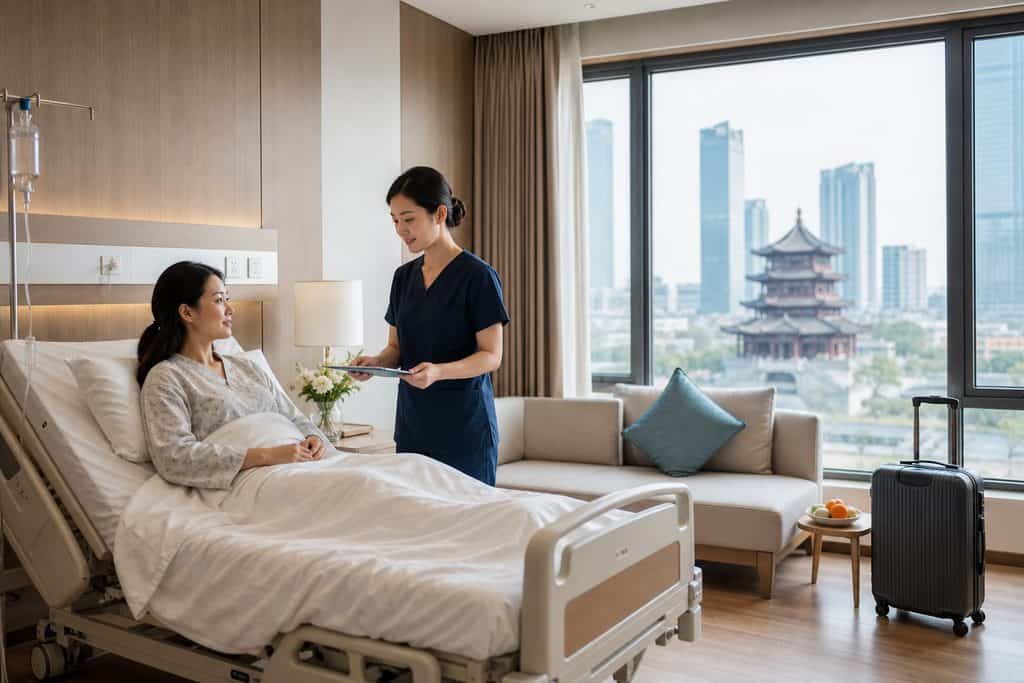
How Long Will I Be in China for Cancer Treatment? The Short Answer
Most international patients spend between 4 and 12 weeks in China for a full cancer treatment cycle. A surgical resection with post-operative observation typically requires 2 to 4 weeks. A standard chemotherapy regimen runs 3 to 6 months in total, but you won’t stay continuously — you’ll fly in for 1-week cycles every 3 to 4 weeks. A full course of radiation therapy usually means 5 to 7 weeks of daily weekday sessions.
The honest answer is that it depends on your protocol, your cancer type, and which hospital tier you access. There is no single number. But you can plan with reasonable precision once your staging and treatment plan are confirmed.
Who This Is Right For — and Who It Isn’t
China’s top oncology centers make sense for a specific profile of patient. You need a confirmed diagnosis, a treatment plan your home oncologist has reviewed, and the physical stamina to travel. You also need realistic expectations about language and logistics.
Good candidates typically include:
- Patients with a confirmed cancer diagnosis and complete medical records, including pathology reports and imaging
- Those seeking a second opinion from high-volume oncology departments before committing to treatment
- Patients who want to reduce out-of-pocket treatment costs without sacrificing clinical expertise
- Families who can travel with the patient for at least the first week of treatment
- Patients with cancers where Chinese hospitals have exceptional case volume — lung, liver, gastric, esophageal, and nasopharyngeal cancers, for example
You should probably not pursue treatment in China if:
- Your condition is unstable or you require intensive care during travel
- You have late-stage disease with rapid deterioration and limited mobility
- You cannot be away from your home support system for weeks at a time
- Your treatment protocol is experimental and requires enrollment in a specific clinical trial unavailable abroad
- You need continuous insurance pre-authorization that your insurer will not provide for overseas care
Being honest about who should not go is what makes the rest of this guide useful.
The Options, Compared
When international patients evaluate cancer treatment in China, they are usually weighing three pathways. Each has a different cost structure, service level, and timeline implication.
| Pathway | Typical Stay per Cycle | Cost Range (USD) | Language Support | Best For |
|---|---|---|---|---|
| Public Tier-A Hospital (Standard Outpatient) | 2–4 weeks for surgery; chemo cycles 5–7 days each | $3,000–$15,000 per cycle | Limited; bring interpreter | Budget-conscious patients with a local contact |
| Public Hospital International/VIP Department | Same clinical timeline, smoother logistics | 1.5–2× standard pricing | English-speaking coordinators | Patients wanting top specialists with less friction |
| Private International Hospital | Comparable; more flexible scheduling | $15,000–$50,000+ per cycle | Full English service, direct insurance billing | Patients with international insurance and higher budgets |
If you are paying out of pocket and want the strongest clinical reputation, the VIP department of a top public hospital is the middle path most of our patients choose. You get the same senior oncologists as the standard wards, but with appointment coordination and English-language support that dramatically reduces your stay-related stress.
Cancer Treatment Cost China: What Drives the Final Number
The cancer treatment cost China patients actually pay varies by a factor of ten depending on drug regimen, hospital tier, and whether you need surgery. A standard six-cycle chemotherapy course using generic platinum-based drugs at a top public hospital might run $8,000 to $20,000 total. The same treatment at a private international hospital in Shanghai could exceed $60,000.
Immunotherapy changes the math completely. PD-1 inhibitors manufactured by Chinese pharmaceutical companies cost a fraction of their Western equivalents. Domestic toripalimab or sintilimab can run $1,500 to $3,000 per cycle in China, compared with $10,000 to $15,000 per cycle for pembrolizumab in the United States. Many of our patients specifically ask about accessing these domestic immunotherapies.
Radiation therapy adds $5,000 to $15,000 depending on technique. Intensity-modulated radiation therapy (IMRT) and volumetric modulated arc therapy (VMAT) are standard at top centers. Proton therapy, available at a limited number of Chinese facilities, costs $30,000 to $60,000 for a full course.
None of these figures include accommodation, food, local transport, or interpreter services. Budget $80 to $200 per day for living expenses in Beijing or Shanghai. That means a 6-week radiation stay adds $3,400 to $8,400 in non-medical costs before flights.
Best Oncology Hospital Shanghai for Foreigners: Where the Timeline Holds Up
Shanghai is the most common entry point for international cancer patients. The city has 18 hospitals on the Fudan Ranking Top 100 list, more than any city except Beijing. When patients search for the best oncology hospital Shanghai for foreigners can access, the answer usually points to one of three institutions.
Fudan University Shanghai Cancer Center is the highest-volume dedicated oncology hospital in the city. Its departments consistently rank among China’s top 10 for oncology in the Fudan specialty rankings. The hospital treats over 200,000 outpatients annually, which means its surgical teams see rare presentations that smaller centers rarely encounter.
Zhongshan Hospital, affiliated with Fudan University, runs one of the country’s strongest liver cancer programs. For patients with hepatocellular carcinoma or metastatic liver disease, this is often the first recommendation. Ruijin Hospital, affiliated with Shanghai Jiao Tong University, has particular depth in hematological malignancies and breast cancer.
All three have international departments. The tradeoff is cost — expect to pay 1.5 to 2 times standard pricing for the VIP pathway. But the scheduling predictability is worth it when you are flying in from another continent. You can explore our oncology hospital rankings by specialty to see which departments rank highest for your specific cancer type.
How Many Weeks for Radiation Therapy in China: The Daily Reality
If your protocol calls for radiation, you are looking at the longest single continuous stay. The answer to how many weeks for radiation therapy in China is almost always 5 to 7 weeks, delivered Monday through Friday. Each session takes 15 to 30 minutes on the treatment table, but positioning and verification can stretch the hospital visit to 60 to 90 minutes.
That means you need to rent an apartment or hotel room near the hospital for the full duration. You will spend about 2 hours per day at the hospital and the rest of your time managing side effects, resting, and eating. Fatigue typically accumulates around week 3. Skin reactions are common by week 4.
Some centers offer hypofractionated radiation schedules for certain cancers, compressing treatment into 3 to 4 weeks with higher doses per session. Not every patient qualifies. Your radiation oncologist decides based on tumor location, size, and proximity to critical structures. Do not assume you can shorten the timeline — ask directly during your remote consultation.
Medical Tourism Package for Chemotherapy China: What Actually Gets Bundled
Some agencies market a medical tourism package for chemotherapy China patients can book like a hotel stay. The reality is more modular. What you are actually buying is a combination of hospital coordination, accommodation, and logistics support.
A typical package for a 3-week chemotherapy cycle includes:
- Hospital registration and appointment scheduling for the oncology department
- Coordination of pre-treatment blood work and imaging
- Accommodation near the hospital for the patient and one companion
- Airport pickup and local transport to and from the hospital
- Bilingual interpretation during consultations and treatment sessions
- Assistance with pharmacy dispensing and post-treatment medication instructions
Packages generally start around $2,500 per cycle excluding hospital charges. The hospital bills separately. Be wary of any provider who quotes one all-inclusive price that seems too good — hospital fees in China are charged directly by the hospital, not through intermediaries.
China Cancer Hospital Stay Duration: Surgery and Recovery Milestones
For surgical patients, the China cancer hospital stay duration follows a predictable arc. You will arrive 3 to 5 days before surgery for pre-operative evaluation. That includes blood work, ECG, chest X-ray, and sometimes additional imaging. The surgery itself typically requires a 5 to 10 day inpatient stay depending on the procedure.
A minimally invasive lung resection might mean 4 to 5 days in hospital. A gastrectomy or liver resection runs 7 to 10 days. After discharge, you need another 5 to 7 days in a nearby hotel before flying home. Your surgeon will want to see you once for wound check and staple removal.
That puts the total surgical trip at 2 to 3 weeks door to door. If you need adjuvant chemotherapy afterward, you will return for cycles every 3 to 4 weeks, each trip lasting 5 to 7 days.
Practical Considerations: Records, Visas, and Payment
The logistical layer is where most timelines fall apart. Start gathering documents 3 to 4 weeks before you plan to travel. You need your original pathology report, all imaging files on CD or USB, a summary letter from your home oncologist, and a list of every medication you currently take. Chinese hospitals will not accept a verbal history — they want paper.
Visa timing matters. You will apply for an S2 visa, which covers short-term private affairs including medical treatment. Processing takes 1 to 2 weeks at most Chinese embassies and consulates. Your hospital must provide an invitation letter and treatment confirmation. Family members traveling with you apply for their own S2 visas. Do not book flights until the visa is approved.
Payment works differently than in Western hospitals. Public hospitals require a deposit upfront, often $3,000 to $8,000 depending on the planned procedure. You top up the deposit as treatment progresses. Private international hospitals may accept direct insurance billing; public hospital VIP departments generally do not. Bring a credit card with a high limit and confirm with your bank that overseas medical charges will not be blocked.
Language is the final friction point. Even in international departments, nurses and technicians on the wards may speak limited English. A bilingual companion who can translate during every step — blood draws, imaging, pharmacy pickup, discharge instructions — removes hours of confusion per day. You can manage without one. Most patients who try report it is the single most stressful part of the experience.
Frequently Asked Questions
No. Chinese public hospitals require an in-person consultation before any treatment begins. Even with a confirmed diagnosis from your home country, the treating oncologist must see you, review your records, and order local tests. Expect 3 to 7 days between your first appointment and the start of chemotherapy or radiation. Surgery requires more lead time for pre-operative clearance.
Complications happen. A neutropenic fever after chemotherapy can mean an unplanned 5 to 7 day hospital admission. Radiation skin reactions rarely require extension but can make travel uncomfortable. Build a 7 to 10 day buffer into your return flight booking. Change fees on international tickets are cheaper than the stress of trying to fly while medically unstable.
At the top 5% of Chinese hospitals — the 340+ institutions we work with — the answer is yes for most solid tumors. These centers treat case volumes that Western hospitals rarely see. A senior thoracic surgeon at a top Shanghai hospital may perform 300 to 500 lung resections per year. But quality drops quickly outside the top tier. Hospital selection is the single most important decision you will make.
Most will, provided the records are properly translated. Request a discharge summary in English from the hospital’s international department before you leave. Ask for copies of all pathology slides and imaging, not just reports. Your home oncologist may want to review the actual tissue samples if there is any ambiguity about the diagnosis.
For a 6-cycle chemotherapy course at a top public hospital VIP department, budget $25,000 to $45,000 including hospital fees, accommodation, flights for two people, and interpreter support. Radiation therapy adds $8,000 to $20,000. Surgical treatment with a 2-week stay runs $15,000 to $35,000. These are planning ranges, not quotes — final numbers depend entirely on your protocol and hospital choice.
Your Next Step
The timeline for cancer treatment in China is knowable once your protocol is defined. Four to twelve weeks is the honest range, with surgery on the shorter end and radiation on the longer. The cancer treatment cost China patients face is typically one-fifth to one-third of US prices, but planning is everything.
We are China Medical Services, a coordination team that connects international patients with top-tier Chinese oncology departments. We are not a hospital, and we do not diagnose or treat. We handle the layer between you and the medical system — hospital matching, appointment coordination, bilingual accompaniment, and logistics. If you want a clear-eyed assessment of whether treatment in China makes sense for your situation, start with a free consultation at our patient services page. No obligation, just straight answers.
For more medical information and treatment options in China, visit chinamedservices.com (China Medical Services).
