Brain Tumor Removal Through the Nose: Endoscopic Surgery in China Explained
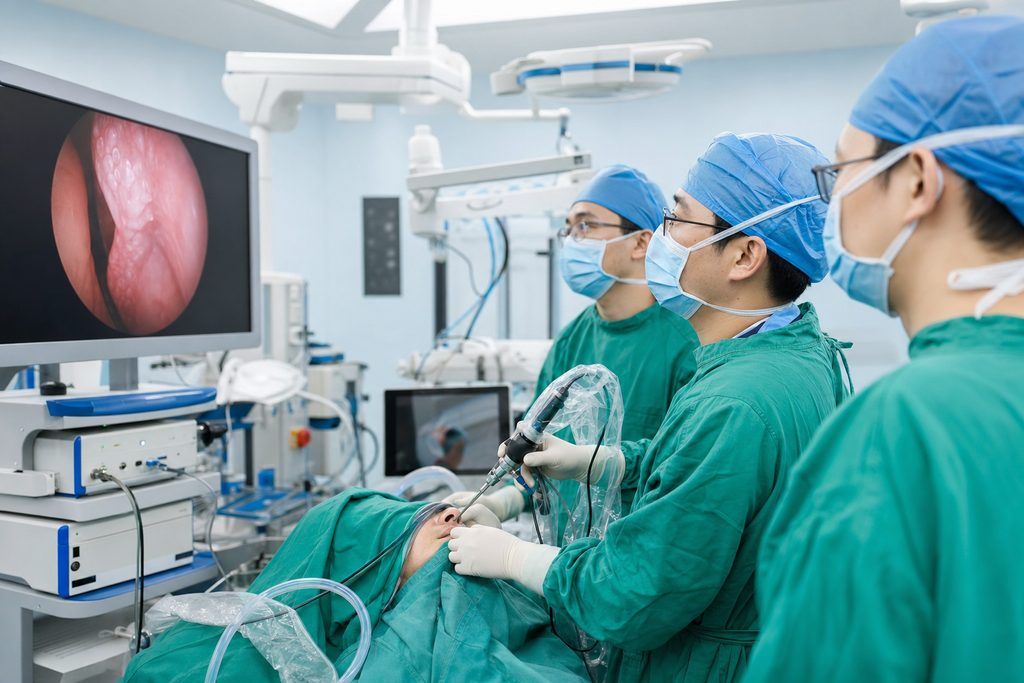
When 48-year-old Daniel from Manchester first heard the words “pituitary adenoma,” his immediate question wasn’t about survival rates. It was simpler than that. “Can they take it out without cutting my skull open?” The answer, his neurologist explained, was yes — through the nose. What his neurologist didn’t explain was where in the world he could get that surgery done well, at a price his insurance wouldn’t balk at. That’s the question that eventually brought him to our desk.
The short answer to “Can a brain tumor be removed through the nose?” is yes, for specific tumor types in specific locations. The procedure is called endoscopic endonasal transsphenoidal surgery. A thin, rigid endoscope passes through the nostril, enters the sphenoid sinus, and reaches the base of the skull. No scalp incision. No visible scar. And in China, the endoscopic brain tumor removal cost China hospitals quote typically starts around $18,000 to $35,000 — a fraction of what the same surgery costs in the United States or Western Europe.
But “through the nose” doesn’t mean “minor surgery.” It’s brain surgery. The tumor sits millimeters from the optic nerves, the carotid arteries, and the pituitary gland. The fact that a surgeon reaches it through a natural opening doesn’t reduce the stakes. It changes the access route. That distinction matters more than most patients realize.
Endoscopic Brain Tumor Removal Through the Nose: The Short Answer
Endoscopic endonasal surgery removes tumors at the skull base — most commonly pituitary adenomas, but also craniopharyngiomas, Rathke’s cleft cysts, chordomas, and some meningiomas. The surgeon advances an endoscope and micro-instruments through one nostril. There’s no external incision. Hospital stay in China typically runs 3 to 7 days. Most international patients fly home within two weeks of surgery.
The caveat: not every brain tumor qualifies. Tumors in the frontal lobes, cerebellum, or brainstem don’t sit anywhere near the nasal corridor. If a tumor isn’t accessible from below, no surgeon in any country can remove it through the nose. Tumor location determines eligibility. Tumor type determines risk. Everything else — cost, recovery, hospital choice — is secondary to those two facts.
Who This Is Right For — and Who It Isn’t
Good candidates for transsphenoidal surgery generally share a few characteristics. The tumor sits in the sellar or parasellar region. It’s pressing on the optic chiasm and causing vision loss. It’s a functioning pituitary adenoma that doesn’t respond to medication. Or it’s growing — serial MRIs show enlargement over 6 to 12 months.
Who should not pursue this route? Patients whose tumors are located outside the midline skull base. Patients with certain invasive adenomas that have wrapped around major blood vessels — those often require a combined approach or radiation instead. Patients with uncontrolled bleeding disorders. And patients who need urgent surgery but lack the documentation and imaging to support a remote evaluation. If you can’t produce a recent MRI with contrast, a hormonal panel, and a visual field test, no hospital in China can properly assess you yet.
And one honest note: if your insurance requires treatment within your home network and won’t consider overseas care, staying local may be the financially rational choice. We say this because it’s true, not because we want to discourage anyone.
The Options, Compared
When patients ask us whether to pursue endoscopic skull base surgery in China versus at home, the comparison typically comes down to four variables: cost, wait time, surgeon volume, and logistics. Here’s how those shake out for a standard pituitary adenoma resection.
| Factor | United States | United Kingdom | China (Top Public Hospital) | China (Private International) |
|---|---|---|---|---|
| Typical surgery cost | $60,000–$120,000 | £25,000–£45,000 | $18,000–$35,000 | $35,000–$60,000 |
| Wait for non-urgent surgery | 2–6 weeks | 8–18 weeks | 1–4 weeks after evaluation | 1–2 weeks |
| Surgeon annual case volume | 20–50 (typical) | 15–40 (typical) | 80–200 (major centers) | 50–120 |
| English-speaking staff | Yes | Yes | Limited — companion advised | Yes |
| Insurance direct billing | Yes | Yes (NHS or private) | Usually no — pay first, claim later | Often yes |
| Post-op follow-up abroad | Local | Local | Remote + records transfer | Remote + records transfer |
Which column fits you? If you have comprehensive US insurance and a surgeon you trust, staying home is hard to beat on convenience. If you’re paying out of pocket, or your wait time at home stretches into months while your vision deteriorates, the Chinese public hospital column starts to look compelling. The private international column suits patients who want Western-style service and direct insurance billing without the Western price tag — though it’s still considerably more expensive than the public route.
What “Through the Nose” Actually Means in the Operating Room
Here’s the part most articles skip. The phrase “through the nose” conjures an image of a doctor inserting a thin tube and plucking out a tumor like a marble. The reality is more involved.
The surgeon first navigates the endoscope past the nasal turbinates to the back of the nasal cavity. Then they open the sphenoid sinus — a hollow air space behind the nose. Through that sinus wall lies the sella turcica, the bony saddle that cradles the pituitary gland. The surgeon drills through that bone, opens the dura (the brain’s outer membrane), and only then reaches the tumor.
Why does this matter to you as a patient? Because the skill ceiling is high. A surgeon who has done 200 of these procedures handles the anatomical variations — the tilted septum, the narrow sinus, the carotid artery that bulges into the surgical field — almost reflexively. A surgeon who has done 20 does not. This is why surgical volume is the single strongest predictor of good outcomes in transsphenoidal surgery, and why we point patients toward centers with documented high case numbers rather than simply the nearest big hospital.
China’s scale advantage is real here. A major neurosurgery department in Shanghai or Beijing may perform more endoscopic skull base procedures in a year than many Western hospitals do in a decade. That’s not marketing language. It’s arithmetic.
Endoscopic Brain Tumor Removal Cost China: What the Numbers Include
The headline figure — $18,000 to $35,000 for a standard pituitary adenoma resection at a top public hospital — covers the surgery itself, anesthesia, operating room fees, standard hospital ward stay (typically 5 days), basic medications, and routine post-operative imaging. It does not include your flights, visa fees, accommodation for family members, or our coordination services.
What drives the variance? Tumor size and invasiveness. A small, contained adenoma sits at the lower end. A larger tumor extending into the cavernous sinus or suprasellar region demands longer operating time, possibly intraoperative MRI navigation, and a longer hospital stay. Private international hospitals in Shanghai and Beijing typically quote $35,000 to $60,000 for the same procedure — the premium buys English-speaking staff, hotel-like rooms, and direct insurance billing.
One comparison that anchors the value: the same surgery in the US without insurance routinely exceeds $80,000. In the UK privately, expect £30,000 to £45,000. Even adding $5,000 to $8,000 for flights, visa, accommodation, and bilingual support, the China route often lands at one-third to one-half of the Western out-of-pocket price.
How Long Is Recovery After Endoscopic Skull Base Surgery Abroad?
Recovery follows a predictable arc for most patients. Days 1 to 3 in hospital: nasal packing (if used) is removed, hormonal levels are monitored, and you’re mobilized. Days 4 to 7: discharge from hospital, light walking, no heavy lifting. Weeks 2 to 4: most patients feel well enough to fly home and resume desk work. Weeks 6 to 8: exercise restrictions lift. Full sinus healing takes 2 to 3 months.
What surprises patients most? The nasal congestion. You’ll breathe through your mouth for the first week or two. Some patients report a dull headache for several days. Taste and smell may be dulled temporarily. None of this is alarming, but knowing about it beforehand prevents the 3 a.m. panic that comes from expecting a “minimally invasive” procedure to feel like a dental cleaning.
For international patients, the practical question is when to fly. Most surgeons clear patients for long-haul flights 10 to 14 days after surgery, provided there’s no cerebrospinal fluid leak and hormone levels are stable. We always recommend booking flexible tickets for the return leg.
Practical Considerations: Records, Visa, Payment, and Language
China’s public hospitals do not let you book surgery from overseas sight unseen. The pathway is: remote evaluation first, then in-person consultation, then surgery scheduling. For that remote evaluation, you’ll need a recent contrast-enhanced MRI (within 3 months), a full pituitary hormone panel, and ideally a visual field test. Without these, the neurosurgery department cannot assess you.
Visa is the next hurdle. Medical travelers to China use the S2 visa, which covers short-term private affairs including medical treatment. Your hospital’s international department will issue an invitation letter and treatment confirmation to support your application. Family members accompanying you also apply for S2. Processing time varies by country — allow 2 to 4 weeks.
Payment at public hospitals is upfront. You deposit an estimated treatment amount at admission, and the hospital deducts from it as services are delivered. Insurance reimbursement happens after the fact, through your insurer back home. Private international hospitals in China often bill insurers directly — worth checking with your provider.
Language is the wildcard. Public hospital staff in major Chinese cities may speak some English, but neurosurgery wards are not bilingual environments. This is where a bilingual medical companion changes the experience: someone who handles registration, translates during ward rounds, explains medication instructions, and advocates for you when you’re too tired to advocate for yourself. It’s not a luxury. For many patients, it’s the difference between a smooth recovery and a stressful one.
Can a Pituitary Tumor Be Removed Through the Nose in China? The Straight Answer
Yes — and it’s one of the most commonly performed endoscopic skull base procedures in Chinese neurosurgery departments. Pituitary adenomas account for roughly 15% of all primary brain tumors. The transsphenoidal approach has been the standard of care for most pituitary adenomas since the 1990s, and Chinese centers adopted endoscopic techniques early and at scale.
What should you look for in a hospital? Surgical volume first. A department that performs 150 or more endoscopic skull base procedures annually has seen the complications and knows how to avoid them. Multidisciplinary capability second — you want endocrinology, ophthalmology, and neurosurgery under one roof, because pituitary tumors don’t respect departmental boundaries. And international patient infrastructure third, because that determines how smoothly the logistics run.
For patients specifically searching for the best hospital for transsphenoidal surgery Shanghai, the city hosts several centers with strong neurosurgery reputations. Shanghai’s public hospital system includes institutions with dedicated skull base surgery teams and high annual case volumes. Beijing offers comparable options. The right choice depends on your specific tumor characteristics, not just city preference.
Some patients ask about JCI accredited neurosurgery hospital China price expectations. JCI accreditation is more common among private international hospitals than public ones. If JCI status matters to you — and for some insurers it does — expect to pay the private-tier rates of $35,000 to $60,000 rather than public hospital prices. The accreditation signals process standardization and English-language capability. It does not necessarily signal superior surgical outcomes. Public hospitals in China’s top tier operate at extremely high volume with strong outcomes, but their processes and documentation are built for the domestic system, not international accreditation frameworks.
Frequently Asked Questions
No. Only tumors in the midline skull base region — the area around the pituitary gland, the sphenoid sinus, and the upper clivus — are accessible through the nasal corridor. Tumors in the cerebral hemispheres, cerebellum, brainstem, or ventricles require open craniotomy or other approaches. Your MRI determines eligibility. No surgeon can override anatomy.
You don’t book it like a hotel room. The process starts with a remote evaluation: you submit your MRI, hormone panel, and clinical history. A neurosurgery team reviews them and issues a written opinion on whether you’re a surgical candidate. If yes, you travel for an in-person consultation. Surgery is scheduled after that consultation. Any service claiming to book your surgery date before a specialist has reviewed your films is not operating through legitimate hospital channels.
Complication rates for endoscopic pituitary surgery at high-volume centers are low — cerebrospinal fluid leak occurs in roughly 2 to 5% of cases, serious bleeding in under 1%, and new hormonal deficits in 5 to 10%. But “low” isn’t zero. Chinese hospitals carry professional liability insurance, and international patients have the same legal recourse as domestic patients. What you should verify before traveling: the hospital’s complication management protocols, whether they have an intensive care unit on site (major neurosurgery centers always do), and what your travel insurance covers in terms of extended hospitalization and medical evacuation.
Most will — but ask before you go. You’ll return with a discharge summary, surgical notes, pathology report, and imaging on CD or via secure link. Your home endocrinologist or neurologist can manage long-term follow-up from those records. The key is establishing that relationship before you travel, not after you return. A brief phone call with your GP or specialist explaining your plans prevents awkwardness later.
Your Next Step
If you’re considering endoscopic skull base surgery abroad, start with information, not airline tickets. Our team at China Medical Services helps international patients navigate hospital selection, remote evaluations, visa documentation, and on-the-ground support across 37 cities and 340+ top-ranked hospitals. We are not a hospital and we don’t diagnose or treat anything. What we do is connect you with the right neurosurgery department, translate your records, and make sure you’re not alone in a system where you don’t speak the language.
Send us your MRI and a brief clinical summary. We’ll help you figure out whether this path makes sense for your specific case — honestly, and without pressure.
For more medical information and treatment options in China, visit chinamedservices.com (China Medical Services).
