Tumor Mutation Testing in China: Costs, Process, and Hospital Access for International Patients
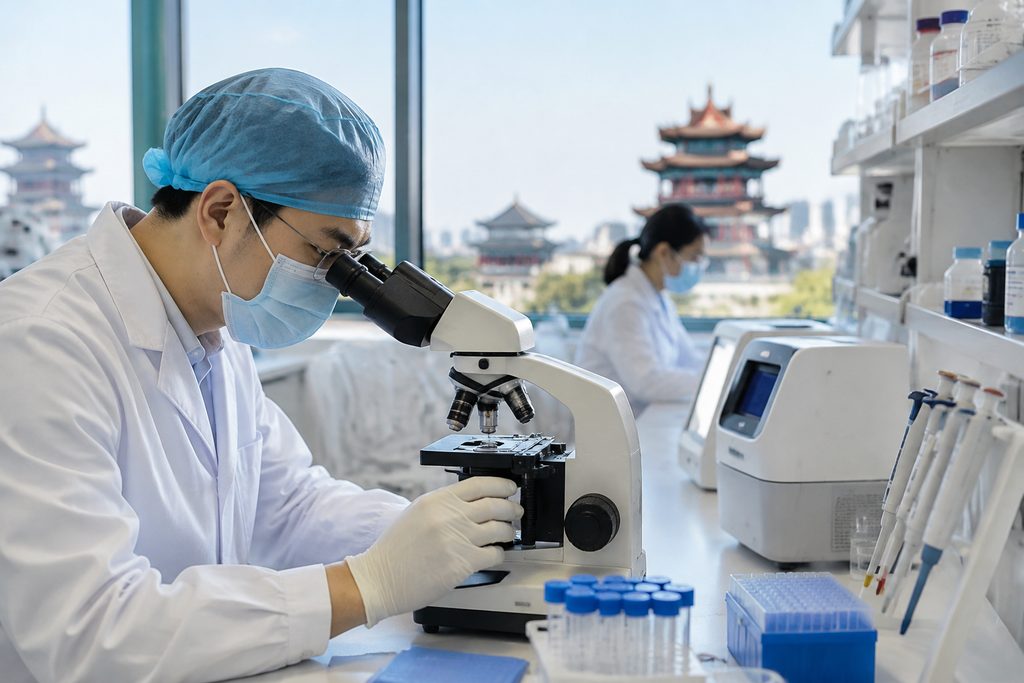
Tumor Mutation Testing in China: What It Costs and How Foreign Patients Can Access It
While a comprehensive next-generation sequencing (NGS) panel in the United States can run anywhere from $3,000 to over $10,000, the same tumor mutation testing cost China facilities offer frequently lands between $800 and $2,500 at top-tier public hospitals. That gap isn’t a signal of lower quality. It reflects structural differences in how Chinese healthcare operates. You don’t need to be a citizen. You don’t need to speak Mandarin. But you do need to understand the pathway.
China’s top oncology centers now run the same platforms used at MD Anderson or Memorial Sloan Kettering — Illumina, Thermo Fisher, and domestic equivalents like BGI. The sequencing chemistry is identical. What changes is the logistics. For a foreign patient, that means documents, timing, and knowing which hospitals actually accept international cases for genomic work.
We coordinate these cases regularly. This article walks through exactly how the process works, what it costs, where to go, and what can go wrong. No sugarcoating.
How This Actually Works, Step by Step
The sequence is straightforward once you see it laid out. Here’s what a typical international tumor mutation testing case looks like from inquiry to results.
Step 1: You send us your existing pathology and imaging reports. These need to be in English or accompanied by a certified translation. The key documents are your histopathology report, any prior genetic testing results, and a summary of your treatment history. If you have tissue blocks or slides available, note that — some tests require fresh or archived tumor tissue, while others work with blood samples (ctDNA).
Step 2: A specialist reviews your case. This is not a doctor making a treatment decision. It’s a preliminary review to determine whether genomic testing is appropriate for your cancer type and stage, and which panel makes sense. Not every tumor needs sequencing. Some cases benefit more from immunohistochemistry or single-gene tests.
Step 3: We match you with a hospital. Based on your cancer type and testing needs, we identify which of our partnered oncology departments has the right platform and accepts international patients for this service. Some hospitals process samples sent by courier. Others require an in-person visit for sample collection or verification.
Step 4: Sample submission and sequencing. If you’re already in China, this is a matter of scheduling. If you’re abroad, your tissue sample or blood specimen ships under controlled conditions to the hospital’s molecular diagnostics lab. Turnaround time depends on the panel size.
Step 5: Report delivery and interpretation. You receive the raw report plus a written summary in English. We arrange a follow-up consultation with a Chinese oncologist or your home oncologist to interpret findings and discuss implications for treatment.
That’s the honest sequence. The parts people underestimate are document preparation and hospital selection. Get those wrong and the timeline doubles.
What Tumor Mutation Testing Actually Costs in China
Let’s put real numbers on the table. The tumor mutation testing cost China hospitals quote depends on three variables: the panel size, the hospital tier, and whether you go through the international department or the standard outpatient route.
A small targeted panel covering 20-50 genes typically runs $500 to $1,200. A comprehensive NGS panel covering 300-600 genes lands between $1,000 and $2,500. Whole-exome sequencing, when clinically indicated, can push toward $3,000. Liquid biopsy testing (ctDNA from blood) sits in the $800 to $1,800 range depending on depth of coverage.
Compare that to the US, where FoundationOne CDx costs approximately $5,800, Guardant360 around $6,000, and academic center panels routinely exceed $4,000. In Europe, prices vary but rarely dip below €2,500 for comprehensive panels. The next generation sequencing cancer China price advantage is real, and it holds across panel types.
| Test Type | China (USD) | United States (USD) | Europe (USD) |
|---|---|---|---|
| Targeted panel (20–50 genes) | $500–$1,200 | $1,500–$3,000 | $1,200–$2,800 |
| Comprehensive NGS (300–600 genes) | $1,000–$2,500 | $4,000–$7,000 | $3,000–$5,500 |
| Liquid biopsy (ctDNA) | $800–$1,800 | $3,500–$6,000 | $2,500–$4,500 |
| Whole-exome sequencing | $2,000–$3,000 | $5,000–$10,000+ | $4,000–$8,000 |
These figures are ranges based on published hospital price lists and our case experience. Final quotes vary by hospital and case complexity. Anyone who gives you a single fixed number without reviewing your records is guessing.
One thing worth knowing: Chinese public hospitals often price sequencing as a laboratory service, not as a bundled “genomic consultation.” That means you pay for the test itself, and separately for any physician interpretation time. The interpretation fee is usually modest — $100 to $300 for a written summary in English.
A Realistic Timeline
People ask “how long does this take?” and the honest answer is: longer than the lab’s stated turnaround time. Here’s what a real timeline looks like for an international patient.
| Stage | What Happens | Duration |
|---|---|---|
| Day 1–7 | Document collection, translation, case review | 1–2 weeks |
| Week 1–3 | Hospital matching and appointment confirmation | 1–3 weeks |
| Week 2–4 | Sample shipping (if abroad) or in-person sample collection | 3–10 days for shipping; same-day for in-person |
| Week 3–6 | Sequencing and bioinformatics analysis | 7–21 days depending on panel size |
| Week 4–8 | Report delivery, English translation, interpretation consult | 3–7 days after lab completion |
So the full arc from first inquiry to interpreted results runs about 4 to 8 weeks. The lab work itself is fast. The administrative layer — translation, hospital confirmation, shipping logistics — is where time bleeds. If you’re already in China with your tissue sample in hand, the whole thing can compress to 2 to 3 weeks.
Visa processing adds another dimension. If you need to travel for sample collection, an S2 visa (the short-stay category used for medical treatment and private affairs) typically takes 4 to 10 business days at most Chinese embassies, assuming your supporting documents from the hospital are in order. We help prepare those documents, but we never guarantee approval — that’s the consulate’s call.
What Can Go Wrong — and What Happens Then
Let’s be direct about failure modes. Genomic testing is not risk-free, and the risks are not what most patients expect.
Tissue insufficiency. The most common problem. Your archived tumor block may not contain enough viable tumor cells for sequencing. Or the DNA may be degraded. If a lab rejects your sample, the options are: request a fresh biopsy (which requires scheduling with a surgeon or interventional radiologist), switch to a liquid biopsy if your tumor sheds DNA into the blood, or abandon comprehensive testing in favor of single-gene PCR tests that need less material. This happens in roughly 5-10% of archived tissue cases.
Actionable findings that lead nowhere. You get a report showing an EGFR mutation or an ALK fusion, but the corresponding targeted drug isn’t approved or available in your home country. This is common. The sequencing worked. The system around it didn’t. In these cases, the report still has value — it may qualify you for a clinical trial or inform a treatment decision in China itself.
Variant of unknown significance (VUS). The lab finds a mutation, but nobody knows what it means clinically. This is not a failure of the test. It’s a limitation of current knowledge. A good interpretation consult will distinguish between actionable mutations, resistance mutations, and VUS. A bad report dumps everything in one table and leaves you to panic.
Shipping failure. Rare but real. Samples get held at customs, temperature chains break, paperwork gets rejected. If a sample is lost or compromised in transit, the hospital will usually accept a replacement sample without charging the full test fee again. But you lose time. Weeks, sometimes.
Language and format mismatch. You receive a report in Chinese, or in a format your home oncologist can’t easily interpret. This is why English translation and a structured interpretation summary matter. The raw data is useless without context.
For each of these, the recourse exists. But it requires someone on the ground in China who can talk to the lab directly, re-coordinate sample submission, and negotiate re-testing. That’s the coordination layer most international patients don’t have.
How to Choose the Right Hospital for Tumor Genomic Testing in China
The best cancer hospitals in China for genomic testing are not a secret list. They’re the same institutions that top the Fudan University hospital rankings for oncology — but ranking alone doesn’t tell you which one fits your case.
Here’s what actually matters when choosing.
Platform availability. Not every top hospital runs every type of NGS panel. Some focus on solid tumors. Others specialize in hematologic malignancies. Ask which sequencing platform they use (Illumina NovaSeq, BGI DNBSEQ, Thermo Fisher Ion Torrent) and whether their panel covers the genes relevant to your cancer type. A hospital that ranks #1 for liver cancer may not be the best choice for a lung cancer panel.
International patient infrastructure. A hospital can have world-class molecular diagnostics and zero capacity to handle a foreign patient. You need an international department that can register you, accept your overseas payment, and issue the documents required for an S2 visa if you’re traveling. Our hospital database filters for exactly this — institutions with verified international patient pathways.
Turnaround time and reporting language. Some labs report in 7 days. Others take 21. Some provide English reports as standard. Others require you to arrange translation. Ask before you commit.
Whether they accept remote sample submission. This is the single biggest variable for foreign patients. If a hospital accepts couriered tissue blocks or blood samples, you can get tumor genetic testing in China without ever boarding a plane. If they require in-person sample collection, your timeline and budget change significantly. The answer varies by hospital and sometimes by department within the same hospital.
Price transparency. Public hospital price lists are regulated and posted. Private international hospitals in Shanghai and Beijing often bundle testing with consultation fees, which pushes the total higher. For example, tumor DNA sequencing cost in Shanghai at a public hospital international department might run $1,200 to $2,000 for a comprehensive panel, while a private JCI-accredited hospital in the same city could quote $2,500 to $3,500 for a similar test with faster turnaround and more hand-holding.
One more consideration: domestic Chinese NGS providers like Burning Rock, GenomiCare, and 3D Medicines often partner with public hospitals to run the actual sequencing. You may never interact with these companies directly, but their platforms underpin many hospital-based tests. The quality is generally high — several are CAP-accredited or have achieved equivalent international certifications.
Practical Considerations: Records, Visa, Payment, and Follow-Up
Before you book tumor mutation analysis China services, get your paperwork in order. The smoother your document package, the fewer delays you’ll hit.
Medical records. You need your complete pathology report, including tumor type, grade, and any prior biomarker testing. If you have a tissue block or unstained slides, request them from your original pathology lab. Many hospitals in China will accept a formalin-fixed paraffin-embedded (FFPE) block shipped under ambient conditions. Blood-based ctDNA testing requires a specialized collection tube — the hospital will ship one to you or direct you to a local partner lab.
Visa. If you’re traveling to China for sample collection or consultation, you’ll apply for an S2 visa with a note indicating medical treatment as the purpose. Supporting documents from the hospital — typically an invitation letter or appointment confirmation — are required. Processing times vary by embassy. Budget 2 to 4 weeks for the full visa cycle.
Payment. Chinese public hospitals generally require prepayment. International bank transfers are accepted at most top-tier institutions, though processing can take 3 to 5 business days. Credit card payment is increasingly available at international departments. Insurance reimbursement is possible but not direct — you pay upfront and file with your insurer afterward. Private international hospitals like those listed on our private hospital directory often offer direct billing with major international insurers.
Language. Even at hospitals with English-speaking international departments, the molecular diagnostics lab and billing office may operate primarily in Chinese. This is where a bilingual coordinator earns their fee — handling registration, sample submission, payment, and report retrieval without you needing to navigate the language barrier yourself.
Follow-up at home. The report is only useful if your home oncologist can act on it. Request the full variant list, not just the summary page. Ask for the raw data files (VCF format) if your oncologist wants to run independent analysis. And schedule the interpretation consult before you leave China or while the case is fresh — trying to arrange it weeks later across time zones is harder.
Frequently Asked Questions
Yes. Chinese hospitals accept international patients for genomic testing, either through remote sample submission or in-person visits. The key requirement is having your records reviewed first to confirm the test is appropriate and the hospital can process your sample. Language support varies by hospital, which is why many international patients work with a coordinator.
At public hospital international departments in Shanghai, comprehensive NGS panels typically run $1,200 to $2,500. Private international hospitals in the city may charge $2,500 to $3,500 for similar coverage with faster turnaround. Small targeted panels start around $500. Final pricing depends on panel size and hospital.
The sequencing technology used at top Chinese hospitals is the same as in Western centers — Illumina, Thermo Fisher, and BGI platforms dominate. Many Chinese labs hold CAP accreditation or equivalent certifications. The variability is not in sequencing accuracy but in reporting quality and clinical interpretation, which is why an English-language interpretation consult matters.
Not necessarily. Many hospitals accept couriered tissue blocks or blood samples for remote testing. If your cancer type requires a fresh biopsy or the hospital mandates in-person sample collection, then travel becomes necessary. Each case is different, and the answer depends on the hospital and your specific situation.
This is a common outcome, not a failure. Comprehensive panels find actionable mutations in roughly 40-60% of cases depending on cancer type. If nothing actionable emerges, the report still provides negative information that can rule out targeted therapies and guide decisions about chemotherapy, immunotherapy, or clinical trial enrollment.
Your Next Step
Tumor mutation testing in China offers real cost advantages without sacrificing technical quality. The challenge is not the science — it’s the coordination: knowing which hospital fits your case, getting your sample there, and receiving a report your home oncologist can actually use.
We are China Medical Services, and we handle that coordination layer. We don’t practice medicine. We don’t promise treatment outcomes. What we do is connect you with top-tier Chinese oncology departments, prepare your documents, manage sample logistics, and ensure you receive an English-language report with proper interpretation support. If you’re considering genomic testing, start with a conversation. Send us your records and we’ll tell you honestly whether this pathway makes sense for your case.
Get the information first. Decide after. That’s the order that
For more medical information and treatment options in China, visit chinamedservices.com (China Medical Services).
