Nanfang Hospital Neurosurgery for International Patients: Costs, Safety, and How to Book
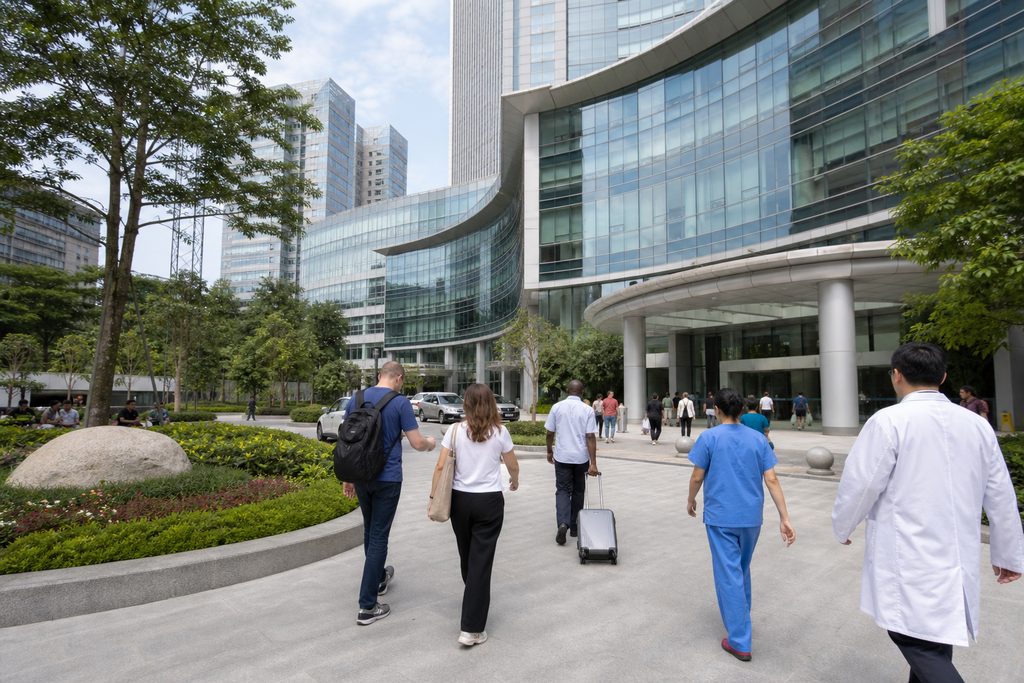
Key Takeaways
- Nanfang Hospital in Guangzhou performs over 2,000 neurosurgical procedures annually, ranking among southern China’s highest-volume centers.
- Brain tumor removal at Nanfang typically costs $15,000–35,000 for international patients, versus $100,000–250,000 in the United States.
- Foreign patients cannot directly book surgery online — you must first complete an in-person or video consultation through the hospital’s international department.
- Safety standards at top-tier Chinese neurosurgery departments are comparable to Western academic centers, but language barriers and process differences require careful preparation.
The Problem: Brain Surgery Costs Are Crushing Patients in the West
You have probably heard that surgery in China means compromising on quality. The reality is exactly the opposite. A craniotomy for tumor resection in the United States now averages $150,000 to $250,000 when you include surgeon fees, anesthesia, ICU days, and hospital charges. Even with insurance, a 20% coinsurance bill can leave a family owing $30,000 to $50,000 out of pocket. For uninsured or underinsured patients, the numbers are simply impossible.
The National Brain Tumor Society reports that approximately 90,000 Americans are diagnosed with a primary brain tumor each year. Many face wait times of 4 to 8 weeks just to see a neurosurgeon, followed by another 2 to 3 months before an operating room opens. During that window, tumors grow. Symptoms worsen. Families sell homes, drain retirement accounts, or worse — skip treatment entirely.
That is the reality for thousands of patients. And it is exactly why a growing number are looking at Guangzhou.
Why Nanfang Hospital Delivers Results for International Patients
Clinical Volume That Western Centers Rarely Match
Nanfang Hospital, officially Southern Medical University Nanfang Hospital, operates a neurosurgery department with more than 200 beds and a dedicated neuro-ICU. The department handles complex cranial base tumors, cerebrovascular malformations, and functional neurosurgery cases that many smaller Western hospitals would refer out. A neurosurgeon at a top Chinese center may perform 150 to 300 craniotomies per year. The average US neurosurgeon performs roughly 60 to 80. Volume matters in brain surgery. It drives surgical judgment, complication management, and confidence in the operating room.
Nanfang is consistently ranked among the top 10 neurosurgery departments in southern China by the Fudan University hospital rankings — one of the most authoritative hospital evaluation systems in the country. For international patients evaluating the best neurosurgery hospital in China for international patients, Nanfang sits alongside Beijing Tiantan Hospital, Huashan Hospital in Shanghai, and West China Hospital in Chengdu.
Technology Without the Marketing Hype
Chinese hospitals do not market their technology the way Western centers do. But walk through Nanfang’s neurosurgery floors and you will see intraoperative MRI suites, robotic stereotactic systems, neuroendoscopy equipment, and hybrid operating rooms that integrate angiography with open surgery. These are the same platforms used at Johns Hopkins or Charité Berlin. The difference is utilization. Machines run 12 to 14 hours a day. Staff are trained on high case volumes, not occasional use.
Cost Advantage Without Quality Compromise
Lower cost does not mean lower quality. It means a different cost structure. Chinese surgeons earn salaries, not per-procedure fees. Hospital overhead is lower. Malpractice insurance is a fraction of US rates. The result: Nanfang Hospital neurosurgery price for foreigners typically runs 70% to 85% below US benchmarks for comparable procedures. You are not buying a discount version of brain surgery. You are buying the same procedure in a system that prices it differently.
Nanfang Hospital Neurosurgery Price for Foreigners: Real Numbers
This is the section most patients ask about first. Let us be direct. Prices vary by tumor type, surgical approach, ICU days, and whether you go through the standard international department or the VIP ward. The table below reflects typical ranges for self-paying international patients, based on cases we have coordinated and published hospital fee schedules. Hospital treatment charges are paid directly to the hospital — never to an intermediary.
| Procedure | Nanfang Hospital (International Patient) | United States (Average) | United Kingdom (Private) |
|---|---|---|---|
| Brain tumor resection (glioma/meningioma) | $15,000 – $35,000 | $100,000 – $250,000 | £60,000 – £120,000 |
| Pituitary tumor removal (transsphenoidal) | $12,000 – $22,000 | $60,000 – $120,000 | £35,000 – £70,000 |
| Cerebral aneurysm clipping | $20,000 – $40,000 | $150,000 – $300,000 | £80,000 – £150,000 |
| Deep brain stimulation (DBS) for Parkinson’s | $30,000 – $55,000 | $80,000 – $150,000 | £50,000 – £90,000 |
| Video consultation with neurosurgery team | $100 – $300 | $300 – $700 | £200 – £500 |
These are reference ranges, not quotes. Final pricing depends on imaging findings, surgical complexity, implant choices, and length of stay. Always request a written estimate from the hospital’s international department before committing.
How to Book Neurosurgery at Nanfang Hospital: The Actual Process
You cannot simply email the hospital and reserve a surgery date. Chinese public hospitals — including Nanfang — require a formal consultation before any surgical scheduling. Here is the real sequence:
Step 1: Submit your records. You need recent MRI or CT scans (DICOM format preferred), pathology reports if a biopsy was done, and a summary letter from your current neurologist or neurosurgeon. These go to the hospital’s international department or through a coordination service that handles translation and formatting.
Step 2: Remote consultation. A Nanfang neurosurgery specialist reviews your case. This can happen via video consultation ($100–300) or as a written second opinion ($300–500 for a top specialist). The team assesses whether your case is operable, what approach they would recommend, and whether treatment in Guangzhou is appropriate.
Step 3: In-person evaluation. If surgery is indicated, you travel to Guangzhou for face-to-face assessment and additional imaging. The surgeon confirms the plan. This is non-negotiable — no reputable Chinese hospital will schedule brain surgery without seeing you in person first.
Step 4: Admission and scheduling. After the in-person consult, the hospital schedules admission. For international patients, this typically happens within 1 to 3 weeks, depending on operating room availability and your medical urgency.
Important: No one outside the hospital can guarantee a specific surgery date. Anyone promising a locked-in date before the hospital reviews your case is not being honest with you.
Is Brain Surgery Safe in China? What the Evidence Actually Shows
This is the question every patient’s family asks. And it deserves a straight answer. The short version: at top-tier academic centers like Nanfang, yes — safety outcomes are comparable to Western benchmarks. The longer version requires nuance.
China’s top 5% of hospitals — roughly 340 institutions ranked by Fudan University and accredited by JCI — operate at international standards. These are not representative of every Chinese hospital. A county-level hospital in a rural province is a very different environment. But when you are evaluating the best neurosurgery hospital in China for international patients, you are looking at the top tier, not the average.
Peer-reviewed data supports this. A 2021 study in The Lancet Regional Health – Western Pacific examined neurosurgical outcomes across major Chinese centers and found 30-day mortality rates for elective craniotomy between 1.2% and 2.8% — in line with figures from the US National Surgical Quality Improvement Program. Infection rates, readmission rates, and reoperation rates all fell within international norms at top centers.
What does differ is communication. English proficiency among nursing staff is limited. Most neurosurgeons read English medical literature but may speak it hesitantly. This is where a bilingual medical companion changes the experience — not just translating words, but navigating the system: where to pay, when to arrive, what the nurse just said about fasting before surgery.
Neurosurgery Medical Tourism Packages China: What Is Actually Included
Search for neurosurgery medical tourism packages China and you will find dozens of agencies offering “all-inclusive” deals. Be careful. Many of these packages bundle services that are not medical at all — airport pickup, hotel bookings, translation apps — and mark them up 200% to 400%.
A legitimate coordination service should provide: medical record translation into Chinese, scheduling with the hospital’s official international department, a bilingual companion for hospital visits, and help with visa documentation. It should never claim to influence surgical priority, guarantee a specific surgeon, or bypass hospital admission rules. Those claims are red flags.
What about brain tumor removal cost Guangzhou when booked through a package? Expect the hospital fee to be identical to what a self-paying patient pays directly. The coordination service charges separately for its labor — typically from $300 per day for companion services, or $5,000 to $8,000 for full end-to-end coordination on complex cases. Anyone quoting a single “package price” that includes surgery should be asked to itemize exactly what goes to the hospital and what goes to the agency.
Practical tip: Ask any agency three questions before signing anything. One: Will the hospital bill me directly? Two: Can I speak with the neurosurgeon before committing? Three: What happens if the hospital declines my case after I arrive? Legitimate coordinators answer all three without hesitation.
Practical Considerations: Visa, Payment, and Follow-Up
Nanfang Hospital has a dedicated neuro-ICU with 24-hour intensivist coverage. Complication management protocols follow international guidelines. If a dispute arises, the hospital’s medical affairs office handles complaints, and international patients have access to the same legal channels as domestic patients. You should carry medical evacuation insurance if you want the option of transfer to a hospital in your home country.
For a typical brain tumor resection, budget $20,000 to $45,000 for the hospital bill, plus $3,000 to $6,000 for flights, accommodation, and living expenses during a 3 to 6 week stay. Coordination services, if you use them, add $2,000 to $8,000 depending on complexity. This is still a fraction of US or UK private costs.
Some do, some do not. It depends on your relationship and your doctor’s familiarity with Chinese medicine. The most effective approach is to share Nanfang’s treatment plan and surgical records with your home physician before making a decision. A written second opinion from Nanfang can help your home doctor evaluate the recommendation objectively.
Your Next Step
Choosing where to have brain surgery is one of the most consequential decisions you will ever make. The facts point to a clear conclusion: top-tier Chinese neurosurgery departments like Nanfang Hospital offer Western-comparable safety at a fraction of the cost. But the logistics — records, visa, language, payment — require careful handling. Our team at China Medical Services helps international patients navigate exactly this process, from record translation to hospital coordination. We are not a hospital and we do not provide medical advice or diagnoses. We simply help you connect with the right specialists and manage the practical details. If you are considering a consultation with Nanfang’s neurosurgery team, start with a conversation. No obligation, no pressure — just clear answers about whether this path makes sense for your case. Explore our Guangzhou hospital guide or review China’s top-ranked neurosurgery departments to see how Nanfang compares.
Frequently Asked Questions
Yes. The hospitals used for international patients are JCI-accredited and follow the same international safety standards as top hospitals in the US and Europe. Surgical teams perform high volumes of procedures — often more than their Western counterparts — which studies show leads to better outcomes.
Costs vary by procedure and hospital, but international patients typically save 40-80% compared to US prices — even when factoring in travel and accommodation. A consultation with our team will give you an exact, all-inclusive quote with no hidden fees.
Send us your existing medical reports to get started. We handle everything from hospital selection and appointment scheduling to visa assistance and post-operative recovery planning. Your medical records are reviewed by the specialist before you even book a flight.
For more medical information and treatment options in China, visit chinamedservices.com (China Medical Services).
