Brain MRI in China: Scan Duration, Costs, and Booking for Foreigners
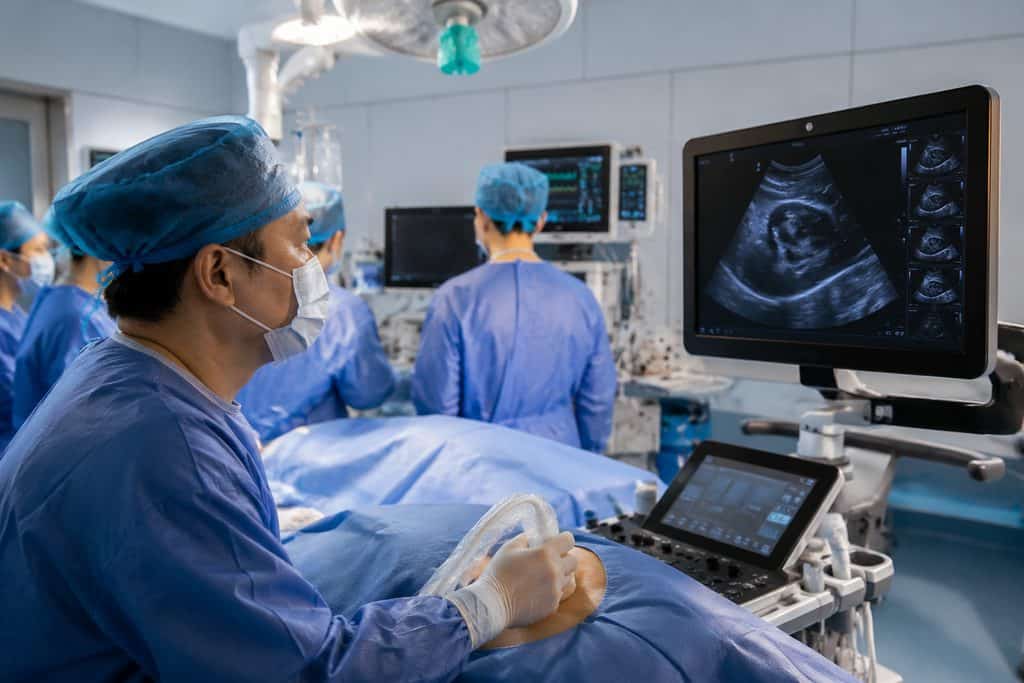
Brain MRI in China: How Long the Scan Takes and What It Costs
Most patients searching for brain MRI cost China assume the scan itself eats up an entire afternoon. The reality surprises them. A standard brain MRI without contrast takes 15 to 45 minutes inside the scanner. The total hospital visit, including check-in, changing, waiting, and collecting images, runs two to three hours. That timeline holds whether you book at a public hospital in Shanghai or a private imaging center in Beijing. What differs dramatically is the price — and the wait to get on the schedule in the first place.
According to published data from China’s National Health Commission, the country operates over 35,000 hospitals. Among them, roughly 340+ top-ranked institutions — about the top 5% — offer imaging departments equipped with modern 1.5T and 3T MRI systems. For international patients, these are the facilities worth considering. They combine newer equipment, English-capable staff in international departments, and transparent pricing that often lands at one-fifth to one-tenth of what the same scan costs in the United States or Western Europe.
Key Takeaways
- A brain MRI scan itself takes 15–45 minutes; the full hospital visit runs 2–3 hours.
- Brain MRI cost China ranges from $150 to $600 at top hospitals, versus $1,000–$5,000 in the US.
- Wait times at Chinese public hospitals are often 1–7 days, but international departments can often schedule within 24–72 hours.
- Public hospital imaging requires in-person registration; private international hospitals allow advance booking for foreigners.
- Language barriers are real — bilingual support transforms the experience from stressful to straightforward.
The Problem: Western MRI Costs and Wait Times Are Out of Control
A brain MRI in the United States averages $1,325 for a self-pay patient, according to 2024 data from New Choice Health. That figure climbs to $3,000 or more at hospital-based imaging centers in major metro areas. In the United Kingdom, NHS wait times for non-urgent MRI scans reached a median of 5.4 weeks in 2024, with some trusts reporting waits exceeding 18 weeks. For a patient with persistent headaches, dizziness, or a family history of neurological disease, those numbers aren’t abstract. They mean months of anxiety while a potentially treatable condition goes unexamined.
Canada’s story is similar. Provincial data from Ontario shows the 90th percentile wait for an MRI sits around 112 days. Australia’s public system reports median waits of 30 to 60 days depending on the state. Patients with means increasingly look elsewhere. Medical travel for diagnostic imaging alone isn’t new — but the scale has shifted. Thailand, Turkey, and India built entire marketing campaigns around affordable scans. China entered this space later, yet its combination of hardware investment, radiologist volume, and price point has quietly made it one of the most efficient places on earth to get a brain scan.
What happens when a patient waits six months for an MRI? The clinical picture changes. A lesion that was operable becomes complex. A vestibular disorder that was manageable becomes disabling. The scan itself is identical wherever you get it. The difference is whether you get it in time to act on the results.
Why China Delivers Brain MRI Results Faster and Cheaper
Radiologist Volume Creates Reading Speed
Chinese hospital imaging departments process enormous daily volumes. A major tertiary hospital in Shanghai or Beijing might complete 300 to 500 MRI examinations per day across multiple scanners. That throughput forces efficiency. Radiologists at these centers read neurological imaging all day, every day. A 2023 study published in European Radiology found that Chinese radiologists at high-volume centers interpret brain MRI studies with diagnostic accuracy comparable to their Western counterparts, while reporting turnaround times averaged under 24 hours for standard cases. Compare that to the 3–7 day report turnaround common at many US outpatient imaging centers.
Volume isn’t just about speed. It’s about pattern recognition. A radiologist who reads 5,000 brain MRIs a year has seen rare presentations that a lower-volume reader might miss. This is the same logic that makes Fuwai Hospital’s cardiac surgery program — the world’s largest by annual volume — a reference point for complex cases. Repetition builds competence.
Equipment Investment Has Been Aggressive
Over the past decade, China installed thousands of new MRI units. By 2023, the country operated more than 15,000 MRI systems nationwide, with 3T machines concentrated in the top-tier hospitals. The 340+ hospitals in our database include facilities running Siemens Magnetom, GE Signa, and Philips Ingenia platforms — the same hardware found in leading Western hospitals. Some academic centers have moved to 5T and 7T research scanners, though clinical work remains on 1.5T and 3T.
For a patient asking is brain MRI safe in China, the answer requires nuance. MRI itself uses no ionizing radiation — it’s magnetic fields and radiofrequency pulses. The safety profile is identical in China, the US, or anywhere else. What varies is protocol rigor and contrast agent management. Top-tier Chinese hospitals follow international safety screening procedures: metal implant checklists, renal function assessment before gadolinium contrast, and claustrophobia accommodations. The key is choosing the right facility. A Fudan-ranked teaching hospital or a JCI-accredited private hospital maintains standards that meet or exceed what most Western patients expect.
Cost Structure Makes the Numbers Work
Why is brain MRI cost China so much lower? Not because quality is compromised. The structural reasons are straightforward. Chinese physician salaries are lower than Western equivalents, though rising. Hospital construction and operating costs run below US levels. Equipment, once imported, is now increasingly manufactured domestically — United Imaging and other Chinese vendors produce MRI systems that compete with Siemens and GE at lower price points. And the sheer patient volume spreads fixed costs across far more scans.
The result: a standard brain MRI without contrast at a top Chinese public hospital’s international department typically runs $150 to $300. With contrast, expect $250 to $450. At private international hospitals in Beijing or Shanghai — think United Family or Jiahui — prices run higher, typically $400 to $600 without contrast, because you’re paying for English-speaking staff, direct insurance billing, and a more Western-style patient experience. Still, that’s a fraction of the $1,000–$5,000 range common in the US for the same study.
How Long Does a Brain MRI Take in Shanghai: A Step-by-Step Timeline
Patients searching how long does a brain MRI take in Shanghai usually want a realistic schedule, not the idealized version. Here’s what a typical visit to a public hospital international department looks like.
Day 0 — Registration and order: You need a doctor’s order for the scan. In China’s public system, that means an outpatient consultation first. The physician reviews your history, writes the imaging order, and you pay at the cashier. This step takes one to two hours including queue time. If you arrive with a written referral from a home-country physician, some international departments will accept it and write the local order without a full re-consultation — but this varies by hospital.
Day 0 or Day 1 — Scheduling: At busy public hospitals, the MRI scheduler assigns the next available slot. For non-urgent brain MRI, that’s often same-day or next-day. At peak periods, expect up to 3–5 days. Private international hospitals usually schedule within 24–48 hours, sometimes same-day.
Scan day — Arrival and preparation: Arrive 30–45 minutes before your slot. You’ll complete a safety screening form, change into a gown if required, and remove all metal. The scan itself: 15–45 minutes depending on protocol. A standard brain MRI without contrast runs 15–25 minutes. With contrast, add 10–15 minutes. If the radiologist orders additional sequences — DWI, FLAIR, SWI, MRA — total scanner time can reach 45 minutes.
Results: Films are typically available within 30–60 minutes after the scan on a CD or via hospital app. The written radiology report follows in 24–48 hours at public hospitals, often same-day at private facilities. You’ll need the report reviewed by a neurologist or neurosurgeon to understand what it means.
Practical tip: If you’re flying to Shanghai specifically for a brain MRI, plan for a minimum two-day stay: Day 1 for consultation and scheduling, Day 2 for the scan and report pickup. Three days gives buffer for contrast studies or additional sequences.
Brain MRI Cost China vs. the West: A Direct Comparison
Numbers clarify decisions faster than adjectives. Here’s what a self-pay brain MRI costs across several systems, based on 2024–2025 published rates and our own coordination data.
| Location | Brain MRI (no contrast) | Brain MRI (with contrast) | Typical wait time |
|---|---|---|---|
| United States (hospital-based) | $1,000–$2,500 | $2,500–$5,000 | 1–4 weeks |
| United Kingdom (private) | $500–$1,200 | $900–$1,800 | 3–10 days |
| China (top public hospital, international dept.) | $150–$300 | $250–$450 | 1–7 days |
| China (private international hospital, e.g., Beijing) | $400–$600 | $550–$800 | 24–72 hours |
The private MRI scan price Beijing at international facilities reflects a premium for convenience: English-speaking staff, direct insurance billing, and a calmer environment. Public hospital international departments sit in the middle — lower prices than private, but with more paperwork and less hand-holding. For a patient combining the scan with a broader medical evaluation, the public international department route usually makes more sense. For someone who wants the scan done with minimal friction and maximum language support, a private hospital is worth the premium.
What about MRI scan wait time China hospital? The honest answer: it depends on the hospital tier and channel. A standard public hospital outpatient MRI can take 1–2 weeks at the busiest centers. The same hospital’s international department or VIP clinic often schedules within 3–5 days. Private international hospitals run 24–72 hours. This is one of the structural advantages international patients enjoy — the international departments operate on separate scheduling tracks with shorter queues.
Booking a Brain MRI in China as a Foreigner: What Actually Works
Patients searching book brain MRI scan China for foreigners quickly discover that the Chinese public hospital system wasn’t designed for online international booking. Most public hospitals require in-person registration with a Chinese ID or passport, and their booking apps are Chinese-language only. That’s the friction point. Here’s how to navigate it.
Option 1: Private international hospitals. United Family, Jiahui, Parkway, and Raffles all accept advance bookings by phone or email in English. They’ll ask for your passport details, a doctor’s referral if you have one, and sometimes a deposit. This is the simplest path for a standalone scan. You’ll pay more, but the process is smooth.
Option 2: Public hospital international departments. These are the sweet spot for price and clinical quality. Hospitals like Peking Union Medical College Hospital, Zhongshan Hospital Fudan University, and West China Hospital run dedicated international clinics. They accept advance contact by email, but the first visit still requires on-site registration with your passport. You can’t fully book the MRI from abroad without a local coordinator or a proxy.
Option 3: A coordination service. This is where our team at China Medical Services fits. We handle the registration, the scheduling calls, the on-site navigation. We’re not a hospital — we don’t diagnose or treat. We’re the bridge between you and the right imaging department. For a patient who doesn’t speak Chinese and has never navigated a Chinese hospital, this support is often the difference between a one-day scan and a three-day ordeal.
What the Scan Results Mean — and What to Do With Them
A brain MRI produces hundreds of images across multiple sequences. The radiologist’s report will describe findings in technical language: T2 hyperintensities, diffusion restriction, mass effect, contrast enhancement. None of that means anything without clinical correlation. This is where many medical travelers stumble. They get the scan, get the report, and then don’t know what to do next.
The right sequence is: scan, radiologist report, then neurologist or neurosurgeon review. At top Chinese hospitals, you can often arrange this review the same day or the following day through the international department. A senior neurologist will read the images themselves — not just the report — and give you a clinical interpretation. That’s the service that matters. The scan is data. The interpretation is medicine.
Some patients bring their Chinese MRI results back to their home neurologist. That works fine — the images are DICOM standard and transferable on CD or via secure upload. But a Chinese neurologist who has seen thousands of similar cases may catch things a generalist misses. If you’re already in China, use the opportunity for a local expert read.
Important: A brain MRI is a diagnostic tool, not a treatment plan. Never interpret your own results. Always have them reviewed by a qualified neurologist or neurosurgeon, whether in China or your home country.
Frequently Asked Questions
At top-tier Chinese hospitals, yes. The scanners are the same Siemens, GE, and Philips models used worldwide. The radiologists are board-certified and high-volume. What varies is the quality gap between top hospitals and smaller facilities. Stick to Fudan-ranked teaching hospitals or JCI-accredited private hospitals and the diagnostic quality is comparable to any Western center.
At public hospitals, no — you need a physician’s order written locally, which means an outpatient consultation first. At private international hospitals, some will accept a foreign doctor’s referral or allow you to see one of their physicians on-site who writes the order immediately. You cannot simply walk in off the street and request an MRI.
This is the scenario you need to think through before you travel. If the scan reveals a brain tumor, aneurysm, or other significant finding, you’ll want immediate access to a neurosurgeon. Top Chinese hospitals have those specialists on-site. The international department can usually arrange a same-day or next-day neurosurgery consultation. You then face a decision: treat in China or return home with the imaging and a clear diagnosis. Both paths are viable. The key is having the scan done at a hospital with full neurosurgical capability, not a standalone imaging center.
For medical travel, the appropriate visa is the S2 visa, which covers short-term private affairs including medical treatment. It requires supporting documents from the receiving hospital — typically an appointment confirmation or treatment invitation letter. Family members accompanying you also apply for S2. The M visa is for commercial and trade activities only and is not appropriate for medical travel. Requirements change, so verify current rules with your nearest Chinese embassy or consulate before booking flights.
It depends entirely on your policy. Some international health insurance plans cover overseas diagnostics, especially if the cost is lower than the home-country equivalent. Most US domestic plans will not. Public Chinese hospitals require upfront payment — they don’t bill foreign insurers directly. Private international hospitals like United Family and Jiahui have direct billing arrangements with many international insurers. Check with your insurer before you travel, and keep all receipts, reports, and a copy of the referral.
Your Next Step
You now know how long the scan takes, what it costs, and how the booking process actually works. The decision comes down to your timeline, your budget, and your comfort with navigating a foreign medical system. If you want the scan done affordably and quickly at a top-ranked hospital, China is a serious option. Our team at China Medical Services helps international patients coordinate brain MRI appointments at 340+ top-ranked hospitals across 37 cities — handling registration, scheduling, and bilingual accompaniment. We don’t diagnose or treat. We make the logistics disappear so you can focus on the result. If you’re considering a brain MRI in China, start with a conversation. It costs nothing, and it will tell you whether this path makes sense for your situation.
For more medical information and treatment options in China, visit chinamedservices.com (China Medical Services).
