Failed Knee Replacement: Can It Be Fixed and What Does Revision Cost in China?
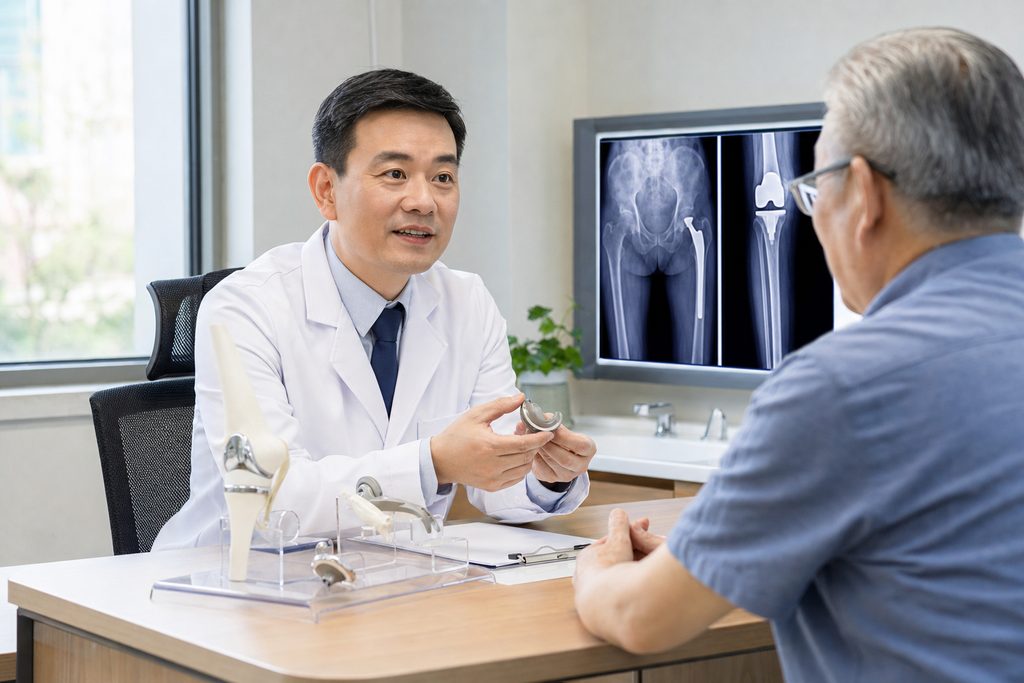
You might assume that once a knee replacement fails, you’re stuck with the pain. That assumption is wrong. A failed knee replacement can often be revised successfully—but the path to getting it fixed depends heavily on why it failed, how much bone remains, and where you choose to have the revision done.
For international patients weighing their options, revision knee replacement cost China has become a serious point of comparison. The procedure is complex. It demands a surgeon who performs revisions regularly, not occasionally. And it demands a hospital equipped for infection workups, bone grafting, and constrained implant systems. China’s top orthopedic centers do these cases weekly, sometimes daily. That volume matters.
Our team at China Medical Services helps patients evaluate whether revision surgery in China makes sense for their specific failure mode. Before any travel, the first step is understanding what failed and what a revision actually involves.
How This Actually Works, Step by Step
You don’t book a revision knee replacement the way you book a hotel room. The sequence is more deliberate. Here’s what actually happens from where you are now to a completed revision.
First, you send your existing records. That means operative notes from the original surgery, the implant labels and serial numbers if you have them, recent X-rays (weight-bearing AP, lateral, and full-length alignment views), and any blood work. If infection is suspected, you’ll need inflammatory markers—CRP and ESR at minimum. A radiologist and an orthopedic surgeon review these before anyone quotes you a price or a date.
Second, you get a written assessment. The surgeon states what they believe failed: aseptic loosening, infection, instability, polyethylene wear, stiffness, or fracture around the implant. This matters enormously. A loose tibial component is revised differently than an infected one. If the assessment says “possible infection,” you will need a joint aspiration before any definitive plan.
Third, a video consultation follows. You speak with the surgical team. They explain what they would do, what constraints they see, and what they need from you before arrival—often a CT scan and dental clearance. You ask hard questions. The surgeon should answer them directly.
Fourth, you decide. If you proceed, our team coordinates the S2 visa documentation, hospital registration, and a surgical slot through the hospital’s international department. You fly in. You undergo preoperative testing on the ground. Surgery happens. Then comes the part most patients underestimate: rehabilitation.
Why a Knee Replacement Fails—and Which Failures Can Be Fixed
Infection changes everything. The standard is a two-stage revision: remove the implant, insert an antibiotic spacer, treat with six weeks of targeted antibiotics, then reimplant. Some centers offer single-stage revision for select organisms and well-controlled infections. You’ll need a joint aspiration result before anyone can tell you which path applies.
Work through a service that coordinates through the hospital’s official international department—not through an agent who promises a specific surgeon and a guaranteed date. Real booking involves record review, a video consultation, a formal hospital quote, and a deposit paid to the hospital, not to an intermediary. If someone asks you to wire money to a personal account, walk away.
Probably not. Registry data shows revision implants have lower 10-year survival than primary implants—roughly 80–85% versus 90–95%. That’s not a reason to avoid revision. A functioning revision for 10–15 years beats a painful failed implant for the same period. But go in with realistic expectations.
For uncomplicated revisions, many patients fly at 2–3 weeks. You’ll need compression stockings, possibly anticoagulation, and an aisle seat to extend the leg. Your surgeon should clear you for flight based on wound healing and clot risk. Long-haul flights under two weeks post-op are generally discouraged.
Your Next Step
A failed knee replacement is not the end of the road. It’s a diagnosis that requires careful workup, an honest surgeon, and a realistic plan. Revision surgery in China can be done well—by high-volume teams at major teaching hospitals, at a cost that often makes the decision financially viable for international patients.
We help patients send records, get written assessments, and arrange video consultations with orthopedic revision teams in Shanghai, Beijing, and other major cities. We don’t perform surgery. We don’t promise outcomes. We handle the coordination—records, translation, hospital communication, visa documentation, and on-the-ground support—so you can focus on the decision itself.
If you’re weighing revision surgery and want a clear-eyed assessment of your records before committing to travel, start with a free consultation. Send what you have. We’ll tell you what’s possible.
Frequently Asked Questions
Yes. The hospitals used for international patients are JCI-accredited and follow the same international safety standards as top hospitals in the US and Europe. Surgical teams perform high volumes of procedures — often more than their Western counterparts — which studies show leads to better outcomes.
Costs vary by procedure and hospital, but international patients typically save 40-80% compared to US prices — even when factoring in travel and accommodation. A consultation with our team will give you an exact, all-inclusive quote with no hidden fees.
Send us your existing medical reports to get started. We handle everything from hospital selection and appointment scheduling to visa assistance and post-operative recovery planning. Your medical records are reviewed by the specialist before you even book a flight.
For more medical information and treatment options in China, visit chinamedservices.com (China Medical Services).
