Kyphosis Correction in Shanghai: Costs, Safety, and Recovery
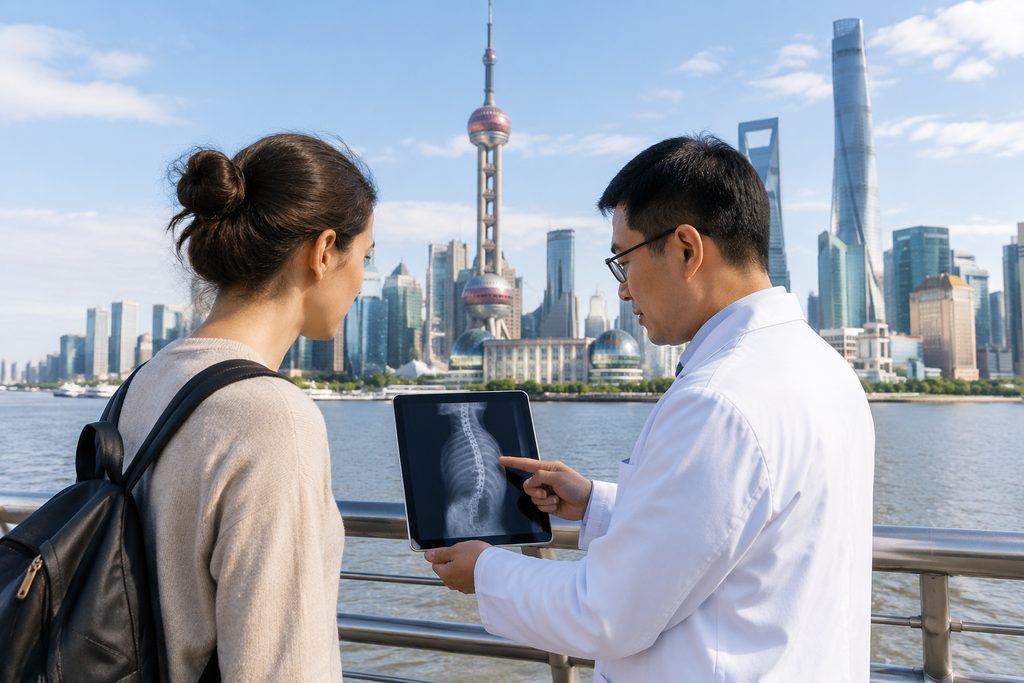
Kyphosis Correction in Shanghai: What to Know
What does kyphosis correction surgery cost in Shanghai, and is it worth traveling for? At top public hospitals, the total bill typically lands between $12,000 and $25,000 — a fraction of the $80,000 to $150,000 quoted in the United States. That single number is why so many international patients start searching. But the honest answer is longer than one figure, because the price depends on the curve, the surgical approach, and which tier of hospital you choose.
Shanghai has quietly become one of the world’s busiest centers for complex spinal deformity work. Two of its hospitals sit in the Fudan University rankings for orthopedics, and their spine teams handle adolescent and adult kyphosis cases every week. What most foreign patients don’t know is how the system actually works — and where the friction points are.
Who This Is Right For — and Who It Isn’t
Spinal deformity surgery is not a cosmetic procedure, and no reputable surgeon treats it as one. Candidacy comes down to curve severity, progression, and symptoms.
Patients who are typically reasonable candidates include those with a thoracic kyphosis measuring beyond 70 to 80 degrees, progressive curves that have worsened across two or more imaging studies, Scheuermann’s disease with persistent pain that has not responded to physical therapy, and adults whose deformity is compressing the spinal cord or causing neurological symptoms. Congenital cases identified in childhood also fall into this group, though timing matters enormously.
Who should think twice? Someone with a mild curve under 50 degrees and no pain. A patient whose osteoporosis is uncontrolled — instrumented fusion in soft bone has a high failure rate. Anyone with an active infection, severe cardiopulmonary disease that makes a 6-to-10-hour operation dangerous, or a curve that has been stable for a decade without symptoms. And anyone whose primary motivation is appearance rather than function.
The Options, Compared
Kyphosis correction is not one operation. It is a family of procedures, and the choice drives both the price and the recovery timeline. Here is how the realistic alternatives stack up.
| Approach | Typical Curve Range | Est. Cost in Shanghai (USD) | Est. Cost in the US (USD) | Hospital Stay |
|---|---|---|---|---|
| Physical therapy / bracing | Under 50° | $500–2,000 | $2,000–8,000 | Outpatient |
| Posterior spinal fusion (standard) | 50°–80° | $12,000–20,000 | $80,000–130,000 | 5–8 days |
| Posterior fusion with osteotomy | 80°–110° | $18,000–28,000 | $120,000–180,000 | 7–12 days |
| Combined anterior-posterior | Severe, rigid curves | $25,000–40,000 | $150,000–250,000 | 10–14 days |
| Private international hospital | Varies | 1.5–2× public rates | — | Varies |
Which column suits you? If your curve is moderate and you can navigate a large Chinese public hospital with language support, the standard fusion row is where most international patients land. If your curve is severe and rigid, you need a team that performs three-column osteotomies routinely — and that narrows the field considerably. If you want an English-speaking ward, direct insurance billing, and a Western-style room, the private international tier exists, at roughly double the cost. It is still cheaper than most US quotes.
Prices above are ranges. They vary by hospital and case complexity, and they exclude travel, lodging, and follow-up imaging after you return home.
Finding the Best Spine Surgeon in Shanghai for Kyphosis
This is the part that determines your outcome more than any other variable. Shanghai’s top spine work concentrates in a handful of public tertiary hospitals with dedicated deformity units. The Fudan University Hospital Rankings evaluate orthopedics by specialty reputation, and Shanghai institutions appear consistently among the national leaders in that category.
What should you actually look for? Volume first. A surgeon who performs deformity correction weekly, not monthly, has seen the complications you are worried about. Second, ask whether the team uses intraoperative neuromonitoring — spinal cord monitoring during the correction is standard at top centers and is a genuine safety marker. Third, ask about three-dimensional navigation and whether the hospital has a dedicated spinal deformity clinic rather than a general orthopedics ward.
You can browse Shanghai’s ranked institutions on our Shanghai city page, and compare orthopedic specialty leaders through our department directory. The top hospitals database groups them by city and ranking tier.
One structural fact surprises nearly every foreign patient: at public hospitals, you cannot book a surgery slot from overseas. You must be seen in person first. The surgeon examines you, reviews imaging, and only then schedules the operation. This is a firm rule, not a bureaucratic inconvenience. It exists because operating on a spine based on emailed X-rays alone would be reckless.
Is Kyphosis Surgery Safe in China?
Spinal deformity correction carries real risks anywhere in the world: neurological deficit, infection, implant failure, pseudarthrosis, and blood loss requiring transfusion. The question is not whether China is “safe” in the abstract. It is whether the specific hospital and team meet international standards.
At China’s leading deformity centers, the answer is generally yes. These units publish outcomes comparable to Western academic centers, use the same implants from the same global manufacturers, and run the same neuromonitoring protocols. Several hold JCI accreditation. Where the system differs is not surgical quality at the top — it is the surrounding infrastructure.
That distinction matters. A world-class operation followed by a chaotic discharge process, no English-speaking nurse, and no clear follow-up plan is a worse experience than the surgery itself deserves. This is the gap that bilingual coordination fills, and it is worth being honest about.
How Long Is Recovery After Kyphosis Correction?
Recovery is measured in months, not weeks. Here is the realistic arc for an uncomplicated posterior fusion.
- Days 1–3: Hospital bed rest with supervised mobilization, usually standing with a walker by day two or three.
- Days 4–8: Walking practice, pain management, wound checks. Most patients discharge within this window.
- Weeks 2–6: Light activity at your lodging. No bending, lifting, or twisting. A brace may be prescribed depending on the surgeon’s protocol.
- Months 2–3: Return to desk work is often possible. Formal physical therapy begins in earnest.
- Months 6–12: Fusion consolidates. Most patients reach their functional plateau somewhere in this range.
Full fusion — the point where the bone graft has genuinely knitted — takes 6 to 12 months. That is biology, not a scheduling preference. Anyone promising a faster timeline is selling something.
Flying home is a separate question. Most surgeons clear patients for long-haul flights somewhere between two and six weeks post-operatively, depending on the approach and your overall health. Plan for a Shanghai stay of roughly three to four weeks if you want a follow-up visit before departure.
What Drives the Cost Up or Down
Four variables move the number most. The number of vertebral levels fused is the biggest — a five-level fusion and a twelve-level fusion are different operations with different implant costs. Whether an osteotomy is needed adds both time and complexity. The hospital tier matters: the international department charges roughly 1.5 to 2 times the standard rate for English-language service and shorter queues. And your length of stay, including any complication management, feeds directly into the total.
What is typically included in a quoted surgical package: surgeon and anesthesia fees, implants, hospital bed and nursing, standard imaging, and routine medications. What is usually not included: international airfare, hotel or serviced apartment, meals, interpreter services, and follow-up imaging after you fly home.
Practical Considerations: Visas, Records, and Language
Start with your medical records. You will need recent standing and supine full-spine X-rays, a CT scan, and an MRI, ideally in DICOM format on a USB drive or secure cloud link. Blood work and a cardiology clearance help too. Send these ahead so a Chinese specialist can review them before you commit to travel.
On visas: for medical treatment in China, the applicable short-stay category is the S2 visa, which covers medical treatment and private affairs, subject to the latest requirements from your local Chinese embassy or consulate and supporting documents from the hospital. Stays beyond 180 days fall under S1. Accompanying family members apply for S2 as well. The M visa is for commercial and trade activity and has nothing to do with medical care — you will occasionally see it mislabeled online, and it is simply wrong.
Language is the practical hurdle. China’s top public hospitals handle enormous daily patient volumes, and signage, forms, and most staff operate in Chinese. An English-speaking coordinator is not a luxury here; it is the difference between a smooth admission and a genuinely stressful one.
Payment runs through international credit cards, wire transfer, or cash at most major hospitals. Bring more than you think you need for incidentals. And arrange your follow-up imaging plan before you leave — your surgeon at home will want to see the post-operative films.
Frequently Asked Questions
No. Public hospitals require an in-person consultation before scheduling any operation. What you can do remotely is have your imaging reviewed through a written second opinion or video consultation, so you arrive with a realistic plan rather than hope. The surgery itself is scheduled only after the surgeon examines you in Shanghai.
Rarely, despite the marketing language. Most quotes cover the surgical episode — surgeon, implants, bed, nursing, and standard imaging. Airfare, lodging, meals, interpretation, and post-discharge imaging are almost always separate. Read the inclusions line by line and ask what happens financially if a complication extends your stay.
This is the honest weak point of medical travel, and it deserves a straight answer. Revision surgery, should it be needed, is more complex than the original operation. Before you travel, confirm that your surgeon at home is willing to manage your follow-up, and get your complete operative notes and imaging in English before you leave China. Some patients build a small contingency budget for exactly this reason.
For comparable procedures at top-tier hospitals, yes — the gap is typically five to ten times for major surgery. But “comparable” is doing real work in that sentence. You are comparing a Chinese public tertiary hospital against a US academic medical center, and the surrounding service experience differs. The surgical quality at the top can be equivalent. The hotel-style comfort usually is not.
Your Next Step
The core message is simple: kyphosis correction in Shanghai can be excellent and dramatically more affordable, but it rewards preparation over impulse. The surgeons are skilled, the technology is current, and the cost gap is real. The friction lives in logistics, language, and follow-up — and that is where good planning pays off.
We are China Medical Services, a coordination service, not a hospital. We do not diagnose, and we do not perform surgery. What we do is connect international patients with appropriate Chinese hospitals, arrange written second opinions and video consultations, and provide bilingual support on the ground. If you would like to understand your options before making any commitment, start with a free consultation — no pressure, and no obligation to travel.
For more medical information and treatment options in China, visit chinamedservices.com (China Medical Services).
