Epilepsy Surgery: Your Recovery, Step by Step
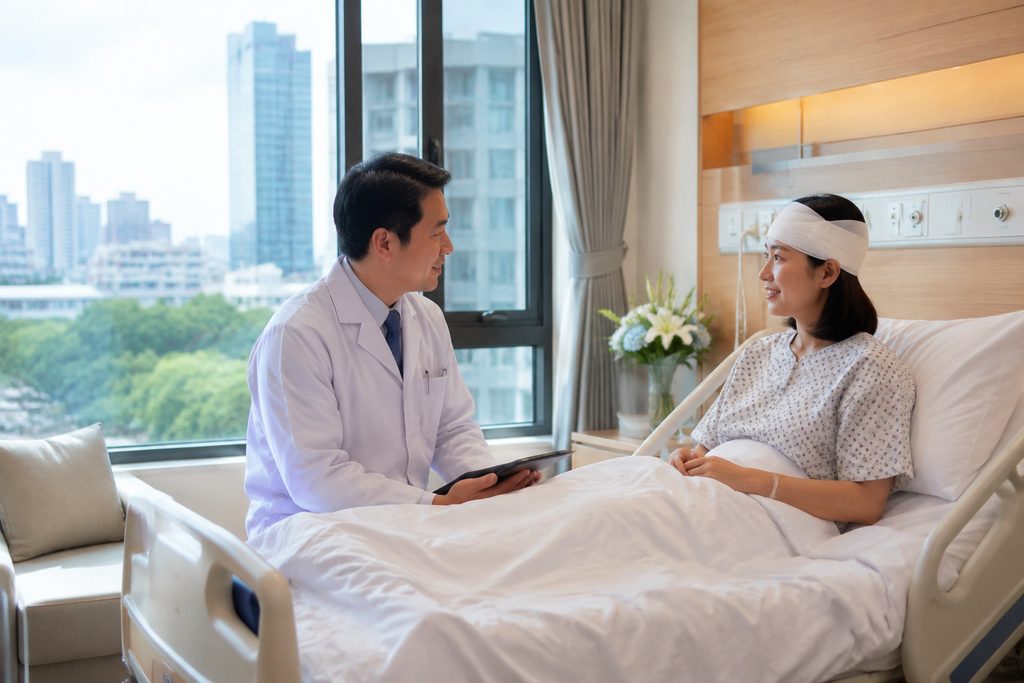
When 34-year-old Daniel from Manchester finally accepted that three anti-epileptic drugs could not stop his focal seizures, he faced a wall. His UK neurologist mentioned surgery but warned the wait for a presurgical evaluation could stretch past 18 months. Daniel started searching for alternatives. That search led him to ask a question more patients are asking every year: what does epilepsy surgery cost China, and what does recovery actually look like week by week?
The short answer: epilepsy surgery in China typically costs between $18,000 and $45,000, depending on the hospital tier and surgical complexity. Recovery spans roughly 6 to 12 weeks before most patients resume normal activities. But the real story is more nuanced. What you pay and how you heal depends heavily on where you go, what type of surgery you have, and how well you prepare before you ever board a plane. Our team has coordinated care for international patients across 37 cities and 340+ top-ranked hospitals, and the recovery pattern we see follows a predictable arc — when the right steps happen in the right order.
Epilepsy Surgery Recovery: The Short Answer
Most patients stay in the hospital for 7 to 14 days after epilepsy surgery. The first 48 hours are the hardest. Headache, fatigue, and incision pain are common. By week three, many patients walk comfortably and manage basic tasks. By week six, most can return to desk work. By week twelve, the majority have resumed driving discussions with their neurologist and settled into a new medication baseline.
But here is what generic timelines miss. The surgical approach changes everything. A temporal lobectomy — the most common epilepsy surgery — has a different recovery curve than a corpus callosotomy or a laser ablation. And your pre-surgical health matters as much as the operation itself. A 28-year-old with well-controlled blood pressure recovers differently than a 55-year-old with diabetes and sleep apnea. No honest article can give you a single number and call it done.
Who This Is Right For — and Who It Isn’t
Epilepsy surgery is not a first-line treatment. It becomes relevant when medications fail. Specifically, you might be a candidate if you meet most of these criteria:
- You have tried at least two appropriate anti-epileptic drugs at adequate doses for at least two years without seizure control.
- Your seizures originate from a single, identifiable brain region — what neurologists call a “seizure focus.”
- That focus is in a surgically accessible area where tissue removal will not cause unacceptable deficits in speech, memory, or movement.
- You are generally healthy enough to tolerate several hours of general anesthesia and a craniotomy.
- You have a support person who can stay with you for at least the first two weeks after discharge.
Who should not pursue this path? If your seizures are generalized from onset — meaning they start across both hemispheres simultaneously — resective surgery is usually off the table. If you have a progressive neurodegenerative condition, surgery will not address the underlying disease. If you cannot commit to the intensive presurgical workup — video EEG monitoring, high-resolution MRI, neuropsychological testing — you are not ready. And if you are seeking surgery primarily to stop taking medication entirely, you may be disappointed. Most patients still need some medication after surgery, though often at lower doses.
The Options, Compared
Daniel had choices. He could wait for the NHS pathway. He could look at private care in the UK or Germany. Or he could evaluate what Chinese hospitals offer. Here is how the realistic options stack up for a standard temporal lobectomy:
| Option | Typical Wait Time | Estimated Cost (USD) | Key Advantage | Key Limitation |
|---|---|---|---|---|
| UK NHS pathway | 12–24 months | Free at point of care | No direct cost | Long wait; limited choice of surgeon |
| UK private hospital | 4–8 weeks | $50,000–$80,000 | Familiar system; no travel | High cost; limited surgical volume |
| Germany (university hospital) | 6–12 weeks | $40,000–$70,000 | Strong reputation in epilepsy surgery | Cost and language barriers for non-German speakers |
| China (top-tier public hospital, international department) | 2–6 weeks after evaluation | $18,000–$45,000 | High surgical volume; lower cost; fast-track coordination available | Travel required; documentation and visa preparation needed |
Which column fits which reader? If you have no savings and time is not critical, the NHS pathway works — eventually. If you want the most familiar environment and cost is secondary, UK private care delivers. But if you need surgery within months, not years, and you are paying out of pocket, China’s combination of surgical volume and pricing becomes hard to ignore. Top Chinese epilepsy centers perform hundreds of resective surgeries annually. That repetition builds team fluency that smaller centers cannot match.
How Long Is Recovery After Epilepsy Surgery: The Week-by-Week Reality
Recovery is not a straight line. It is a series of thresholds. Here is what we tell the families we support — the honest version, not the brochure version.
Days 1–3: Hospital, ICU or step-down unit. You wake up with a head dressing, maybe a drain. You will feel groggy. Headache is normal. Nurses check your pupils and ask you to squeeze hands every few hours. You will not remember much of this later. That is fine. Your support person should be present to take notes, because you will not retain instructions.
Days 4–7: Regular ward. The drain comes out. You sit up, then walk to the bathroom with help. Some patients have transient word-finding difficulty or mild confusion — this usually resolves within days. Discharge planning begins. The hospital will schedule a follow-up CT or MRI before you leave.
Weeks 2–3: Hotel or serviced apartment near the hospital. This is the most underrated part of international recovery. You are discharged but not ready to fly. You need a place to rest, eat simple meals, and walk short distances. Most patients stay within 30 minutes of the hospital for one to two weeks post-discharge. Your surgeon wants to see you once or twice during this window.
Weeks 4–6: Home. You fly back once your surgeon clears you — typically 14 to 21 days after surgery for uncomplicated cases. At home, you taper pain medication, sleep a lot, and avoid lifting anything heavier than a kettle. Driving is off the table until your neurologist says otherwise, usually 6 to 12 months depending on seizure control and local regulations.
Weeks 7–12: Gradual return. Desk work often resumes around week six. Physical jobs take longer. The real milestone is medication adjustment. Your epileptologist will review your seizure diary and may reduce doses. Some patients are seizure-free within weeks. Others see a gradual decline in seizure frequency over months. Both are normal.
Is Epilepsy Surgery Safe in China: What the Data Actually Shows
The question deserves a straight answer. Epilepsy surgery carries real risks anywhere in the world — infection (1–3%), bleeding (1–2%), and neurological deficits like memory or language changes (5–15% depending on the resection site). Mortality is rare, typically under 0.5% for temporal lobe resections at experienced centers.
Chinese epilepsy surgery programs at top-tier public hospitals operate under the same surgical principles as Western centers. They use intraoperative neuromonitoring, neuronavigation, and in many cases, robotic stereotactic assistance. The difference is volume. A high-volume Chinese center may perform more resective epilepsy surgeries in a year than a typical European center performs in three. Volume matters for outcomes. Studies consistently show that centers performing more than 20 epilepsy surgeries annually have lower complication rates than low-volume centers.
That said, safety depends on the specific hospital and team. Not every Chinese hospital performs epilepsy surgery well. The best programs are concentrated in Beijing, Shanghai, and Guangzhou. Our role is to match you with a program that has genuine epilepsy surgery expertise — not just a neurosurgery department that occasionally does a temporal lobectomy. Looking for the best epilepsy surgeon in Shanghai means verifying their annual case volume, their complication rate, and their experience with your specific seizure focus. That verification is exactly the work we do before you commit to travel.
Epilepsy Surgery Cost China: Breaking Down the Numbers
Let us put real figures on the table. A standard anterior temporal lobectomy with presurgical evaluation at a top-tier Chinese public hospital’s international department runs roughly $18,000 to $30,000. More complex cases — extratemporal resections, hemispherectomies, or cases requiring invasive intracranial EEG monitoring — push costs to $35,000 to $45,000. Laser interstitial thermal therapy, where available, falls in the $25,000 to $35,000 range.
What is included? Typically the presurgical workup (video EEG, 3T MRI, neuropsychological testing), the surgery itself, anesthesia, hospital bed charges, standard medications, and routine post-operative imaging. What is not included? International flights, accommodation for you and your companion, extended rehabilitation if needed, and any complications requiring prolonged ICU stays. Those extras can add $5,000 to $15,000 depending on your choices and circumstances.
Compare that to the United States, where the same surgery without insurance runs $80,000 to $150,000. Or Western Europe, where private-pay patients face $40,000 to $70,000 bills. The gap is real. But cost should never be the only factor. A lower price at a low-volume center is not a bargain — it is a risk. The value proposition is a high-volume center at a fraction of Western private-pay prices. That is the combination worth traveling for.
Some patients ask about epilepsy surgery packages abroad. These exist, but read the fine print. A package that bundles surgery, hospital stay, and a hotel room may look clean on paper. What matters is who is doing the surgery and what the package excludes. Complications, extended stays, and follow-up imaging are common exclusions. We advise patients to compare packages against itemized hospital quotes before deciding.
Practical Considerations: Documents, Visa, and the Fast-Track Question
If you are considering surgery in China, preparation starts weeks before you travel. The documentation burden is real, and it is the step most patients underestimate.
First, records. You need your complete seizure history, all prior EEG reports, MRI images on disc (not just the written report), a list of every anti-epileptic drug you have tried with doses and durations, and a letter from your current neurologist summarizing your case. Chinese epilepsy teams will not schedule surgery without reviewing these. Incomplete records mean delays.
Second, visa. Foreign patients traveling to China for medical treatment apply for an S2 visa, which covers short-term private affairs including medical treatment. Your accompanying family member also applies for an S2. The hospital’s international department will provide an invitation letter and treatment confirmation — these documents are required for the visa application. Processing typically takes one to two weeks, sometimes longer. Do not book flights until the visa is in hand. The M visa is for commercial and trade activities and is not appropriate for medical travel.
Third, payment. Chinese public hospitals require prepayment for international patients. Most accept international credit cards, wire transfers, or cash. Insurance reimbursement is retroactive — you pay the hospital, then claim from your insurer. Some private international hospitals in China offer direct billing, but the top epilepsy surgery programs are mostly in public hospitals. Budget for the full amount upfront.
Fourth, language. Even in international departments, not every nurse or technician speaks fluent English. A bilingual medical companion changes the experience — from registration to pharmacy pickup to discharge instructions. This is not a luxury. It is the difference between knowing what is happening and guessing.
Can you book epilepsy surgery China fast track? Here is the honest answer. You cannot skip the presurgical evaluation. No reputable surgeon will operate on a brain they have not fully mapped. What fast-track coordination does is compress the waiting time between steps. Instead of waiting weeks for each appointment, a coordinated pathway schedules your video EEG, MRI, and surgical consultation in a single trip. That can cut months off the timeline compared to navigating the system alone. It cannot cut corners on safety.
Frequently Asked Questions
Plan for four to six weeks total. That includes the presurgical evaluation (5 to 10 days), the surgery and hospital stay (7 to 14 days), and post-discharge observation near the hospital (7 to 14 days). Your surgeon will not clear you to fly until the risk of immediate post-operative complications has passed. Leaving earlier is medically unwise.
Almost certainly yes, at least initially. The goal of surgery is seizure freedom or major seizure reduction, not medication elimination. Most patients continue anti-epileptic drugs for one to two years after surgery. If you remain seizure-free during that window, your neurologist may gradually reduce doses. Some patients eventually stop medication entirely. Others stay on a single drug at a low dose. No surgeon can promise you will be medication-free.
Surgery fails to achieve seizure freedom in roughly 30 to 40 percent of cases, depending on the seizure type and focus location. If seizures persist, options include reoperation (if the initial resection was incomplete), additional medication trials, neuromodulation devices like vagus nerve stimulation or responsive neurostimulation, or dietary therapies. You should discuss the plan for surgical failure with your surgeon before the operation. If the team cannot articulate a Plan B, find another team.
Yes, and you should. Your companion applies for an S2 visa alongside you, using the same hospital invitation documents. Their role during the first week is practical — communicating with nurses when you are groggy, tracking medications, and making decisions when you cannot. Choose someone calm under pressure. They do not need medical training, but they do need patience and a passport with at least six months of validity.
Important: This article provides general information about epilepsy surgery and recovery. It is not medical advice. Surgical candidacy, risks, and recovery timelines vary by individual. Always consult a qualified neurologist or neurosurgeon about your specific case before making any treatment decisions.
Your Next Step
Recovering from epilepsy surgery is a process measured in weeks and months, not days. The patients who do best are the ones who prepare thoroughly — complete records, realistic expectations, and a support person who understands the plan. That preparation starts long before you enter an operating room.
We are China Medical Services. We are not a hospital, and we do not diagnose or treat anything. What we do is handle the logistics: matching you with an appropriate epilepsy surgery program, coordinating your evaluation and surgical timeline, arranging bilingual support on the ground, and helping with visa documentation. If you are weighing your options and want an honest assessment of whether this path makes sense for your case, start with a conversation. Visit our patient services page to learn how we work and what to expect. No pressure. Just information, and a clear next step when you are ready.
Epilepsy surgery is a serious decision with real risks and real potential rewards. The more you know before you commit, the better your recovery will go. Daniel flew to Shanghai, had his temporal lobectomy, and was back at his desk in Manchester eleven weeks later. His seizures have not returned. That outcome is not guaranteed for everyone. But it is possible — and for patients who have exhausted medication options, possible is worth understanding fully.
For more medical information and treatment options in China, visit chinamedservices.com (China Medical Services).
