China Medical Tourism for Tajik Patients: Dushanbe Treatment Access Explained
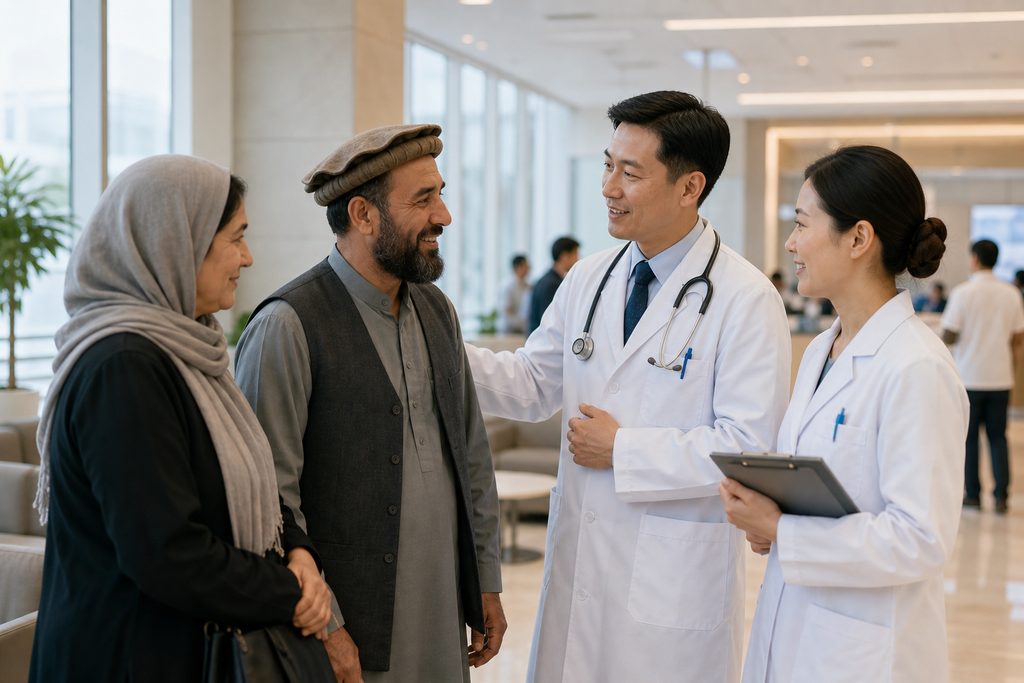
Have you ever wondered if a serious diagnosis in Dushanbe means your only options lie within Tajikistan’s borders? It doesn’t. Every year, hundreds of patients from Central Asia travel east for complex surgeries they can’t access at home. Not because local doctors lack skill. But because certain subspecialties and technologies are concentrated in a handful of global medical hubs. China has quietly become one of them.
The real challenge is not finding a capable surgeon. It is navigating a healthcare system that is vast, linguistically sealed, and structurally different from anything a Tajik patient has encountered. We know because we guide patients through it. This article lays out exactly how the process works, what it costs, and where the hidden pitfalls lie.
Key Takeaways
- China’s top-tier hospitals perform heart bypass surgery for $12,000–$20,000, roughly one-fifth the cost in Western Europe with comparable clinical volume and outcomes.
- The best hospital in China for Tajikistan patients is not a single institution — it depends entirely on the specific diagnosis, and the ranking systems that identify the right match are publicly verifiable.
- Without a bilingual medical escort who understands both Russian-speaking patient needs and Chinese hospital workflows, a solo patient will struggle to complete even a basic outpatient registration.
- You cannot book surgery from Dushanbe through a hospital’s public website. The only secure path is through the hospital’s official international department, which requires a coordinator to initiate.
The Problem: When the Treatment You Need Is Not Available at Home
Tajikistan’s healthcare system has made measurable progress over the past decade. The government has invested in primary care infrastructure and maternal health programs. But the reality remains stark for patients facing complex oncology, advanced cardiac surgery, or rare pediatric conditions. The country has approximately 1.9 physicians per 1,000 people, according to World Bank data. That ratio masks a deeper problem: the subspecialists who can perform a minimally invasive mitral valve repair or a pediatric brain tumor resection are so few that waiting is not a clinical option. It is a gamble.
A patient with stage III esophageal cancer in Dushanbe faces a crushing timeline. Local staging and diagnosis may take weeks. If the required surgical technique or radiation protocol is not available domestically, the next step is medical evacuation or self-funded travel abroad. Historically, patients turned to Turkey, India, or Russia. But those routes come with their own friction. Visa delays for Russia. Skyrocketing private hospital bills in Turkey. Language barriers everywhere.
China entered this equation not through marketing, but through word of mouth. Central Asian traders and businesspeople who traveled to Urumqi, Beijing, or Shanghai for commerce began seeking medical care during their stays. They noticed the speed. The technology. The prices. A cardiac evaluation that took three weeks to schedule in Dushanbe happened in two days in a Chinese public hospital. News traveled through family networks. Today, the question has shifted from “Should I go to China?” to “How do I go to China without getting lost in the system?”
Who We Are
We are not a hospital. We do not provide medical treatment, offer clinical diagnoses, or make promises about surgical outcomes. Our team functions as the logistical bridge between patients from Tajikistan and the 340+ top-ranked hospitals in our database across 37 Chinese cities. We handle the architecture of your medical journey: hospital selection based on your actual medical records, appointment coordination through official international departments, visa guidance for S2 medical visas, and bilingual medical companions who stand beside you from registration to discharge. Think of us as the people who make sure you walk into the right building, see the right specialist, and understand every word spoken in the consultation room.
Why China Delivers Results for Central Asian Patients
The argument for traveling to China is not emotional. It is structural. Three factors combine to create an option that is clinically serious and financially survivable.
Clinical Volume That Reshapes Surgical Skill
A surgeon’s outcomes improve with repetition. This is not controversial. It is documented across every surgical discipline. The challenge for patients in smaller countries is that rare procedures remain rare. A cardiac surgeon in a low-volume center might perform 30 valve replacements annually. At Fuwai Hospital in Beijing, the surgical teams complete over 14,000 cardiac operations each year. That is not a typo. When a Tajik patient searches for the best hospital in China for Tajikistan patients needing complex heart surgery, the answer often points to institutions where the volume alone creates a safety margin that smaller centers cannot replicate.
The same pattern holds in oncology. Fudan University Shanghai Cancer Center sees a caseload that allows its specialists to develop granular experience with specific tumor subtypes. A thoracic surgeon there may handle more esophageal cancer resections in a month than a regional hospital in Central Asia performs in a year. Volume does not guarantee a good outcome. But it makes one more likely.
Technology Deployed at Operational Scale
Chinese hospitals do not just purchase advanced equipment. They run it constantly. A public tertiary hospital in Shanghai might operate its MRI machines 16 hours a day, seven days a week. The result is that a patient arriving from Dushanbe can often complete all preoperative imaging within 48 hours of arrival. No six-week wait for a CT scan. No separate appointments spread across different facilities.
This operational tempo extends to surgical technology. Robotic-assisted surgery platforms, intraoperative neuromonitoring, and proton therapy centers are not experimental novelties in China’s top hospitals. They are integrated into standard clinical workflows. For a Tajik patient considering book surgery in China from Dushanbe, the implication is practical: the technology listed on a hospital’s website is actually available, not just theoretically present. We verify this before making any recommendation.
Cost Structures That Reflect Economics, Not Quality Cuts
Let’s address the question that every patient asks but sometimes hesitates to voice. If the care is so advanced, why does it cost so much less than in Germany or Turkey? The answer has nothing to do with corner-cutting. Chinese public hospitals operate on a model where physician salaries, facility costs, and pharmaceutical pricing are structurally lower than in Western markets. A top-ranked oncologist in Shanghai earns a fraction of what a comparable specialist earns in Munich. The hospital’s overhead is lower. The supply chain for surgical implants is domestic and competitive.
The result is a China hospital package price for Central Asian patients that often ranges from 20% to 50% of the equivalent private-pay rate in Western Europe. A coronary artery bypass graft that costs $120,000 in the United States runs $12,000 to $20,000 at a top Chinese public hospital. A total hip replacement that would bill at $40,000 in a private Istanbul hospital might cost $8,000 to $12,000 in China. These are real, verifiable ranges. They vary by hospital tier and case complexity. But the economic direction is consistent and significant.
What You Need to Know Before Going Alone
We have watched patients attempt to navigate this system independently. Some succeed. Many do not. The barriers are not insurmountable, but they are real. Ignoring them is how a medical journey becomes a logistical nightmare.
- Medical Visa Requirements Are Precise and Unforgiving: The correct visa category for medical treatment in China is S2, annotated for medical purposes. The medical visa China from Tajikistan cost varies by processing speed and consular jurisdiction, but the larger challenge is documentation. The Chinese embassy requires a formal invitation letter from the treating hospital. Public hospitals do not issue these letters to individuals who contact them through general email addresses. They issue them through their international departments, which typically require a coordinator to initiate the request. Applying with incomplete documentation means a rejected application, a lost visa fee, and a delayed treatment timeline. Family members accompanying the patient also need S2 visas. M visas are for business. Using the wrong category will get you turned away at the border.
- Payment Systems Do Not Work the Way You Expect: Chinese public hospitals require upfront payment before admission. This is non-negotiable. They do not accept international health insurance for direct billing in most cases. The patient pays the hospital directly, then seeks reimbursement from their insurer afterward. The payment methods accepted are typically Chinese bank cards, WeChat Pay, Alipay, or cash. International credit cards are not reliably accepted at public hospital cashier counters. A patient arriving with only a Visa card and no local payment infrastructure will find themselves unable to settle a hospital deposit. We have seen this happen.
- Language Barriers Are Absolute in Public Hospitals: A top rated oncology hospital in Shanghai for international patients may have English-speaking physicians in its international department. But the nurses, the lab technicians, the pharmacist, the cafeteria staff, and the security guard at the entrance do not speak English. They speak Mandarin. Or Shanghainese. A Tajik patient who speaks Russian, Tajik, and perhaps some English still cannot read a Chinese hospital signage system, fill out a registration form, or understand discharge medication instructions. Without a bilingual companion, every step becomes a negotiation with confusion.
How We Help You Navigate This
Our process begins with your medical records. You send us what you have. We translate them into clinical Chinese and submit them to the international departments of hospitals that match your diagnosis. We do not choose hospitals based on vague reputation. We consult the Fudan University hospital rankings, which evaluate China’s hospitals by specialty reputation. If your case involves liver cancer, we look at which hospitals rank in the top ten for oncology. If it is a pediatric orthopedic condition, we consult the pediatric surgery rankings. The best hospital in China for Tajikistan patients is always the one with the strongest documented outcomes for your specific condition.
Once a hospital accepts your case, we coordinate the visa invitation letter. We guide you through the S2 application at the Chinese embassy in Dushanbe. We arrange airport pickup and accommodation near the hospital. On the day of your first consultation, a bilingual medical companion meets you at the hospital entrance. This person handles registration, queues for lab tests, translates during the doctor’s consultation, and explains every medication and follow-up instruction before you leave.
The question of how can a Tajik patient get treatment in China is answered by this sequence. It is not mysterious. But it requires someone who knows the phone numbers to call, the documents to prepare, and the departments to contact. That is what we do. Our service fees start from $300 for appointment coordination, and bilingual companions begin at $200 per day. These are separate from hospital charges. They are the cost of ensuring you do not waste weeks wandering through a system you cannot navigate alone.
Frequently Asked Questions
Can I directly book surgery in China from Dushanbe without traveling first for a consultation?
In almost all cases, no. Chinese public hospital regulations require an in-person outpatient consultation before a surgery can be scheduled. The surgeon must examine you, review your imaging personally, and document the clinical indication for the procedure. The international department can arrange that consultation and tentatively reserve a surgical slot, but the final scheduling happens only after the face-to-face evaluation. Anyone promising you a guaranteed surgery date before you have seen the doctor is not being honest about how Chinese hospitals operate.
What is the real medical visa China from Tajikistan cost and processing time?
The consular fee for an S2 visa varies slightly by reciprocity agreements, but typically ranges from $30 to $90 for the visa itself. However, the total cost of the visa process includes the medical invitation letter coordination, document translation, and expedited processing if your treatment timeline is urgent. Processing time at the Chinese embassy in Dushanbe is generally 4 to 7 business days for standard applications. Expedited service may reduce this to 2 to 3 days for an additional fee. We handle the invitation letter procurement so that your application package is complete on first submission.
How do I know which is the best hospital in China for Tajikistan patients with my specific condition?
You do not guess. You consult the Fudan University hospital specialty rankings, which are published annually and rank China’s top hospitals across 45 clinical specialties. For oncology, the top ranked hospitals include Fudan University Shanghai Cancer Center and Peking Union Medical College Hospital. For cardiac surgery, Fuwai Hospital and Zhongshan Hospital Fudan University lead the rankings. We match your diagnosis to these rankings and verify current department capacity before making a recommendation. The hospital that is best for a heart valve repair is not necessarily the best for a spinal tumor resection. Specialty matters more than overall reputation.
What if something goes wrong during treatment?
This question deserves a direct answer. Chinese top-tier hospitals have complication management protocols comparable to international standards. Their intensive care units are equipped and staffed to handle postoperative crises. But you are far from home, and your family may not speak the language. Our bilingual companions remain available throughout your hospitalization. If a complication arises, they ensure you understand exactly what is happening, what the medical team is recommending, and how to communicate your concerns. We do not intervene in clinical decisions. We make sure you are never in the dark about them.
Is the lower cost a reflection of lower quality?
No. The cost difference is driven by structural economics, not clinical shortcuts. Physician salaries, hospital construction costs, nursing wages, and pharmaceutical pricing in China are all lower than in Western markets. The surgical implants, the imaging machines, and the chemotherapy drugs are the same international brands used in hospitals worldwide. The surgeons training at China’s top medical centers often include fellowships in the United States or Europe. The value proposition is real: comparable clinical quality at a fraction of the price. But this only holds true at the top-tier hospitals. Lower-tier facilities do not offer the same standard. We only work with the top 5% of China’s 35,000+ hospitals, ranked by Fudan and JCI accreditation.
Your Next Step
Traveling to China for medical treatment is not a decision to make lightly. It requires planning, documentation, and a clear-eyed understanding of what the journey entails. But for Tajik patients facing diagnoses that demand subspecialist care unavailable at home, it represents a path that is clinically credible and financially accessible.
The process begins with a conversation. You share your diagnosis and medical records. We identify the hospitals with the strongest documented outcomes for your condition. We explain the costs, the timeline, and the steps involved. No pressure. No sales pitch. Just the information you need to make a decision that is yours alone to make.
Medical Disclaimer: This article is for informational purposes only and does not constitute medical advice. Always consult a qualified healthcare provider about your specific condition and treatment options. China Medical Services does not provide clinical care or guarantee surgical outcomes.
For more medical information and treatment options in China, visit chinamedservices.com (China Medical Services).
