Health Checkup: A Same-Day Experience in China’s Top Hospitals
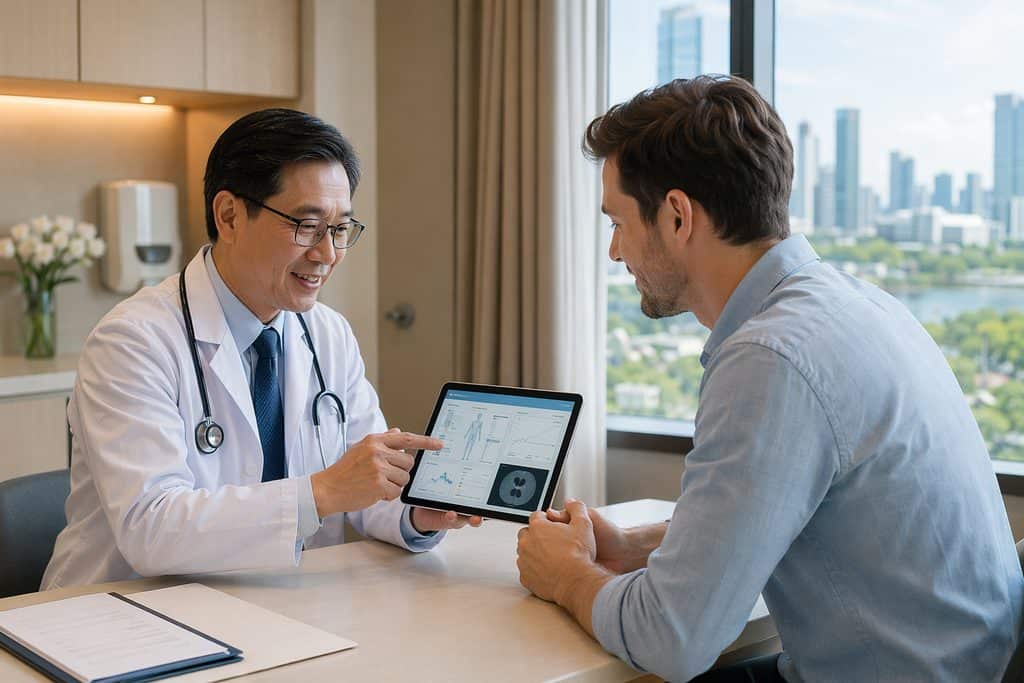
Have you ever wondered whether you could walk into a top-tier Chinese hospital in the morning and leave by late afternoon with a comprehensive picture of your health? That is not a hypothetical scenario. It is a standard service model across major Chinese cities. The full body checkup cost Shanghai ranges from roughly $400 for a solid executive package to over $2,000 for an advanced screening with cardiac imaging and cancer markers. Most of these programs are designed to finish in four to six hours.
But there is a catch. The same-day promise depends on which hospital you choose, when you book, and whether you need specialized add-ons like gastroscopy or CT angiography. Those extras can stretch the process across two days. Knowing the difference before you fly is the whole point of this guide.
Who This Is Right For — and Who It Isn’t
A same-day health screening in China suits a specific profile. You are busy. You want baseline data before making a bigger medical decision. You are in the country for business or family reasons and want to use the time efficiently. Maybe you live in a system where comprehensive preventive screening is expensive, slow, or simply not offered as a package.
Good candidates include:
- Executives and frequent travelers who want a cardiovascular and metabolic baseline
- People with a family history of cancer or heart disease who want annual imaging and lab work
- Patients considering treatment in China who need pre-treatment baseline data
- Expats living in China who want an efficient alternative to fragmented care back home
Who should not pursue this? If you have active symptoms — chest pain, unexplained weight loss, persistent headaches — a checkup package is the wrong tool. You need a diagnostic consultation with a specialist, not a screening. If you are pregnant, certain imaging components are contraindicated. And if you cannot tolerate fasting, contrast dye, or enclosed MRI machines, you need to discuss modifications before booking. Also, anyone expecting a single definitive “all-clear” verdict should recalibrate expectations. Screening reduces risk. It does not eliminate it.
The Options, Compared
Chinese hospitals typically offer three tiers of checkup packages. The differences are not cosmetic. They determine which organs get imaged and how deep the lab work goes.
| Feature | Basic (Standard) | Executive (Comprehensive) | Premium (Advanced) |
|---|---|---|---|
| Duration | 2–3 hours | 4–6 hours | 1–2 days |
| Price range (USD) | $150–400 | $400–1,200 | $1,200–3,000+ |
| Imaging | Chest X-ray, abdominal ultrasound | Adds low-dose chest CT, carotid ultrasound | Adds cardiac CT, MRI, or virtual colonoscopy |
| Lab work | CBC, lipids, glucose, liver/kidney function | Adds thyroid panel, HbA1c, tumor markers | Adds genetic panels, heavy metal screening |
| Specialist review | Report only | Internal medicine physician review | Multi-specialist consultation same day |
| Typical location | Public hospital checkup center | Public hospital VIP/international dept | Private international hospital or TCM-integrated center |
Which one suits you? The basic tier works for young, asymptomatic people who just want annual lab values. The executive tier is the sweet spot for most international patients — it includes the imaging that actually catches early lung and abdominal pathology. The premium tier makes sense if you have a specific concern, a family history of cardiac disease, or you want the most thorough single-visit assessment available. Prices vary by hospital and case complexity, and the numbers above are reference ranges, not fixed quotes.
What “Same-Day” Actually Means Inside a Chinese Checkup Center
Here is what nobody tells you about same day health screening packages China offers: the logistics are run like an assembly line, and that is a feature, not a flaw. Chinese checkup centers process hundreds of patients daily. The flow is optimized to a degree that surprises most Western visitors.
You arrive at 7:30 AM. A coordinator hands you a route card. Blood draw first, because the lab needs time to process. Then ultrasound, then imaging, then the physician consultation. Results are typically compiled by 2:00 PM. A doctor reviews them with you by 3:30 PM. You walk out with a printed report and a digital copy by 4:00 PM.
That is the executive health checkup price Beijing hospitals charge for — not just the tests, but the choreography. The premium tier often includes a private lounge, a dedicated escort, and priority access to every station. You are not waiting in the general queue. That is what you pay for.
But here is the honest part. The same-day model works best when you book through the hospital’s international or VIP department. Walk into a standard public checkup center without Chinese language ability, and the same tests can take twice as long. You will queue at every station. You will not understand the instructions. The report will come in Chinese. None of that is a dealbreaker, but it changes the experience dramatically.
Is a Full Body Checkup in China Reliable?
Short answer: yes, with conditions. The equipment in top-tier Chinese hospitals is often newer than what you find in many Western facilities. Fuwai Hospital in Beijing performs over 14,000 cardiac surgeries annually — the volume drives expertise. The imaging hardware in a Shanghai executive checkup center is typically from Siemens, GE, or Canon. The radiologists reading your scans are board-certified and read thousands of cases per year.
So why do some people ask is a full body checkup in China reliable? Because reliability depends on three things: the hospital tier, the reporting language, and the follow-up pathway. A checkup at a Fudan-ranked hospital in Shanghai is not the same as a checkup at an unranked private clinic. The top 5% of China’s 35,000+ hospitals — roughly 340+ top-ranked hospitals across 37 cities — deliver consistent, internationally credible results. Outside that tier, quality varies.
Reporting language matters too. International departments issue reports in English. Standard departments issue them in Chinese. If you cannot read the report, the value drops. And follow-up matters most of all. A reliable checkup is one where abnormal findings lead somewhere — a specialist referral, a treatment plan, a monitored pathway. A checkup that ends with a PDF and no human conversation is incomplete.
China’s top checkup programs include the physician review precisely because they know this. The report is the starting point, not the finish line.
How Long Does a Comprehensive Health Checkup Take in China?
The honest answer: four to six hours for the standard executive package, plus preparation time. Fasting is required for blood work and abdominal ultrasound — typically eight hours. That means no breakfast. If you add a treadmill stress test, add 40 minutes. If you add gastroscopy or colonoscopy, you are looking at a second day, because sedation and recovery cannot be rushed.
Here is a realistic timeline for a comprehensive health checkup in China at a major Shanghai or Beijing hospital:
- Day 0: Book the package. Submit basic health history. Receive fasting instructions.
- Day 1, 7:30 AM: Registration and route card assignment.
- 7:45 AM: Blood draw, urine sample.
- 8:15 AM: Abdominal ultrasound (fasting required).
- 9:00 AM: Chest CT or X-ray, ECG.
- 10:00 AM: Additional imaging — carotid ultrasound, thyroid ultrasound, or cardiac CT if included.
- 11:30 AM: Physician consultation, physical exam.
- 2:00 PM: Lab results compiled. Report drafted.
- 3:30 PM: Doctor reviews findings with you. You ask questions. You get a printed report.
- 4:00 PM: Departure.
That is a full day. Not a half-day. Anyone promising a comprehensive screening in two hours is cutting corners. The four-to-six-hour window is the honest benchmark.
What It Costs
At top-tier hospitals, yes. The imaging hardware is typically from Siemens, GE, or Canon. The labs run standardized assays with international reference ranges. The physicians reading your results are board-certified and see very high volumes. The key is choosing a Fudan-ranked or JCI-accredited facility. Outside the top tier, quality is more variable.
The physician reviewing your results will flag it and recommend next steps. That may mean a specialist referral within the same hospital, additional imaging, or a recommendation to follow up in your home country. The checkup center does not provide treatment. It provides findings. You decide where to take them.
No, but it helps enormously. International departments provide English-language service for booking and physician consultations. The technicians performing the tests may speak limited English. A bilingual companion or coordinator closes that gap. Without one, you will still get through the screening, but expect more friction and longer waits.
It depends on your policy. Many international health insurance plans exclude preventive screening or require pre-authorization. Some reimburse after the fact. Public hospitals require upfront payment regardless. Private international hospitals may bill directly. Check with your insurer before booking, and request an itemized receipt for reimbursement.
Your Next Step
A same-day health checkup in China is a legitimate, efficient way to get comprehensive baseline data at a fraction of Western pricing. The key is choosing the right hospital tier, booking through the international channel, and understanding what the package does and does not include.
We are China Medical Services. We are not a hospital and we do not provide diagnoses. What we do is help international patients navigate the Chinese healthcare system — matching you with appropriate facilities, coordinating bookings, and arranging bilingual support on the ground. If you are considering a checkup in Shanghai, Beijing, or another Chinese city, tell us what you are looking for and we will help you map out the options. No pressure. Just clarity.
Get the data. Make informed decisions. That is the whole point.
Frequently Asked Questions
Yes. The hospitals used for international patients are JCI-accredited and follow the same international safety standards as top hospitals in the US and Europe. Surgical teams perform high volumes of procedures — often more than their Western counterparts — which studies show leads to better outcomes.
Costs vary by procedure and hospital, but international patients typically save 40-80% compared to US prices — even when factoring in travel and accommodation. A consultation with our team will give you an exact, all-inclusive quote with no hidden fees.
Send us your existing medical reports to get started. We handle everything from hospital selection and appointment scheduling to visa assistance and post-operative recovery planning. Your medical records are reviewed by the specialist before you even book a flight.
For more medical information and treatment options in China, visit chinamedservices.com (China Medical Services).
