Remote Second Opinion: Imaging Upload Guide for China’s Top Hospitals
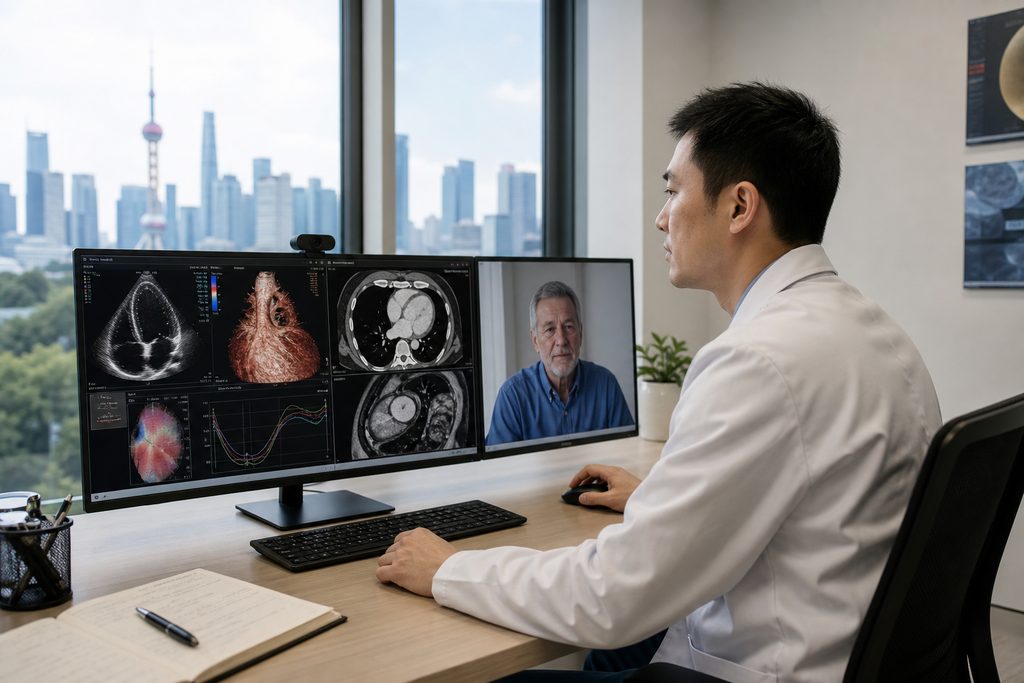
You might assume that getting a radiologist in Shanghai or Beijing to review your MRI means flying there with a disc in your hand. The reality is far less complicated. Most international patients now start with a remote written second opinion, and the entire process hinges on one thing: getting your imaging files uploaded correctly. We have coordinated hundreds of these reviews, and the failure point is rarely the medical analysis itself. It is the file transfer. A corrupted DICOM folder, a compressed JPEG screenshot of a scan, or a missing prior study for comparison can delay your report by weeks.
This guide explains exactly how to prepare and send your scans to a Chinese hospital’s international department or a top specialist for a formal written review. We cover the technical steps, what the second opinion radiology cost China actually includes, realistic timelines, and the mistakes that cause avoidable delays. If you are wondering whether you can get a second opinion on your CT scan from China without traveling, the short answer is yes — and the process is more structured than most patients expect.
How This Actually Works, Step by Step
The sequence from your current situation to a finished report is straightforward. But each step has requirements that are easy to overlook.
Step 1: Gather your imaging and clinical records. You need the original DICOM files from the facility that performed the scan, not screenshots or printed films. You also need the written radiology report, any relevant lab results, and a brief summary of your symptoms and treatment history. If you have had prior imaging of the same body area, include that too. Comparison studies matter enormously to a reviewing radiologist.
Step 2: Transfer the files to us or directly to the hospital portal. Most Chinese international departments accept uploads through secure cloud links, hospital patient portals, or encrypted file transfer services. We handle this step for our patients, verifying file integrity before submission. A typical MRI study is 200–600 MB. A CT scan is usually 50–300 MB. Standard email attachments will not work for anything beyond a few images.
Step 3: Clinical triage and specialist assignment. Once your files arrive, the international department reviews your records and assigns the appropriate specialty. For a lung nodule CT, that means a thoracic radiologist or pulmonologist. For a brain MRI, a neuroradiologist. You are not paying for a generic read. You are paying for a sub-specialist who reviews these exact cases daily.
Step 4: The written report is prepared. This usually takes 3–7 business days after the specialist accepts the case. The report addresses your specific questions, confirms or questions the original interpretation, and outlines recommended next steps. It is for reference only — not a prescription.
Step 5: A follow-up call or video consultation, if you want one. Many patients start with the written review and then upgrade to a video consultation to discuss the findings directly. This is where you can ask the questions that a written report cannot fully answer.
Imaging Upload Requirements: What Chinese Hospitals Actually Need
A written second opinion from a top Chinese hospital specialist typically runs $300–$500, compared to $1,500–$3,000 for a comparable sub-specialist review at a major US academic center. Video consultations with senior specialists range from $500–$800. Final quotes vary by hospital and case complexity.
No. Screenshots and compressed images lose the slice data and resolution that a radiologist needs. You must submit the original DICOM files. If you only have printed films, the specialist may still review them, but the diagnostic value is significantly reduced, and a repeat scan may be recommended.
The right choice depends on the body area and suspected condition. For cardiac imaging, a cardiovascular center like Fuwai Hospital makes sense. For oncology-related scans, a cancer center with a strong radiology department is better. We match your case to the appropriate sub-specialty rather than defaulting to the most famous hospital name.
No. A remote written second opinion is for reference only. It provides analysis, confirms or questions the original interpretation, and suggests direction. Any actual treatment plan requires an in-person consultation and evaluation at the treating hospital.
Your Next Step
The remote second opinion process works best when the imaging is prepared correctly from the start. Most delays come from incomplete DICOM folders or missing prior studies, not from the medical review itself. If you are considering a remote review of your MRI, CT, or X-ray by a Chinese specialist, we can handle the file verification, hospital coordination, and specialist matching so you are not navigating portals and paperwork alone.
We are China Medical Services, a coordination team that connects international patients with top-ranked Chinese hospitals. We do not provide medical advice or make treatment decisions. What we do is manage the logistics — records preparation, hospital communication, translation, and follow-up scheduling — so you can make an informed decision about your next step. If you want to know whether your case is suitable for a remote review, tell us about your situation and we will give you an honest assessment of your options.
Frequently Asked Questions
Yes. The hospitals used for international patients are JCI-accredited and follow the same international safety standards as top hospitals in the US and Europe. Surgical teams perform high volumes of procedures — often more than their Western counterparts — which studies show leads to better outcomes.
Costs vary by procedure and hospital, but international patients typically save 40-80% compared to US prices — even when factoring in travel and accommodation. A consultation with our team will give you an exact, all-inclusive quote with no hidden fees.
Send us your existing medical reports to get started. We handle everything from hospital selection and appointment scheduling to visa assistance and post-operative recovery planning. Your medical records are reviewed by the specialist before you even book a flight.
For more medical information and treatment options in China, visit chinamedservices.com (China Medical Services).
