Childhood Leukemia China Relapsed: Navigating Pediatric Hematology at Peking University People’s Hospital
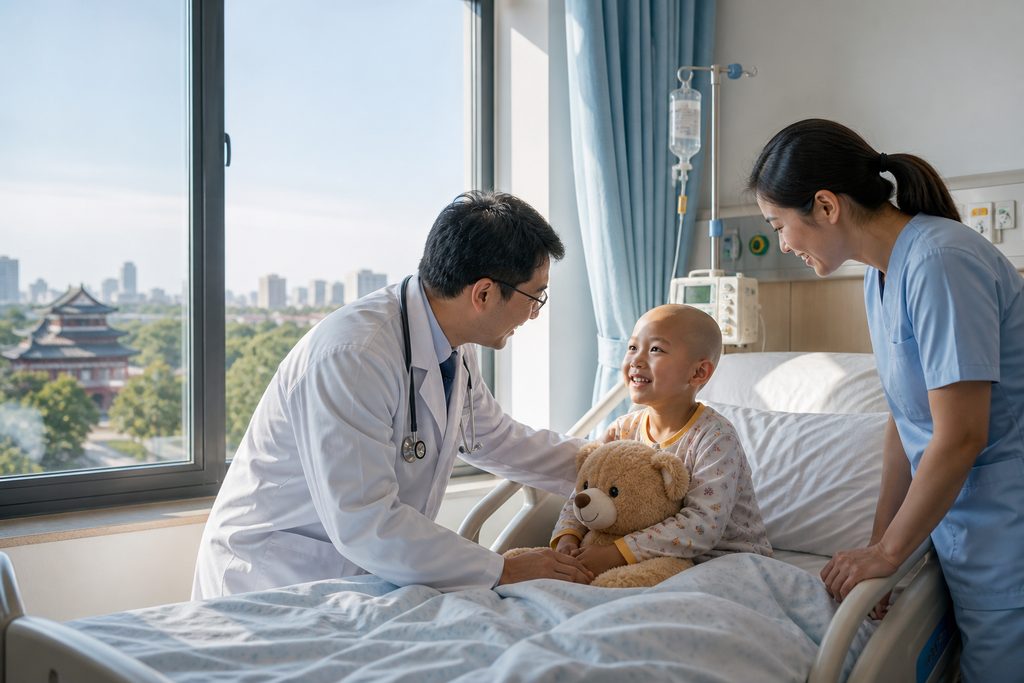
When 7-year-old Leo relapsed for the second time, his parents sat in a London consultant’s office and heard words no family wants to hear: the standard protocol had failed. The chemotherapy that had worked before was no longer holding. The next step was an experimental trial with a 14-month waiting list. They started searching. Late nights on medical journals, parent forums, PubMed. That’s how they found a different path. Leo’s story isn’t unique, but his family’s response was. They looked east.
Key Takeaways
- Peking University People’s Hospital runs one of the world’s largest pediatric haploidentical transplant programs, with over 1,000 such procedures completed annually.
- China’s domestic CAR T-cell therapy trials are enrolling relapsed ALL patients at a fraction of Western costs, with early response rates exceeding 80% in some cohorts.
- The hospital’s public outpatient system cannot be pre-booked from overseas; access requires navigating a dedicated international VIP channel, which adds logistical complexity.
- Treatment costs for a full pediatric leukemia protocol, including transplant, often range from $50,000 to $120,000 — contrasted with $500,000+ in the US — but require upfront payment.
The Problem: When Standard Protocols Fail Childhood Leukemia
Relapsed acute lymphoblastic leukemia (ALL) in children is a brutal clinical challenge. Approximately 15% of pediatric ALL patients will relapse after first-line chemotherapy. For those children, the five-year overall survival rate drops below 50%. In cases of early relapse — within 18 months of diagnosis — that number falls further. Western medicine offers a ladder of options: salvage chemotherapy, targeted therapies like blinatumomab, and ultimately hematopoietic stem cell transplant. The problem is not the science. It’s the access.
In the United Kingdom, the National Institute for Health and Care Excellence (NICE) has approved CAR T-cell therapy for pediatric ALL, but treatment slots remain severely constrained. In the United States, a single infusion of tisagenlecleucel (Kymriah) carries a list price of $475,000, not including the hospitalization needed to manage cytokine release syndrome. Even families with comprehensive insurance face coverage denials, geographic limitations, and grueling appeals processes. The clock doesn’t stop ticking while paperwork moves through committees. Parents watch their children wait. That’s the reality that pushes families to consider treatment abroad.
Who We Are
We are not a hospital. We do not provide medical treatment, make clinical recommendations, or diagnose conditions. Our team acts as your logistical bridge to China’s top-tier medical system. We coordinate with hospital international departments, arrange bilingual medical companions, and handle the practical barriers — visas, accommodation, appointment scheduling — that make seeking care overseas feel overwhelming. We connect you with the clinical expertise. You make the medical decisions with your doctors.
Why Peking University People’s Hospital for Relapsed Pediatric Leukemia
Peking University People’s Hospital (PKUPH) sits in Beijing’s Xicheng district and houses one of China’s most formidable pediatric hematology programs. The hospital is not just a clinical center. It’s the institution where Professor Lu Daopei pioneered haploidentical stem cell transplantation in China — a technique that fundamentally changed treatment access for patients without matched sibling donors. That legacy matters. It means the department has been managing high-risk, relapsed cases for decades, not years.
Clinical Volume That Drives Pattern Recognition
The pediatric hematology department at PKUPH manages an extraordinary caseload. The transplant program performs over 1,000 procedures annually, with a significant portion dedicated to pediatric patients with relapsed or refractory leukemia. When a clinical team sees that many high-complexity cases, they develop pattern recognition that simply cannot be replicated in lower-volume centers. A transplant physician at PKUPH might manage more relapsed ALL cases in a single quarter than a regional Western center sees in two years. This volume translates into refined graft-versus-host disease management, better donor selection protocols, and more confident handling of post-transplant complications.
How Does China Treat Relapsed Pediatric Leukemia Differently
The treatment philosophy at PKUPH reflects a distinct approach to relapsed disease. Chinese pediatric hematologists often favor earlier transplant intervention for high-risk relapses compared to Western protocols that may exhaust multiple salvage chemotherapy lines first. The rationale is straightforward: each additional chemotherapy round weakens organ function and increases transplant risk. By moving to transplant sooner — particularly using haploidentical donors — the team aims to achieve durable remission before the disease develops further drug resistance. This approach is not universally accepted. But the published survival data from PKUPH, showing five-year overall survival rates exceeding 60% for high-risk relapsed ALL patients who undergo haploidentical transplant, makes a compelling argument.
Is CAR T-Cell Therapy for Children Available in China
Yes. This is perhaps the most significant development in China’s pediatric oncology landscape over the past five years. Multiple domestic CAR T-cell therapy trials are actively enrolling pediatric patients with relapsed CD19-positive ALL. These are not copies of Western products — they are independently developed constructs with published clinical data. Early-phase trial results from Chinese institutions show complete remission rates of 80-90% in heavily pre-treated pediatric ALL patients, comparable to outcomes reported for FDA-approved products. The critical difference is cost. While US CAR T-cell products list at $375,000 to $475,000 for the cell product alone, Chinese clinical trials and commercial CAR T options often price the entire treatment course — including hospitalization — between $40,000 and $80,000. The structural reasons for this cost gap are real: lower labor costs, streamlined regulatory pathways for domestic cell therapy products, and government investment in biotech infrastructure. Quality is not sacrificed. The manufacturing standards for these products meet international GMP requirements, and the clinical protocols follow internationally recognized endpoints.
Peking University People’s Hospital Pediatric Leukemia Treatment Cost
Families need hard numbers, not reassurances. The Peking University People’s Hospital pediatric leukemia treatment cost varies significantly based on the specific protocol and whether transplant is required. For a standard chemotherapy-only salvage protocol, expect a range of $20,000 to $40,000 over the treatment course. If a haploidentical stem cell transplant is needed — which is common in relapsed cases — the total cost typically falls between $50,000 and $120,000. This covers the transplant procedure, donor workup, graft processing, hospitalization during the aplastic phase, and initial post-transplant monitoring.
These figures are not trivial. But context reshapes the picture. The same haploidentical transplant protocol in the United States routinely exceeds $500,000, often reaching $800,000 when complications arise. Even with insurance, a 20% coinsurance obligation on an $800,000 bill devastates most families. In China, the payment model is upfront and transparent. You receive a cost estimate before treatment begins. You pay the hospital directly. There is no insurance negotiation, no surprise billing months after discharge, no network restrictions. For families whose insurance has denied coverage for out-of-network transplant centers or experimental CAR T trials, the Chinese model offers something rare: clarity.
| Treatment Component | Estimated Cost in China (USD) | Estimated Cost in USA (USD) |
|---|---|---|
| Salvage Chemotherapy (full course) | $20,000 – $40,000 | $50,000 – $100,000 |
| CAR T-Cell Therapy (incl. hospitalization) | $40,000 – $80,000 | $475,000 – $600,000 |
| Haploidentical Stem Cell Transplant | $50,000 – $120,000 | $500,000 – $800,000 |
| Post-Transplant Recovery (3 months monitoring) | $15,000 – $30,000 | $80,000 – $150,000 |
Note: All costs are estimates. Final pricing depends on the specific treatment protocol, length of hospitalization, and any complications that arise. The hospital provides a detailed estimate after reviewing medical records.
What You Need to Know Before Going Alone
The clinical capabilities at PKUPH are world-class. The logistical reality of accessing them independently is brutal. We tell every family this upfront: China’s public hospital system is not designed for international patients who lack Mandarin fluency and local navigation skills.
- Visa Requirements: Medical treatment in China requires an S2 visa with a specific annotation for medical purposes. The application requires an official invitation letter from the treating hospital, proof of appointment, and documentation of the medical necessity. PKUPH’s international department can issue this letter, but only after your case has been reviewed and accepted. This creates a chicken-and-egg problem: you need the hospital’s letter to get the visa, but the hospital needs to see you in person before fully accepting your case. We break this cycle by coordinating with the international department to arrange a preliminary case review and secure the documentation before you travel.
- Payment Systems: Chinese public hospitals require upfront payment. Credit cards are accepted at international departments, but transaction limits on foreign cards often cap at $5,000-$10,000 per day. Wire transfers to the hospital’s account are possible but take 3-5 business days to clear. Families who arrive without understanding this system can find themselves unable to pay for treatment that has already begun. We advise on payment structuring before you travel and can facilitate hospital billing communication to prevent administrative freezes.
- Language and Navigation: PKUPH is a massive campus. The outpatient building alone sees over 10,000 patient visits daily. Signage in English is limited. Laboratory slips, pharmacy instructions, and discharge summaries are in Chinese. A single missed lab result or misunderstood medication instruction during the immunosuppressed post-transplant period can be catastrophic. The hospital’s international department provides some English support, but it is not a comprehensive concierge service. A bilingual medical companion who understands both the clinical terminology and the physical layout of the hospital is not a luxury — it’s a safety requirement.
How We Help You Navigate This
These barriers exist for structural reasons. Dismantling them one by one is what we do. Our process starts with a free consultation. You tell us about your child’s diagnosis, what treatments have been tried, what the current clinical status is. We do not give medical opinions. We listen, and then we map the path.
Our team translates and formats your child’s medical records for submission to PKUPH’s pediatric hematology department. We coordinate with the international patient office to arrange a preliminary case review — often via a written second opinion from a top specialist, which costs between $300 and $500 and is credited toward future coordination fees. If the hospital accepts the case, we move to logistics: visa invitation letters, appointment scheduling, airport transfer arrangements, and accommodation near the hospital. During treatment, a bilingual medical companion stays with you — translating consultations, explaining medication schedules, navigating the labyrinthine corridors between the lab, pharmacy, and inpatient ward. After discharge, we coordinate follow-up appointments and, when the time comes, the return journey home.
If your child’s protocol involves CAR T-cell therapy, we can help identify which clinical trials at PKUPH and other Beijing hospitals are currently enrolling. The relapsed childhood leukemia immunotherapy China price landscape shifts frequently as new trials open and commercial products receive domestic approvals. Our role is to provide current information, not to steer you toward any specific trial. The decision belongs to you and the treating physician.
Frequently Asked Questions
You cannot book a standard public outpatient appointment from abroad. The hospital’s public registration system requires in-person queueing on the day of the clinic. However, the international department can arrange a pre-scheduled specialist consultation through their VIP channel. This requires medical record submission, case review, and confirmation from the department. Our team handles this entire coordination process. The VIP channel consultation typically costs between $800 and $1,200 for the initial specialist visit, which includes the coordination fee.
This is the question every parent asks, and it deserves an honest answer. CAR T-cell therapy achieves complete remission in 80-90% of pediatric ALL patients in published Chinese trials, but not all remissions are durable. Relapse after CAR T remains a clinical reality. The advantage of receiving CAR T therapy at a major transplant center like PKUPH is that the team can transition directly to haploidentical transplant as consolidation therapy. This “CAR T bridge to transplant” strategy is an active area of research at the hospital, and the integrated approach means your child stays under one clinical team throughout, rather than being transferred between institutions.
Comparability depends on what you measure. In terms of transplant volume, PKUPH exceeds every individual US center. In terms of clinical trial access for domestic CAR T products, PKUPH offers options that are simply not available outside China. In terms of published outcomes, the survival data for haploidentical transplant at PKUPH is comparable to international benchmarks. Where differences exist, they are operational: nursing ratios are lower than in US academic centers, family members are expected to provide more bedside care during hospitalization, and the hospital food and amenities are functional rather than comfortable. These are not trivial differences for a family spending months in treatment. But they are logistical challenges, not clinical ones. Families who understand this trade-off before arriving are better prepared for the experience.
For a child with relapsed ALL undergoing CAR T-cell therapy followed by transplant, plan for 4 to 6 months in Beijing. The CAR T process itself — apheresis, manufacturing, infusion, and cytokine release syndrome monitoring — typically spans 6 to 8 weeks. If a transplant follows, the inpatient transplant phase is 4 to 6 weeks, followed by 2 to 3 months of near-daily outpatient monitoring for graft-versus-host disease and engraftment. Some families stay longer if complications arise. The hospital will not discharge your child until the clinical team is confident in the stability of the recovery. We help families plan for this extended stay, including visa extensions and accommodation near the hospital.
Your Next Step
Leo’s parents made their decision after three weeks of research and one long video call with a specialist who reviewed his records. They flew to Beijing in November. His CAR T infusion happened in December. By March, he was in molecular remission and preparing for transplant. Not every story follows that arc. Some are harder. Some families arrive and find that the clinical situation has deteriorated beyond what treatment can salvage. We do not promise outcomes. We promise that if treatment in China is a viable option for your child, we will make the path as clear and navigable as it can be.
Start with a conversation. Visit our patient coordination page to tell us about your situation. No commitment. No pressure. Just a clear-eyed assessment of what is possible.
Medical Disclaimer: This article is for informational purposes only and does not constitute medical advice. Treatment decisions should be made in consultation with qualified medical professionals. Outcomes vary by individual case. China Medical Services does not provide clinical care or guarantee treatment results.
For more medical information and treatment options in China, visit chinamedservices.com (China Medical Services).
