Mitochondrial Disease Care in China: Where International Patients Start
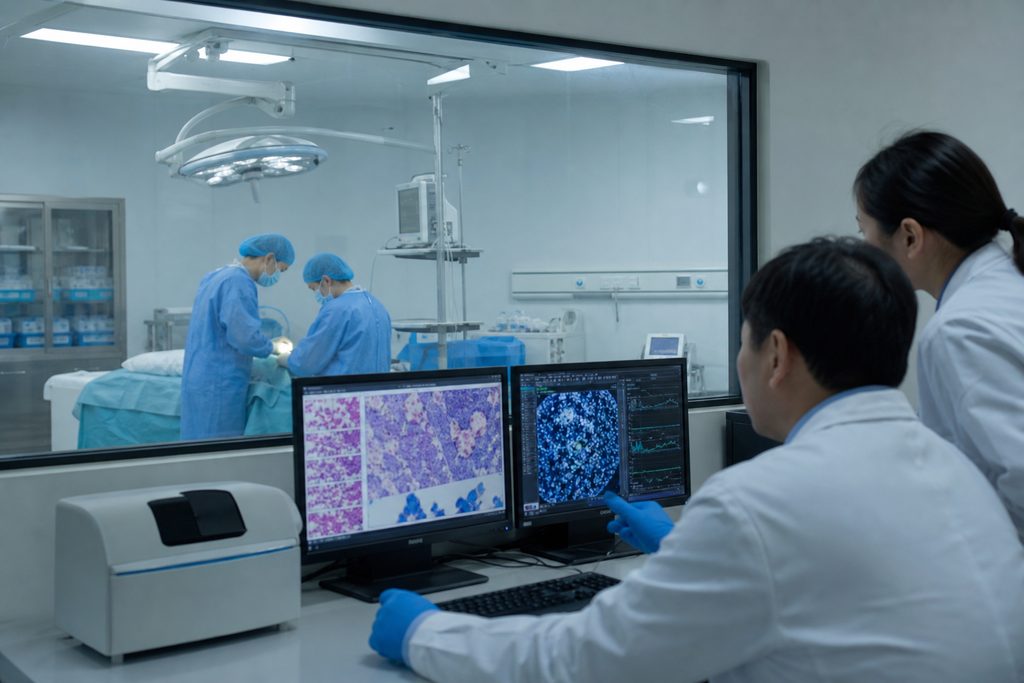
Mitochondrial Disease Care in China: Where to Start
What if the specialist your child needs is 7,000 miles away, and the wait at home stretches past a year? For families navigating mitochondrial disease, that question is not hypothetical. It is Tuesday. And increasingly, the answer they type into a search bar is a practical one: mitochondrial disease treatment cost China versus the United States, which hospital, which visa, and how to begin without flying blind.
Mitochondrial disease is a group of rare, genetically complex disorders affecting the energy-producing structures inside cells. More than 300 genes have been implicated, and symptoms can appear in the brain, muscles, heart, liver, or eyes — sometimes all at once. That complexity is exactly why families struggle to find a center that has seen enough cases to recognize the pattern.
China now treats a significant share of Asia’s rare-disease population, and its top-tier hospitals have built dedicated neuromuscular and metabolic genetics programs. For international families, the challenge is rarely the medicine. It is the navigation. This guide walks through where to start, what it costs, what the timeline looks like, and what can go wrong.
How This Actually Works, Step by Step
There is no walk-in path. Chinese public hospitals do not let overseas patients book a specialist outpatient slot from abroad. So the realistic sequence looks like this.
Step one — gather records. You send existing examination reports: genetic testing panels (whole exome or mitochondrial genome sequencing), muscle biopsy pathology, MRI and MRS imaging, EEG, cardiac workup, lactate and pyruvate levels, and any prior clinical summaries. English is fine. Our team handles translation into Chinese for the hospital’s review.
Step two — written second opinion. The relevant Chinese specialty — typically neurology, metabolic genetics, or pediatrics — reviews the file and returns written analysis, treatment suggestions, and direction. This costs $300–500 and takes roughly one to two weeks. It is the cheapest way to learn whether China adds anything to your current plan.
Step three — video consultation. If the written opinion raises options worth discussing, you speak online with the Chinese specialty team. You explain symptoms and goals; they explain what they would recommend and why. A standard international-department video consultation runs $100–300; a top-specialist session runs $500–800; a multidisciplinary team (MDT) session, where neurology, genetics, cardiology, and rehabilitation weigh in together, runs $1,500–2,000.
Step four — decide, then coordinate. Only after a feasible plan is clear and you agree to it does travel make sense. At that point we coordinate arrival support, hospital communication, and available green-channel logistics. Nothing is promised in advance — admission and treatment decisions remain the hospital’s.
Which Hospitals and Departments Handle These Cases
Mitochondrial disease does not sit in one department. It sits at the intersection of neurology, metabolic genetics, and pediatrics, with cardiology and rehabilitation pulled in as needed. That is why the “best hospital” question has a more useful answer: find the hospital whose specialty team has depth in inherited metabolic and neuromuscular disease.
When families ask about the best hospitals for mitochondrial disease in China, we point them to the Fudan University Hospital Rankings, which grade China’s roughly 35,000 hospitals. The general Top 100 is divided into five tiers (A++++ down to A) rather than numbered positions, while 45 specialty reputation lists do rank individual departments. Neurology, pediatrics, and rare-disease genetics are the lists that matter here.
Our database covers 340+ top-ranked hospitals across 37 cities — the top 5% of the country’s hospitals by Fudan and JCI standing. Beijing alone holds 21 of the general Top 100, Shanghai 18, and Guangzhou 10. Peking Union Medical College Hospital in Beijing and West China Hospital in Chengdu are both large referral centers for undiagnosed rare disease. You can browse the full list by city on our Fudan-ranked hospital directory, or go straight to the specialty rankings on the department-by-department Top 10 guide.
One honest caveat: no Chinese hospital publishes a “mitochondrial disease cure rate.” Anyone who quotes you one is inventing it. What these centers offer is diagnostic depth, multidisciplinary assessment, and access to supportive and experimental protocols that may not be available where you live.
A Realistic Timeline
Families consistently underestimate the administrative half of this process. Here is what the calendar actually looks like, from first inquiry to follow-up.
| Stage | What Happens | Typical Duration |
|---|---|---|
| Records collection | You gather genetic reports, imaging, biopsy slides, clinical summaries | 1–3 weeks |
| Translation & file prep | Documents translated and formatted for the hospital’s international office | 3–7 business days |
| Written second opinion | Specialty team reviews and returns written analysis | 1–2 weeks |
| Video consultation | Live session with the specialty team; MDT if needed | Booked 1–2 weeks out |
| Appointment coordination | Registration, medical card creation, in-person slot arranged | 2–4 weeks |
| Visa (S2) | Application with hospital invitation and supporting documents | 1–3 weeks, varies by consulate |
| Travel & arrival | Flights, airport transfer, accommodation near the hospital | 1–2 weeks |
| In-person evaluation | Examination, repeat or additional testing, team review | 3–10 days on site |
| Treatment or monitoring plan | Decided by the hospital team; may be outpatient or inpatient | Days to several weeks |
| Follow-up at home | Records shared with your local physicians | Ongoing |
Realistically, plan on six to twelve weeks from first contact to being seen in person. Rush cases exist, but they are the exception, not the service. And note that hospital appointment lead times vary enormously by department — a rare-disease genetics slot at a top Beijing hospital can be booked out further than a general neurology slot.
What Can Go Wrong — and What Happens Then
This is the section most agencies skip. We will not.
The hospital may decline the case. Some mitochondrial presentations are too advanced, too unstable for travel, or simply outside a given team’s scope. When that happens, the written opinion still stands as useful documentation, and we can redirect the file to a different center. Occasionally the honest answer is that travel is not in the patient’s interest. We will say so.
You may not get the exact specialist you asked for. Chinese public hospitals assign patients to departments, not to named individuals, and senior professors rotate between clinic, surgery, and research. We coordinate through official international departments and VIP channels. We do not buy priority, and we never promise a specific doctor on a specific date. If a requested appointment cannot be arranged, the coordination fee is refunded in full.
Insurance may not follow you. Most international policies treat Chinese public hospitals as out-of-network. Public hospitals require prepayment, with reimbursement handled afterward by your insurer. Private international hospitals — United Family, Jiahui, Parkway, Raffles — often bill insurers directly, but their rare-disease depth is generally narrower than the big public centers. Budget accordingly.
Language will be harder than you expect. A top Chinese hospital can see tens of thousands of outpatients in a single day. Signage, registration kiosks, and pharmacy queues run in Chinese. Without a bilingual companion, even a straightforward follow-up visit becomes a full-day ordeal.
Evaluating Safety, Cost, and What “Packages” Really Mean
Is mitochondrial disease treatment safe in China? For diagnostic workups, multidisciplinary assessment, and supportive care, the top-tier public hospitals meet international standards — many hold JCI accreditation, and their genetics and neurology departments publish in the same journals your home specialists read. Safety concerns for this patient group tend to be logistical rather than clinical: medication continuity, travel stress on a child with low energy reserves, and coordination gaps between the Chinese team and your doctors back home.
On cost, families searching for mitochondrial disease treatment cost China figures should understand two things. First, mitochondrial disease rarely has a single “treatment price” — it is a bundle of consultations, genetic testing, imaging, and supportive therapies. Second, Chinese pricing for comparable procedures typically runs one-fifth to one-tenth of U.S. rates. A comprehensive diagnostic workup that might exceed $30,000 in the U.S. often lands in the $4,000–9,000 range at a top Chinese public hospital, though this varies by hospital and case complexity.
As for medical tourism packages for rare disease treatment China — treat the word “package” with caution. Rare disease care cannot be packaged in advance, because nobody knows what testing or admission will be needed until the team examines the patient. What can be arranged in advance is the coordination layer. Our own service pricing is published openly: written second opinions from $300, top-specialist video consultations from $500, hospital appointment coordination from $300, in-person top-specialist consultation coordination $800–1,200, and bilingual medical companion support from $300 per day. VIP end-to-end coordination runs $5,000–8,000.
One clarification that matters to Western families: we operate as a case-management service — medical record translation, appointment coordination through hospitals’ official international departments, and bilingual accompaniment. We are not an access broker, and we do not sell queue-jumping. Final quotes always depend on the hospital and the complexity of the case.
Practical Considerations: Records, Visas, and Follow-Up
Records. Bring originals and certified translations of every genetic report. If a muscle biopsy was performed, the actual slides or blocks matter — Chinese pathologists often want to re-read them. Digital imaging on disc or secure cloud link is standard now.
Visa. Foreign patients coming to China for medical treatment use the S2 visa, annotated for medical treatment purposes. Stays beyond 180 days require the S1 category. Accompanying family members apply for S2 as well. Note clearly: the M visa is for commercial and trade activities and has nothing to do with medical care. Requirements shift, so confirm current documentation with the relevant Chinese embassy or consulate and secure supporting hospital documents before applying. Approval is never guaranteed.
Payment. Public hospitals require prepayment; private international hospitals frequently accept direct insurance billing. Carry a card that works internationally and confirm wire-transfer options in advance for larger sums.
Follow-up. Ask for a written English discharge summary and imaging copies before you leave China. Your home neurologist will need them, and chasing records across time zones afterward is genuinely painful.
Language support. For a first visit, a bilingual medical companion handles registration, queueing, payment, wayfinding, and interpretation. For a multi-day workup, this is close to essential rather than optional.
Frequently Asked Questions
Diagnostic evaluation usually takes 3–10 days on site. Treatment duration depends entirely on the plan the hospital team recommends — some patients need only outpatient monitoring, while others require weeks of inpatient supportive care. Add six to twelve weeks of preparation before travel. There is no standard duration, because there is no standard presentation.
Yes. That is the recommended starting point. You send existing reports, the specialty team reviews them and returns a written second opinion, and you can then hold a video consultation before committing to travel. Many families discover this remote stage is enough to clarify their next steps.
Usually, yes — but they may want to re-run specific panels or reinterpret raw data, particularly for mitochondrial genome variants where interpretation standards differ between laboratories. Budget for the possibility of repeat testing.
That depends on the child’s stability, and it is a question for your treating physicians, not for us. Some children travel comfortably; others should not fly long distances at all. If a Chinese team’s written opinion suggests travel is worthwhile, discuss fitness-to-fly with your local doctors first.
Your Next Step
The core message is simple: start remotely, start with records, and let the medical review tell you whether travel is worth it. Mitochondrial disease is complex enough without adding a blind flight across the world.
China Medical Services is a patient-navigation service, not a clinic. We do not diagnose, prescribe, or promise outcomes — we translate records, coordinate appointments through hospitals’ official international departments, and accompany patients through a system that is genuinely difficult to navigate alone. If you would like to know whether a Chinese specialist review adds anything to your current plan, start with a free consultation and we will tell you honestly what is and is not possible.
This article is for general information only and does not constitute medical advice. Treatment decisions should always be made with qualified physicians who have reviewed the individual patient’s full history.
For more medical information and treatment options in China, visit chinamedservices.com (China Medical Services).
