Fertility Treatment: A Companion Through the Costs, Clinics, and Care in China
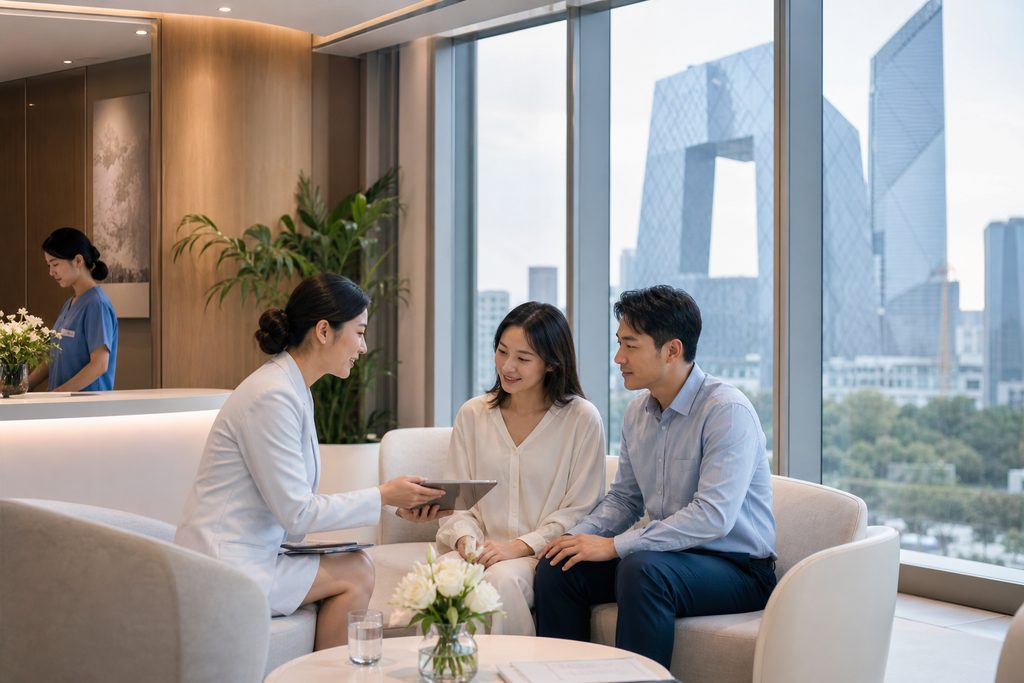
When 34-year-old Amira from London started researching IVF abroad, she had a spreadsheet with twelve clinics across four countries. The columns blurred together — package prices that didn’t include medications, success rates calculated differently, and no clear answer on whether she’d be treated well as a foreigner. She almost gave up. Then a friend who had cycled in Shanghai showed her a single invoice: every line item, every medication dose, every scan. That transparency changed her decision.
Searching for the best IVF clinic Shanghai price pulls up dozens of glossy websites, but very few tell you what actually matters: what the quoted number includes, whether the lab is accredited, and how the clinic handles patients who don’t speak Mandarin. This guide answers those questions directly. We work with international patients navigating Chinese fertility care every week, and we’ll walk you through the real numbers, the real clinics, and the real tradeoffs — without the marketing gloss.
Fertility Treatment in China: The Short Answer
A single IVF cycle at a top-tier private or international hospital in Shanghai typically costs between $6,000 and $12,000 USD, excluding pre-cycle diagnostics and medications. That’s roughly one-third to one-half of what the same cycle costs in the United States or the United Kingdom. Public hospital IVF runs lower — often $3,500 to $6,000 — but comes with language barriers and less hand-holding for foreigners.
The caveat: “price” in Chinese fertility clinics is rarely a single number. Most clinics quote the medical procedure separately from medications, embryo freezing, and genetic testing. So when you compare the best IVF clinic Shanghai price against a clinic in Bangkok or Barcelona, you need to ask what each quote actually covers.
Who This Is Right For — and Who It Isn’t
China’s fertility clinics have become a serious option for a specific kind of patient. Not everyone. Here’s who typically benefits most:
- Women under 38 with a clear diagnosis (tubal factor, mild male factor, PCOS) who want a well-equipped lab at a lower price point than Western Europe.
- Couples who have already done one failed cycle at home and want a second opinion without spending $25,000 again.
- Patients who value volume. Large Chinese fertility centers run thousands of cycles per year. That repetition builds lab technicians who have seen everything.
- Foreigners already living in China — expats in Shanghai, Beijing, or Shenzhen who want treatment without flying home.
Who should not pursue this:
- Women over 42 using their own eggs. Success rates drop sharply everywhere, and flying across the world doesn’t change ovarian biology. Most reputable Chinese clinics will tell you this in the first consultation.
- Patients who need a single named doctor to manage every step personally. Chinese hospitals, even private ones, run on teams. You may see different doctors at different visits.
- Anyone who cannot stay in China for at least 3-4 weeks. A full IVF cycle from baseline scan to embryo transfer requires repeated visits. Some clinics offer “remote start” protocols, but you still need to be on the ground for retrieval and transfer.
- Patients with complex genetic conditions requiring highly specialized PGT-M testing. Only a handful of Chinese labs do this well, and wait times vary.
The Options, Compared
When international patients ask us about fertility treatment cost China, they’re usually comparing three genuine alternatives: a Chinese private/international hospital, a Chinese public hospital, and a well-known fertility destination like Thailand or Spain. Here’s how they stack up.
| Factor | Shanghai Private/International | Chinese Public Hospital | Thailand (Bangkok) |
|---|---|---|---|
| Single IVF cycle cost | $6,000–$12,000 | $3,500–$6,000 | $8,000–$15,000 |
| English-speaking staff | Usually yes | Rarely | Common |
| Average wait for first consult | 1–2 weeks | 2–4 weeks | 1–3 weeks |
| Lab accreditation | JCI or CAP for top clinics | National standards | JCI common |
| Medication cost (per cycle) | $1,500–$3,000 | $800–$2,000 | $2,000–$4,000 |
| Genetic testing (PGT-A) | $2,000–$4,000 | $1,500–$3,000 | $3,000–$5,000 |
| Donor egg availability | Limited; strict rules | Very limited | More flexible |
If you’re a foreigner who wants English communication and a Western-style experience, the Shanghai private/international column is the realistic choice. If you have a Chinese-speaking partner or family member and budget is the main constraint, a public hospital becomes viable. Thailand wins on donor egg flexibility and tourism appeal, but you’ll pay for it.
Is IVF Safe in China for Foreigners?
The short answer is yes — at accredited clinics. China’s top fertility centers follow protocols similar to those in Europe and North America. The country’s health authority regulates assisted reproductive technology strictly, and clinics must be licensed to perform IVF at all. Unlicensed clinics exist, as they do everywhere, but they’re easy to avoid if you know what to look for.
What does “safe” actually mean here? Three things. First, laboratory standards: top Chinese labs use vitrification for embryo freezing, time-lapse incubators, and laser-assisted hatching — the same equipment you’d find in a London or Sydney clinic. Second, medication protocols: Chinese doctors tend to use slightly lower stimulation doses than American clinics, which reduces OHSS risk for many patients. Third, infection control and surgical safety: Chinese hospitals perform enormous volumes of egg retrievals, and complication rates at major centers are low.
But safety also includes communication. A medication error because a nurse couldn’t explain dosing in English is a safety issue. That’s why we tell every patient asking “is IVF safe in China for foreigners” the same thing: the medical care is safe, but your safety depends on choosing a clinic with genuine English-language infrastructure — not just one receptionist who speaks some English.
How Much Does IVF Cost in Beijing vs. Shanghai?
Patients often ask us how much does IVF cost in Beijing compared to Shanghai. The honest answer: the two cities are nearly identical at the top end. A private international clinic in Beijing charges roughly the same as one in Shanghai — $6,000 to $12,000 per cycle. Public hospital pricing is also similar, though Beijing has more top-tier public fertility centers than Shanghai, which means more competition and occasionally lower medication markups.
The real difference is logistics. Beijing’s top hospitals cluster in the Haidian and Chaoyang districts, and traffic is notoriously bad. Shanghai’s international clinics are more spread out, and the city is generally easier for first-time visitors to navigate. If you’re flying in for treatment, Shanghai’s Pudong airport and extensive metro make the logistics slightly simpler. But the medical quality is comparable. Choose the city where you have support — a friend, a relative, or a service that can help you get around.
Success Rates at IVF Clinics in China: What the Numbers Actually Mean
Every clinic publishes success rates IVF clinics China patients love to compare. Here’s the problem: success rates are calculated differently everywhere. Some clinics report clinical pregnancy per embryo transfer. Others report live birth per started cycle. A clinic that transfers more embryos per cycle will show higher pregnancy rates but also higher twin rates — which carries real medical risk.
At top Chinese fertility centers, the live birth rate per embryo transfer for women under 35 using their own eggs typically runs between 45% and 55%. For women 35-37, it drops to 35-45%. For 38-40, expect 25-35%. These numbers align with good clinics in Europe and the US. No clinic in China — or anywhere — can promise a baby. If a clinic quotes you a success rate above 65% for a general patient population, ask how they calculate it. That question alone will tell you a lot about their transparency.
One factor that genuinely helps in China: volume. A center running 3,000 cycles a year has embryologists who handle more cases in a month than a small Western clinic handles in a year. That repetition matters for lab quality, especially for difficult cases like severe male factor infertility or repeated implantation failure.
What It Costs: A Line-by-Line Breakdown
When a clinic quotes you “one IVF cycle for $8,000,” what does that actually include? Here’s what we tell our patients to ask for, line by line.
- Initial consultation and baseline testing: $300–$600. Blood work, ultrasound, semen analysis. Sometimes waived if you book a package.
- Ovarian stimulation medications: $1,500–$3,000. This varies by protocol and your response. Older patients or those with low ovarian reserve may need higher doses.
- Monitoring scans and blood tests during stimulation: $500–$1,000. Usually 4-6 visits over 10-14 days.
- Egg retrieval procedure: $1,500–$2,500. Includes anesthesia and operating room time.
- ICSI (if needed): $800–$1,500. Standard for male factor infertility.
- Embryo culture and transfer: $1,000–$2,000. Fresh transfer is often included; frozen transfer is separate.
- Embryo freezing (first year): $500–$800. Annual storage after that: $300–$500.
- PGT-A genetic testing (optional): $2,000–$4,000 for up to 8 embryos.
So that “$8,000 cycle” might actually be $10,500 once medications and testing are added. And if you need a frozen transfer later, that’s another $2,000–$3,000. This is not a bait-and-switch — it’s just how fertility pricing works globally. The key is to get an itemized quote before you commit. Any reputable clinic will provide one.
Practical Considerations: Records, Visas, and Staying in China
If you decide to pursue treatment in China, the logistics matter as much as the medicine. Here’s what actually applies.
Medical records. Bring everything: previous cycle summaries, hormone panels, semen analyses, surgical reports. Chinese doctors want data, not narratives. If your records are not in English, get them translated. Some clinics accept Chinese or English only, so check before you send anything.
Visa. Foreigners traveling to China for medical treatment typically apply for an S2 visa, which covers short-term private affairs including medical care. You’ll need a letter from the hospital confirming your appointment. Your partner or companion applies for the same category. Processing times vary by country, so start at least 6-8 weeks before your intended travel date. We never guarantee visa approval — that’s the embassy’s decision — but a proper hospital letter makes the process smoother.
Payment. Chinese hospitals, even private international ones, generally require payment upfront or at each visit. Some international clinics accept foreign credit cards; others need a Chinese bank card or cash. Insurance rarely covers IVF in China unless you have a specific international policy. Check before you arrive.
Language. Even at international clinics, lab technicians and pharmacy staff may not speak English. The doctor might, but the person drawing your blood might not. A bilingual companion — whether a friend, a family member, or a professional service — removes a huge amount of daily friction. Our team at China Medical Services has seen patients manage alone, but it’s genuinely harder than most people expect.
Follow-up after returning home. If you do a fresh transfer in China and return home before the pregnancy test, your home clinic can handle the beta HCG test. Coordinate this before you leave. If you have frozen embryos in China and want to transfer later, you’ll need to return for the transfer — or arrange embryo shipping, which is complex and expensive. Most patients simply fly back for a frozen transfer, which takes about a week.
Frequently Asked Questions
No. Chinese law restricts assisted reproductive technology to married heterosexual couples. Clinics require a marriage certificate. If you’re a single woman or in a same-sex relationship, China is not a viable option for IVF, regardless of which clinic you contact. This is a legal restriction, not a clinic policy.
You can book a consultation and initial testing package remotely, but no reputable clinic will start ovarian stimulation before you’ve had an in-person evaluation. Some clinics offer “remote start” where you do baseline testing at home and begin medications before flying to China, but this still requires a prior video consultation with the doctor. Anyone promising a full book fertility treatment package China deal without seeing you first is not operating like a legitimate medical provider.
No. IVF is a medical procedure, not a product. Clinics do not offer refunds for failed cycles. Some private clinics offer multi-cycle packages at a discount — for example, three cycles for the price of two-and-a-half — but these are prepaid and non-refundable if you conceive on the first cycle. Read the terms carefully. A failed cycle is emotionally devastating, and adding financial loss on top makes it worse. That’s why we tell patients to budget for one cycle at a time, not to prepay for packages unless they fully understand the terms.
Plan for 3-4 weeks minimum. A typical timeline: days 1-3, baseline scan and blood work; days 3-12, ovarian stimulation with monitoring every 2-3 days; day 13-14, egg retrieval; days 18-20, fresh embryo transfer. Some clinics want you to stay 2-3 days after transfer for observation, though many patients fly home the next day. If you do a frozen transfer later, that trip is shorter — about 7-10 days.
This is complicated. Chinese law allows egg donation only from women who are themselves undergoing IVF and have surplus eggs, and donors must remain anonymous. The waiting list for donor eggs at Chinese clinics is long — often 2-3 years. Commercial egg donation is illegal. If donor eggs are central to your treatment plan, Thailand, Spain, or the United States will give you faster access. Chinese clinics are not a practical donor egg destination for most international patients.
Your Next Step
Choosing a fertility clinic in another country is a decision made under stress, with incomplete information, in a language you may not speak. That’s hard. Our team exists to make it less hard. We’re not a hospital, we don’t diagnose anything, and we don’t promise outcomes — we help you identify which clinics are genuinely equipped for international patients, get your records translated, coordinate appointments, and arrange a bilingual companion if you want one on the ground.
If you’re comparing the best IVF clinic Shanghai price against options in Beijing or elsewhere, start with a conversation. Tell us your diagnosis, your budget, and your timeline. We’ll tell you honestly whether China makes sense for you — and if it doesn’t, we’ll say so. Get a free consultation with our patient coordination team and we’ll help you map the path forward, one step at a time.
For more medical information and treatment options in China, visit chinamedservices.com (China Medical Services).
