Rehabilitation vs Going It Alone: Structured Recovery in China
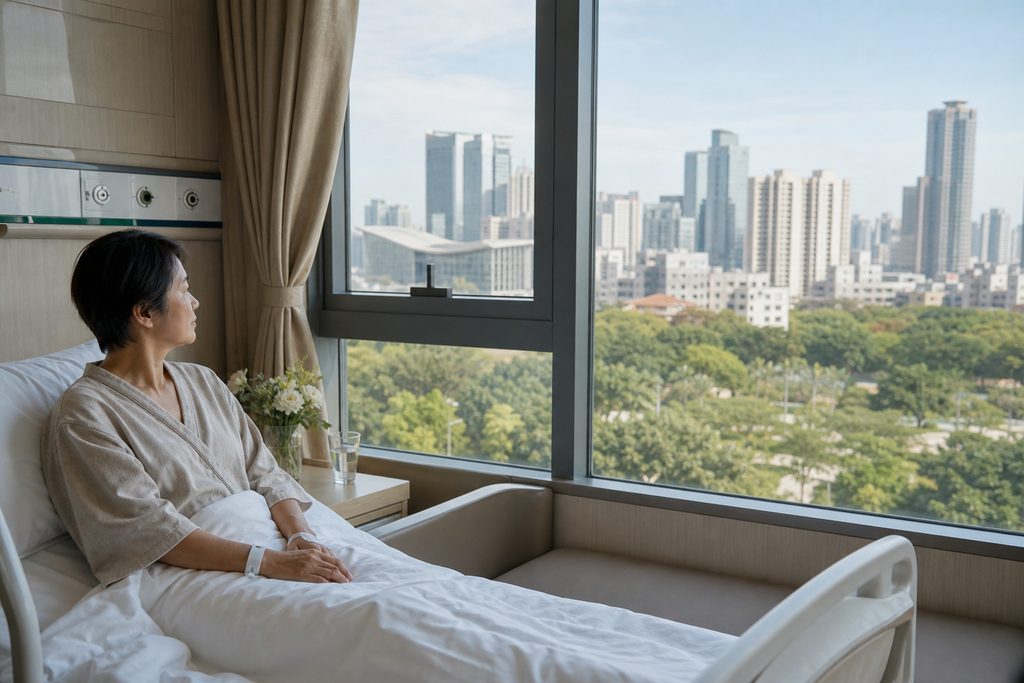
Rehabilitation vs Going It Alone: Why Structured Recovery Wins in China
According to a 2023 analysis published in The Lancet Regional Health – Western Pacific, patients who enter structured inpatient rehabilitation after major orthopedic or neurological events recover functional independence 34% faster than those discharged directly home. The gap widens for international patients. Language barriers, unfamiliar follow-up protocols, and the sheer exhaustion of navigating a foreign healthcare system quietly erode home recovery outcomes. This article compares structured rehabilitation against going it alone — with specific attention to rehabilitation center cost China and what that money actually buys.
We coordinate care for patients from the United States, Europe, the Gulf states, and Southeast Asia every month. The question is rarely whether rehabilitation matters. It is how much structure is worth paying for, and how to tell a genuine program from a hotel room with a treadmill.
How This Actually Works, Step by Step
Most patients arrive at the decision point after surgery: a knee replacement in Shanghai, a spinal fusion in Beijing, a stroke admission in Guangzhou. The acute team stabilizes them. Then comes the fork in the road.
Here is the sequence we guide patients through:
Step 1 — Discharge assessment. The treating surgeon or neurologist issues a discharge summary and a functional baseline: range of motion, weight-bearing status, swallowing safety, cognitive screening if relevant. This document is the foundation for any rehab plan.
Step 2 — Decision: structured rehab or home recovery. This depends on three factors: the patient’s baseline fitness, the complexity of the deficit, and the support available at home. A 45-year-old with a straightforward ACL repair and a capable spouse at home is a different case from a 68-year-old post-stroke patient living alone.
Step 3 — If structured rehab: program matching. We review the discharge summary with rehabilitation departments at hospitals in our network. The patient receives a proposed program: inpatient or outpatient, duration, disciplines involved (physiotherapy, occupational therapy, speech therapy, TCM adjuncts if appropriate), and a cost range.
Step 4 — If home recovery: remote guidance. The patient returns home with a written exercise protocol. We can arrange periodic video check-ins with the original surgical team. But the patient executes everything independently.
Step 5 — Follow-up and discharge from rehab. Structured programs end with a formal exit assessment: measurable progress, remaining deficits, and a home maintenance plan. Home recovery has no equivalent milestone.
What Structured Rehabilitation Actually Provides
An inpatient rehabilitation ward in a top Chinese hospital is not a spa. It is a clinical unit with daily physician rounds, nursing ratios calibrated to functional dependency, and therapy sessions that are documented, scored, and adjusted. Patients who book a rehab package China medical tourism route typically receive:
- Two to three hours of active therapy daily, split across disciplines
- Weekly multidisciplinary team reviews with measurable progress markers
- Immediate medical escalation if complications arise — a fall, a wound infection, a blood pressure spike
- Nutritional support calibrated to healing demands
- Discharge planning that includes a written home program and, where requested, remote follow-up
Going it alone means the patient or family manages all of this without clinical oversight. The first week home is when most preventable complications happen. That is not a marketing claim. It is a well-documented pattern in post-surgical care literature.
Rehabilitation Center Cost China: What the Numbers Look Like
Let us address the financial question directly. Rehabilitation center cost China varies by city, hospital tier, and whether the patient needs inpatient or outpatient care. Based on current coordination cases, here is a realistic picture:
| Program Type | Typical Cost Range (USD) | What It Includes |
|---|---|---|
| Outpatient physiotherapy (top-tier public hospital) | $40–$90 per session | One-on-one session with a licensed therapist, 45–60 minutes |
| Outpatient physiotherapy (private international clinic) | $80–$150 per session | English-speaking therapist, longer sessions, direct insurance billing |
| Inpatient rehabilitation (public hospital, standard ward) | $150–$350 per day | Room, nursing, daily therapy, physician oversight |
| Inpatient rehabilitation (international/VIP ward) | $400–$800 per day | Private room, English coordination, higher therapy intensity, family accommodation support |
| Stroke-specific inpatient program (4 weeks) | $6,000–$18,000 total | Multidisciplinary team, daily PT/OT/speech, imaging and lab follow-up |
These ranges reflect what we see in Beijing, Shanghai, and Guangzhou. They are not quotes. A final figure depends on the hospital, the patient’s functional status, and the length of stay. But the pattern holds: structured rehab in China costs a fraction of comparable programs in the United States or Western Europe, where a single inpatient rehab day routinely exceeds $1,500.
What about how long is rehab after stroke in China? The honest answer: it depends on stroke severity and the patient’s baseline. Mild strokes with good early recovery may require two to three weeks of inpatient rehab. Moderate strokes with hemiparesis typically run four to six weeks. Severe strokes with cognitive or swallowing involvement can extend to eight weeks or more, often transitioning from inpatient to outpatient care. Chinese stroke units follow protocols aligned with international guidelines, and the intensity of therapy is generally high — which is why many patients see meaningful gains within the first month.
A Realistic Timeline
Here is what the process looks like for a patient considering structured rehabilitation in China after surgery or a neurological event:
| Stage | Duration | What Happens |
|---|---|---|
| Acute treatment | 3–14 days | Surgery or acute stroke care; patient stabilized; discharge summary issued |
| Document translation and program matching | 2–5 days | We translate discharge records into Chinese for hospital rehab departments; program proposals returned |
| Decision and deposit | 1–3 days | Patient selects program; hospital confirms bed availability; deposit paid |
| Visa processing (if not already in China) | 1–4 weeks | S2 visa application with hospital invitation letter; processing time varies by consulate |
| Admission to rehab | Day 0 | Functional baseline assessment; therapy begins within 24–48 hours |
| Active rehabilitation | 2–8 weeks | Daily therapy, weekly reviews, progress documentation |
| Discharge and home program | Final 3–5 days | Exit assessment, written home protocol, equipment recommendations, remote follow-up scheduled |
The step people forget is document translation. A discharge summary in English or Arabic means nothing to a Chinese rehab team until it is professionally rendered. That takes days, not hours. And visa processing for patients not already in China adds real lead time. Plan for it.
What Can Go Wrong — and What Happens Then
Structured rehabilitation is not a guarantee of a perfect outcome. Here are the honest failure modes:
The program is too intense. Some patients arrive expecting gentle movement and discover that Chinese rehab departments push hard. Fatigue, frustration, and even refusal to participate can follow. The recourse: the therapy team adjusts the protocol. Intensity is titrated to tolerance. But the patient must communicate — which is where a bilingual coordinator matters.
Medical complications during rehab. A wound infection, a urinary tract infection, a fall. These happen in any rehab setting. The difference in a hospital-based program is that the response is immediate: labs, imaging, specialist consults, all within the same building. At home, the patient waits for an appointment.
Plateau and psychological dip. Recovery is not linear. Around week three or four, many patients hit a plateau and become discouraged. Structured programs anticipate this. Psychologists or counselors are often embedded in rehab teams. Home recovery offers no such buffer.
Insurance refuses to pay. Some international insurers will not cover rehabilitation in China unless it is part of an acute admission. Or they demand pre-authorization that takes weeks. The recourse: we provide itemized cost breakdowns and clinical justifications to support the patient’s claim. But approval is never guaranteed. Patients should verify coverage before committing.
Inpatient Rehab vs Home Recovery Abroad: How to Decide
The question inpatient rehab vs home recovery abroad deserves a clear-eyed answer. Here is the decision framework we use with patients:
Choose structured inpatient rehab if:
- The patient lives alone or has limited family support
- The deficit is complex — stroke, spinal cord injury, multi-joint replacement
- The patient has comorbidities that need monitoring (diabetes, cardiac disease, anticoagulation)
- Language access at home is a problem for follow-up care
- The patient wants measurable progress with professional accountability
Home recovery may work if:
- The surgery was uncomplicated and the patient is young and fit
- A capable family member can assist daily
- The patient has access to a local physiotherapist who understands the surgical protocol
- The patient is disciplined about exercise and follow-up
Many patients ask can I recover from knee surgery alone. The honest answer is yes — if the surgery was a routine arthroscopic procedure and the patient follows a structured home protocol. But for total knee replacement, going alone is riskier. Stiffness, quadriceps inhibition, and gait compensations develop quickly without supervised therapy. A 2022 meta-analysis in the Journal of Arthroplasty found that unsupervised home recovery after TKA was associated with a 2.3-fold higher rate of manipulation under anesthesia for arthrofibrosis. That is a painful and costly outcome that structured rehab largely prevents.
When patients ask about the best physical therapy clinic Shanghai price, we point them toward hospital-affiliated departments first. Private clinics in Shanghai offer English-speaking therapists and more flexible scheduling, but sessions cost roughly double. Hospital departments are less polished but clinically rigorous. For post-surgical rehab, the hospital affiliation matters more than the decor.
Practical Considerations: Records, Visas, Payment, and Follow-Up
If you are considering structured rehabilitation in China, here is what we tell every patient before they commit:
Medical records. You need the operative report, discharge summary, imaging (DICOM files preferred), and current medication list. These must be translated into Chinese by a qualified medical translator. We handle this, but the patient must provide complete originals.
Visa. Foreign nationals coming to China specifically for medical treatment or rehabilitation apply for an S2 visa. The hospital or rehab facility issues an invitation letter confirming the treatment plan. Family members accompanying the patient apply for their own S2 visas. Processing times vary by consulate — plan for at least two to four weeks. The S2 is the correct category for short-term medical stays; anything longer than 180 days requires an S1.
Payment. Public hospitals require prepayment or staged deposits. Private international facilities may accept direct insurance billing, but many still require a deposit from the patient. Keep all receipts and itemized invoices for insurance claims.
Language. Even in top-tier hospitals, English proficiency among rehab staff is inconsistent. A bilingual medical companion — someone who can translate during therapy sessions, clarify instructions, and advocate for the patient — changes the experience dramatically. This is not a luxury. For a patient who cannot communicate pain levels or understand exercise cues, it is a safety issue.
Follow-up at home. Before discharge, request a written home program in English. Ask for a video recording of the key exercises. Confirm whether the rehab team will accept remote follow-up questions, and through what channel.
Frequently Asked Questions
A full inpatient rehab stay in China typically costs 60–80% less than an equivalent program in the United States. Outpatient physiotherapy sessions run $40–$150 in China versus $150–$400 in the US. The gap is real, but quality varies by hospital — which is why hospital selection matters more than price shopping.
Mild strokes: two to three weeks of inpatient rehab. Moderate strokes with hemiparesis: four to six weeks. Severe strokes: eight weeks or longer, often with a transition to outpatient care. The timeline depends on the patient’s functional baseline and the intensity of therapy tolerated. No reputable program will promise a fixed recovery date.
For minor arthroscopic procedures, yes — with a disciplined home protocol. For total knee replacement or ligament reconstruction, unsupervised recovery carries real risks: stiffness, gait dysfunction, and higher rates of secondary intervention. Structured rehab for at least two to four weeks after major knee surgery is the standard we recommend.
Reputable programs reassess within the first few days. Therapy intensity, discipline mix, and even the treating therapist can be adjusted. If the mismatch is fundamental — wrong hospital, wrong specialty focus — we work with the patient to transfer. That process takes time and may involve additional costs, but it is better than persisting in a program that is not working.
Some international insurers cover it, especially if rehabilitation is part of a post-surgical admission. Others require pre-authorization or exclude overseas rehab entirely. Patients should contact their insurer before committing. We provide documentation to support claims, but we cannot guarantee reimbursement.
Your Next Step
Structured rehabilitation in China offers a level of intensity, oversight, and cost efficiency that home recovery rarely matches. But it is not automatic. The right program, the right hospital, and the right support around the patient make the difference between a productive stay and a frustrating one.
We help international patients evaluate rehab options across our network of top-ranked Chinese hospitals — from program matching and document translation to bilingual companions and visa guidance. We do not provide medical advice or guarantee outcomes. What we do is make the path clearer. If you are weighing structured rehab against going it alone, start with a free consultation and we will help you think it through.
For more medical information and treatment options in China, visit chinamedservices.com (China Medical Services).
