Rehabilitation vs Recovery at Home: The Real Cost and Outcome Gap in China
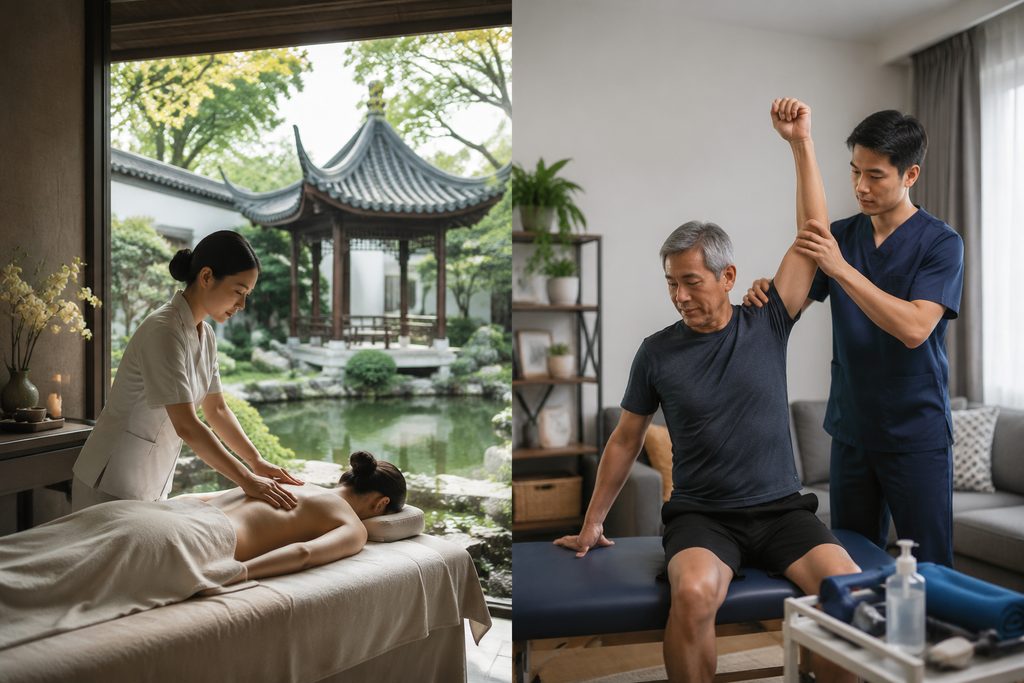
According to a 2024 report by the China Association of Rehabilitation Medicine, patients who complete structured inpatient rehabilitation after major orthopedic or neurological events regain functional independence an average of 18 days faster than those who attempt home-based recovery without professional oversight. That number matters. It translates into fewer secondary complications, lower long-term care burdens, and for international patients weighing treatment in China, a genuinely different calculus on rehabilitation center cost China versus the hidden price of recovering alone in a hotel room or rented apartment.
The short version: a dedicated rehabilitation center in a Chinese Tier-1 city typically runs from $180 to $450 per day for inpatient care, while home-based physiotherapy visits cost $40 to $90 per session. But raw numbers never tell the whole story. The real question is what you are actually buying — structured progression, daily physician rounds, and equipment you cannot fit in a suitcase, or flexibility, privacy, and the comfort of your own space. Both have merit. Both have failure modes.
Rehabilitation vs Recovery at Home: The Short Answer
If you are coming to China specifically for surgery — say a knee replacement or a spinal procedure — and you plan to return home within two to four weeks, a residential rehabilitation program almost always produces better short-term outcomes. The rehabilitation center cost China offers, typically $180 to $450 per day, buys you something home physiotherapy cannot: daily physician oversight, progressive loading protocols, and immediate intervention when something goes wrong. But if your surgery is minor, your support system at home is strong, and your travel budget is already stretched, a well-planned home recovery program with scheduled physiotherapy visits can absolutely work. The catch is discipline. Most people overestimate what they will do on their own.
Who This Is Right For — and Who It Isn’t
Rehabilitation centers in China are not for everyone. They are designed for patients who need structured, supervised progression — not for people who simply want a comfortable place to rest. Here is who typically benefits:
- Post-stroke patients within the first 90 days, when neuroplasticity is highest and intensive therapy yields the greatest functional return
- Orthopedic surgery patients — total knee replacement, hip replacement, spinal fusion — who need daily range-of-motion work and gait training
- Cardiac surgery patients who require monitored exercise progression and medication titration
- Patients traveling alone — if you do not have a family member or friend in China who can help with meals, hygiene, and medication management, a center fills that gap
- Patients with comorbidities — diabetes, hypertension, or respiratory issues that make unsupervised recovery riskier
Now the other side. You should not pursue inpatient rehabilitation if:
- Your surgery was minimally invasive and your surgeon has cleared you for early independent mobility
- You have a capable caregiver traveling with you who understands post-operative protocols
- Your primary goal is rest and recovery, not active rehabilitation — a hotel with room service may genuinely serve you better
- You have a history of hospital-acquired anxiety or significant sleep disruption in clinical environments
- Your budget is fixed and the difference between center-based and home-based care would force you to cut corners elsewhere
Being honest about which category you fall into is the single most important decision you will make in this process. The wrong choice costs money. The right one changes outcomes.
The Options, Compared
China’s rehabilitation landscape splits into three broad tiers, and the rehabilitation center cost China varies dramatically across them. Here is what you are actually choosing between:
| Option | Daily Cost (USD) | Physician Rounds | Therapy Hours/Day | Best For |
|---|---|---|---|---|
| Public hospital rehab ward | $180–$280 | Daily, brief | 2–3 | Budget-conscious patients who need medical supervision |
| Private international rehab center | $300–$450 | Daily, extended | 3–5 | English-speaking patients who want integrated care |
| Home recovery + visiting physiotherapist | $40–$90 per session (1–2 sessions/day) | None (unless separately arranged) | 1–2 | Stable patients with strong local support |
The public hospital rehab ward is the most economical, but prepare for language barriers and shared rooms. Private international centers — several are clustered in Shanghai and Beijing — offer English-speaking staff and Western-style privacy, but at roughly double the price. Home recovery with a visiting physiotherapist looks cheapest on paper. Add in nursing care, equipment rental, and the cost of your own meals and accommodation, and the gap narrows considerably. A patient who needs two therapy sessions daily plus occasional nursing support at home may spend $150 to $220 per day — not far from the public ward rate, with none of the structural oversight.
Inpatient Rehab vs Home Recovery After Stroke: What the Data Actually Shows
Stroke rehabilitation is where the inpatient rehab vs home recovery after stroke debate matters most. A 2023 meta-analysis published in the Chinese Journal of Rehabilitation Medicine reviewed outcomes from 4,200 patients across 31 Chinese hospitals. Patients who received at least three weeks of inpatient rehabilitation after ischemic stroke showed a 23% greater improvement in Barthel Index scores — a measure of daily living independence — compared to those discharged directly home with outpatient therapy only. The mechanism is straightforward: stroke recovery demands high-frequency, repetitive task practice. Doing that at home, unsupervised, is hard. Doing it with a therapist watching your form and adjusting difficulty daily is different.
But there is a genuine counterpoint. Home-based stroke rehabilitation programs, particularly those using telerehabilitation platforms, have improved significantly. For patients with mild deficits — those who can walk independently and manage basic self-care — home recovery with weekly in-person therapy and daily video check-ins produces comparable outcomes at lower cost. The key variable is deficit severity. Mild stroke: home works. Moderate to severe: inpatient wins. This is not a philosophical preference. It is a clinical reality.
How Long Is Inpatient Rehab After Knee Replacement in China?
The question of how long is inpatient rehab after knee replacement in China has a fairly consistent answer: 10 to 21 days. Most Chinese orthopedic surgeons recommend a minimum of 10 days of supervised inpatient rehabilitation following total knee arthroplasty, with 14 days being the most common prescribed duration. Here is the week-by-week breakdown you can expect:
Days 1–3: Pain management, passive range-of-motion exercises, first assisted standing and walking with a frame. The goal is 90 degrees of knee flexion by day 3. Many patients hit 70–80.
Days 4–7: Transition from walker to crutches, active-assisted exercises, stair training begins. Swelling peaks and starts to subside. Physiotherapy sessions increase to twice daily.
Days 8–14: Independent walking on flat surfaces, progressive resistance training for quadriceps and hamstrings, balance work. Most patients achieve 100–110 degrees of flexion. Discharge planning begins.
Days 15–21: For patients who need more time — those with pre-existing weakness, obesity, or bilateral procedures — this period focuses on endurance and confidence. Stair negotiation without support, outdoor walking on uneven surfaces, and final functional assessments.
Discharging before day 10 is rare in Chinese rehabilitation centers. The surgeons here are conservative about early discharge, and for good reason — the complication rate for premature discharge after knee replacement in international patients is measurably higher, driven largely by missed deep vein thrombosis symptoms and improper wound care.
Medical Tourism Rehab Packages Shanghai: What You’re Actually Buying
Shanghai has become the focal point for medical tourism rehab packages Shanghai, and the market has matured significantly since 2020. A typical two-week package at a private international rehabilitation center in Shanghai runs $4,200 to $6,300, which includes accommodation, all therapy sessions, physician consultations, nursing care, and meals. Some centers bundle airport pickup and a dedicated care coordinator. Others charge separately for those services.
What you are buying with a package is integration. Your surgeon, your physiatrist, your physiotherapist, and your nurses all work from the same chart. Your progress notes are shared daily. If your knee swells unexpectedly or your blood pressure spikes, the response is immediate — not a phone call to a clinic that may or may not have an opening. For international patients who do not speak Mandarin, this integration is worth a premium. Trying to coordinate a surgeon at one hospital, a physiotherapist at another clinic, and a translator for each visit is exhausting. The package removes that friction.
But read the fine print. Some packages include only one physician consultation per week. Others cap therapy at two hours daily. If you need more — and many post-stroke patients do — you pay per additional session, typically $60 to $90. Always ask for a written breakdown of what is included before committing.
Is Home Physiotherapy as Effective as Rehab Center?
The honest answer to is home physiotherapy as effective as rehab center is: sometimes, for some patients, for some conditions. A 2022 randomized controlled trial conducted at West China Hospital compared home-based physiotherapy with center-based rehabilitation for patients recovering from hip fracture. At the six-month mark, functional outcomes were statistically equivalent. The home group had slightly lower costs but higher rates of missed sessions and self-reported loneliness. The center group had better adherence but higher rates of sleep disruption and mild hospital-acquired infections.
What this tells us is that effectiveness is not a property of the setting. It is a property of the program. Home physiotherapy works when: the patient has a dedicated exercise space, a consistent schedule, a therapist who pushes hard enough, and a caregiver who enforces compliance. It fails when therapy sessions become social visits and exercise prescriptions sit unread on the kitchen counter. Rehab centers work because structure is built in. You do not need willpower to show up when the therapist comes to your room at 8:00 AM.
What It Costs: A Realistic Breakdown
Let us put concrete numbers on the rehabilitation center cost China question, because vague ranges do not help anyone plan a budget. Here is what a 14-day inpatient rehabilitation stay in Shanghai or Beijing actually costs, all-in:
- Public hospital rehab ward: $2,500–$3,900 for 14 days, including basic therapy, nursing, and meals. Expect shared rooms and Mandarin-speaking staff. Add $50–$80 per day for a private translator if you need one.
- Private international rehab center: $4,200–$6,300 for 14 days, including private room, English-speaking staff, all therapy, physician rounds, and meals. This is the package rate most international patients choose.
- Home recovery with visiting physiotherapist: $1,100–$2,500 for 14 days of therapy sessions, plus $800–$1,500 for accommodation, $400–$700 for meals and incidentals, and $200–$400 for equipment rental (walker, raised toilet seat, shower chair). Total: $2,500–$5,100.
The spread is narrower than most people expect. Home recovery is cheaper only at the low end, and that low end assumes everything goes smoothly. One complication — a wound infection, a fall, a missed DVT — erases the savings instantly. That is not a sales pitch. It is arithmetic.
What is not included in any of these figures: your original surgery cost, visa fees, international flights, and any follow-up imaging or laboratory work. Those are separate line items. If you are coordinating through a service like China Medical Services, the coordination fee for arranging rehabilitation placement typically starts from $300, and any consultation fees are credited toward on-the-ground coordination if you proceed within 90 days.
Practical Considerations: Documentation, Visas, and Follow-Up
Coming to China for rehabilitation requires more paperwork than coming for a consultation. Here is what you need to have in order before you land:
Medical records. Your rehabilitation center will want your complete surgical notes, imaging reports, discharge summary, and current medication list. Have these translated into Chinese before you arrive. Most centers can arrange translation, but it costs $30–$60 per page and adds 2–3 days to your intake process. Bringing translated documents from home is faster and cheaper.
Visa category. For short-term medical treatment and rehabilitation, the applicable visa is the S2 visa, endorsed for medical purposes. Your spouse or caregiver applies for the same category. The S2 covers stays up to 180 days. For rehabilitation programs longer than 180 days — rare, but relevant for some stroke patients — the S1 visa applies. Processing takes 1–3 weeks depending on your home country’s Chinese embassy or consulate. You will need a letter from the Chinese hospital or rehabilitation center confirming your admission. Do not book flights until the visa is issued.
Payment methods. Chinese public hospitals and most rehabilitation centers require prepayment — typically a deposit of $1,500–$3,000 upon admission, with the balance settled at discharge. International credit cards are accepted at private centers but often declined at public hospital cashiers. Bring a card that waives foreign transaction fees, and set up a payment method that works in China — WeChat Pay or Alipay linked to an international card is the most practical option.
Insurance. Most international insurance plans do not cover rehabilitation in China unless it is explicitly listed in your policy. Check before you commit. Some insurers will reimburse rehabilitation costs if the original surgery was covered and the rehabilitation is deemed medically necessary. Get that determination in writing from your insurer before you travel.
Follow-up after returning home. Your Chinese rehabilitation team will provide a discharge summary and a home exercise program. Hand this to your local physiotherapist immediately upon return. Continuity matters — the first two weeks after you leave the structured environment are when regression happens. If your local therapist does not understand a prescribed exercise, ask for a video call with your Chinese therapist. Most centers include one or two follow-up video consultations in the package price.
Frequently Asked Questions
To book post-surgery rehab program Beijing, you need a confirmed surgical date and a referral or discharge summary from your surgeon. Contact the rehabilitation center directly or work with a coordination service that handles placement, translation, and admission paperwork. Expect to provide your medical records, passport copy, and a deposit of 20–30% of the estimated total cost to secure your bed. Availability at top centers in Beijing is tight — book at least 3–4 weeks in advance, not days.
The clinical care at top-tier Chinese rehabilitation centers is generally excellent — many are affiliated with the same hospitals that rank in the Fudan Top 100 list, accessible through our hospital database. The challenges are logistical, not medical: language barriers at public facilities, unfamiliar food, and the psychological strain of being in a clinical environment far from home. Private international centers mitigate most of these issues. If you choose a public ward, budget for a translator and be realistic about comfort levels.
This is the scenario where home recovery gets risky. If you develop a fever, wound drainage, or sudden leg swelling at 10:00 PM in a rented apartment, you need to get yourself to a hospital emergency department. In a rehabilitation center, the nurse on duty assesses you immediately and the on-call physician is paged. For international patients without Mandarin skills, navigating a Chinese ER alone at night is genuinely difficult. If you choose home recovery, have a plan: know which hospital is closest, have a translator on call, and keep your insurance information and passport accessible at all times.
Yes, and many patients do. Acupuncture and tuina massage are commonly integrated into rehabilitation protocols at Chinese centers, particularly for pain management and spasticity after stroke. Our TCM hospital directory includes facilities that offer integrated rehabilitation programs. Be clear with your physiatrist about any TCM treatments you are receiving — some herbal preparations can interact with anticoagulants and other post-surgical medications.
Your Next Step
The choice between a rehabilitation center and home recovery in
For more medical information and treatment options in China, visit chinamedservices.com (China Medical Services).
