Rehabilitation for African Patients: Costs, Timelines, and Hospital Choice in China
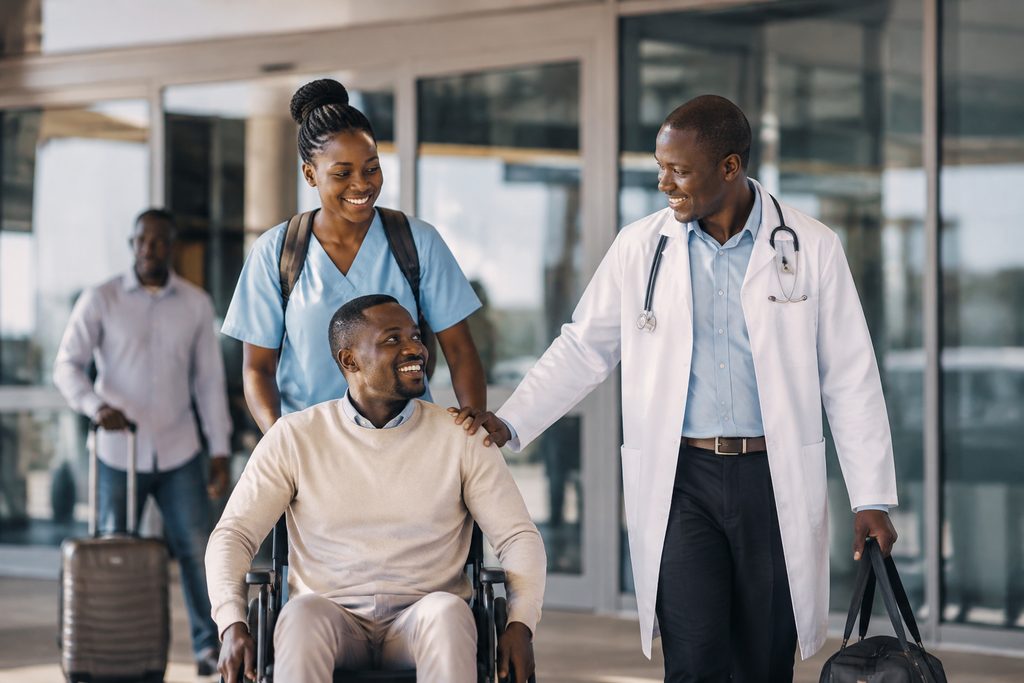
What if the biggest barrier to recovery after a stroke or spinal cord injury wasn’t the injury itself, but the price tag attached to getting better? For many African patients, the math is brutal. World-class inpatient rehabilitation in Europe or North America routinely exceeds $1,500 per day. A three-month program can burn through $135,000 before flights and family accommodation. The rehabilitation center cost China changes that equation. Top-tier programs in Beijing and Shanghai run between $150 and $400 per day for comprehensive inpatient care — often 70-80% less than Western equivalents. But cost is only part of the story. Quality, language, visa logistics, and the specific type of rehab you need determine whether flying 10,000 kilometers for recovery makes sense.
Rehabilitation in China for African Patients: The Short Answer
Yes, China offers high-quality rehabilitation programs that are genuinely accessible to African patients — financially and logistically. A comprehensive inpatient rehab stay at a top public hospital’s international department typically costs $4,500 to $12,000 per month, depending on the intensity of therapy and the hospital tier. That figure includes physician oversight, daily physical or occupational therapy, nursing care, and a standard private room. The same program in the United States would run $30,000 to $60,000 per month.
The caveat: China’s best rehab departments are concentrated in large public hospitals where outpatient clinics operate on a walk-in, same-day registration system. You cannot simply email a hospital and book a bed from Lagos or Nairobi. Access requires either the hospital’s international VIP channel or a coordination partner who handles registration, translation, and scheduling on your behalf. That’s the practical reality — and it’s manageable with the right preparation.
Who This Is Right For — and Who It Isn’t
Rehabilitation in China works exceptionally well for a specific profile of patient. You’re a strong candidate if you fall into one of these categories:
- Post-stroke patients 3-12 months out from the event, medically stable, with clear rehab goals like regaining gait or arm function
- Spinal cord injury patients who have completed acute surgical care and need intensive, structured therapy — often 3-6 months of daily sessions
- Orthopedic post-surgical patients recovering from joint replacement, ligament reconstruction, or complex fracture fixation
- Patients with chronic neurological conditions such as cerebral palsy or Parkinson’s disease seeking maintenance therapy combined with traditional Chinese medicine approaches
- Families traveling together — China’s visa framework allows an accompanying family member on the same S2 visa category, and hospital international departments are accustomed to hosting relatives
You should not pursue rehab in China if any of these apply:
- You are still medically unstable. Rehab departments are not acute care wards. Active infections, uncontrolled blood pressure, or recent cardiac events need to be managed at home first.
- You require daily dialysis or ventilator support. While some hospitals can accommodate this, the complexity and cost make it impractical for most international patients.
- You cannot commit to at least 4-6 weeks. The visa process, travel, and initial assessments mean anything shorter rarely justifies the journey.
- Your primary goal is a single consult, not ongoing therapy. In that case, a written second opinion or video consultation is far more cost-effective than flying to China.
The Options, Compared
African patients considering international rehabilitation face three realistic pathways. Each has different trade-offs in cost, access speed, and therapy intensity. Here’s how they stack up:
| Option | Monthly Cost (USD) | Time to Start | Therapy Intensity | Language Support |
|---|---|---|---|---|
| China — public hospital international dept. | $4,500–$12,000 | 2–4 weeks after records review | 3–5 hours daily, physician-led | English-speaking coordinators; interpreters available |
| China — private international hospital | $8,000–$20,000 | 1–3 weeks | 2–4 hours daily, Western-style | Fully English-speaking clinical staff |
| South Africa — private rehab center | $6,000–$15,000 | 1–2 weeks | 2–4 hours daily | English native |
| India — private rehab hospital | $3,000–$8,000 | 2–3 weeks | 2–3 hours daily | English widely spoken |
| Turkey — private rehab hospital | $5,000–$14,000 | 2–4 weeks | 2–4 hours daily | English-speaking coordinators |
| United States — inpatient rehab facility | $30,000–$60,000 | 1–2 weeks (if insured) | 3+ hours daily, MD-led | English native |
China’s public hospital international departments strike a distinctive balance: near-Western therapy intensity at a fraction of the cost, with the added option of integrating traditional Chinese medicine modalities like acupuncture and tuina massage into the rehab plan. For patients who need physician oversight and daily structured therapy but cannot justify U.S. pricing, this is the sweet spot. Private international hospitals in Shanghai and Beijing suit patients who prioritize a fully English-speaking environment and direct insurance billing over cost savings.
What a Typical Stroke or Spinal Cord Rehab Stay in China Actually Looks Like
Here’s what nobody tells you about rehab in China: the daily rhythm is more structured than what most Western outpatient programs offer. A typical inpatient day at a top rehab department runs like this:
Morning (8:00 AM – 12:00 PM): Physician rounds, then two therapy blocks. For stroke patients, this might mean 45 minutes of physical therapy focused on gait training, followed by 45 minutes of occupational therapy for hand function and activities of daily living. Spinal cord injury patients often start with respiratory muscle training before moving to upper-body strengthening.
Afternoon (1:30 PM – 5:00 PM): One to two additional therapy sessions. This is where Chinese rehab departments differ from many Western programs — they frequently layer in acupuncture, electrotherapy, or hydrotherapy depending on the facility. A patient recovering from a stroke might receive scalp acupuncture alongside conventional physiotherapy. The evidence for acupuncture in motor recovery is mixed, but many patients report subjective improvement in spasticity and pain. You can discuss TCM integration with the rehab physician — it’s optional, not mandatory.
Evening: Rest, family visits, or optional self-guided exercises in the therapy gym. Nursing staff handle medication, positioning, and any wound care needs.
The intensity is real. Most patients receive 3-5 hours of active therapy daily, five to six days per week. That’s comparable to or exceeding what U.S. inpatient rehab facilities provide. And it’s one reason how long does spinal cord rehab take in China is a question with a concrete answer: a typical structured program runs 8-12 weeks for meaningful functional gains, though many patients extend to 6 months for maximum recovery.
Rehabilitation Center Cost China: What the Numbers Include
Let’s get specific about the rehabilitation center cost China — because quoted figures mean nothing without knowing what’s inside them. At a top-tier public hospital’s international department in Beijing or Shanghai, a monthly inpatient rehab stay breaks down roughly like this:
- Private room with bathroom: $60–$150 per night ($1,800–$4,500/month)
- Physician oversight and nursing care: $800–$1,500/month
- Physical therapy (daily sessions): $40–$80 per session, 20-25 sessions/month ($800–$2,000/month)
- Occupational therapy: $30–$60 per session, 10-15 sessions/month ($300–$900/month)
- Speech therapy (if needed): $40–$70 per session, 8-12 sessions/month ($320–$840/month)
- Acupuncture/TCM adjunct therapy (optional): $20–$40 per session, 8-12 sessions/month ($160–$480/month)
- Meals, basic supplies, interpreter coordination: $300–$600/month
Total: roughly $4,500 to $12,000 per month, all-in. What’s not included: international flights, visa fees, family accommodation, and any diagnostic imaging (MRI, CT) that the rehab team orders during your stay. Budget an additional $1,500–$3,000 for initial assessments and imaging if you haven’t had recent scans.
Private international hospitals run higher — $8,000 to $20,000 monthly — but include English-speaking therapists, Western-style meal services, and direct insurance billing with major international insurers. If you carry expat health insurance with rehab coverage, this is often the smoother route.
Is Rehab in China Good for African Patients? The Honest Answer
Is rehab in China good for African patients? The honest answer is: yes, with conditions. The clinical quality at top-ranked rehab departments is genuinely strong. Hospitals like Huashan Hospital in Shanghai and China Rehabilitation Research Center in Beijing handle enormous patient volumes — which translates into experienced therapists and well-established protocols. A therapist at a major Chinese rehab center may see more stroke patients in a year than a Western counterpart sees in five.
But there are real friction points. Language is the biggest one. Even in international departments, the day-to-day therapy is often delivered by therapists who speak limited English. That’s manageable with a bilingual medical companion, but it’s not frictionless. Cultural differences in communication style — Chinese clinicians tend to be more directive and less collaborative than Western patients may expect — can feel jarring at first. Food is another practical matter; hospital meals are Chinese-style unless you’re in a private international facility, though most international wards accommodate dietary restrictions with advance notice.
For African patients specifically, the visa pathway is well-established. The S2 visa covers medical treatment and private affairs, and Chinese embassies across Africa process these applications routinely. Supporting documents include a hospital invitation letter, medical records, and proof of funds. We provide guidance on this process, but approval is always at the consulate’s discretion.
The verdict: if you’re medically stable, can commit 6-12 weeks, and accept that some daily communication will require translation support, China offers rehab quality that rivals Western centers at a fraction of the cost. If you need fully seamless English communication and zero logistical friction, a South African or Turkish private center might suit you better — at a higher price.
How to Book a Rehab Program in Beijing for International Patients
Booking a rehab program in Beijing for international patients follows a different path than booking one in, say, Johannesburg or London. You cannot simply call the hospital and reserve a bed. The process works like this:
Step 1: Records review. You submit existing medical records — discharge summaries, imaging reports, current medication lists, and a physician’s note confirming medical stability. The rehab department reviews these to determine if you’re an appropriate candidate. This typically takes 5-10 business days.
Step 2: Preliminary plan and cost estimate. If accepted, the department provides a proposed therapy plan and an itemized cost estimate. You review it, ask questions, and decide whether to proceed.
Step 3: Visa application. The hospital issues an invitation letter. You apply for an S2 visa at your nearest Chinese embassy or consulate. Processing times vary by country — typically 1-4 weeks. Your accompanying family member applies under the same category.
Step 4: Travel and admission. You arrive in Beijing, complete any pending assessments (often a fresh MRI or CT), and begin the program. Most international departments assign a coordinator who handles registration, payment, and scheduling.
Throughout this process, a coordination partner handles the logistics: submitting records in the right format, communicating with the department, arranging the invitation letter, and providing on-the-ground support once you arrive. That’s the role we play at China Medical Services. We’re not a hospital, and we don’t make medical decisions — we connect you with the right department and smooth the path.
Practical Considerations: Records, Payment, and Follow-Up
For best physical therapy hospital Shanghai for foreigners, the strongest options are Huashan Hospital’s rehabilitation department, the international departments at Zhongshan Hospital and Ruijin Hospital, and private facilities like Jiahui and United Family. Huashan is particularly known for neurological rehab. All have experience with international patients, though private facilities offer fully English-speaking therapy teams at a higher price point.
Rehab is not a guarantee of functional recovery. Some patients plateau; a small percentage experience complications like falls, infections, or medical deterioration. Chinese rehab departments are equipped to manage these events, and international departments coordinate transfer to acute care if needed. But the risk is real, and you should carry medical evacuation insurance. Reputable programs set realistic expectations in the first assessment — if a program promises dramatic recovery, walk away.
A structured inpatient spinal cord rehab program in China typically runs 8-12 weeks for meaningful functional gains, with many patients extending to 6 months. The first 4-6 weeks focus on stabilization, respiratory function, and basic mobility. Weeks 6-12 target transfers, wheelchair skills, and upper-body conditioning. Longer stays yield diminishing returns for most patients, though individual trajectories vary widely by injury level and completeness.
Yes. One accompanying family member can apply for an S2 visa under the same category as the patient. Hospital international departments are accustomed to hosting relatives, and many offer family accommodation options or can recommend nearby serviced apartments. Budget $1,500 to $3,000 per month for family accommodation and living expenses in Beijing or Shanghai.
Your Next Step
Rehabilitation in China isn’t for everyone. But for African patients who are medically stable, can commit at least six weeks, and want physician-led therapy intensity at a price that doesn’t require selling a family home, it’s an
Frequently Asked Questions
Yes. The hospitals used for international patients are JCI-accredited and follow the same international safety standards as top hospitals in the US and Europe. Surgical teams perform high volumes of procedures — often more than their Western counterparts — which studies show leads to better outcomes.
Costs vary by procedure and hospital, but international patients typically save 40-80% compared to US prices — even when factoring in travel and accommodation. A consultation with our team will give you an exact, all-inclusive quote with no hidden fees.
Send us your existing medical reports to get started. We handle everything from hospital selection and appointment scheduling to visa assistance and post-operative recovery planning. Your medical records are reviewed by the specialist before you even book a flight.
For more medical information and treatment options in China, visit chinamedservices.com (China Medical Services).
