Mobility Needs: A Helping Ride Through China’s Hospital Network
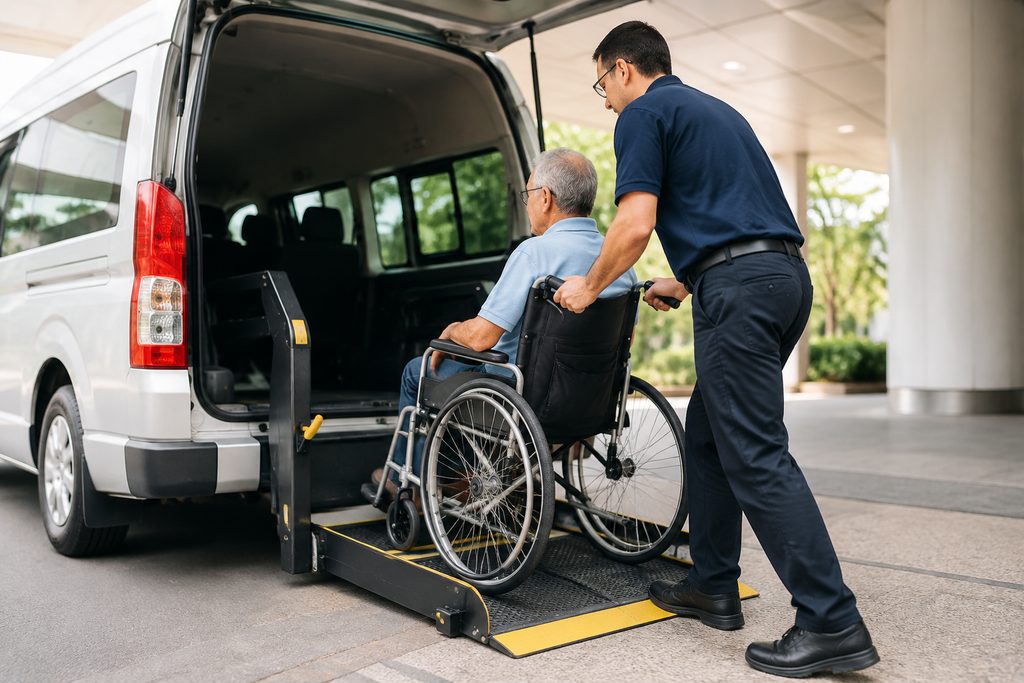
You’ve probably heard that getting around after surgery in a foreign country is a logistical nightmare. The reality is more manageable than you think — if you know who to call before you land. A medical transport service for surgery patients China isn’t a luxury add-on. It’s the difference between a stressful discharge day and a smooth transition to your hotel or recovery apartment.
Every year, thousands of international patients travel to Chinese hospitals for orthopedic procedures, cardiac interventions, oncology surgeries, and complex reconstructive work. They plan flights, visas, hospital deposits, and accommodation. Then they hit the same wall: how do you actually get from the operating theater to your bed without walking, lifting luggage, or navigating a metro station in a post-anesthesia haze?
That’s the gap this article fills. We’ll walk through what these services actually include, what they cost in Shanghai and Beijing, how to book them from abroad, and where things can go wrong. No fluff. Just the operational details that matter when you’re the one in the wheelchair.
How This Actually Works, Step by Step
The process starts weeks before your surgery date. You contact a coordination team — either through your hospital’s international department or an independent service like China Medical Services — and provide your surgical schedule, discharge location, and mobility restrictions.
Here’s the sequence:
Step 1: Assessment. You send your surgery date, hospital name, and the surgeon’s expected discharge instructions. If you’re having a hip replacement in Guangzhou, the team needs to know whether you’ll be weight-bearing or non-weight-bearing. That determines the vehicle type.
Step 2: Vehicle and staffing match. A standard sedan works for a patient who can sit upright. A wheelchair-accessible van is required for someone who cannot bend a knee or hip beyond 90 degrees. A nurse escort adds monitoring during transit — blood pressure checks, medication timing, wound awareness.
Step 3: Booking confirmation. You receive a written confirmation with the pickup time, vehicle plate number, driver name, and escort credentials. Payment is typically settled in advance or on the day, depending on the provider.
Step 4: Day-of coordination. The driver arrives at the hospital’s discharge entrance 30 minutes early. The escort handles paperwork handoff with the nursing station, confirms your discharge summary is in hand, and wheels you to the vehicle.
Step 5: Transfer and handover. You’re driven to your hotel or serviced apartment. The escort helps you into the room, reviews medication instructions, and confirms you have water, food, and a way to call for help. Then they leave.
That’s the whole mechanism. It’s not complicated. But it requires a provider who understands hospital discharge protocols — which entrance to use, which documents to collect, how to communicate with ward nurses who may not speak English.
Medical Transport Service for Surgery Patients China: What’s Actually Included
Let’s be specific about what you’re paying for. A medical transport service for surgery patients China typically bundles three components: the vehicle, the driver, and optionally a medical escort.
The vehicle is not an ambulance in most non-emergency cases. It’s a private car, MPV, or wheelchair-accessible van configured for patient comfort. Think reclining seats, extra legroom, and space for crutches or a walker. Ambulances are reserved for transfers that require continuous monitoring or stretcher transport.
The driver is trained in defensive driving and patient handling. They won’t speed over speed bumps. They’ll know the hospital’s designated pickup zones. Some speak basic English; most coordinate through a dispatch team that does.
The medical escort is where the value concentrates. A registered nurse or trained medical companion rides with you, monitors your condition, manages nausea or dizziness, and communicates with the hospital if something feels off. They also handle the practical stuff — carrying your discharge bag, holding doors, translating at the pharmacy if you need to stop for prescriptions.
What’s not included: emergency resuscitation equipment, continuous cardiac monitoring, or ICU-level care. If you need that, you’re looking at a hospital-to-hospital ambulance transfer, which is a different service tier.
A Realistic Timeline
Here’s what a typical timeline looks like for arranging non-emergency transport after surgery in a major Chinese city. Note the lead times — they’re longer than most patients expect.
| Stage | What Happens | Timeframe |
|---|---|---|
| Initial inquiry | You submit surgery details and discharge location | 2–4 weeks before surgery |
| Quote and vehicle match | Provider confirms availability and sends pricing | 1–3 business days after inquiry |
| Booking locked | Deposit paid, pickup time reserved | At least 7 days before discharge |
| Day-of confirmation | Driver and escort names confirmed, plate number sent | 24 hours before pickup |
| Discharge and transfer | Escort meets you at ward, handles paperwork, drives you to accommodation | Day of discharge |
| Follow-up check | Provider calls to confirm you’re settled and medications are understood | 24–48 hours after transfer |
The part people forget: document translation. Your discharge summary will be in Chinese. If you need it in English for your home physician, that takes an extra 2–3 days. Some transport providers offer translation as an add-on; most don’t. Plan for it separately.
Visa processing runs parallel. The S2 visa for medical treatment and private affairs typically takes 4–10 business days after submission, depending on your home country’s Chinese embassy or consulate. Start that process before you book transport — you can’t board a plane without it.
What Can Go Wrong — and What Happens Then
Discharge delays are the most common failure point. A surgeon might decide to keep you an extra day for observation. Or the pharmacy takes three hours to fill your prescriptions. Your driver is booked for a specific time slot.
What happens: a good provider builds buffer time into the schedule. They’ll hold the vehicle for up to two hours without penalty. After that, you may be charged a waiting fee — typically $15–25 per hour. Some services roll the delay into the next available slot. Ask about this policy before booking.
Another failure mode: the vehicle doesn’t match your mobility needs. You booked a sedan, but post-surgery you can’t bend your knee enough to sit in a standard back seat. The solution is to over-specify. If there’s any doubt, book the wheelchair-accessible van. It costs more, but it’s the difference between a comfortable ride and a painful contortion.
Language breakdowns happen too. A driver who doesn’t speak English can’t understand that you’re nauseous and need to pull over. This is why the escort matters. If your budget only allows for a driver, carry a translation card with key phrases: “Please drive slowly,” “I feel sick,” “My incision hurts.” A bilingual escort eliminates this entire category of risk.
And then there’s the no-show. Rare, but it happens. Reputable providers offer a refund guarantee if they fail to arrive within 45 minutes of the scheduled time. Confirm this in writing before you pay.
How Do International Patients Get to Hospital After Surgery in Shanghai?
Shanghai has the most developed medical transport infrastructure of any Chinese city. The international departments at Huashan Hospital, Zhongshan Hospital, and Ruijin Hospital all maintain relationships with private transport vendors. But here’s the catch: those vendors primarily serve the hospital’s VIP and international ward patients.
If you’re discharged from a standard public ward, you’ll need to arrange your own ride. That’s where the question how do international patients get to hospital after surgery in Shanghai gets complicated. The answer depends on your discharge classification:
- Walking discharge: You can walk unassisted. A regular taxi or ride-hailing car works, though a private driver is more comfortable.
- Assisted discharge: You need a wheelchair or walking frame. A wheelchair-accessible van with a trained driver is the standard.
- Stretcher discharge: You cannot sit upright. This requires a non-emergency ambulance with medical staff.
Most orthopedic and abdominal surgery patients fall into the assisted discharge category. They can sit, but walking long distances is painful or prohibited. For these patients, a private van with a sliding door and a fold-out ramp is the practical choice.
Shanghai’s hospital districts — Xuhui, Huangpu, Pudong — have heavy traffic between 7:30–9:30 AM and 5:00–7:30 PM. Discharge is usually scheduled for mid-morning or early afternoon. A good provider will time the pickup to avoid rush hour, even if it means waiting an extra hour in the hospital lounge.
Cost of Private Ambulance with Nurse in Beijing: What You’ll Actually Pay
Let’s talk numbers. The cost of private ambulance with nurse in Beijing varies by vehicle type, distance, and staffing level. Here’s a realistic range based on current market rates:
| Service Type | What You Get | Typical Cost (USD) |
|---|---|---|
| Private car with driver | Sedan or MPV, no medical staff | $80–150 per transfer |
| Wheelchair van with driver | Accessible van, ramp or lift, no nurse | $150–300 per transfer |
| Wheelchair van with nurse escort | Van plus registered nurse for monitoring | $300–500 per transfer |
| Non-emergency ambulance with nurse | Stretcher, oxygen, vitals monitoring, nurse | $500–900 per transfer |
These are Beijing prices. Shanghai runs 10–20% higher. Guangzhou and Shenzhen are comparable to Beijing. Second-tier cities like Chengdu or Hangzhou tend to be 20–30% cheaper.
The nurse escort adds real value for patients on blood thinners, those with cardiac history, or anyone traveling more than 45 minutes. The nurse can spot early signs of complications — unusual bleeding, dizziness, shortness of breath — and decide whether to divert to the nearest emergency department. That decision-making capability is worth the premium.
Prices vary by hospital and case complexity. A transfer from a downtown Beijing hospital to a nearby hotel costs less than a cross-city transfer to a recovery facility in Shunyi. Always get a written quote with the specific pickup and drop-off addresses included.
Non Emergency Medical Transportation Packages China: Bundling Saves Money
If you need more than one ride — say, hospital to hotel, hotel to follow-up appointment, hotel to airport — look at non emergency medical transportation packages China. Most providers discount bundled transfers by 15–25% compared to booking each leg separately.
A typical package for a hip replacement patient in Guangzhou might look like this:
- Airport pickup on arrival (standard sedan): $100
- Hospital admission day transport: $100
- Discharge day wheelchair van with nurse: $350
- Two follow-up appointment round trips: $300 total
- Airport drop-off with wheelchair assistance: $150
Booked individually: $1,000. As a package: $750–850. The savings come from the provider’s ability to schedule efficiently — same driver, same vehicle, predictable routing.
But packages have a downside: rigidity. If your discharge date shifts by two days, the whole schedule needs reworking. Ask about rescheduling flexibility before committing. Some providers allow date changes up to 48 hours before each leg at no charge. Others charge a rebooking fee. Get it in writing.
Can I Hire a Driver to Take Me to Hospital in Guangzhou After Hip Replacement?
The short answer: yes. The longer answer involves Guangzhou’s specific geography and hospital layout.
Guangzhou’s top orthopedic hospitals — Nanfang Hospital, the First Affiliated Hospital of Sun Yat-sen University — sit in dense urban districts with narrow approach roads. Standard taxis often refuse short trips from hospital entrances because the queue isn’t worth the fare. Ride-hailing apps work, but drivers may cancel when they see you with a walker and hospital bags.
So the question can I hire a driver to take me to hospital in Guangzhou after hip replacement is really about reliability. A pre-booked private driver with a confirmed pickup solves the cancellation problem. You’re not competing with other passengers for a scarce resource.
After a hip replacement, you’ll have strict positioning rules: don’t bend past 90 degrees at the hip, don’t cross your legs, don’t twist. A standard sedan back seat violates all three. You need either a front passenger seat pushed fully back or a wheelchair van with a flat entry. Specify this when booking. A driver who doesn’t understand hip precautions will watch you struggle into the back seat and think nothing of it.
Guangzhou’s traffic is unpredictable. The Tianhe district can gridlock at 5 PM. Haizhu district floods during summer rainstorms. Build 30–45 minutes of buffer into any hospital-bound trip. Your follow-up appointment won’t wait because the Dongfeng Road intersection backed up.
Medical Escort and Wheelchair Van Rental Shanghai Price: Breaking Down the Line Items
When you see a quote for medical escort and wheelchair van rental Shanghai price, it usually breaks down into three line items:
Vehicle rental: $120–200 for a half-day (4 hours), $200–350 for a full day (8 hours). This covers the van, fuel, parking, and driver time.
Escort fee: $80–150 for a medical companion, $150–250 for a registered nurse. The nurse costs more because they bring clinical judgment, not just physical assistance.
Coordination fee: $30–80. This is the dispatch team’s cut for matching you with the right vehicle and escort, confirming with the hospital, and handling last-minute changes.
So a half-day wheelchair van with a nurse escort in Shanghai runs roughly $350–530 all-in. A full day with a non-medical companion might be $280–400.
What drives the price up: distance from the provider’s base, toll roads, parking fees at private hospitals (some charge $10–20 per entry), and after-hours service. A 6 AM pickup for an early surgery costs more than a 10 AM pickup.
What drives it down: booking a package, choosing a non-medical companion instead of a nurse when your condition is stable, and scheduling during off-peak hours.
Practical Considerations: Records, Payment, Insurance, and Follow-Up
Before you book any transport, gather these documents:
- Discharge summary — in Chinese, stamped by the hospital. Your escort can help translate the key points on the spot.
- Medication list — with Chinese drug names. Pharmacies in China won’t recognize Western brand names.
- Follow-up appointment card — shows the date, time, and department for your post-op check.
- Insurance documentation — if your insurer covers non-emergency transport, you’ll need itemized receipts.
Payment is typically by WeChat Pay, Alipay, bank transfer, or international credit card. Some smaller providers only accept local payment methods. Confirm this before you commit. If you’re using a coordination service like China Medical Services, they can handle the payment logistics on your behalf.
Insurance coverage for non-emergency transport is rare. Most international health plans cover ambulance transport only when medically necessary. A comfortable ride from hospital to hotel doesn’t qualify. Budget for this out of pocket.
Your S2 visa covers the medical treatment period. If your recovery extends beyond your visa’s validity, you’ll need to apply for an extension through the local exit-entry administration bureau. Your transport provider can’t help with this, but your hospital’s international department can provide the supporting documents.
Follow-up at home: bring your discharge summary and imaging CDs. Chinese hospitals typically give you a CD with your CT or MRI scans. Your home physician will need those files. Some patients also request a written second opinion from their Chinese surgeon before flying home — that’s a separate service worth considering if your case is complex.
Frequently Asked Questions
Is a medical transport service the same
For more medical information and treatment options in China, visit chinamedservices.com (China Medical Services).
